
TL;DR

Get baby and family essentials delivered free — and shop member deals
- Fast, free delivery on millions of items
- Access to Prime Big Deal Days deals on October 6–7
- Prime Video, Amazon Music and more included
Baby-friendly Halloween costumes should fit comfortably, leave the face clear, allow free movement, and suit the weather and your baby’s age. Try the outfit before Halloween, check for loose parts and product recalls, and keep car-seat layers thin; a cute costume is a bonus, not a reason to compromise comfort or supervision.
At 3 a.m., a costume with a tangled ribbon or a hard-to-open back stops looking adorable pretty quickly. On Halloween, your baby still needs the basics to work: easy diaper changes, a clear face, and room to move.
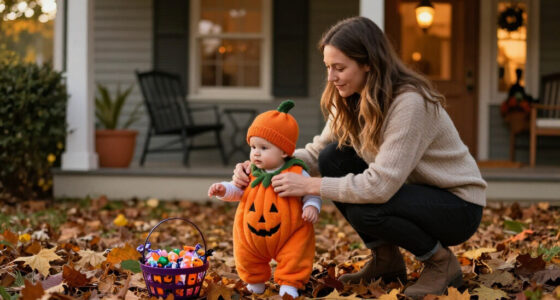
Baby-friendly Halloween costumes can be as simple as soft pumpkin pajamas or a familiar outfit with a little animal hat. The right choice depends on your baby’s age, the weather, and what you plan to do—not on how elaborate the costume looks in a photo.
This guide covers how to pick a comfortable outfit, check fit and materials, keep your baby warm without bundling them into a car seat, and decide whether an outing makes sense. You’ll also get a try-on checklist and practical ideas for newborns, home photos, and short visits. A cute costume is a bonus; it should never get between your baby and comfort, breathing, movement, or your view of them.
Choose the costume around your baby’s age, comfort, and actual Halloween plan.
Keep the face clear; skip masks and check that hats or hoods cannot slide over the eyes.
Try the outfit on in advance and look for restricted movement, scratchy seams, loose pieces, and difficult diaper access.
Use thin layers for car-seat rides and follow the seat’s instructions; bulky costume padding can affect harness fit.
Check age guidance and CPSC recalls for the specific costume, especially when it includes lights, batteries, or accessories.
Choose a costume that matches your baby’s plans
Baby-friendly Halloween costumes work best when they match what your baby will actually do: nap at home, visit grandparents, or take a short neighborhood stroll. Start with the plan, then pick an outfit that makes that plan comfortable. A newborn resting in a carrier has different needs from a crawling baby playing on the living-room floor.
For example, a soft one-piece animal outfit may suit a brief visit with familiar people, while themed pajamas may be a better fit for an evening at home. If your baby is happiest watching the doorbell from your arms, there’s no need to dress them for a crowded event. A photo in a cozy outfit can be the whole celebration.
Choose a look that is easy to put on and take off, especially if your baby needs frequent feeding or diaper changes. Snaps at the crotch or a zipper with a protective fabric flap can save you from wrestling a sleepy baby through several layers. Keep the outfit loose enough for natural movement, but not so loose that fabric bunches around the face or catches under your arms while you carry them.
Age and ability matter, too. A baby who is not sitting steadily may not need props or elaborate headwear, and a crawling baby can quickly find loose decorations. Keep your expectations gentle: a short outing, a familiar visit, or a few photos may suit your baby better than a late, noisy evening. Follow their cues and their usual routine where you can.
What to know: costume ideas change from year to year, so don’t treat a retailer’s “top trend” list as safety advice. Soft animals, food themes, family matching outfits, and everyday clothes with one costume-like accessory are flexible choices. A pumpkin-colored sleeper and a soft hat can look festive without turning dressing into a project.
As an affiliate, we earn on qualifying purchases.
Check fit, fabric, and fasteners before Halloween night
Before Halloween, check that the costume lets your baby breathe freely, move naturally, and stay in your sight. The face should remain uncovered, the chest should not feel restricted, and no part should drag, bunch, or slip over the eyes. That quick fit check matters more than whether the costume looks exactly like the product photo.
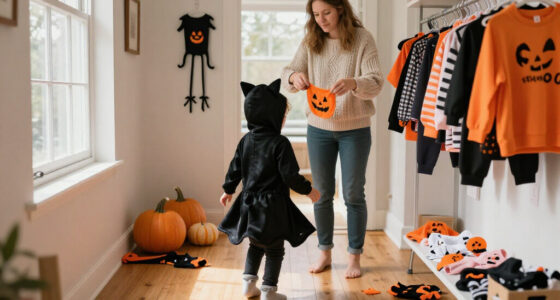
Try the full outfit on a calm day, ideally when you have time to notice the small annoyances. A seam that feels harmless in your hand may rub a baby’s neck; a hood that fits in the bedroom may slide down when you pick them up. Move your baby gently as usual and check that the sleeves, legs, and fasteners stay where they belong. This trial run also reveals whether you can make an ordinary change without disturbing the whole outfit—a useful test, since a costume that is difficult to remove can turn a quick diaper change into a cold, fussy interruption.
Soft, breathable fabric and simple closures usually make a costume easier to live with. Look closely for scratchy seams, loose embellishments, long ties, and small detachable pieces that a baby could pull off and put in their mouth. Skip masks. A soft hat or removable hood may work if it fits securely and stays away from the face, but take it off if your baby seems uncomfortable or too warm. The point is not that every decoration is automatically unsafe; it’s that each extra piece adds something to inspect, supervise, and potentially remove when your baby gets tired or starts grabbing at it.
Use this practical try-on checklist before keeping the costume:
- Can your baby breathe and move comfortably, without fabric tightening across the chest?
- Does the costume leave the face clear and stay out of the eyes when you hold your baby?
- Can you access the diaper without removing every layer?
- Can you adjust clothing for the weather and check your baby’s temperature?
- Are all details securely attached, with cords and small parts out of reach?
If a costume fails one of these checks, simplify it. For instance, remove a dangling bow and use a plain sleeper underneath. That may mean giving up a detail that makes the costume look more complete, but it reduces both the chance of irritation or grabbing and the amount you need to monitor. A quieter, simpler outfit is a better trade than spending the evening tugging fabric away from your baby’s face.
As an affiliate, we earn on qualifying purchases.
Keep your baby warm without adding risky bulk
Dress your baby for the actual temperature, not the costume’s fluffy appearance. Check how your baby feels during the outing and adjust light layers as needed; a thick-looking costume can still leave hands or feet exposed, while several bulky layers can make an indoor room uncomfortably warm. One outfit cannot answer every weather question. Think of warmth and coverage as separate checks: a costume may insulate the torso while leaving extremities exposed, and adding more padding may solve one problem while creating another.
A useful example: if you’re walking from a chilly porch into a heated home, choose layers you can remove without undoing the whole costume. A thin base layer under a simple outfit may be easier to manage than a heavily padded suit. Keep an eye on your baby during the visit, and respond if they seem uncomfortable or too warm. The advantage of removable layers is that you can adapt as the setting changes; the tradeoff is that they need to stay arranged and not bunch around the face or body. For infant sleep, feeding, or health questions, follow your pediatrician’s guidance rather than relying on costume advice.
Car rides need their own plan. Bulky costumes and padding can interfere with a snug car-seat harness, even if the outfit looks soft. A harness needs to fit close to your baby; padding beneath it can compress, leaving the straps less snug than they seemed when you buckled them. For the ride, dress your baby in thin layers, buckle them according to the car-seat instructions, and place a blanket over the secured harness if needed. Don’t put bulky costume padding between your baby and the harness.
That means you may want a two-part plan: comfortable clothes for the car, then a costume layer once you’ve arrived and taken your baby out of the seat. For example, a baby can ride in a thin sleeper and wear a loose costume tunic for family photos afterward. Keep the costume layer away from straps and remove it before buckling your baby in again. This takes a little extra dressing, but it avoids making the costume do two jobs—looking festive and serving as a safe travel layer—that may conflict.
Warm-looking is not the same as car-seat-ready. Check temperature, movement, and harness fit as separate questions.
When the weather is uncertain, pack an extra light layer rather than choosing the bulkiest outfit you can find. Conditions change between a drafty porch, a warm car, and a crowded living room. A spare layer gives you flexibility without requiring you to guess based on fleece thickness alone; check that it does not interfere with a properly secured harness when your baby rides in the car.
As an affiliate, we earn on qualifying purchases.
Pick simple costume details and leave props to adults
Simple costume details are easier to supervise than dangling cords, batteries, or props. Keep anything small, sharp, loose, or tempting to chew well away from your baby, and make sure decorative pieces cannot detach during normal handling. The baby should remain easy to hold, see, and comfort. This is also a practical tradeoff: fewer accessories mean fewer things to check when you are carrying, feeding, or soothing your baby.
A soft hat, colored sleeper, or securely attached felt shape can add a clear theme without adding much fuss. Imagine a baby dressed in green pajamas with a soft, removable leaf hat: the look reads as a pea pod in a family photo, but there’s no plastic sword or trailing ribbon to manage. For a homemade outfit, begin with clothes your baby already tolerates and add only a few lightweight details that won’t come loose. Familiar base clothing can make the outfit easier to wear, while removable details let you simplify it if your baby starts tugging or gets uncomfortable.
Be especially cautious with lights and electronic accessories. Wires, cords, batteries, and small components belong out of your baby’s reach. A blinking headband may look bright in a photo, but it creates another item to check and another thing a baby may grab. Props usually work better in an adult’s hand, held well away from the baby. Keeping a prop separate still gives you the visual theme without asking the baby to wear or hold an extra object.
For an after-dark outing, add reflective details to an outer layer or stroller rather than putting visibility gear where it can block your view of the baby. Keep your baby close and supervised, and choose a route that lets you stay attentive. A reflective stroller panel and a plain, clear-faced costume beat a complicated outfit that hides your baby in a crowd. Visibility helps others notice you, but it does not replace staying close enough to supervise.
Before using any store-bought costume, check its age guidance and labels, especially if it includes batteries, lights, or accessories. Look up the specific item in the U.S. Consumer Product Safety Commission (CPSC) recall database before Halloween; product designs and safety notices can change. Don’t assume a familiar brand or last year’s costume is automatically free of recalls. If you’re considering face paint for a very young baby, avoid applying it around the eyes and mouth, and check product age guidance and ingredients; a soft accessory is often the simpler choice. A recall check cannot replace checking how the costume fits your baby now, since fit and condition can change with growth and use.
As an affiliate, we earn on qualifying purchases.
Use this quick comparison to find the easiest costume
The easiest costume is the one that fits your baby’s activity, not the one with the most details. Compare how much dressing, supervision, and adjustment each option takes before you decide. A one-piece outfit can be handy for a short visit, while regular pajamas may win when your baby needs frequent changes. The table is a starting point rather than a ranking: even a simple outfit needs a fit check, and the best choice depends on how your baby responds when wearing it.
| Costume option | Works well for | Check before you choose |
|---|---|---|
| Soft one-piece animal outfit | A brief visit or family photos | Make sure the hood stays clear of the face and the outfit doesn’t restrict movement. |
| Themed pajamas | Home celebrations and easy changes | Check the fit, fabric, and any decorative pieces. |
| Everyday clothes with a soft accessory | Babies who dislike full costumes | Use an accessory that fits securely and comes off easily. |
| Homemade outfit with lightweight details | A personal theme or sibling match | Keep ties, glue, sharp edges, and detachable parts away from your baby. |
For example, if your baby wakes when you change their clothes, themed pajamas may be more practical than a layered costume with several snaps. If you’re visiting relatives for twenty minutes, a soft one-piece may be perfectly manageable. The right choice depends on the time, temperature, and your baby’s tolerance for getting dressed. In other words, convenience is not just about getting the costume on; it is also about whether you can adjust or remove it quickly when the plan changes.
Matching outfits can be lovely, but your baby doesn’t need a full costume to join in. A sibling in a dragon outfit and a baby in a plain green sleeper can make a sweet family theme without putting a cape, tail, and hat on the smallest person. Keep the baby’s outfit simple enough that you can pick them up, feed them, or change them without a production. That may make the costumes less identical, but it keeps the baby’s needs from becoming the price of coordinating the look.
Comfort and convenience are not competing goals. A costume that opens easily and stays in place can look festive while making the evening smoother. If you have to choose between one more decorative detail and an easy diaper change, you already know which one will matter at midnight.
Make the evening shorter and calmer when your baby needs it
A baby-friendly Halloween plan has an easy way to stop, head home, or switch to photos indoors. Babies vary, and a costume does not make a late or crowded event comfortable for every child. Choose a plan that gives you room to respond to your baby rather than trying to stick to a schedule made for older children. A flexible plan matters because discomfort can build as the evening goes on, and the ability to leave promptly is often more useful than trying to prevent every possible disruption.
For instance, you might visit one familiar neighbor, take a few pictures on the porch, and head inside before the street gets noisy. Another family might skip trick-or-treating and let an older sibling show off their costume at home. Both plans count. A baby can be part of the day without staying out for hours. A shorter visit also means fewer changes in temperature and fewer chances for a tired baby to become overwhelmed, while still leaving room to mark the occasion together.
Keep your baby in sight when you’re moving through a group, especially if the costume hood or a blanket changes how clearly you can see their face. If you’re using a stroller, check that costume fabric cannot trail near wheels or obstruct your view. For a carrier, follow its instructions and make sure the outfit does not interfere with the fit or your ability to monitor your baby. The costume should work around the way you carry and watch your baby, not require you to compromise either to preserve the look.
It helps to pack the ordinary things before the cute extras: a change of clothes, diapers, wipes, and a light layer you can add or remove. If the baby gets fussy, hot, or tired, you’ll be glad the exit plan is simple. Having the basics ready reduces the pressure to stay out just because you are unprepared to change course; the outing can end when your baby needs it to.
Try not to measure the night by how many houses you reach or how long the costume stays on. Maybe your baby wears the hat for one photo, then spends the rest of the evening in a comfortable sleeper. That’s still a Halloween memory—and often a much nicer one for everyone.
Frequently Asked Questions
What should my baby wear for Halloween?
Choose a comfortable outfit that fits your baby, suits the weather, and makes sense for your plans. A soft one-piece costume, themed pajamas, or everyday clothes with a simple accessory can all work. Keep the face clear and make sure your baby can move comfortably.
Can babies wear Halloween masks?
It’s best to skip masks for babies because they can obstruct breathing or vision and may feel uncomfortable. Keep your baby’s face uncovered. If you use a hat or hood, check that it fits securely and stays away from the eyes.
How can I keep my baby warm without overheating?
Use light layers you can adjust, and check your baby during the outing instead of judging warmth by how fluffy the costume looks. A warm indoor room and a cold porch call for different layers. For infant health or sleep questions, follow your pediatrician’s guidance.
Can my baby wear a costume in a car seat?
Bulky costumes or padding can interfere with a snug harness fit. Dress your baby in thin layers for the ride and buckle them according to the car-seat instructions; if needed, place a blanket over the secured harness. Add a costume layer after the ride rather than placing bulky padding under the straps.
Does my baby need a costume to take part?
No. A themed sleeper, a family photo, or simply joining a short visit is enough. If your baby dislikes getting dressed, prioritize comfort and let the occasion come from a small accessory or the setting instead.
Conclusion
Choose the simplest outfit that lets your baby breathe, move, stay comfortable, and remain easy for you to supervise. Try it on before Halloween, check the specific product for age guidance and recalls, and keep a low-key backup plan ready.
If the hat comes off after one photo and your baby spends the evening in soft pajamas, the costume still did its job. The best Halloween look is the one your baby can wear happily—and you can manage with one hand while holding them close.
Cold & flu season Picks
humidifiers
As an affiliate, we earn on qualifying purchases.