
TL;DR

Turn the school run and nap time into listening time
- Thousands of audiobooks, podcasts and originals
- Listen on your phone, tablet or Echo — also offline
- Cancel anytime
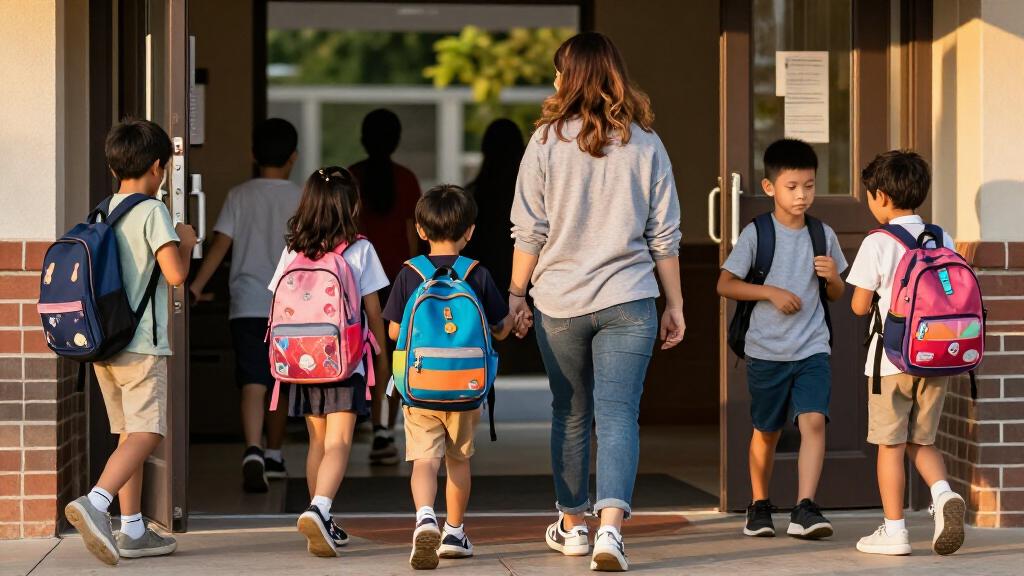
In an opinion article published by The 74, a Dallas mother of six describes how communication with her children’s charter school helped her improve their morning routine and attendance. Her account argues that schools should maintain attendance expectations while asking families what makes getting to school difficult.
The 74 published an opinion essay by a Dallas mother of six who says communication with her children’s school helped her address tardiness and get them to school more consistently. Her account makes the case that schools can uphold attendance expectations while working with families to understand practical barriers such as childcare, work schedules and long commutes.
The author says five of her children attend IDEA A.W. Brown, a charter school about an hour from the family’s home, while her youngest child goes to daycare. She also works in education and describes managing school drop-offs as a single mother following the death of her children’s father. In her account, some mornings were difficult as she tried to get six boys ready and make the long drive.
She says she spoke openly with teachers, administrators and case managers about the family’s mornings and knew whom to contact when they were running late. She also describes relatives helping: her father called in the morning after overnight work, and her sister reminded her to wake the boys and get them moving. These are details from her personal account, not independently reported findings about the school’s attendance practices.
A conversation about her third-grade son Legend’s tardiness changed how she approached mornings, she writes. His teacher recognized his potential and explained that arriving on time could give him access to school breakfast, the start-of-day routine and early instruction. The author says her family then changed its routines, despite the difficulty of getting six children out the door on time.
Attendance Expectations With Family Support
The essay offers a parent’s perspective on a common school challenge: attendance expectations do not, by themselves, resolve the reasons students arrive late or miss school. The author argues that a school’s response can include both clear expectations and direct communication about what a family needs to meet them.
Her account also connects punctuality with students’ access to the school day. She says the conversation about Legend made her think about the breakfast and instruction he could miss by arriving late. That is her explanation of what changed her approach; the essay does not provide attendance records or data measuring the effect of the family’s changes.
For educators and families, the distinction she emphasizes is between lowering expectations and helping families meet them. Her story suggests that asking about a barrier may reveal circumstances that are not apparent from an attendance record, though it does not establish that one approach will work for every household.
As an affiliate, we earn on qualifying purchases.
A Family’s Long School Commute
The essay is framed as personal commentary, not a study or a report of a new district policy. The author recounts her own family’s experience with school mornings and describes the support she says she received from staff at IDEA A.W. Brown. The source material does not provide school or district data on attendance, nor does it state whether the school has a formal program for working with families facing barriers.
Her account centers on changes within the family as well as communication with the school. Relatives helped with morning reminders; the teacher’s explanation gave the author a clearer picture of what her son could miss; and the family adjusted its routine. She presents those experiences as reasons her children’s school remained worth the long drive, not as evidence that all families have the same support or circumstances.
“High expectations and empathy are not opposites. My family needed both.”
— The essay’s author, a Dallas mother of six
As an affiliate, we earn on qualifying purchases.
What the Essay Does Not Measure
The source is one parent’s account and does not establish how widely her experience applies. It includes no attendance statistics, comparison group or measured outcome showing whether family-school communication changed attendance across the school or district. The publication date is also not given in the supplied material.
The essay does not detail the school’s specific attendance policies, how staff support is organized, or whether the author’s children’s attendance improved by a measurable amount. It also does not report responses from school officials, other parents or researchers. Those limits matter when distinguishing the author’s argument and experience from broader evidence about attendance policy.
kids breakfast and lunch containers
As an affiliate, we earn on qualifying purchases.
As an affiliate, we earn on qualifying purchases.
Attendance Efforts Beyond Reminders
The source describes no announced policy change or scheduled next step. The author’s closing appeal is for schools seeking better attendance to learn what makes it difficult for families and work with them, while continuing to expect students to arrive ready to learn.
Readers seeking a broader picture would need additional reporting on school attendance data, the barriers families report and which support approaches schools use. The essay itself does not say whether IDEA A.W. Brown or its district plans to change its practices.
As an affiliate, we earn on qualifying purchases.
Key Questions
What is the opinion essay about?
It describes a Dallas mother of six working to manage school mornings and argues that schools should pair attendance expectations with communication and support for families.
She says conversations with school staff helped her understand what her son could miss by arriving late, including breakfast and early instruction. She also describes help from her father and sister and says the family changed its routines.
Does the essay show that the school’s approach improved attendance?
Not with measured data. The author describes her own experience but provides no attendance figures or comparison showing the effect across the school or district.
What barriers to attendance does the author mention?
She points to circumstances such as childcare, work schedules, long commutes and family loss as possible challenges. The essay does not claim that every family faces the same barriers.
Source: rss
Halloween Picks
halloween
As an affiliate, we earn on qualifying purchases.