
TL;DR

Turn the school run and nap time into listening time
- Thousands of audiobooks, podcasts and originals
- Listen on your phone, tablet or Echo — also offline
- Cancel anytime
The 74 published an opinion piece about parents asking middle-school teachers how students may use AI, and teachers giving cautious answers shaped by school rules. The writer argues that assignments and athletic training teach persistence and other skills as well as subject knowledge, while the piece does not identify a specific school policy or report new data.
The 74 has published an opinion piece about parents asking middle-school teachers how students may use artificial intelligence, arguing that the debate should account for the persistence and independent thinking students build by doing difficult work themselves. The article describes a back-to-school night where teachers offered cautious explanations of school rules, but it does not name a district or establish a new policy.
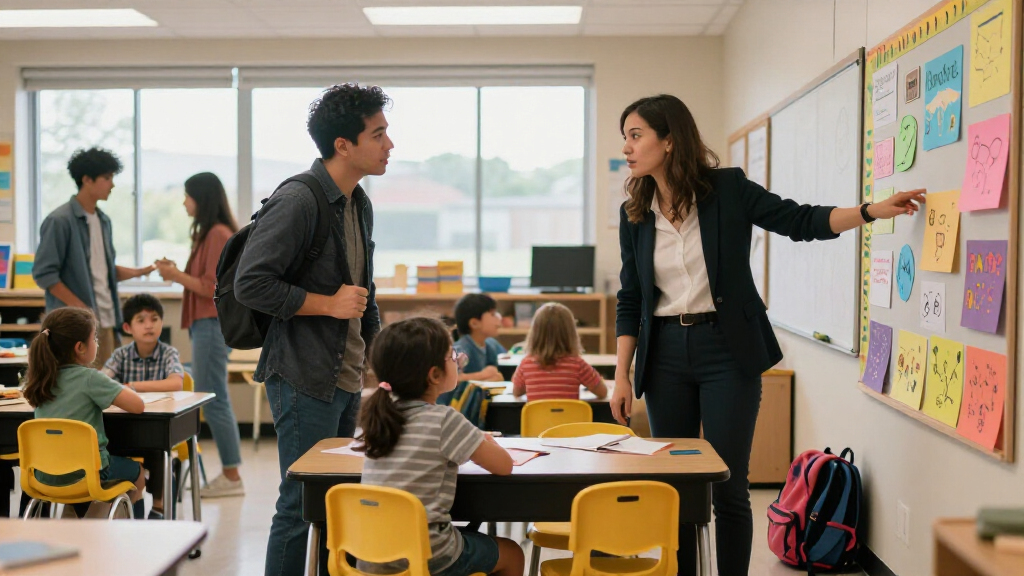
The piece presents a scene from middle-school back-to-school night: parents move between classrooms and, in the writer’s account, repeatedly ask teachers, “What’s your AI policy?” Teachers are described as anticipating the question and explaining that student use is permitted only in narrow, specified ways. The article offers no policy document or named school to verify those rules beyond the anecdote.
Some parents in the account ask whether students can use AI under teacher supervision or for practice, brainstorming and research. The writer portrays the exchange as tense and suggests adults are trying to determine whether AI is a useful tool, a distraction or a threat to learning. Those descriptions are the author’s observations and interpretation, not survey findings about parents or teachers generally.
The author contrasts the classroom discussion with coaches at the same event. No one, the piece says, asks whether athletes can use AI to run a race or complete hill sprints. From that contrast, the writer argues that school tasks, like training, are not only about producing a final answer or result: they also give young people practice in focus, persistence, memory and confidence.
Why Practice Matters Beyond Grades
The article’s central point is that evaluating AI in school only by whether it can supply information or help complete an assignment may overlook what students gain from doing the work. A student may not need every fact from a particular science or history lesson in adulthood, the writer argues, but the process of studying can build habits and skills that transfer to other challenges.
That distinction matters to families and educators deciding where AI assistance fits. A tool that helps a student get unstuck may support learning in some situations; if it routinely replaces the thinking and effort an assignment is meant to develop, it may weaken that practice. The piece raises this trade-off but does not offer tested guidance for deciding when assistance helps or hinders, nor does it measure AI’s effects on student outcomes.
For parents, the commentary reframes the question from simply “Can students use AI?” to what a given task is designed to teach. For teachers, it underscores why classroom rules may need to distinguish among activities such as brainstorming, research and completing work. Those are implications of the argument, not policies announced by The 74 or a school system.
AI learning tools for middle school students
As an affiliate, we earn on qualifying purchases.
As an affiliate, we earn on qualifying purchases.
A School-Night AI Debate
The article is framed as an opinion piece, not a report of a school board decision, research study or new statewide rule. Its evidence is a first-person account of one middle-school event and the questions the writer says parents raised there. The supplied material does not give the school’s name, location or the date of the event.
The writer uses cross-country and other school activities as comparisons. Students run races, the argument goes, not solely to win competitions but to learn goal-setting, practice and care for their bodies. Likewise, academic assignments can serve purposes beyond mastery of a single topic, including developing the capacity to stick with complex or tedious work.
The excerpt describes AI as capable of helping students find a problem or talk through a challenge, while questioning whether that help should replace effort. It ends before laying out a complete answer for the school year. The article therefore supplies a way to think about the debate, rather than a detailed classroom framework or verified account of how a particular school permits AI.
“What’s your AI policy?”
— Parents, as quoted in The 74 opinion piece
student practice workbooks for focus and persistence
As an affiliate, we earn on qualifying purchases.
As an affiliate, we earn on qualifying purchases.
School Rules Remain Unspecified
The source does not identify the school, district, teachers or parents in the scene, and it provides no written policy to confirm exactly what student AI use is allowed. It is also unclear how representative the event is of other families or schools. The article reports no data on how often students use AI, how teachers enforce restrictions or how such tools affect learning.
The supplied excerpt cuts off before the author finishes the proposed answer for the school year. It does not establish which AI uses the writer ultimately supports, whether schools should adopt a particular rule or what evidence would show that AI is helping rather than displacing practice. Those points should not be inferred from the excerpt.
educational research and critical thinking games
As an affiliate, we earn on qualifying purchases.
As an affiliate, we earn on qualifying purchases.
Watch for Local Policy Guidance
The next practical developments will depend on individual schools and districts: families can look for written rules that explain whether AI may be used for brainstorming, research, practice or submitted work, and teachers may clarify expectations for particular assignments. The source does not announce a meeting, policy vote or publication date for further guidance.
As the school year proceeds, the questions raised in the commentary remain open: which tasks are meant to build independent skills, when AI assistance supports that goal, and how educators will communicate the difference to students and parents. The piece argues for keeping those learning purposes in view, but reports no decision or outcome.
As an affiliate, we earn on qualifying purchases.
Key Questions
What is the news in this piece?
The 74 published an opinion article about parent questions on student AI use at a middle-school back-to-school night and the value of effort in learning.
Did a school announce a new AI policy?
No new policy is reported. The writer describes teachers referring to narrow limits on AI use but does not name a school or provide a written rule.
The author says assignments and training can build skills such as persistence, attention, memory and confidence, beyond the immediate subject matter or result.
Does the article say students should never use AI?
No. The excerpt acknowledges that AI can help students work through problems, but questions when that assistance supports learning and when it substitutes for practice. It does not provide a complete policy recommendation.
What remains unknown?
The school’s identity and exact rules, how representative the anecdote is, and what the author’s full recommendation would be are not established in the supplied material.
Source: rss
Halloween Picks
halloween
As an affiliate, we earn on qualifying purchases.