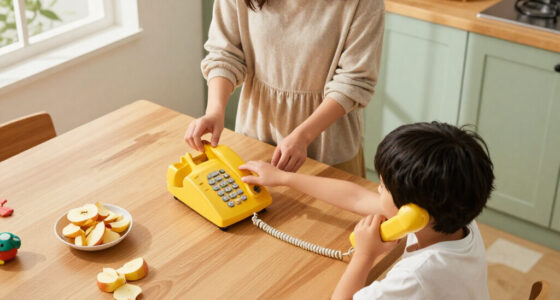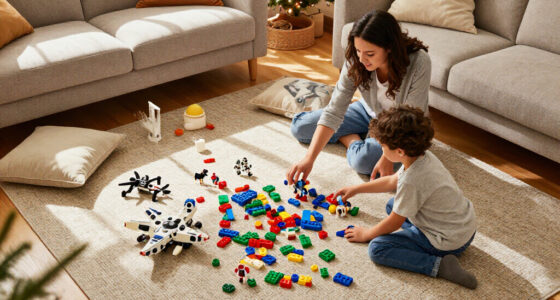

When choosing educational toys for a toddler, the key decision is often whether play should be led mainly by the child or guided by a toy. Montessori-style open-ended toys—such as stacking pieces, shape sorters, and simple pretend-play materials—offer a few clear ways to explore. Electronic interactive toys use lights, sounds, buttons, or spoken prompts to direct attention and reward responses.

Give the gift of listening to the whole family
- Choose a 1-, 3-, 6- or 12-month membership
- They pick the audiobooks they love
- Easy to send by email

LeapFrog Learning Friends 100 Words Book
- ✔ Age range: 18 months–4 years
- ✔ Word count: More than 100
- ✔ Languages: English and Spanish

Airbition Talking Flash Cards for Toddlers, 224 Words, English, Blue
- ✔ Age range: 1+ years
- ✔ Word count: 224
- ✔ Language: English

LeapFrog 2-in-1 LeapTop Touch Educational Toy
- ✔ Age range: 2–5 years
- ✔ Learning modes: ABCs, numbers, games, music, and messages
- ✔ Keyboard: Letters A–Z and numbers 1–10
Both can support learning when they suit a child’s age and invite hands-on participation. The difference is what they ask of the toddler: open-ended toys leave room for self-directed practice and imagination, while electronic toys can make letters, numbers, and cause and effect more explicit. Choose Montessori-style toys if you value flexible, repeatable play with fewer features. Choose electronic toys if your toddler is drawn to sound and feedback and you want more guided activities.
At a Glance
| Criteria | Montessori-style open-ended toys | Electronic interactive learning toys | Winner |
|---|---|---|---|
| Learning through play | Builds skills through handling, sorting, stacking, and repetition | Can introduce specific concepts through prompts, songs, and simple quizzes | Depends |
| Child independence | Lets toddlers choose how to use materials and set their own pace | Guides play with buttons, instructions, and programmed responses | A |
| Engagement and feedback | Relies on the activity itself rather than lights or sound | Offers immediate sound or light feedback, which some toddlers enjoy | B |
| Imaginative play | Often supports flexible pretend play and changing uses | Play may follow the toy’s programmed activities more closely | A |
| Safety and durability | Usually has fewer electronic parts; check age labels and small-piece risks | Requires attention to batteries, volume, construction, and age guidance | A |
| Price and long-term value | Often lower cost and usable in many ways as skills grow | Can cost more; value depends on sustained interest and useful features | A |
LeapFrog Learning Friends 100 Words Book
The Learning Friends book makes vocabulary practice feel like a natural extension of looking through a picture book. A toddler can touch an image and hear the word, a fact, or a related sound effect, helping connect what they see with what they hear. Its categories include animals, food, colors, and activities, so adults can also use a page or theme as a starting point for conversation away from the toy.Its biggest advantage over the Airbition cards is English and Spanish play. That makes it the most flexible pick in this group for households that want toddlers to hear words in both languages. Airbition states a larger vocabulary count, though, and may suit families who prefer choosing and repeating individual cards. Compared with the LeapTop, this book stays much more focused on naming familiar things rather than moving into numbers, games, and keyboard-like play.The tradeoff is that this is still an electronic toy: it needs two AA batteries, and the supplied batteries are for demonstration, so regular play calls for replacements. Its stated age range extends to four, but children who have moved beyond picture-led word learning may want the LeapTop’s more varied activities. We rank it first because it combines approachable interaction and broad everyday vocabulary with a bilingual feature the other two options do not offer.
Pros:
- Touch-activated words, facts, and sound effects connect pictures with spoken language.
- English and Spanish options support bilingual listening and practice.
- More than 100 words span familiar toddler-friendly themes.
- Songs and a light-up star add another way to engage with the book.
Cons:
- Requires two AA batteries, and fresh batteries are recommended for regular use.
- Its vocabulary focus may feel limited to children ready for more varied learning activities.
Best for: Families seeking an interactive first vocabulary toy with English-Spanish word exposure and familiar picture themes.
Not ideal for: Families who want the largest stated word set, rechargeable power, or more advanced letter and number activities.
Bottom line: We rank the Learning Friends book first for its approachable picture-based vocabulary, varied themes, and bilingual play.
“We rank the Learning Friends book first for its approachable picture-based vocabulary, varied themes, and bilingual play.”
Airbition Talking Flash Cards for Toddlers, 224 Words, English, Blue
Airbition takes a more modular approach to early words: children use illustrated cards with a reader that speaks the word, plays animal sounds, and can repeat the prompt. With 224 cards across topics such as animals, vehicles, food, colors, and shapes, it has the widest stated vocabulary set in this roundup. That breadth may appeal to families who want to rotate themes or revisit individual words rather than follow a fixed book layout.Compared with LeapFrog’s Learning Friends book, the card format invites a different kind of interaction. An adult can select a card, name the picture, and use the repeat button for another listening turn; the book, by contrast, bundles words into a single picture-led format and adds Spanish. Airbition is English-only, so it is less suitable for bilingual practice. Its five volume levels help families adjust sound for their setting, and USB recharging avoids the AA battery changes required by both LeapFrog toys.The main compromise is managing a two-part set of cards and reader, which may be less convenient than opening a single book for a quick activity. The reader provides up to four hours of use per charge, so it needs recharging between longer stretches of play. Plastic construction is another practical consideration. We place it second because its word coverage and repeat function are strong, but the book offers a more integrated toddler experience and bilingual flexibility.
Pros:
- 224 illustrated cards cover a wide range of familiar topics.
- Reader speaks words, plays animal sounds, and includes a repeat button.
- Five volume levels make it easier to adapt sound output.
- USB rechargeable design provides up to four hours per charge.
Cons:
- The reader needs recharging after up to four hours of use.
- Plastic construction and separate cards may be less appealing to families seeking a book-like format.
Best for: Families who want a broad set of English vocabulary cards, repeatable audio prompts, and adjustable volume.
Not ideal for: Households seeking Spanish-language practice, a single integrated book format, or a toy that does not need charging.
Bottom line: We recommend Airbition for vocabulary breadth and repeatable card practice, with the caveat that it offers English only and requires charging.
“We recommend Airbition for vocabulary breadth and repeatable card practice, with the caveat that it offers English only and requires charging.”
LeapFrog 2-in-1 LeapTop Touch Educational Toy
The LeapTop Touch is the most activity-focused option here. It switches between a laptop-style keyboard and a touch tablet, with letter keys from A to Z, number buttons from 1 to 10, and five modes covering ABCs, numbers, games, music, and messages. That range makes it a better fit for a toddler who is ready to explore early school-style concepts than for a child whose main need is hearing and naming everyday objects.Compared with the two vocabulary products, LeapTop trades word coverage for variety. It does not state a word count or offer English-Spanish play like the Learning Friends book, and it does not come with Airbition’s illustrated card collection. Instead, it presents multiple activity types in one toy and lets parents customize it to help a child practice spelling their name. The take-along handle also helps when the toy needs to move between rooms or travel with the family.The stated age range is 2–5 years, so this pick starts later than the book’s 18-month range or Airbition’s 1+ designation. That makes it the least suitable of the three for younger toddlers. It also requires three AA batteries for regular use. We rank it third for this toddler-focused roundup because its age fit and learning emphasis are narrower, even though its flexible modes can make it a useful next step for children beginning to explore letters and numbers.
Pros:
- Converts between laptop-style keyboard and touch tablet modes.
- Five modes cover letters, numbers, games, music, and messages.
- Can be customized to help a child practice spelling their name.
- Take-along handle supports moving the toy between locations.
Cons:
- Requires three AA batteries for regular use.
- Its 2–5 years age range starts later than those of the other two picks.
Best for: Families with a child aged two or older who wants varied letter, number, music, and game activities in a portable toy.
Not ideal for: Families shopping for a first vocabulary toy for a younger toddler or seeking bilingual words and a large illustrated word set.
Bottom line: We see the LeapTop Touch as the strongest step-up for early letters and numbers, but a less direct choice for toddler vocabulary building.
“We see the LeapTop Touch as the strongest step-up for early letters and numbers, but a less direct choice for toddler vocabulary building.”
As an Amazon Associate we earn from qualifying purchases.
Key Differences
The clearest difference is who sets the pace and direction. With open-ended toys, toddlers learn by trying actions, noticing results, and repeating them: a block falls, a ring fits, or a pretend cup becomes part of a game. This leaves room for exploration and makes the same object useful in several ways. Electronic toys can make a concept more direct by naming colors, playing a song, or responding when a child presses a button. That feedback can hold attention, but the toy’s programmed activity may define more of the play.
Neither format is automatically more educational. A well-chosen toy in either category can prompt practice and shared play; a noisy or overly difficult toy can frustrate or distract. For many toddlers, a small mix works well: simple materials for repeated, self-directed play and one interactive toy when its specific prompts match the child’s interests. If choosing only one, consider whether your child tends to explore objects independently or responds best to clear cues and immediate feedback.
Detailed Comparison
Learning through play (moderate difference)
Montessori-style toys support learning through physical trial and error. A toddler can turn a puzzle piece, test a stack, or sort objects by shape, practicing coordination and problem solving without needing the toy to name the skill. Electronic toys can offer clearer instruction, such as identifying a number or matching a sound to a button. That can help introduce a specific idea, though pressing the correct button may offer less practice with handling and testing objects. The winner depends on the learning goal: A for hands-on repetition and B for direct prompts. The gap is moderate because either toy can support learning when a caregiver joins in and the activity fits the child.
Child independence (Montessori-style open-ended toys wins — moderate)
Open-ended toys give toddlers more control over what to do next. A child can stack, sort, carry, or invent a new use, and can repeat a task without waiting for a programmed response. Electronic toys often ask the child to follow a sequence or respond to a cue. That structure may help a toddler get started, but it can also make the child’s role more reactive. A wins by a moderate margin for families who want independent exploration or fewer adult instructions during play. B can still be a useful starting point for a child who enjoys clear choices, but its activities are less flexible.
Engagement and feedback (Electronic interactive learning toys wins — moderate)
Electronic toys have the advantage when immediate response is the main draw. A light, sound, or spoken prompt can show a toddler that an action had an effect, and some children will return to a toy because they enjoy that response. The benefit depends on the child: repetitive sounds can lose their appeal or interrupt focused play. Open-ended toys offer quieter feedback through movement and results, such as a tower standing or a shape fitting. B wins by a moderate margin for toddlers who seek sound and visual cues; A may hold attention longer for children who enjoy experimenting without prompts.
Imaginative play (Montessori-style open-ended toys wins — moderate)
A plain set of blocks or pretend food can become different things as a toddler’s play changes. That flexibility gives open-ended toys an advantage for pretend scenarios, though toddlers may need time and adult modeling before they invent elaborate games. Electronic toys can include pretend-play features, but their responses usually follow a fixed set of actions. A wins by a moderate margin for flexible make-believe and reuse. This difference matters most to caregivers who want one toy to support varied play over time; it matters less when the immediate goal is practicing a defined activity such as matching or naming.
Safety and durability (Montessori-style open-ended toys wins — minor)
Simple toys tend to have fewer parts that can stop working, such as speakers, switches, or battery compartments. That can make them easier to maintain, but it does not make every open-ended toy safe: small pieces, loose parts, and unsuitable materials still call for age-label checks and supervision. Electronic toys add practical checks around battery access, sound level, and construction. A wins by a minor margin on simplicity and likely maintenance, not as a blanket safety guarantee. For either type, follow the manufacturer’s age guidance, inspect for damage, and choose pieces large enough for the child’s stage.
Price and long-term value (Montessori-style open-ended toys wins — moderate)
Montessori-style toys often provide stronger value when a family wants durable materials that can serve different purposes. A basic sorter or stacking set may stay useful as a toddler repeats and varies the activity. Electronic toys can justify a higher price when their specific prompts or songs match a strong interest and keep the child engaged. Extra modes alone do not make a toy better value, especially if the child quickly loses interest or uses only one feature. A wins by a moderate margin for most budgets; pay more for B only when the feedback adds something your child actually uses.
Montessori-style open-ended toys: Pros and Cons
Pros:
- Encourages hands-on practice and self-directed repetition
- Can support different kinds of play as a child develops
- Often has fewer electronic parts and a lower purchase price
Cons:
- May not hold the attention of toddlers who prefer sounds and prompts
- Some activities need an adult to demonstrate how to begin
- Age-inappropriate small pieces can create safety concerns
Electronic interactive learning toys: Pros and Cons
Pros:
- Offers clear prompts and immediate responses
- Can make songs, letters, numbers, or matching activities engaging
- May help a toddler get started with a structured activity
Cons:
- Programmed play can limit ways to use the toy
- Sounds and lights may distract some children or lose appeal
- Batteries and electronic parts add maintenance and can raise the price
Who Should Choose What
Choose Montessori-style open-ended toys if:
- Your toddler likes stacking, sorting, fitting, carrying, or repeating hands-on actions.
- You want toys that can support several kinds of play as your child grows.
- You prefer quieter activities and want to keep the purchase price modest.
Choose Electronic interactive learning toys if:
- Your toddler responds strongly to songs, spoken prompts, lights, or immediate feedback.
- You want a toy that introduces a defined concept through guided activities.
- You have checked that its volume, features, and age guidance suit your child.
Skip both if: Neither format fits if the toy is beyond your toddler’s developmental stage, includes unsuitable small parts, or holds little interest. Everyday objects approved for the child’s age and supervised play can be better choices.
Value for Money
For most families, Montessori-style toys are the stronger value because a simple item can support repeated practice and several kinds of play without batteries or multiple programmed modes. A higher price for an electronic toy makes sense when its prompts or feedback solve a real need: for example, your toddler loves musical interaction or benefits from a clear cue to begin a matching activity. Pay for features your child will use, not for a long feature list. If a lower-cost open-ended toy already invites the kind of play your child enjoys, the electronic option may add convenience or novelty without adding enough lasting value.
Final Verdict
Choose Montessori-style open-ended toys as the better starting point for most toddlers. They offer flexible, hands-on practice, encourage children to set their own pace, and tend to deliver more play value for the money. Choose an electronic interactive toy when your toddler is especially engaged by sound and feedback, or when its guided activity supports a clear learning goal. The biggest deciding factor is whether your child gets more from experimenting with objects or responding to prompts. If you are unsure, start with one simple open-ended toy and add an electronic one only if its specific features match a demonstrated interest.
Frequently Asked Questions
Are Montessori-style toys more educational than electronic toys?
Not by default. Montessori-style toys often encourage hands-on exploration and repetition, while electronic toys can introduce concepts through prompts and feedback. The better choice depends on the child’s age, interests, and the skill the activity supports.
Are electronic educational toys worth the higher price?
They can be worth it when a toddler regularly uses the prompts, songs, or responses and those features support an activity you want to encourage. If your child mainly enjoys pressing buttons once or twice, a less expensive open-ended toy may offer more lasting play.
Should toddlers use both kinds of educational toys?
Yes, if both suit the child and fit your budget. A simple sorter or blocks can provide flexible practice, while an interactive toy can add guided songs or questions. A few well-chosen toys are usually more useful than buying many toys with overlapping activities.
What should I check before buying either type?
Check the age guidance, piece size, materials, and construction. For electronic toys, also check battery security and whether the sound level can be controlled. Choose an activity your toddler can attempt with enjoyment, with adult help when needed.