
TL;DR

Turn the school run and nap time into listening time
- Thousands of audiobooks, podcasts and originals
- Listen on your phone, tablet or Echo — also offline
- Cancel anytime
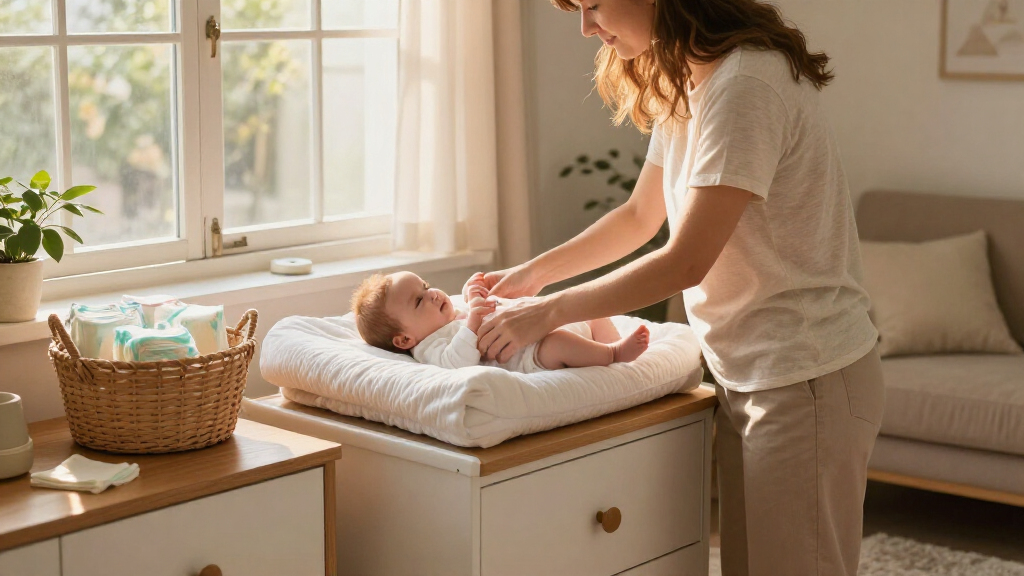
A changing station in a small apartment can be a dresser-top pad, a clear floor-level mat, or a compact station tucked into a corner. Measure the space and walking route, secure furniture as directed, and keep supplies within your reach but away from the baby. Never leave a baby unattended on an elevated surface; follow product instructions and ask your pediatrician about infant care questions.
At 3 a.m., a good changing station is the spot where you can find a clean diaper without switching on every light or moving a laundry basket with your foot. In a small apartment, that spot may be a dresser top, an open corner, or a floor mat you can put away after the change.
You don’t need a dedicated nursery or a bulky table. You do need a stable surface, a clear way to reach it, and supplies arranged so you can keep a hand on your baby. This guide walks you through measuring your space, choosing a layout, storing the essentials, and keeping the setup practical as your baby grows.
Every home has its own tight spots. A door that swings into the only open corner, a radiator under the window, or a roommate’s path to the kitchen can change what works. Use the examples as starting points, then follow your furniture and changing pad instructions, check current CPSC recalls for child products, and ask your pediatrician about infant care questions.
Measure the standing space, drawer swing, door swing, and walking route before choosing a station.
A stable dresser with a properly fitted pad or a clear floor-level mat can work without a dedicated changing table.
Keep diapers, wipes, and spare clothes within your reach, and keep heavy or loose items from falling onto the baby.
Stay with your baby on an elevated surface; straps do not make it safe to step away.
Use wipeable or washable materials, follow product directions, and check CPSC recall notices for child products.
Changing Station in a Small Apartment: Compact Layouts That Work
A calmer 3 a.m. change starts with a stable surface, a clear route through the room, and essentials within your reach. Find a practical setup without adding a bulky table or giving up a whole corner.
Small space, thoughtful setup
You do not need a dedicated nursery. A dresser-top pad, a compact corner, a portable caddy paired with a safe surface, or a floor-level mat can all fit daily life when the surroundings are planned well.
There is no universal minimum footprint. Your usable space depends on the furniture, standing room, supply access, drawer clearance, and the route through the room.
Check standing space, drawer and door swings, and the normal walking route before choosing a spot.
A stable dresser with a properly fitted pad or a clear floor mat can work without a changing table.
Keep diapers, wipes, and spare clothes within your reach and away from the baby.
Stay with your baby on an elevated surface. A strap does not make it safe to step away.
Choose washable or wipeable materials, follow product directions, and check current CPSC recalls.
Measure the spot—and the route
Measure the proposed width and depth, then stand in the space and test whether you can reach supplies, open drawers, and keep the usual path clear. A tape measure can reveal that a drawer will hit the bedroom door before it becomes a daily frustration.
Use painter’s tape to mark the furniture footprint and where you will stand. Open nearby doors and drawers. Look up too: shelves can use vertical space, but heavy objects, dangling cords, or reachable items can create hazards.
Consider the real household rhythm. Can someone get dressed while you change the baby? Can a sleepy adult pass without stepping around laundry, a sliding rug, or pet bowls? A narrow wall may work better than an open corner that blocks the route.
Set up first. Keep attention on baby.
Gather what you need before placing your baby on the surface. A short, repeatable sequence can keep the change organized and your attention where it belongs.
Prepare
Collect the diaper, wipes, clean cover, and spare clothes.
Check
Make sure the surface is stable, clear, and ready to use.
Stay close
Keep a hand on your baby on an elevated surface; never step away.
Reset
Wipe the area and return supplies to their parking spot.
Five compact setups, different strengths
Pick the option that fits your furniture, routine, and ability to supervise closely. A caddy organizes supplies; it does not replace a safe changing surface.
Dresser-top station
Best when a dresser is already thereFit the pad as instructed, check that the dresser is stable and anchored as directed, and make sure drawers still clear the room.
Corner station
Best for an unused nookUse a compact table or dresser where you can stand comfortably and open nearby drawers without blocking a doorway.
Closet-adjacent setup
Best for clothing accessKeep supplies and clothes close, with good lighting and enough room to use the changing area without crowding it.
Portable caddy
Best across more than one roomCarry diapers and wipes between rooms, then park the caddy beside a safe, flat changing surface.
Floor-level mat
Best for a setup that stores awayUse a clean, clear patch away from cords, toys, pets, drafts, and radiators. Fold and store the mat after use.
| Layout | Works well when | Check before use |
|---|---|---|
| Dresser-top pad | You already have a stable dresser near clothing. | Pad fit, furniture stability, wall anchoring, and drawer clearance. |
| Corner station | An unused corner has room to stand and open drawers. | Door swings, lighting, and the walking route. |
| Portable caddy | You change the baby in more than one room. | Pair it with a safe, flat changing surface. |
| Floor-level mat | You want a setup that stores away. | Clear, clean floor space away from hazards. |
A tiny pit stop, not a supply warehouse
Store everyday supplies within an adult’s reach, arranged so they cannot fall onto or be grabbed by the baby. A top drawer, stable basket, or safely placed organizer can keep the next change close at hand.
Skip heavy containers or glass jars on narrow shelves above the changing area. Keep creams or medicines stored safely and follow their labels and your pediatrician’s advice. Put a spare onesie in the top drawer instead of reaching across the baby to a distant closet.
A handled caddy is useful in a shared home, as long as it has a parking place under the dresser, in a closet, or on an accessible shelf. Keep the floor and work area calm so spills are easier to clean and fewer loose items can be knocked over.
Within adult reach
Use a drawer, stable basket, or accessible organizer for the next change’s essentials.
Out of baby’s reach
Arrange loose items and products so they cannot be grabbed or fall onto the baby.
Easy to clean
Choose wipeable surfaces and washable covers; keep a small bin or laundry bag nearby.
Stable surface. Close supervision. Clear guidance.
Follow the instructions and weight limits for the changing pad and furniture. Use any supplied strap as directed, but never rely on it as a reason to step away. Never leave a baby unattended on an elevated changing surface.
Secure furniture as its manufacturer directs, check current CPSC recall notices for child products, and ask your pediatrician about infant care questions or your baby’s individual needs.
Measure the spot before you bring in furniture
A changing station in a small apartment works when the whole routine fits—not just the changing pad. Measure the width and depth of the proposed spot, then check whether you can stand there, reach supplies, open drawers, and keep the normal walking route clear. A tape measure can save you from discovering that a dresser drawer hits the bedroom door every morning.
Try the layout with painter’s tape on the floor. Mark the furniture footprint and the space where you’ll stand, then open nearby doors and drawers. For example, if a 30-inch-wide dresser fits beside the closet but leaves you wedged between the bed and the handles, a narrow wall near the bedroom entrance may feel easier even if it is farther from the crib.
Look up as well as down. Shelves can use vertical space, but heavy objects above a changing area can fall, and dangling cords or reachable items can create hazards. Keep the route to the station clear of rugs that slide, laundry piles, and pet bowls; at night, a sleepy parent should not have to sidestep a maze.
There is no universal minimum footprint. Your practical minimum depends on the furniture, your reach, drawer clearance, and the paths other people need to use. In a shared bedroom, test the setup during a normal morning: can someone get dressed while you change the baby without bumping the station?
Popular right now

KitchenAid Artisan 5-Quart Tilt-Head Stand Mixer, Almond Cream

Ninja Foodi Air Fryer, 8 Qt DualZone, 6-in-1, Grey, DZ201

LG 85-Inch QNED84B Mini LED 4K Smart TV (2026)
As an affiliate, we earn on qualifying purchases.
Choose a surface that stays steady during a change
A safe changing surface is stable, suited to the pad or mat you use, and large enough for the intended setup. You can use a changing table, a dresser with a pad fitted as instructed, or a floor-level mat on a clear, clean area. The right option depends on your room and your ability to supervise closely.
A dresser-top station can make daily care easier when the dresser is sturdy and secured to the wall as directed by its manufacturer. Put the pad where it fits securely, not half over an edge to make room for a lamp. If the dresser rocks when you pull a drawer, fix the stability issue before using its top for changes.
A floor mat avoids the elevated-surface fall risk, but the floor area still needs attention. Move toys, cords, and pet items first, and keep the mat away from a drafty doorway or a radiator. One parent might keep a washable mat folded in a basket beside the bed, then lay it on a clear rug-free patch when a change is needed.
Follow the product instructions and weight limits for the changing pad and furniture. A strap, if supplied, should be used as directed, but it does not make it safe to step away. Keep one hand on your baby on an elevated surface, and never leave the baby unattended. For questions about care or your baby’s needs, follow your pediatrician’s guidance.
Compare four compact layouts before you settle on one
The best layout is the one that gives you a safe surface and a comfortable reach without turning a doorway into an obstacle course. A dresser top often suits a bedroom, a corner station can anchor an unused nook, a portable caddy can serve two rooms, and a floor mat can disappear into storage. Each choice solves a different space problem.
| Layout | Works well when | Check before use |
|---|---|---|
| Dresser-top pad | You already have a stable dresser near clothing | Fit, stability, wall anchoring, and drawer clearance |
| Corner station | An unused corner has room to stand and open drawers | Door swings, lighting, and the walking route |
| Portable caddy | You change the baby in more than one room | Pair it with a safe, flat changing surface |
| Floor-level mat | You want a setup that stores away | Clear, clean floor space away from hazards |
Imagine a studio where the living room doubles as the play area. A caddy can carry diapers and wipes from bedroom to living room, but it doesn’t replace the changing surface: set it down beside a properly prepared mat before you begin. In a small bedroom, a corner dresser may be more convenient if its drawers open fully without blocking the bed.
Compact layouts that look tidy in a photo can feel awkward in daily use. Test where your elbows go, where the dirty diaper goes, and whether another adult can pass behind you. A useful station behaves like a small kitchen work triangle: surface, supplies, and cleanup are close enough to reach without taking your attention off the baby.
Put the supplies in reach without putting them over the baby
Store changing supplies within an adult’s reach, but arrange them so they cannot fall onto or be grabbed by the baby. A top drawer, stable basket, or wall organizer placed safely can keep diapers and wipes close. Avoid balancing heavy containers or glass jars on a narrow shelf above the changing surface.
Keep the station simple: diapers, wipes, a clean pad cover, spare clothes, and a small disposal or laundry option cover many everyday changes. If you use creams or medicines, store them safely and follow their labels and your pediatrician’s advice. For instance, keep a spare onesie in the top drawer rather than reaching across the baby to a closet on the other side of the room.
A handled caddy is handy in a shared home because it can move with you. It can also become clutter on the floor if everyone sets it down in the walking path. Give it a parking spot—under the dresser, in a closet, or on a shelf you can reach—and return it after use.
Think of the station as a tiny pit stop, not a supply warehouse. You don’t need a month of diapers on the surface; you need the next change’s essentials close and the backup stock stored elsewhere. That keeps the work area calm, makes spills easier to wipe, and leaves fewer loose items to knock over when the baby starts rolling or reaching.
Use a short routine that keeps your attention on the baby
A reliable changing routine starts before you place the baby on the surface: gather supplies, check the area, and keep your attention on the baby throughout. On an elevated surface, stay within arm’s reach and keep one hand on the baby. A routine helps at night because you don’t have to remember where the wipes went while holding a wiggly baby.
- Prepare the spot. Clear the surface, lay out a clean pad cover if needed, and make sure the room is bright enough to see what you’re doing.
- Bring supplies close. Set out the diaper, wipes, and clean clothes before the change begins.
- Stay with your baby. Keep one hand on the baby when using an elevated surface; never step away or leave the baby unattended.
- Clean and reset. Dispose of the diaper, put used fabric in the laundry bag, and wipe the surface according to product directions.
For example, if the wipes run out halfway through, don’t leave the baby on the dresser while you walk to the closet. Take the baby with you or use another safe arrangement; your routine should make that next move obvious. A floor setup has its own hazards, so clear the area before placing the baby down and keep pets away.
Use supplied straps only as their instructions describe. They can be part of the product’s intended use, but they do not replace close supervision. If you have questions about a particular product or care practice, check current manufacturer guidance and ask your pediatrician rather than relying on a setup trick from a photo online.
Keep cleanup quick and the station useful as your baby grows
A changing station stays practical when you can clean it quickly and adapt it as your baby grows. Choose a wipeable pad or a washable cover, keep a small bin or laundry bag nearby, and leave enough open space to replace a cover without dismantling the whole corner. A station that takes ten minutes to reset tends to collect piles.
After a messy change, a spare cover within reach means you can swap it out while the baby is safely cared for. Keep a second washable cover folded in a drawer, and follow the pad and cover labels for cleaning. If the station shares space with a bed, a lidded laundry bag can keep used clothes contained without taking up the floor.
Babies grow quickly, and the station may stop suiting the routine before the furniture wears out. A dresser can return to ordinary clothing storage; a caddy can move to another room; a floor mat can fold into a closet. Multifunctional furniture and portable storage are popular compact nursery choices, but style trends don’t replace stable installation or supervision.
Check current CPSC recall notices for child products you buy or already own, and review manufacturer instructions for setup and use. Product features and safety standards can vary. If you share a room, make a habit of clearing the surface when it is not in use, so it doesn’t become a landing pad for a mug, keys, or laundry basket.
Frequently Asked Questions
Do I need a dedicated changing table?
No. A stable dresser with a properly fitted changing pad or a floor-level mat can work. Follow the products’ instructions and choose the arrangement that leaves room to move safely.
How much space do I need for a changing station?
There is no universal minimum. Measure the furniture, space to stand, drawer and door swings, supply access, and the route people use through the room. A taped floor outline can show whether the station crowds daily movement.
Is it safe to change a baby on a dresser?
A dresser can work if it is stable, secured as directed, and used with a pad fitted according to its instructions. Keep one hand on the baby and never leave the baby unattended on an elevated surface.
Does a changing pad strap prevent falls?
Use any supplied strap as the product instructions direct, but do not rely on it to prevent falls or step away. Stay within reach and keep a hand on your baby on an elevated surface.
Can I use a portable changing caddy by itself?
A caddy organizes supplies and can move between rooms, but it is not a changing surface. Pair it with a clean, stable surface, supervise your baby, and keep the area clear of hazards.
What should I keep at the changing station?
Many parents keep diapers, wipes, a clean cover, spare clothes, and a disposal or laundry option nearby. Store creams and medicines safely, and follow their labels and pediatric guidance.
Conclusion
Start by measuring the place where you already change the baby, then choose the simplest stable surface that fits your room and routine. Keep the next change’s supplies close, cleanup easy, and your attention on the baby.
A good small-space station doesn’t need its own room. It needs a clear patch of floor, a steady surface, and a diaper you can reach with one hand at 3 a.m.