
TL;DR

Turn the school run and nap time into listening time
- Thousands of audiobooks, podcasts and originals
- Listen on your phone, tablet or Echo — also offline
- Cancel anytime
Organize baby clothes by size first, then by type, with clear labels and accessible storage. Review every few weeks to stay ahead of rapid growth, and keep only what fits well and is needed soon.
Picture this: it’s 6:30 a.m., your baby wakes up, and you’re already scrambling to find an outfit that actually fits. Sound familiar? Managing a baby’s growing wardrobe feels like a constant game of Tetris — sizes shifting, clothes piling up, and mornings getting more chaotic. But it doesn’t have to be that way.
The secret lies in a simple, practical closet system that keeps what’s current front and center, with everything else organized for quick access or storage. You’ll save time, reduce stress, and actually enjoy the process of dressing your little one. This guide reveals exactly how to set up and maintain a baby closet that grows with your baby, not against you.
Organize baby clothes by size first, then by type, with clear labels and accessible storage zones.
Review your baby’s wardrobe every 2–4 weeks during rapid growth phases to swap out outgrown items promptly.
Use simple storage solutions like labeled bins, shelves, and drawer systems for quick visibility and easy access.
Invest in adjustable, versatile clothing that can grow with your baby, reducing the need for frequent buying.
Maintain a regular routine of removing, storing, or donating outgrown clothes to prevent clutter buildup.
How to Organize Baby Clothes by Size Without Losing Your Mind
Baby clothes are tricky because size labels aren’t standardized. A 6-month onesie from one brand might fit like a 3-month from another. The best approach? Use size labels as rough guides and focus on actual measurements. Creating clear sections in your closet for each size—like Newborn, 0–3 months, 3–6 months, etc.—helps you quickly identify what’s appropriate for your baby at any given time. This method reduces guesswork and saves precious time during busy mornings.
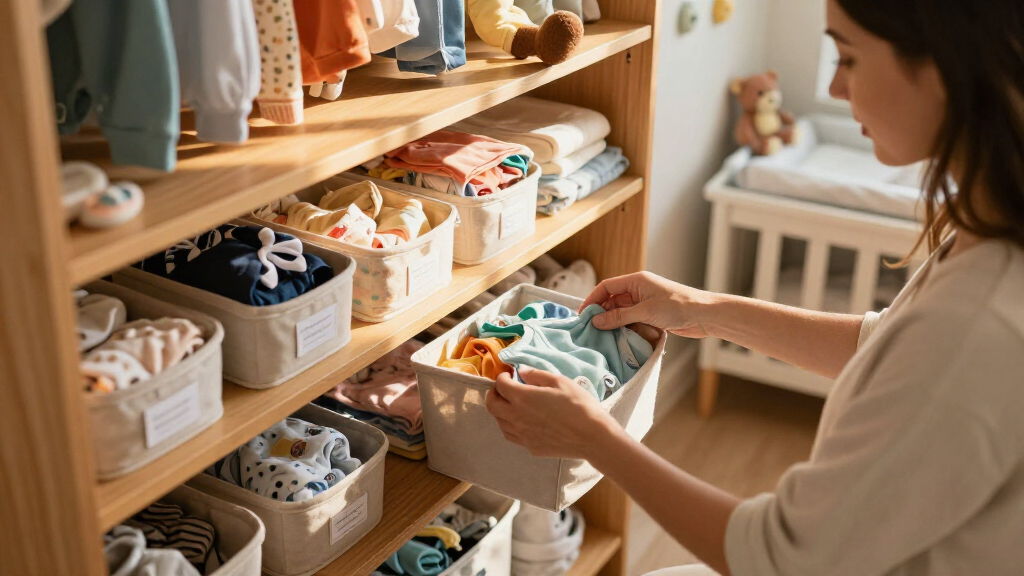
Within each section, sort by clothing type: bodysuits, sleepers, pants, and outerwear. Keeping the current size at eye level isn’t just about convenience; it’s about making sure you’re always aware of what fits now, which prevents frustration and ensures your baby is dressed comfortably. Moving next sizes to a shelf above and larger sizes to storage bins or under the bed creates a visual hierarchy that guides your choices seamlessly. This organization minimizes the chaos of rummaging through piles and helps you make quick, confident decisions.
For example, if your baby is 4 months old, keep the 0–3 months and 3–6 months garments close but separate. When the 0–3 months start looking tight—snaps no longer fasten easily, or fabric pulls—you can swap them out efficiently without digging through a mountain of clothes. This proactive approach prevents clutter from accumulating and ensures your baby always has appropriately sized options readily available.
As an affiliate, we earn on qualifying purchases.
The Perfect Closet Layout That Saves Time Every Morning
Imagine opening your closet and instantly seeing what fits today. To achieve this, a thoughtful layout isn’t just about aesthetics—it’s about reducing decision fatigue and streamlining your routine. Placing clothes that currently fit at eye level ensures you can grab an outfit quickly, which is crucial during hectic mornings. Sorting these by type—bodysuits, pants, pajamas—further cuts down the time spent searching.
The upper shelf should house the next size up, clearly labeled and sorted by season. This foresight means you’re not scrambling to find the right size when the current one becomes too tight; instead, you can rotate items smoothly. Lower shelves or drawers dedicated to daily essentials—like socks, bibs, and frequently used pajamas—keep everything within arm’s reach, reducing unnecessary steps.
The inclusion of a separate bin for outgrown clothes, ready for donation or storage, prevents your space from becoming cluttered. Larger sizes, sentimental pieces, or long-term hand-me-downs stored elsewhere keep the main closet streamlined. This setup minimizes the time spent searching and ensures you’re always prepared for the next growth spurt. When mornings are busy, this organized approach transforms chaos into calm, allowing you to dress your baby confidently and efficiently.
As an affiliate, we earn on qualifying purchases.
How to Keep Up With Rapid Baby Growth Without Clutter Overload
Babies grow at an astonishing rate, often outgrowing clothes in just a matter of weeks. This rapid growth can quickly lead to clutter if not managed proactively. Regularly reviewing your baby’s wardrobe every 2–4 weeks during peak growth phases isn’t just about keeping things tidy—it’s about ensuring your baby’s comfort and safety. Clothes that no longer fit can cause discomfort or restrict movement, and cluttered spaces make dressing more stressful.
Establishing a system, such as a labeled basket or bin for “too small” clothes near the closet, encourages quick sorting. When an outfit no longer fits—snaps won’t close, fabric pulls, or length is insufficient—immediately transfer it to this designated spot. This habit prevents accumulation of unused items, keeps your current sizes accessible, and simplifies the process of rotating in new clothes.
For example, if your baby is struggling to snap a bodysuit or the pants leave red marks around the waist, these are signs it’s time to move them out. Meanwhile, keep the next size—say 6–9 months—within arm’s reach, so you’re prepared as your baby outgrows the current size. This disciplined routine reduces clutter, saves time, and ensures your baby’s wardrobe is always ready for growth spurts, making mornings less stressful and more efficient.
As an affiliate, we earn on qualifying purchases.
Comparison Table: Storing Outgrown Clothes — Best Options & Their Pros & Cons
| Method | Pros | Cons |
|---|---|---|
| Clear plastic bins | Easy to see contents, label easily, stackable | Can become dusty or sticky over time, labels may peel, requires regular cleaning |
| Opaque storage boxes | Hide clutter, look tidy, protect contents from light | Limited visibility, labels are essential, may require more effort to find specific items |
| Vacuum-sealed bags | Save space by compressing clothes, ideal for seasonal storage | Deep creases can make it harder to fold clothes neatly, less accessible for frequent use, risk of damage if not sealed properly |
| Labeled garment bags | Protect delicate or special items, easy to identify contents at a glance | Bulkier, less flexible for quick access, may take up more space |
Choosing the right storage method depends on your space constraints, budget, and how often you need to access these clothes. Clear bins are practical for regular use because they combine visibility and ease of access. Vacuum bags are excellent for long-term storage but require careful sealing to prevent damage. Balancing these options based on your needs ensures your baby’s outgrown clothes are stored efficiently without creating clutter or frustration.
labeled baby clothing storage bins
As an affiliate, we earn on qualifying purchases.
As an affiliate, we earn on qualifying purchases.
Smart Tips for Buying Baby Clothes That Grow With Them
Pre-purchasing baby clothes can seem like a smart way to save time and money, but it’s a gamble if you don’t choose wisely. Focus on versatile, adjustable pieces that can adapt to your growing baby’s needs. Features like fold-over cuffs, expandable waistbands, and adjustable snaps aren’t just convenience—they extend the usability of each item, reducing the need for frequent replacements and thus minimizing clutter and expense.
For example, leggings with fold-over cuffs can be worn across a range of sizes, stretching their usability from 3 to 6 months or more. Sleepwear with expandable necklines or ribbed cuffs can accommodate growth without sacrificing safety or comfort. These thoughtful features make it possible to purchase fewer items that last longer, saving space and reducing waste.
Limit pre-purchasing to essential pieces in each size and prioritize items that can be used across seasons and stages. This strategic approach ensures you’re prepared for growth without overstocking or investing in clothes that will quickly become outgrown or unused.
Mistakes to Avoid When Managing Baby’s Growing Closet
Common mistakes can turn your closet into a cluttered chaos. Don’t store every size in one place; this creates confusion and makes it difficult to find what you need quickly. Keeping current and next sizes accessible is essential, but storing future sizes separately helps you avoid clutter and prevents confusion during busy mornings. Overbuying based on guesswork is another pitfall—babies often outgrow clothes faster than anticipated, leading to unused piles of clothing that take up space.
Mixing seasonal clothing with year-round items can also cause clutter and inefficiency. Keep winter coats separate from summer shorts to streamline dressing and prevent mismatched outfits. Additionally, resist the temptation to keep stained, torn, or ill-fitting clothes “just in case.” These items only add clutter and can cause frustration when you’re in a hurry, or they might be mistaken for usable clothes. Regularly auditing and decluttering prevents this buildup.
Finally, avoid overcomplicating your labeling system. Keep labels simple, clear, and consistent—using large text or color coding if helpful—so everyone in the household can easily maintain the system without frustration or confusion. A straightforward system ensures ongoing organization and reduces stress during hectic mornings.
Your Baby’s Closet: The Continuous Cycle of Growth and Organization
The key to a smooth, clutter-free closet lies in a simple cycle: wear now → prepare next size → remove outgrown items → store, donate, or pass on. When you keep this rhythm, your baby’s clothes stay manageable and accessible. Regular reviews prevent overflow, and smart storage keeps the essentials within reach. This cycle isn’t just about tidiness—it reflects a mindful approach that respects your baby’s rapid development and your limited time. Each step ensures that your baby’s wardrobe evolves seamlessly, minimizing stress and maximizing efficiency.
Remember, the goal isn’t perfection but creating a flexible system that adapts with your baby’s growth. When your closet becomes a well-organized, dynamic space, mornings turn from chaos into calm, and dressing your baby can become a quick, pleasant routine. This ongoing cycle fosters peace of mind, knowing everything is in order and ready when needed.
Imagine a closet where everything that fits is visible and accessible, outgrown clothes are neatly stored or donated, and you’re always prepared for the next size. That’s the power of a thoughtful, adaptable system—one that evolves as your baby does, making life easier and more enjoyable.
Conclusion
A cluttered closet can turn a busy morning into a stressful race against time. The secret to managing your baby’s rapid growth? A simple, flexible system that keeps current sizes accessible and outgrown clothes neatly stored or donated. When your closet works with you, dressing your little one becomes a breeze, and you reclaim precious time and peace of mind.
Imagine a closet that adapts effortlessly to your baby’s growth—organized, visible, and stress-free. That’s the goal. Start small, review often, and keep the focus on what really matters: happy mornings and a clutter-free space.
Cold & flu season Picks
humidifiers
As an affiliate, we earn on qualifying purchases.