
TL;DR

Turn the school run and nap time into listening time
- Thousands of audiobooks, podcasts and originals
- Listen on your phone, tablet or Echo — also offline
- Cancel anytime
You don’t need a full nursery to care for a newborn. A dedicated corner with a safe sleep space, organized essentials, and thoughtful design makes nighttime routines easier and more reassuring.
Few things demand more patience at 3am than navigating a tiny, blinking infant in the dark. Yet, that moment can be made smoother with a little planning. Creating a nursery in the parents’ room isn’t about building a mini palace, but carving out a corner that works. It’s about safety, accessibility, and comfort—without turning your entire bedroom into a cluttered mess.
Imagine a space where you can gently soothe, feed, and check on your baby—all while maintaining a sense of calm and order. This guide walks you through practical steps to design that corner, blending safety with style, space with efficiency. Because, honestly, you need a setup that adapts as your baby grows—and your sleep deprivation deepens.
Prioritize safety: use approved sleep surfaces, keep hazards out of reach, and avoid soft bedding or pillows.
Choose a location that offers easy access, good airflow, and clear pathways—think of it as your baby’s safe little command station.
Create visual boundaries with rugs, colors, or simple decor—no need for bulky dividers that restrict airflow.
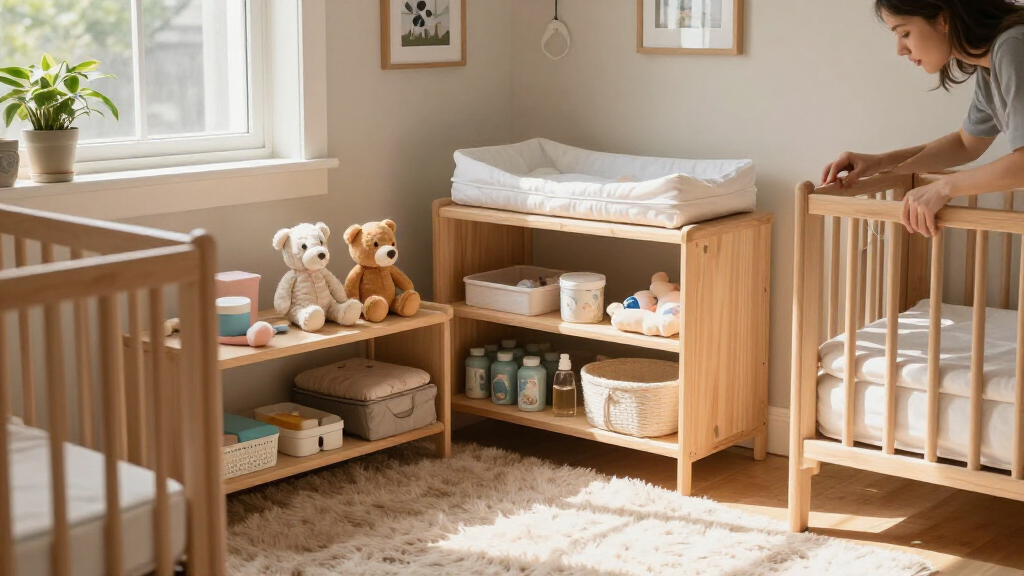
Optimize storage vertically and within reach—under-crib drawers, wall shelves, and baskets keep essentials accessible yet out of baby’s grasp.
Use soft lighting and white noise to make nighttime care gentle, and plan for adaptable furniture to grow with your baby.
Nursery in the Parents’ Room: Carving Out a Corner That Works
A newborn does not need a miniature palace. A safe sleep surface, a clear nighttime pathway, organized essentials, and gentle lighting can turn one thoughtful corner into a calm, capable care station.
Associated with room-sharing on a separate infant sleep surface.
Place the baby on their back for every nap and overnight sleep.
Many pediatric guidelines recommend room-sharing for at least the first six months.
No pillows, toys, bumpers, positioners, or loose blankets.
The safe-sleep essentials
Start with the sleep surface, then remove hazards around it. Style, storage, and convenience only work when this foundation is secure.
Firm, flat, and level
Choose a safety-compliant crib, mini crib, bassinet, or play yard with the mattress intended for that product.
Keep it beautifully bare
Use only a tightly fitted sheet. Soft bedding and decorative accessories belong outside the infant sleep space.
Back for every sleep
Use the same safe position for daytime naps and overnight sleep, creating a simple and repeatable routine.
Clear the hazard radius
Move cords, lamps, charging cables, unstable furniture, heaters, and hanging decorations away from the crib.
Airflow without a draft
Avoid direct air-conditioning, radiators, fireplaces, and drafty windows while maintaining comfortable ventilation.
Room-share, do not bed-share
Keep the baby close for reassurance and feeding, but always on a separate, approved infant sleep surface.
A four-step bedtime safety check
Run this quick scan before every sleep. It reduces decision fatigue when the room is dark and everyone is tired.
Approved surface
Use a compliant crib, bassinet, mini crib, or play yard.
Empty sleep zone
Remove pillows, blankets, toys, bumpers, pods, and positioners.
Baby on back
Use the safest starting position for every sleep period.
Perimeter clear
Check cords, heat, drafts, shelves, lamps, and unstable objects.
Room-sharing with a separate sleep surface may reduce sleep-related infant death risk by up to half. The separate surface is the crucial distinction.
Find the “just right” corner
The best position balances proximity, access, airflow, and hazard separation. Do not force a crib into the smallest available gap if it compromises movement or safety.
| Location test | Ideal corner | Possible compromise | Avoid |
|---|---|---|---|
| Nighttime access | ✓ Easy reach with room to lift safely | ~ A few clear steps from the bed | ✗ Blocked by furniture or clutter |
| Walking route | ✓ Open path to bed and doorway | ~ Narrow but consistently clear | ✗ Crib blocks an exit or wardrobe |
| Air and temperature | ✓ Ventilated without direct airflow | ~ Near a vent with redirected airflow | ✗ Beside a heater or drafty window |
| Light exposure | ✓ Away from bright lamps and screens | ~ Light controlled with dimming | ✗ Direct glare or strong sunlight |
| Overhead zone | ✓ Empty wall above the crib | ~ Lightweight decor placed elsewhere | ✗ Shelves or heavy objects overhead |
Test the room before moving furniture
Stand in the proposed spot at night. Trace the route from bed to crib, imagine lifting the baby, and identify anything you might bump, pull, or trip over.
A compact care station
Keep the floor open and organize the small set of items used repeatedly. Supplies should be reachable with one hand, then moved out of reach as the baby becomes mobile.
Under-crib drawers
Use drawers designed for the crib to hold spare sheets, sleepwear, and lightweight linens.
Divided dresser storage
Group diapers, wipes, clothing, and feeding supplies so each category has a fixed home.
Secure wall storage
Anchor shelves carefully, position them away from the crib, and never install objects directly overhead.
Parkable rolling cart
Pull essentials close during care, then lock or park the cart safely outside the baby’s reach.
Floor-level changing
A portable changing mat uses minimal space and eliminates the fall risk of an elevated surface.
Quiet laundry control
Add a compact hamper or waste container that opens quietly and does not obstruct the pathway.
The one-hand rule
Arrange routine supplies so the caregiver can reach them without stepping away. Never leave a baby unattended on an elevated changing surface.
Low light, moderate sound, less disruption
The aim is enough visibility for safe care without signaling that the day has begun. Prepare supplies before bedtime and keep every movement simple.
Warm and indirect
Use a dimmable lamp or night-light instead of bright overhead lighting during feeds and diaper changes.
Steady, not loud
Place a white-noise machine away from the baby’s head and use a moderate volume. Total silence is unnecessary.
Dark, with cords secured
Blackout curtains may support sleep, but all cords must be fixed safely and kept completely out of reach.
One corner, five connected decisions
A successful shared-room nursery is a system. Each decision supports the next, from safe sleep to calmer routines and easier updates as the baby grows.
Choose
Select a clear, accessible corner.
Secure
Remove hazards and anchor storage.
Define
Use color, a rug, or coordinated decor.
Organize
Place essentials within one-hand reach.
Reassess
Move items as rolling and crawling begin.
Visual separation without isolation
Define the nursery corner with a washable rug, coordinated wall color, removable decals, or matching baskets. Avoid tall solid dividers that reduce airflow, obstruct movement, or introduce a tipping hazard.
Why a Safe Sleep Zone in Your Room Matters Most
Starting with safety is non-negotiable. The corner you carve out should prioritize safe sleep practices. Use a certified, firm, flat mattress—nothing soft or plush. Keep the sleep surface free of pillows, blankets, bumpers, and toys. Place your baby on their back every time they nap or sleep overnight.
Many parents confuse room-sharing with bed-sharing. But a separate sleep surface—like a bassinet or mini crib—keeps your baby safer while still close enough for reassurance. According to BabyUI, this setup can cut sleep-related risks in half. Keep the sleep space away from cords, drafts, and hazards—think of it as a miniature fortress of safety.
Why does this matter? Soft bedding, pillows, or bumpers can pose suffocation risks, especially since newborns lack the motor skills to move away from danger. A firm, flat sleep surface minimizes this risk and promotes better sleep posture. The tradeoff is that you might need to give up some storage or space for larger cribs, but the safety benefits outweigh the convenience of plush bedding. Ensuring the space is free of hazards—such as cords or drafts—reduces the chance of accidental suffocation or entanglement, which are leading causes of sleep-related infant deaths. Remember, safety isn’t just about compliance; it’s about peace of mind and protecting your baby’s fragile life.
As an affiliate, we earn on qualifying purchases.
Picking the Perfect Spot: How to Find Your ‘Goldilocks’ Corner
Finding the right spot in your bedroom isn’t about squeezing the crib into the tiniest corner. It’s about balance. Look for a corner that offers enough space for you to move comfortably, access the sleep area easily, and avoid hazards.
Think about airflow—avoid drafts from windows or vents. Proper placement can influence both safety and sleep quality. For instance, placing the crib too close to a window might expose your baby to cold drafts or direct sunlight, disrupting sleep and potentially causing health issues. Conversely, a corner that’s too isolated may make nighttime checks more difficult or feel disconnected. The goal is to find a spot that offers good ventilation, easy access for diaper changes and soothing, and a quiet environment. The tradeoff often involves balancing proximity to your bed with safety considerations—closer might mean easier access but increased risk of accidents if not carefully arranged. Always double-check that the setup doesn’t block exits or create clutter that could trip you up in the dark. A well-chosen corner supports both your baby’s safety and your peace of mind, making nighttime routines smoother and less stressful.
As an affiliate, we earn on qualifying purchases.
Designing Visual Separation Without Losing Connection
You want your nursery corner to feel purposeful but not isolated. The trick is to create a visual cue that this is a dedicated space—without building walls or blocking airflow. Think simple, flexible design elements.
For example, a washable rug can define the zone, giving it a cozy feel and signaling to your subconscious that this is a special area. Using a different wall color or removable decals can subtly communicate boundaries, helping your brain switch between caregiving and relaxation modes. This visual separation helps your baby associate their space with sleep and comfort, which can improve their sleep habits over time. A narrow book ledge or a carefully placed curtain (used safely and with attention to airflow) can add a sense of boundary without creating a physical barrier that restricts movement or ventilation. Be mindful that any divider or curtain is securely anchored and kept outside the baby’s reach to prevent accidents. Matching baskets or textiles can also unify the space, making it feel intentional yet integrated into your bedroom decor. The implication is that thoughtful visual cues can foster a sense of security and purpose without compromising airflow or safety, which is crucial for a cozy, functional nursery corner.
As an affiliate, we earn on qualifying purchases.
Keeping It Compact: Essential Furniture and Storage Hacks
Space is precious. You don’t need a full changing table—just a secure, portable changing pad on a dresser or a dedicated spot on the floor. Keep supplies within arm’s reach but out of baby’s grasp.
Vertical storage helps maximize limited space. Use over-door organizers, wall-mounted shelves (anchored securely), or under-crib drawers. Baskets and bins group diapers, wipes, clothes, and feeding gear. This way, everything is accessible with one hand, yet out of sight when not needed. Prioritizing vertical storage allows you to keep essentials organized without cluttering the floor, which is especially important in small spaces. The tradeoff involves choosing storage solutions that are both accessible and safe—avoid heavy or unstable shelving that could fall, and consider safety straps or anchors. For example, a rolling cart that you can tuck away or pull close makes diaper changes quick and minimizes clutter. Remember: Never leave a baby unattended on an elevated surface—floor changes are safest and most space-efficient. The key is to balance accessibility with safety, ensuring you can reach everything you need without risking accidental falls or injuries.
As an affiliate, we earn on qualifying purchases.
Lighting and Sound: How to Keep Nighttime Calm
Soft, warm lighting helps you see without waking the baby. A dimmable lamp or night-light is perfect for feeds and diaper changes. Avoid harsh overhead lights that flood the room, which can startle your infant and make it harder for them to settle back to sleep.
Blackout curtains can help your baby sleep longer by blocking out external light, but ensure cords are secured and out of reach to prevent accidents. White noise machines—placed at a safe distance from the crib—mask household sounds and create a consistent, soothing background. Moderate volume is essential—too loud can startle your baby, while too soft may be ineffective. For example, a gentle hum at bedtime and during night feeds can become a calming anchor, helping your baby associate certain sounds with sleep, which can improve sleep quality over time. Remember, silence isn’t necessary—familiar household noises, like the washing machine or soft music, can help your baby feel secure and sleep better in shared spaces. The key is to find the right balance of light and sound that promotes restful sleep without causing overstimulation or disturbance.
Supporting Your Sleep: Smart Moves for Parents
Shared rooms mean shared sleep, but small adjustments make a big difference. Keep diaper supplies organized and close before bed, such as in a small basket or on a nearby shelf, to minimize rummaging and disturbance. Use a quiet drawer or cart to reduce noise and prevent accidental awakening.
Separate your reading light or phone from the baby’s sleep zone to avoid light pollution that can disrupt sleep cycles. Establish a consistent routine for feeds and soothing—doing the same actions in the same order helps your baby recognize sleep cues. When you’re done, move the baby gently back to their sleep space, minimizing wake-ups. For example, keeping essentials within arm’s reach allows quick access without bright lights or ruffling sheets, which can wake your baby unnecessarily. If you tend to fall asleep with your baby, consider setting up a safe sleeping arrangement that allows you to put them down gently—like a rocking chair or a sidecar crib. These small adjustments support healthy sleep habits for both of you, reducing fatigue and stress while maintaining safety and comfort.
Temperature and Air Quality: Keep the Room Just Right
The room should feel cozy but not hot or stuffy. Aim for a temperature around 68–72°F (20–22°C). Overdressing your baby or covering them with loose blankets can cause overheating, which is linked to increased SIDS risk. Use fitted sleep clothing or breathable sleep sacks designed for this temperature range to promote safe, comfortable sleep.
Proper airflow is crucial. Use an open window or a fan set on low to circulate fresh air, but always ensure it doesn’t blow directly on the baby. This helps prevent stuffiness and maintains a healthy breathing environment. Humidifiers aren’t always necessary but can be beneficial in dry climates, provided they are cleaned regularly to prevent mold or bacteria growth. For example, a lightly dressed baby in a sleep sack with a small, well-positioned fan can stay comfortable without overheating. Maintaining a smoke-free environment and ensuring good ventilation supports healthy sleep and reduces respiratory issues. The tradeoff involves balancing airflow and temperature—too much draft can cause cold, while too little can lead to stuffiness. Regularly monitoring the room’s temperature and humidity helps you keep conditions optimal for your baby’s health and sleep quality.
Making the Nursery Corner Grow With Your Baby
Your baby’s needs will change quickly. What works at 3 months may not suit six months or a crawling toddler. Choosing adaptable furniture—like a crib with adjustable height or a convertible bassinet—ensures the space remains safe and functional as your child develops. Regularly reassessing hazards is essential; as your baby grows, they’ll begin to pull up, stand, or even climb. Lower the mattress, secure shelves, and remove objects they can pull down or climb on. Keep an eye on developmental milestones and modify the space accordingly. For example, when your baby starts pulling up, you might need to transition to a toddler bed or reposition furniture to prevent falls. This ongoing process ensures your corner remains safe, functional, and comforting at every stage, avoiding the need for costly or disruptive renovations. Flexibility in design and vigilance in safety checks make sure your nursery corner evolves with your child’s growth, maintaining peace of mind and a nurturing environment.
Latest Trends: Small, Smart, and Stylish Nursery Corners
Modern nursery design favors compact, multifunctional furniture and modular storage. Foldable cribs, bedside bassinets, and convertible pieces make the most of limited space while offering versatility. These pieces can adapt to your baby’s changing needs, saving space and money. Design trends lean toward neutral, calming palettes that blend seamlessly with adult bedrooms, creating a cohesive look that feels integrated rather than separate. Secondhand furniture is increasingly popular—just ensure it’s free of safety recalls and thoroughly cleaned to prevent hazards. Smart tech, like app-connected bassinets and breathing monitors, can add convenience and peace of mind. However, safety remains paramount; these gadgets should complement, not replace, fundamental safe sleep practices. For example, a sleek, foldable bassinet beside your bed can be tucked away when not in use, freeing up space and keeping your nursery corner adaptable. The tradeoff involves balancing technological convenience with simplicity and safety, ensuring your setup remains secure, functional, and stylish.
Frequently Asked Questions
How much space do I really need for a nursery corner?
You need enough space for an approved sleep product to stand level, with clear access for you to reach and tend to your baby. Follow manufacturer instructions for clearance, and ensure the area isn’t blocking exits or creating tripping hazards.
Is a bassinet better than a mini crib for a small bedroom?
Neither is universally better. Bassinets are compact and perfect for early months but have shorter lifespan limits. Mini cribs last longer but take up more space. Choose based on your room size, budget, and your baby’s growth.
Can I put the crib next to my bed?
Yes, as long as it remains a safe, separate sleep surface. Ensure gaps, cords, and bedding are away from the baby, and position it following safety guidelines. Properly attached bedside cribs are designed for this purpose.
What’s the safest way to add a room divider or curtain?
Only if it’s stable, anchored well, and never blocks ventilation or access. Keep it far enough from the crib, and avoid anything that can be pulled into the sleep space or pose a tipping risk.
When should my baby move out of the room?
There’s no fixed timeline. Many parents transition around 6 months, but it depends on your baby’s development, sleep habits, and family needs. Prioritize safety, consistency, and everyone’s well-being.
Conclusion
Building a nursery corner in your bedroom isn’t about creating a perfect, permanent space but about making it safe, functional, and calming. With thoughtful placement, simple design, and strategic organization, you turn your room into a reassuring hub for both baby and parent. Remember—less clutter, more control, and safety above all.
Now, take a moment to look around your bedroom. That empty corner? It might just become your new favorite spot—and the start of a safer, more organized parenting journey.
Halloween Picks
halloween
As an affiliate, we earn on qualifying purchases.