
TL;DR

Turn the school run and nap time into listening time
- Thousands of audiobooks, podcasts and originals
- Listen on your phone, tablet or Echo — also offline
- Cancel anytime
A smart changing pad weight log is most useful as a record of measurements taken under similar conditions and reviewed over time. Feedings, diapers, clothing, timing, and scale setup can all affect a reading, so use your pediatrician’s guidance to interpret the pattern rather than treating one number or app alert as a diagnosis.
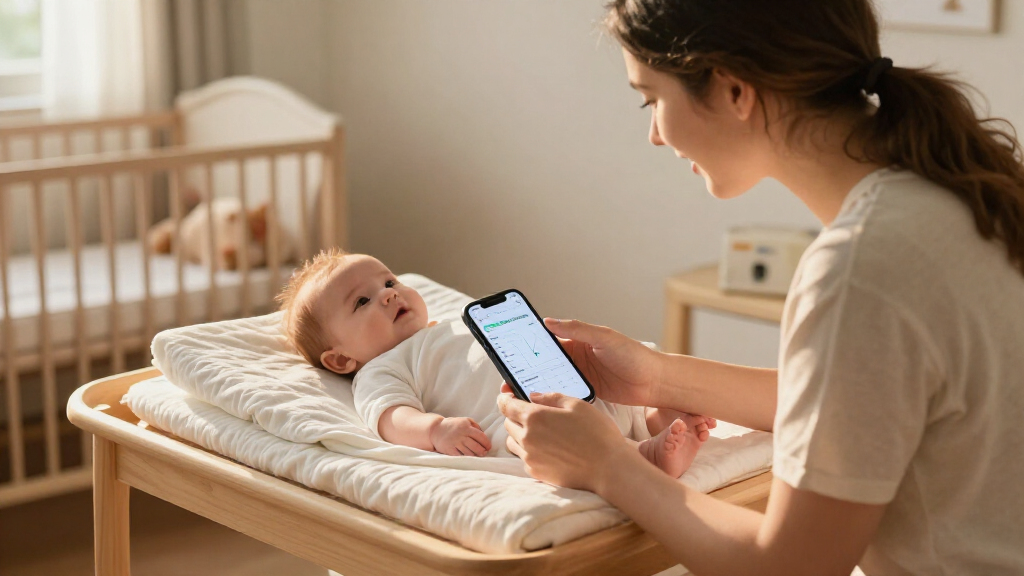
At 3 a.m., one unexpected number on your phone can feel louder than the baby monitor. A smart changing pad may save each measurement for you, but the screen cannot tell you by itself whether a small jump reflects growth, a recent feed, a wet diaper, or the way the pad sits on the dresser.
This guide helps you make sense of the weight trend without turning your nursery into a weighing station. You’ll learn how to collect more consistent readings, what an app can and cannot tell you, and how to bring a useful record to your baby’s pediatrician.
The goal is simple: use the log to support care, not to replace it. A calm routine, a few clear notes, and the clinician’s view of your baby’s overall growth are more useful than chasing every decimal on a dashboard.
Compare readings taken with the same pad on a stable, level surface and under similar conditions.
Treat a smart changing pad log as a record and conversation aid, not a diagnosis or replacement for pediatric visits.
Ask your baby’s clinician how often to weigh and what method to follow; extra readings can add worry without changing care.
A percentile is a comparison, not a grade; clinicians interpret it alongside other measurements and your child’s growth pattern.
If a surprising result persists or your baby seems unwell, contact the care team instead of relying on an app alert.
Smart Changing Pad Weight Logs: Making Sense of the Trends
A smart changing pad can keep readings together, but the useful story is the pattern over time. Consistent conditions and your pediatrician’s guidance matter more than one decimal, one alert, or one unexpected number at 3 a.m.
One number is a moment. A sequence adds context.
A feed, a wet diaper, a thicker sleeper, or a moved pad can shift the display. One high or low reading does not describe growth by itself.
Small differences add up
Timing, clothing, diaper state, positioning, and surface can all affect what the home device records.
Look across dates
A dated series under similar conditions gives the care team more context than an isolated dot.
Think weather, not verdict
One surprising reading is like one unusual day. Note the circumstances and discuss a persistent concern.
A repeatable routine beats repeated weighing.
Use home measurements only as often as the baby’s clinician recommends. Extra readings can add worry without changing care.
Set the pad
Follow product instructions on a firm, level surface.
Choose a routine
Ask when and how often to measure; keep timing similar.
Keep conditions close
Use similar clothing, such as a clean, dry diaper if appropriate.
Stay within reach
Keep your baby attended and supported throughout.
Note what changed
Record date and context; confirm a surprise once under the same conditions.
A useful notebook, not a medical verdict.
Connected products may save readings, show graphs, or offer reminders. Features vary by model and region; app interpretations are not diagnoses.
The pad may help with
- Saving dates and readings together
- Showing a sequence over time
- Reminding you of a clinician-set schedule
- Sharing feeding context or questions at a visit
Clinical context is needed for
- Deciding whether growth is on track
- Explaining a persistent change or concern
- Interpreting percentiles and growth charts
- Changing feeding or care based on a number
Home and clinic scales may differ. Accuracy depends on the device, setup, calibration, and positioning. A display with several decimal places does not mean every digit is dependable; small changes may be measurement noise.
A percentile is a comparison, not a grade.
Clinicians read weight alongside age, sex, length, head circumference, gestational age, and your child’s established growth pattern.
Many newborns lose some weight in the first days after birth and regain it within roughly the first couple of weeks, but timing and amount vary. Your care team can advise based on your baby’s age, feeding, and health. There is no universal home target that replaces that guidance.
Turn the graph into a better conversation.
Ask which readings are useful to bring and how often to take them. A clear, short record can help the clinician understand what you noticed.
Date and reading
Keep entries in order so the care team can see the broad direction over time.
What was different?
Note a recent feed, different clothing, diaper change, or a new pad location.
Review app privacy
Check what the app stores, who can access it, and whether you can export or delete it.
When a reading raises a question
Let your baby’s clinician set the schedule and interpret concerns. Avoid using a home threshold as a stand-in for care.
How often should I weigh my baby?
Follow the schedule recommended by the clinician. Frequent weighing is not needed for every family and may add anxiety.
How much fluctuation is normal?
Feeds, urination, bowel movements, clothing, and setup can shift readings. Ask about a persistent pattern or change that concerns you.
Is a smart pad as accurate as a clinic scale?
Not necessarily. If a reading could affect a health decision, confirm it with your clinician.
What if a result surprises me?
Check the setup and repeat once under similar conditions. If it persists or your baby seems unwell, contact the care team rather than relying on an app alert.
Why the trend tells you more than one reading
A smart changing pad weight log is most useful when you look at several readings taken under similar conditions, because one measurement can shift with a feed, diaper, clothing, timing, or setup. The pattern over time gives your baby’s care team more context than one unusually high or low number.
Think of the log like a short weather report, not a verdict. One cold morning does not tell you what the whole season will be like; one heavier measurement after a feed does not describe your baby’s growth by itself. For example, you weigh your baby before a morning change on Monday, then after a feed in a thicker sleeper on Tuesday. A difference between those readings may say more about the circumstances than about growth.
That does not make a home log pointless. A sequence with dates can help you and your clinician see the broad direction and ask better questions. Note anything that might explain a surprise, such as a recent feed or a different diaper. If you see a persistent pattern that concerns you, share it with the care team rather than trying to diagnose it from the graph.
Home measurements are also not automatically interchangeable with clinic measurements. A pediatrician may use the clinic’s scale and assess weight alongside age, sex, length, head circumference, gestational age, and your baby’s established growth pattern. A percentile is a comparison, not a grade. The most useful question is how your child’s overall picture looks to the clinician—not whether one dot lands exactly where you hoped.
Popular right now

TCL 65 Inch QM8L Series SQD-Mini LED QLED 4K Smart Google TV

TCL 65-Inch QM6K QLED Mini-LED 4K HDR Smart Google TV, 144Hz

Philips Café Aromis Automatic Espresso Machine with LatteGo Pro Milk System
As an affiliate, we earn on qualifying purchases.
How to get readings you can compare
To make smart changing pad readings easier to compare, use the same device on a stable, level surface and follow its instructions each time. Similar timing and similar clothing also help, because a soft sleeper or a recently wet diaper can shift the displayed number.
- Set the pad up the same way. Place it on a firm, level surface as the manufacturer directs. A pad that rocks on a changing table is not a good place to weigh.
- Choose a repeatable routine. If your clinician recommends home measurements, ask when and how often to take them. Use a similar time and similar clothing, ideally a clean, dry diaper or no clothing if that fits the device instructions.
- Keep your baby attended and supported. Never leave a baby alone on a changing surface, even for a quick reading. Keep your hands ready and follow the product’s safety guidance.
- Record useful context. Add the date and any relevant note, such as “after feed” or “different pad location,” if your app allows it.
- Check a surprising result once. Confirm the setup, then repeat the reading under the same conditions. If the result persists or your baby seems unwell, contact the care team.
For example, you might take a reading after the first morning diaper change, in a clean diaper, with the pad on the same dresser. A week later, repeat that routine. The point is not to create laboratory conditions at home; it is to reduce avoidable differences so the record is easier to discuss.
Do not build a routine around repeated weighing unless the clinician asks you to. At home, extra readings can add worry without changing care. If your baby is being closely monitored, follow the specific schedule and method the care team gives you.
What a smart changing pad can—and can’t—tell you
A smart changing pad can make it easier to record a baby’s weight and keep dates together, but it cannot diagnose a health problem or replace a pediatrician’s assessment. The display is a measurement from a home device, affected by the device, its setup, calibration, and how your baby is positioned.
Before you trust the decimals, check the manufacturer’s guidance on accuracy and calibration. A readout that shows two decimal places does not mean every digit is dependable. Home and clinic scales may differ, and small changes between measurements may be noise. For instance, if the app displays a tiny increase after you move the pad to another surface, check the setup before deciding the trend has changed.
Some connected products offer reminders, dashboards, or feeding and growth insights. Features vary by model and region, and an app’s interpretation is not a medical diagnosis. Treat the app as a notebook with helpful automation: it can sort entries and show a graph, while your clinician supplies the context for what the graph means.
| What the pad may help with | What needs clinical context |
|---|---|
| Saving dates and readings | Deciding whether growth is on track |
| Showing a sequence over time | Explaining a persistent change or concern |
| Reminding you of a clinician-set schedule | Changing feeding or care based on a number |
Before entering health details, review what the app stores, who can access it, and whether you can export or delete the data. A log should make communication simpler, not leave you guessing where your baby’s information went. You can also ask your clinician which readings are useful to bring to appointments.
How to read newborn weight changes without guessing
Newborn weight changes need to be read in context: many babies lose some weight in the first days after birth and then regain it, but the timing and amount vary. Your baby’s clinician can interpret the measurements alongside age, feeding, and health, so a home log cannot supply a universal target.
It can be tempting to search for a single deadline and treat it like a pass-or-fail test. Many newborns regain birth weight within roughly the first couple of weeks, but individual circumstances differ. Your care team can tell you what to expect for your baby and whether a follow-up measurement is needed.
Picture the first days at home: a sleepy newborn feeds, has a wet diaper, and gets bundled into a soft outfit. A reading from that moment is one part of the story. If the clinician has asked you to track weight, keep the requested dates and methods, and share feeding context or other changes they asked you to watch.
Growth charts also take more than weight into account. Clinicians consider measurements such as length and head circumference, along with age, sex, gestational age, and the child’s established pattern. A percentile compares your child with a reference group; it is not a mark on a report card. One shift in percentile does not establish a problem on its own, so ask the care team what the whole set of measurements means.
If feeding is difficult, your baby seems unusually sleepy, or you notice fewer wet diapers than expected, contact the clinician promptly for advice regardless of the app’s graph. The number is useful information, but your baby’s condition and the care team’s assessment matter more than a reassuring-looking screen.
When a weight log helps you talk with the pediatrician
A weight log helps most when it gives your pediatrician a clear record of dates, readings, and relevant context. It supports the conversation; it does not replace scheduled visits, a physical assessment, or the clinician’s interpretation of your baby’s growth.
Before an appointment, you might export or show the measurements your clinician requested and write down two or three questions. For example: “We weighed on Monday and Friday, both before the morning feed. Does this pattern fit what you expect?” That is more useful than arriving with a string of numbers but no idea when or how you took them.
Ask the care team how often to weigh your baby and what method to use. Frequent weighing is not necessary for every family, and it may increase anxiety without changing care. If your clinician asks for closer monitoring, follow the schedule they set rather than adding extra measurements because the app sends a reminder.
Home before-and-after feed measurements may not be precise enough to estimate how much milk your baby took. Use that approach only if the care team recommends it and explains how to do it. If the app suggests feeding conclusions, treat them as prompts for a conversation, not instructions to change feeding.
A practical note can include the reading, the date, the conditions, and what prompted you to ask. This turns the log into a simple shared record. If a number surprises you, tell the clinician what you observed and how your baby is feeding and behaving; they can advise whether the next step is a repeat measurement, an appointment, or no action.
What to do when the app shows a sudden change
If your smart changing pad shows a sudden gain or drop, check the setup and repeat the measurement once under consistent conditions, then contact your baby’s clinician if the result persists or concerns you. One unexpected reading can reflect ordinary variation or measurement conditions, but a persistent pattern deserves professional interpretation.
Start with the simple things: is the pad level, is it on the same surface, and is your baby wearing similar clothing? Was the reading taken just after a feed, or with a wet diaper? If Monday’s reading was on a firm dresser and Tuesday’s was on a soft, uneven surface, you have a reason to question the comparison before worrying about the graph.
Do not keep weighing every few minutes to make the number feel certain. That can turn a small discrepancy into a long, stressful night without adding reliable information. A single careful repeat is enough to check for an obvious setup issue; then follow the care team’s advice.
Also pay attention to the baby, not only the number. Poor feeding, unusual sleepiness, fewer wet diapers than expected, signs of dehydration, or other concerning changes call for prompt medical advice. If your baby seems seriously unwell, seek urgent care. A reassuring app reading does not rule out a problem, just as a surprising number does not diagnose one.
If the baby is sleeping and there is no clinician instruction to monitor at that moment, a routine home log is usually not a reason to wake them. Follow specific guidance if your care team is closely monitoring your baby. At 3 a.m., the safest next step is the one grounded in that advice, not a guess prompted by a notification.
Keep the log useful without letting it run the nursery
A useful weight log fits around your care routine; it does not dictate the rhythm of your nursery. Agree on a schedule with your baby’s clinician, keep the setup consistent, and let the record support the next conversation rather than invite constant checking.
For one family, the app’s reminder might help a tired parent remember a clinician-requested weekly measurement. For another, daily alerts may create more stress than value. If you find yourself refreshing the chart after every diaper change, ask the care team whether you need to weigh that often. A feature that sounds reassuring in a product description may not be helpful for every household.
Give the data a small, defined job: save readings, show dates, and help you share a question. You might keep a note that says “before first feed, clean diaper” so a later measurement has context. If the app offers a trend line, use it to notice what to ask about—not to set a feeding schedule or judge your baby’s health alone.
Privacy belongs in the routine too. Review app access, storage, export, and deletion options, especially if multiple caregivers use the account. A partner or grandparent may need to see a measurement, but that does not mean every app permission is necessary.
The calmest system is often the simplest one that works for your family and clinician. If the pad saves a measurement you would otherwise forget, it is doing a useful job. If its alerts keep you awake without changing the care plan, talk with the pediatrician about a less frequent schedule.
Frequently Asked Questions
How often should I weigh my baby at home?
Follow the schedule recommended by your baby’s clinician. Frequent weighing is not necessary for every family and may add anxiety without changing care.
Is a smart changing pad as accurate as a doctor’s scale?
Not necessarily. Accuracy depends on the device, setup, calibration, and how your baby is positioned. If a reading will affect a health decision, confirm it with your clinician.
What should I do if my baby’s weight percentile goes down?
One percentile change does not establish a problem. Clinicians interpret weight over time alongside other measurements and your child’s overall health, so contact the care team if you are concerned.
Can I weigh my baby before and after a feed to measure intake?
Home measurements may be too imprecise for reliable feed-volume estimates. Use this method only if your care team recommends it and explains how to do it.
Should I wake a sleeping baby to weigh them?
A routine home log is usually not a reason to interrupt sleep. Follow specific instructions from the clinician if your baby is being closely monitored.
What if the app shows a sudden drop or gain?
Check the setup and repeat the measurement once under consistent conditions. If the result persists or your baby seems unwell, contact the clinician; seek urgent care for severe symptoms.
Conclusion
Let the smart changing pad do the small, useful job it does well: keep a dated record. Take readings in a repeatable way, follow the schedule your baby’s clinician recommends, and bring the trend and your questions to the next conversation.
When the nursery is quiet and the app lights up, remember that one number is only one dot. Your baby’s care team can help you see the whole picture.