The best sleep tracker overall in this lineup is the Fitbit Inspire 3, which balances sleep monitoring with a simple, screen-based fitness band. For recovery-focused data, WHOOP 5.0 is the standout, while the Withings Sleep pad tracks from beneath the mattress without requiring a wearable. Your choice comes down to whether you prefer detailed recovery insights, a familiar wristband, or a device-free setup—and whether you are comfortable with an ongoing membership or app requirements. I compare those tradeoffs alongside comfort, everyday usability, and the limits of sleep estimates. Read on for the full breakdown and guidance by buyer type.

Turn the school run and nap time into listening time
- Thousands of audiobooks, podcasts and originals
- Listen on your phone, tablet or Echo — also offline
- Cancel anytime
Complete the kit


Key Takeaways
- Fitbit Inspire 3 is the clearest all-around wrist pick: the lineup includes several Inspire 3 listings, but their band colors or bundles do not change the core choice for most buyers.
- WHOOP 5.0 stands apart for recovery-minded users: its screenless approach and membership model suit people who want ongoing health and training insights, not a simple standalone sleep readout.
- Withings Sleep is the wearable-free alternative: its under-mattress format avoids wearing a band overnight, though it is less suited to people who want activity tracking on their wrist.
- The product list contains substantial overlap: multiple Fitbit Inspire 3 variants offer similar core tracking, so compare included accessories and configuration rather than treating each as a distinct tracker.
- Rings and low-profile bands trade screen access for discreet wear: the Free Shark ring and slim tracker options may appeal to people bothered by a watch at night, but fit and app experience deserve extra scrutiny.
| WHOOP 5.0 Screenless Fitness and Health Tracker with 12-Month Membership |  | Best for Recovery-Focused Sleep Insights | Model: WHOOP 5.0 | Display: Screenless | Tracking metrics: Heart rate, HRV, respiratory rate, VO2 Max, resting heart rate, steps, calories, sleep, strain, and recovery | VIEW LATEST PRICE | See Our Full Breakdown |
| Screenless Fitness Tracker Smart Band with Sleep, Heart Rate, HRV and SpO2 Monitoring |  | Best Long-Battery Screenless Value | Display: Screenless | Tracked metrics: Heart rate, SpO2, HRV, stress, steps, distance, calories, and sleep | Sleep stages: Light, deep, and REM | VIEW LATEST PRICE | See Our Full Breakdown |
| Fitbit Charge 5 Health and Fitness Tracker with Built-In GPS, Stress Management, Sleep Tracking, and 24/7 Heart Rate Monitoring |  | Best Sleep Tracker with an On-Wrist Display | Display: Color touchscreen | Sleep tracking: Sleep Score and light, deep, and REM sleep tracking | GPS: Built-in | VIEW LATEST PRICE | See Our Full Breakdown |
| Withings Sleep Under-Mattress Sleep Tracking Pad |  | Best No-Wear Sleep Tracker | Sleep tracking: Deep, light, and REM sleep cycles | Additional monitoring: Snoring, breathing disturbances, and heart rate | Connectivity: Wi-Fi; automatic sync with the Health Mate app | VIEW LATEST PRICE | See Our Full Breakdown |
| FITVII FINO2 Slim Fitness Tracker with Heart Rate and Sleep Monitoring |  | Best for Beginners Who Want a Color Screen | Model: FITVII FINO2 | Display: 1.45-inch TFT color touchscreen | Watch faces: 89+ customizable options | VIEW LATEST PRICE | See Our Full Breakdown |
| Google Fitbit Inspire 3 Fitness Tracker with Small and Large Bands |  | Best for Broad Health Tracking in a Slim Band | Sleep and health tracking: Sleep, heart rate, stress, skin temperature, and blood oxygen | Exercise modes: More than 40, with automatic exercise tracking | Water resistance: 50 meters | VIEW LATEST PRICE | See Our Full Breakdown |
| Google Fitbit Edge Activity Tracker with Small and Large Bands, Obsidian/Matte Black |  | Best for GPS-Tracked Outdoor Routines | Sleep tracking: Sleep stages | GPS: Built-in | Battery life: Up to 7 days | VIEW LATEST PRICE | See Our Full Breakdown |
| Fitbit Inspire 3 Fitness Tracker with Small and Large Classic Bands, Midnight Zen/Black |  | Best for Long Battery Life | Model: Fitbit Inspire 3 | Sleep and health tracking: Sleep, 24/7 optical heart rate, and stress | Exercise modes: 20+ | VIEW LATEST PRICE | See Our Full Breakdown |
| Free Shark Smart Ring with Sleep and Activity Tracking, Heart Rate and Blood Oxygen Monitoring, Rose Gold, Size 8 |  | Best Subscription-Free Ring | Form and size: Round smart ring; size 8 | Sleep and health tracking: Sleep stages, heart rate, blood oxygen, steps, and activity | Battery life: Up to 5 days per charge | VIEW LATEST PRICE | See Our Full Breakdown |
| Fitbit Versa 4 Health and Fitness Smartwatch with GPS, Heart Rate and Sleep Tracking, Alexa, Water Resistant, Black |  | Best Smartwatch for Sleep and Daytime Features | Sleep and readiness: Sleep insights and personalized Daily Readiness Score | Heart rate and oxygen: 24/7 optical heart rate; SpO2 | GPS: Built-in | VIEW LATEST PRICE | See Our Full Breakdown |
| Samsung Galaxy FIT 3 [40MM] 1.6″ AMOLED Display, International Model, Gray | 1.6" AMOLED Display, International Model, Gray” image=”https://m.media-amazon.com/images/I/61K2qby-3oL._AC_SY300_SX300_QL70_ML2_.jpg” link=”0″] | Best for Android Users Who Want a Bright Display | Display: 1.6-inch AMOLED, 320 × 320 | Battery: 208 mAh; up to 14 days advertised, 13 days listed | Weight: 18.5 g | VIEW LATEST PRICE | See Our Full Breakdown |
| Fitbit Inspire 3 Fitness Tracker with Heart Rate, Stress, Workout, and Sleep Tracking, Lilac Bliss/Black |  | Best for Straightforward Sleep and Wellness Tracking | Display: Touchscreen | Battery life: Up to 10 days | Sleep and wellness tracking: Sleep, heart rate, stress, and workout intensity | VIEW LATEST PRICE | See Our Full Breakdown |
| Bestinn H32 Pro Fitness Tracker Smartwatch |  | Best for a Feature-Packed Display on a Budget | Display: 1.58-inch always-on touchscreen with side button | Sleep tracking: Sleep stages | Health tracking: Heart rate, blood oxygen, and blood pressure | VIEW LATEST PRICE | See Our Full Breakdown |
| Fitbit Inspire 3 Health and Fitness Tracker Bundle, Black |  | Best Bundle for a Ready-to-Wear Fitbit Setup | Model: Fitbit Inspire 3 | Display: Color touchscreen | Battery life: Up to 10 days | VIEW LATEST PRICE | See Our Full Breakdown |
| Google Fitbit Air Screenless Activity Tracker, Obsidian |  | Best Screenless Pick for Overnight Comfort | Design: Screenless activity tracker | Band: Micro-adjustable Google Performance Loop; one size, 130–210 mm | Battery life: Up to seven days | VIEW LATEST PRICE | See Our Full Breakdown |
| sleep tracker | Water resistance | GPS | Display | Battery life |
|---|---|---|---|---|
| WHOOP 5.0 Screenless Fitness a | — | — | Screenless | 14+ days stated |
| Screenless Fitness Tracker Sma | IP68 | Connected GPS via smartphone | Screenless | — |
| Fitbit Charge 5 Health and Fit | 50 meters | Built-in | Color touchscreen | Up to 7 days; varies with use and other factors |
| Withings Sleep Under-Mattress | — | — | — | — |
| FITVII FINO2 Slim Fitness Trac | IP68 | Via smartphone | 1.45-inch TFT color touchscreen | — |
| Google Fitbit Inspire 3 Fitnes | 50 meters | — | Touchscreen | — |
| Google Fitbit Edge Activity Tr | 50 meters | Built-in | — | Up to 7 days |
| Fitbit Inspire 3 Fitness Track | 50 meters | Via connected smartphone | — | Up to 10 days |
| Free Shark Smart Ring with Sle | 80 meters | Via smartphone | — | Up to 5 days per charge |
| Fitbit Versa 4 Health and Fitn | Up to 50 meters | Built-in | — | Up to 6+ days; continuous GPS listed at up to 12 hours |
| Samsung Galaxy FIT 3 [40MM] 1. | 5ATM and IP68 | No GPS | 1.6-inch AMOLED, 320 × 320 | — |
| Fitbit Inspire 3 Fitness Track | 50 meters | Via smartphone | Touchscreen | Up to 10 days |
| Bestinn H32 Pro Fitness Tracke | IP68 | Connected-phone GPS | 1.58-inch always-on touchscreen with side button | — |
| Fitbit Inspire 3 Health and Fi | Swimproof | — | Color touchscreen | Up to 10 days |
| Google Fitbit Air Screenless A | Up to 50 meters | Via smartphone | — | Up to seven days |
More Details on Our Top Picks
WHOOP 5.0 Screenless Fitness and Health Tracker with 12-Month Membership
WHOOP 5.0 suits buyers who want sleep interpreted alongside daytime strain and recovery, rather than treated as a standalone score. It tracks sleep, heart rate, HRV, and respiratory rate continuously, then presents personalized insights and coaching in its app. Compared with the Withings Sleep Under-Mattress Sleep Tracking Pad, WHOOP follows you beyond the bed; the Withings pad avoids wearing a device overnight and adds snoring and breathing-disturbance monitoring.
The screenless design keeps the band focused on continuous wear, and its stated 14-plus-day battery life reduces charging interruptions. The tradeoff is that you need the app to check results, and the included charger is corded. The 12-month WHOOP One membership is part of this package, but ongoing use is built around the membership model, making it less appealing to anyone who wants a simple tracker without an app-led coaching setup.
Pros:- Tracks sleep continuously alongside HRV, heart rate, and recovery metrics.
- Personalized app insights connect overnight data with daytime strain.
- Stated battery life of 14 days or more supports extended wear between charges.
- Includes a CoreKnit band, Basic Charger, and 12-month WHOOP One membership.
Cons:- Screenless design means sleep data and insights must be viewed in the app.
- The included Basic Charger is corded; wrist-based wireless charging requires a separate PowerPack.
- The membership-based experience may not suit buyers seeking a standalone tracker.
Best for: People who want sleep patterns connected to HRV, recovery, and daily training strain, and are comfortable checking insights in an app.
Not ideal for: Buyers who want an on-device display, a bed-based tracker, or to avoid a membership-centered tracking experience.
- Model:WHOOP 5.0
- Display:Screenless
- Tracking metrics:Heart rate, HRV, respiratory rate, VO2 Max, resting heart rate, steps, calories, sleep, strain, and recovery
- Membership:12-month WHOOP One membership included
- Battery life:14+ days stated
- Included accessories:CoreKnit performance band and Basic Charger
- App integrations:Apple Health, Google Health Connect, Natural Cycles, Withings, Peloton, and Strava
Our verdict“Choose WHOOP 5.0 if you want sleep tracking woven into a broader recovery routine and do not mind an app-first, screenless experience.”
Screenless Fitness Tracker Smart Band with Sleep, Heart Rate, HRV and SpO2 Monitoring
This screenless smart band is aimed at buyers who want sleep-stage and wellness tracking without a watch face to check throughout the day. It records light, deep, and REM sleep, along with heart rate, HRV, SpO2, and stress. Its claimed 20–30-day battery life is longer than the WHOOP 5.0’s stated 14-plus days, although WHOOP offers personalized coaching and a broader recovery-focused experience.
The 25-gram build and quick-release strap make this a lightweight option for overnight wear, while IP68 water resistance supports everyday use. There are more than 170 activity modes, but outdoor route tracking relies on connected GPS from your phone. The QwatchPro app provides the data, and readings are for reference only—not medical measurements. I’d choose this band for basic sleep and wellness tracking with fewer charging stops, not for buyers who want established coaching features or a screen on their wrist.
Pros:- Tracks light, deep, and REM sleep alongside heart rate, HRV, SpO2, and stress.
- Claimed 20–30-day battery life can reduce charging interruptions.
- Lightweight 25 g body with a replaceable quick-release strap.
- IP68 water resistance and more than 170 activity modes support everyday use.
Cons:- Connected GPS requires carrying a compatible smartphone.
- Readings are for reference only; the band is not a medical device.
- Screenless operation requires the QwatchPro app to review measurements.
Best for: People seeking a lightweight, screenless band for sleep stages and everyday wellness tracking, with infrequent charging.
Not ideal for: Buyers who need built-in GPS, medical-grade readings, or a polished recovery-coaching setup like WHOOP 5.0.
- Display:Screenless
- Tracked metrics:Heart rate, SpO2, HRV, stress, steps, distance, calories, and sleep
- Sleep stages:Light, deep, and REM
- Claimed battery life:20–30 days
- Weight:25 g
- Water resistance:IP68
- GPS:Connected GPS via smartphone
- App and compatibility:QwatchPro; Android 4.4+ and iOS 9.0+
Our verdict“Pick this band for long claimed battery life and app-based sleep tracking, but choose WHOOP 5.0 if recovery coaching matters more than simplicity.”
Fitbit Charge 5 Health and Fitness Tracker with Built-In GPS, Stress Management, Sleep Tracking, and 24/7 Heart Rate Monitoring
The Fitbit Charge 5 is the most straightforward pick here for someone who wants sleep stages and a Sleep Score on the wrist, alongside daytime health and fitness features. Its color touchscreen makes quick checks easier than on the WHOOP 5.0 or the screenless smart band, while built-in GPS records outdoor workouts without a phone. It also tracks heart rate around the clock and includes stress tools and several additional health metrics.
That broader feature set makes the Charge 5 a more versatile daily companion than the Withings Sleep Under-Mattress Sleep Tracking Pad, but it requires wearing a device to bed and charging more often: battery life is up to seven days and varies with use. Some features, including Daily Readiness Score, require Fitbit Premium; the included six-month trial has eligibility and activation terms. Choose it for an on-wrist view of sleep and activity, not if you want the longest battery life or a tracker that stays off your body.
Pros:- Shows Sleep Score and light, deep, and REM sleep stages.
- Color touchscreen makes sleep and activity information easy to check on the wrist.
- Built-in GPS tracks outdoor workouts without a connected phone.
- Tracks 24/7 heart rate, stress, and additional health metrics.
Cons:- Up to seven days of battery life is shorter than the WHOOP 5.0 and the screenless smart band’s stated claims.
- Daily Readiness Score requires Fitbit Premium.
- ECG app availability varies by country and the app is not intended for people under 22.
Best for: People who want sleep stages and a Sleep Score on a color wrist display, plus built-in GPS for phone-free outdoor workouts.
Not ideal for: Buyers who prefer a bed-based sensor, longer battery life, or access to Daily Readiness Score without Fitbit Premium.
- Display:Color touchscreen
- Sleep tracking:Sleep Score and light, deep, and REM sleep tracking
- GPS:Built-in
- Heart rate monitoring:24/7 optical tracking
- Health metrics:SpO2, heart rate variability, skin temperature variation, and ECG app where available
- Battery life:Up to 7 days; varies with use and other factors
- Water resistance:50 meters
- Compatibility:iOS 15 or higher; Android 9 or higher
- Included membership:6-month Fitbit Premium trial, subject to eligibility and activation terms
Our verdict“Choose the Charge 5 if you want readable sleep data and built-in GPS in one wrist-worn device, and accept more frequent charging and some membership-dependent features.”
Withings Sleep Under-Mattress Sleep Tracking Pad
The Withings Sleep Under-Mattress Sleep Tracking Pad is the clear choice for people who do not want a band or watch on their wrist overnight. Set it beneath the mattress and it tracks deep, light, and REM cycles, as well as heart rate, snoring, and breathing disturbances. Unlike the Fitbit Charge 5, it is focused on what happens in bed rather than providing daytime activity tracking, wrist notifications, or workout GPS.
Automatic Wi-Fi syncing to the Health Mate app means there is no wearable to remember to charge or put on before sleep. I’d favor it over the WHOOP 5.0 for anyone who dislikes sleeping in a band, though WHOOP is the more complete option for linking overnight patterns to daytime recovery and strain. The pad depends on Wi-Fi for app syncing and is designed for mattresses 4 to 15 inches thick, so mattress setup and home connectivity determine whether it fits.
Pros:- Tracks sleep cycles, heart rate, snoring, and breathing disturbances from beneath the mattress.
- No wrist-worn device is needed during the night.
- Automatically syncs with the Health Mate app over Wi-Fi.
- Supports IFTTT integrations for connected-home routines.
Cons:- Requires Wi-Fi for app syncing.
- Designed for mattresses 4–15 inches thick.
- Does not provide the daytime activity and recovery tracking offered by WHOOP 5.0 or Fitbit Charge 5.
Best for: People who want overnight sleep and breathing-related tracking without wearing a device or charging a wrist tracker.
Not ideal for: Buyers who want daytime activity, portable tracking, or a device that works with mattresses outside the 4–15-inch tested range.
- Sleep tracking:Deep, light, and REM sleep cycles
- Additional monitoring:Snoring, breathing disturbances, and heart rate
- Connectivity:Wi-Fi; automatic sync with the Health Mate app
- Integration:IFTTT
- Placement:Between mattress and bed platform or box spring
- Tested mattress thickness:4–15 inches
Our verdict“Choose the Withings pad if you want passive, no-wear overnight tracking and your mattress and Wi-Fi setup are compatible.”
FITVII FINO2 Slim Fitness Tracker with Heart Rate and Sleep Monitoring
The FITVII FINO2 makes sense for a first-time tracker buyer who wants sleep monitoring without giving up a color display for everyday notifications and basic activity checks. Its 1.45-inch touchscreen shows call and message alerts, and the tracker records sleep alongside heart rate, blood oxygen, blood pressure, and daily activity. Compared with the Fitbit Charge 5, it offers watch faces and reminders, but the Charge 5 lists sleep stages and a Sleep Score, plus built-in GPS; the FINO2’s GPS depends on a smartphone.
The FINO2’s range of sports modes, alarms, weather updates, and remote camera control gives it more of a general-purpose smartwatch feel than the screenless WHOOP 5.0. That breadth does not make it the better choice for sleep-focused insights: the supplied details do not specify sleep-stage tracking or battery life. Its health measurements should be treated as tracker data, not a substitute for clinical assessment, and compatibility is limited to supported Android and iOS phones.
Pros:- Combines sleep monitoring with heart rate, blood oxygen, blood pressure, and activity tracking.
- 1.45-inch color touchscreen displays notifications and customizable watch faces.
- Offers sports modes, alarms, reminders, weather updates, and remote camera control.
- IP68 water resistance supports everyday wear.
Cons:- GPS requires a connected smartphone.
- The supplied product information does not specify sleep stages or battery life.
- Compatibility is limited to supported Android and iOS smartphones, not PCs or tablets.
Best for: New tracker buyers who want a color touchscreen, sleep and activity monitoring, and phone notifications in one everyday band.
Not ideal for: Sleep-focused buyers who specifically want documented sleep stages, a stated battery-life figure, or built-in GPS like the Fitbit Charge 5.
- Model:FITVII FINO2
- Display:1.45-inch TFT color touchscreen
- Watch faces:89+ customizable options
- Health monitoring:Heart rate, blood pressure, blood oxygen, and sleep
- Sports modes:Running, basketball, walking, climbing, cycling, yoga, and elliptical
- Activity tracking:Steps, calories, distance, and speed
- Water resistance:IP68
- GPS:Via smartphone
- Compatibility:Android 5.1 and above; iOS 10.0 and above
Our verdict“Choose the FINO2 if you want an entry-level, screen-equipped daily tracker, but favor the Charge 5 for more clearly specified sleep-stage features and built-in GPS.”
Google Fitbit Inspire 3 Fitness Tracker with Small and Large Bands
I’d choose the Fitbit Inspire 3 for sleep tracking when I also want a compact band that follows several everyday health measures. It tracks sleep alongside heart rate, stress, skin temperature, and blood oxygen, giving it broader health coverage than the more workout-oriented Fitbit Versa 4. Its touchscreen and over 40 exercise modes add useful daytime functions without requiring a full smartwatch.
The tradeoff is that this data-rich approach is not entirely self-contained: some features require Fitbit Premium, and irregular rhythm notifications are limited by location and eligibility. Unlike the Free Shark Smart Ring, it also uses a wrist-worn band rather than a ring, which may not suit someone who dislikes wearing a tracker on the wrist. I’d rank it for people who want sleep insights plus varied health tracking, not for buyers seeking every insight without a subscription.
Pros:- Tracks sleep alongside heart rate, stress, skin temperature, and blood oxygen.
- More than 40 exercise modes and automatic exercise tracking support varied routines.
- Water resistant to 50 meters.
- Includes small and large silicone bands.
Cons:- Some features require a Fitbit Premium membership.
- Irregular rhythm notifications are limited to select countries and users.
Best for: People who want sleep tracking alongside heart rate, stress, skin temperature, and blood oxygen data in a lightweight wristband.
Not ideal for: Buyers who want all advanced insights without a subscription, or who prefer a ring rather than a wrist-worn tracker.
- Sleep and health tracking:Sleep, heart rate, stress, skin temperature, and blood oxygen
- Exercise modes:More than 40, with automatic exercise tracking
- Water resistance:50 meters
- Connectivity:Bluetooth
- Compatible devices:iOS 16.4 or higher; Android 11.0 or higher
- Display:Touchscreen
- Band material and sizes:Silicone; small and large bands included
- Memory:32 MB
Our verdict“Choose the Inspire 3 if you want wide-ranging health and sleep tracking in a simple band, and can accept subscription limits on some features.”
Google Fitbit Edge Activity Tracker with Small and Large Bands, Obsidian/Matte Black
The Google Fitbit Edge is the sleep-tracking pick I’d favor for someone whose daytime exercise includes outdoor routes. Built-in GPS and an altimeter let it track workouts without relying on a phone for location, while sleep-stage tracking keeps overnight data in the same device. That makes it a more self-sufficient exercise companion than the Fitbit Inspire 3, which relies on a connected phone for GPS metrics.
Its up to seven-day battery life and quick-charge claim help limit charging interruptions, a practical advantage for a tracker worn overnight. The compromises are the subscription requirement for Gemini-powered coaching and some advanced insights, plus compatibility limits to newer iOS and Android versions. I’d pick it over the screenless Free Shark Smart Ring for glanceable tracking and built-in GPS, but skip it if sleep is the only feature you need or you want advanced coaching without an added membership.
Pros:- Built-in GPS and an altimeter support outdoor workout tracking without phone-based GPS.
- Tracks sleep stages alongside health and fitness metrics.
- Up to seven days of battery life, with a stated quick-charge boost.
- Includes small and large bands and is water resistant to 50 meters.
Cons:- Gemini-powered coaching and some advanced health insights require a subscription.
- Requires Android 11.0 or newer or iOS 16.4 or newer.
Best for: People who want sleep-stage tracking in a wristband that can also record outdoor workouts with built-in GPS.
Not ideal for: Sleep-only buyers who do not need GPS or a display, and people whose phones do not meet the listed operating-system requirements.
- Sleep tracking:Sleep stages
- GPS:Built-in
- Battery life:Up to 7 days
- Charging:Five minutes provides up to a day of power
- Water resistance:50 meters
- Compatibility:Android 11.0 or higher; iOS 16.4 or higher
- Band sizes:Small: 130–170 mm wrists; large: 170–210 mm wrists
- Storage:64 MB
Our verdict“Pick the Fitbit Edge if outdoor GPS and sleep tracking belong in the same routine, but compare it with a simpler band if you mainly want overnight data.”
Fitbit Inspire 3 Fitness Tracker with Small and Large Classic Bands, Midnight Zen/Black
For sleep tracking, the Fitbit Inspire 3 stands out here because its listed battery life reaches up to 10 days. Fewer charging sessions make it easier to keep a wrist tracker on overnight, when consistent wear matters for building a useful sleep record. It covers sleep, heart rate, and stress, while its 20-plus exercise modes keep it relevant during the day.
Compared with the Fitbit Versa 4, this Inspire 3 is a slimmer, simpler tracker rather than a smartwatch with built-in GPS and phone-connected features. That smaller role suits buyers who prioritize overnight comfort and battery life over a large screen or independent location tracking. The main compromise is that GPS metrics depend on a connected smartphone; the description also does not specify the display dimensions or screen technology. I’d choose it over the Free Shark Smart Ring if I prefer a wristband and longer stated battery life, but not if I need phone-free GPS.
Pros:- Up to 10 days of listed battery life can reduce interruptions to overnight wear.
- Tracks sleep, 24/7 heart rate, stress, and workout activity.
- More than 20 exercise modes and workout intensity maps.
- Includes small and large silicone bands and is water resistant to 50 meters.
Cons:- GPS metrics require a connected smartphone.
- Display dimensions and screen technology are not specified in the product details.
Best for: Sleep-focused wristband buyers who want long stated battery life, core health tracking, and exercise modes without a full smartwatch.
Not ideal for: Runners who want GPS tracking without carrying a phone, or buyers who specifically want a ring-style tracker.
- Model:Fitbit Inspire 3
- Sleep and health tracking:Sleep, 24/7 optical heart rate, and stress
- Exercise modes:20+
- GPS:Via connected smartphone
- Battery life:Up to 10 days
- Water resistance:50 meters
- Bands:Small and large classic silicone bands included
- Connectivity and compatibility:Bluetooth; iOS and Android devices
Our verdict“Choose this Inspire 3 if long battery life and everyday sleep tracking matter more than built-in GPS or smartwatch features.”
Free Shark Smart Ring with Sleep and Activity Tracking, Heart Rate and Blood Oxygen Monitoring, Rose Gold, Size 8
The Free Shark Smart Ring is the lineup’s clearest choice for buyers who do not want a wrist-worn sleep tracker or a subscription tied to app features. It records sleep stages alongside steps, heart rate, blood oxygen, and activity, putting useful overnight and daytime measures in a compact ring. The included app features are listed as subscription-free, unlike some Fitbit insights and coaching on the Inspire 3, Edge, and Versa 4.
Its stated water resistance reaches 80 meters, and the smart charging case extends the claimed total use to over 30 days, though the ring itself is listed for up to five days per charge. That case changes how battery life should be interpreted. The key buying risk is fit: this is size 8, so careful finger measurement matters. It also uses phone-based GPS, unlike the built-in GPS on the Fitbit Edge. I’d skip it if sizing is uncertain or I need route tracking without a phone.
Pros:- Tracks sleep stages, steps, heart rate, blood oxygen, and activity.
- App features are available without a subscription.
- Rated waterproof to a stated depth of 80 meters.
- Up to five days per charge, with over 30 days stated when using the smart charging case.
Cons:- Size 8 requires careful measurement to get a suitable fit.
- GPS depends on a connected smartphone.
- The five-day per-charge claim is shorter than the Inspire 3’s listed battery life.
Best for: Buyers who prefer a finger-worn sleep tracker and want sleep and health metrics without an app subscription.
Not ideal for: People uncertain about their ring size, or outdoor exercisers who need built-in GPS instead of phone-based GPS.
- Form and size:Round smart ring; size 8
- Sleep and health tracking:Sleep stages, heart rate, blood oxygen, steps, and activity
- Battery life:Up to 5 days per charge
- Charging case:Over 30 days of use stated with smart charging case
- Water resistance:80 meters
- Subscription:None for app features
- Compatibility and connectivity:iOS and Android smartphones; Bluetooth
- GPS:Via smartphone
Our verdict“Choose the Free Shark ring if you want subscription-free sleep tracking in a ring and can confirm that size 8 fits.”
Fitbit Versa 4 Health and Fitness Smartwatch with GPS, Heart Rate and Sleep Tracking, Alexa, Water Resistant, Black
The Fitbit Versa 4 makes the most sense when sleep tracking is one part of a broader smartwatch routine. It combines sleep insights and continuous heart-rate monitoring with a personalized Daily Readiness Score, built-in GPS, and more than 40 exercise modes. Compared with the compact Fitbit Inspire 3, it offers a fuller smartwatch experience, including Alexa, Google Maps, Google Wallet, and calls and notifications when a phone is nearby.
That added capability comes with a larger commitment than a simple sleep band: phone-based calling and notifications still depend on having the phone close, and some insights require Fitbit Premium or vary by location. Battery life is listed as up to six days or more, but continuous GPS use is listed at up to 12 hours. I’d choose the Versa 4 over the Fitbit Edge when smartwatch tools matter as much as workouts, but the Edge or Inspire 3 is a more focused pick if overnight tracking is the priority.
Pros:- Combines sleep insights and a personalized Daily Readiness Score.
- Built-in GPS and more than 40 exercise modes support workout tracking.
- Supports Alexa, Google Maps, Google Wallet, and phone-connected calls and notifications.
- Water resistant to 50 meters.
Cons:- Calls and notifications require a nearby connected phone.
- Some insights require Fitbit Premium or vary by location.
- Battery life varies with use, and continuous GPS use is listed at up to 12 hours.
Best for: People who want sleep insights and readiness data alongside built-in GPS, smartwatch apps, and a broad set of workout modes.
Not ideal for: Buyers seeking a compact, sleep-first tracker, or anyone who expects calls and notifications to work without a nearby phone.
- Sleep and readiness:Sleep insights and personalized Daily Readiness Score
- Heart rate and oxygen:24/7 optical heart rate; SpO2
- GPS:Built-in
- Exercise modes:40+
- Battery life:Up to 6+ days; continuous GPS listed at up to 12 hours
- Water resistance:Up to 50 meters
- Connectivity:Calls, texts, and notifications when a phone is nearby
- Compatibility:iOS and Android
- Display and case:Touchscreen; aluminum case
Our verdict“Choose the Versa 4 if you want sleep tracking within a feature-rich smartwatch, not if you want the simplest or most focused overnight tracker.”
Samsung Galaxy FIT 3 [40MM] 1.6″ AMOLED Display, International Model, Gray
1.6" AMOLED Display, International Model, Gray” image=”https://m.media-amazon.com/images/I/61K2qby-3oL._AC_SY300_SX300_QL70_ML2_.jpg” link=”0″]Best for Android Users Who Want a Bright Display
View Latest PriceI’d pick the Galaxy Fit3 for an Android user who wants sleep tracking in a watch-like format without giving up a clear, easy-to-read screen. Its 1.6-inch AMOLED display is larger than the Fitbit Inspire 3’s, which makes daytime controls and notifications easier to see, while the slim 18.5-gram body is less intrusive at bedtime than a full smartwatch. Sleep coaching, SpO2 tracking, heart-rate monitoring, and snore detection add useful context beyond sleep duration. The tradeoff is significant: this international model is Android-only, has no US warranty, and lacks built-in GPS. Its claimed battery life also tops the Inspire 3’s, but sleep-focused buyers should weigh that convenience against the limited compatibility and support.
Pros:- Sleep coaching, snore detection, heart rate, and SpO2 provide several kinds of sleep-related data.
- Large 1.6-inch AMOLED display is easier to read and navigate than the Fitbit Inspire 3’s smaller screen.
- Lightweight 18.5-gram aluminum body is suited to overnight wear.
- Battery is rated for up to 14 days.
Cons:- Works with Android devices only and is not compatible with iPhone or iOS.
- International model has no warranty in the US.
- No built-in GPS; Samsung Pay is not supported.
Best for: Android phone owners who want a readable wrist display, basic sleep insights, and long intervals between charges.
Not ideal for: iPhone users or buyers who want a US warranty, built-in GPS, or a tracker focused mainly on sleep rather than all-day fitness.
- Display:1.6-inch AMOLED, 320 × 320
- Battery:208 mAh; up to 14 days advertised, 13 days listed
- Weight:18.5 g
- Sleep features:Sleep monitor, sleep coaching, SpO2, heart rate, and snore detection
- Water resistance:5ATM and IP68
- Workout modes:101+ with auto detection
- Compatibility:Android devices only
- GPS:No GPS
Our verdict“Choose the Galaxy Fit3 if you use Android and want a bright-screen tracker with sleep coaching, but skip it if you need iPhone support or US warranty coverage.”
Fitbit Inspire 3 Fitness Tracker with Heart Rate, Stress, Workout, and Sleep Tracking, Lilac Bliss/Black
The Fitbit Inspire 3 is a strong fit for someone who wants sleep tracking alongside familiar wellness measures, without the bulk of a smartwatch. It combines sleep, heart rate, stress, and workout-intensity tracking, so overnight data sits alongside daytime activity in one compact tracker. Compared with the Samsung Galaxy Fit3, it works with a wider range of phones and has water resistance rated to 50 meters, while the Samsung offers a larger display and a longer stated battery span. The Inspire 3’s up to 10-day battery life means more frequent charging, and route tracking depends on a connected phone rather than built-in GPS. Its small and large bands help with fit, but buyers seeking deeper sleep-specific tools may prefer a dedicated sleep-focused device.
Pros:- Combines sleep, heart rate, stress, and workout-intensity tracking.
- More than 20 exercise modes cover common activities.
- Water-resistant to 50 meters for swimming and everyday water exposure.
- Includes small and large silicone bands to accommodate different wrists.
Cons:- GPS data requires a connected smartphone.
- Battery life is up to 10 days, so it needs charging more often than the Samsung Galaxy Fit3’s stated maximum.
- Its broad fitness and wellness focus may be less appealing to buyers seeking a dedicated sleep tracker.
Best for: People who want sleep tracking, stress and heart-rate trends, and everyday activity data in a slim tracker that works with a phone.
Not ideal for: Buyers who need built-in GPS, longer battery life than the stated 10 days, or sleep analysis as the device’s primary function.
- Display:Touchscreen
- Battery life:Up to 10 days
- Sleep and wellness tracking:Sleep, heart rate, stress, and workout intensity
- Exercise modes:20+
- GPS:Via smartphone
- Water resistance:50 meters
- Band material:Silicone; small and large bands included
- Connectivity:Bluetooth
Our verdict“Choose the Inspire 3 if you want an approachable Fitbit for sleep and everyday wellness, and accept phone-dependent GPS and periodic charging.”
Bestinn H32 Pro Fitness Tracker Smartwatch
The Bestinn H32 Pro suits buyers who want sleep-stage tracking bundled with a large selection of smartwatch-style tools. Its 1.58-inch always-on display, phone notifications, alarms, music controls, and customizable watch faces make it more interactive than the screenless Fitbit Air. It also lists heart rate, blood oxygen, blood pressure, and sleep tracking, plus more than 120 exercise modes. That breadth is appealing if sleep is one part of a wider activity routine, but the descriptions do not establish clinical accuracy for wrist-based health readings; I’d treat them as general trends, not medical measurements. Like the Fitbit Inspire 3, route tracking relies on a connected phone. This is the more feature-heavy choice, while the Inspire 3 has a more established sleep-and-wellness proposition.
Pros:- Always-on 1.58-inch display offers quick access to sleep and activity information.
- Tracks sleep stages alongside heart rate, blood oxygen, and daily activity.
- More than 120 exercise modes give it broader workout coverage than the Fitbit Inspire 3.
- Compatible with Android and iOS and includes customizable watch faces.
Cons:- GPS route tracking requires a connected phone.
- Health readings are wrist-based and should not be treated as medical measurements.
- The product description does not specify battery life, limiting how confidently buyers can plan charging.
Best for: Android or iPhone users who want an always-on screen, broad activity modes, and sleep-stage estimates in one watch-style tracker.
Not ideal for: Buyers who prioritize validated health measurements, built-in GPS, or a sleep-first device with fewer smartwatch distractions.
- Display:1.58-inch always-on touchscreen with side button
- Sleep tracking:Sleep stages
- Health tracking:Heart rate, blood oxygen, and blood pressure
- Exercise modes:120+
- Activity tracking:Steps, distance, and calories
- Water resistance:IP68
- GPS:Connected-phone GPS
- Compatibility:Android 4.4 or later; iOS 8.4 or later
- Watch faces:250+
Our verdict“Pick the H32 Pro if you want a screen-rich, multi-purpose tracker with sleep-stage estimates, but choose the Fitbit Inspire 3 for a more established sleep-and-wellness option.”
Fitbit Inspire 3 Health and Fitness Tracker Bundle, Black
This Inspire 3 bundle makes the most sense for someone who has settled on Fitbit and wants the useful setup pieces in the box. The tracker covers sleep stages, heart rate, activity, stress, and wellness metrics, much like the standalone Inspire 3; the distinction is the included charging accessories, two screen protectors, cleaning cloth, and six-month Fitbit Premium membership. That membership may give newcomers a period to explore added sleep and readiness features, though some insights require Premium and continued access may depend on a subscription. Against the Galaxy Fit3, this bundle has broader stated phone utility and swimproof design, but less battery life and no built-in GPS. It’s better value in included accessories than in sleep-tracking hardware: the underlying tracker remains the same compact Inspire 3.
Pros:- Tracks sleep stages, heart rate, activity, stress, and wellness metrics.
- Includes small and large bands, a wall adapter, charging cable, screen protectors, and cleaning cloth.
- Six-month Fitbit Premium membership offers access to subscription features during the included period.
- Swimproof color touchscreen tracker with up to 10 days of battery life.
Cons:- Some sleep and readiness features, including Sleep Profile and Daily Readiness Score, require Fitbit Premium.
- Connected GPS relies on a paired phone.
- The tracker itself is not a different or more capable sleep device than the standalone Inspire 3.
Best for: First-time Fitbit buyers who want small and large bands, charging accessories, screen protection, and a trial period for Premium features.
Not ideal for: Buyers who already own Inspire 3 accessories, want sleep insights without a subscription, or need built-in GPS.
- Model:Fitbit Inspire 3
- Display:Color touchscreen
- Battery life:Up to 10 days
- Tracking:Heart rate, activity, sleep, stress, and wellness metrics
- Water resistance:Swimproof
- Included accessories:Small and large bands, USB charging cable, wall adapter, two screen protectors, and cleaning cloth
- Membership:Six-month Fitbit Premium membership
- Warranty:One-year manufacturer warranty
Our verdict“Choose this bundle over the standard Inspire 3 if you need the included accessories and want to sample Premium, but skip it if you already have compatible gear.”
Google Fitbit Air Screenless Activity Tracker, Obsidian
The Fitbit Air is the clearest choice here for people who would rather wear a low-distraction band than check a screen. Its screenless design and micro-adjustable loop band are intended for day-and-night wear, while heart rate, movement, skin-temperature variation, and blood oxygen tracking add context beyond basic sleep duration. Compared with the Fitbit Inspire 3, it trades at-a-glance notifications and touchscreen controls for a simpler, less screen-centered routine. The cost of that simplicity is a shorter stated battery life—up to seven days versus the Inspire 3’s up to 10—and GPS still comes from a phone. Fast charging helps: five minutes can provide up to a day of battery life. Buyers should also note that personalized coaching requires Google Health Premium.
Pros:- Screenless design avoids an illuminated display during overnight wear.
- Micro-adjustable loop band is designed for a comfortable fit across work, exercise, and sleep.
- Tracks heart rate, movement, skin-temperature variation, and blood oxygen.
- Five minutes of charging provides up to one day of battery life.
Cons:- Up to seven days of battery life is shorter than the Fitbit Inspire 3’s stated maximum.
- GPS requires a smartphone connection.
- Personalized coaching features require a Google Health Premium subscription.
Best for: People who want a subtle tracker for overnight wear and prefer checking sleep and health data in an app rather than on their wrist.
Not ideal for: Anyone who wants a display, standalone GPS, more than a week between charges, or personalized coaching without a subscription.
- Design:Screenless activity tracker
- Band:Micro-adjustable Google Performance Loop; one size, 130–210 mm
- Battery life:Up to seven days
- Fast charging:Five minutes provides up to one day of battery life
- Sensors:Optical heart rate, 3-axis accelerometer, gyroscope, device temperature, and red and infrared SpO2 sensors
- Water resistance:Up to 50 meters
- GPS:Via smartphone
- Compatibility:Android 11.0 or higher; iOS 16.4 or higher
- Storage:64 MB
Our verdict“Choose the Fitbit Air if a screenless, sleep-friendly form matters more than wrist controls, but pick the Inspire 3 for a display and longer stated battery life.”
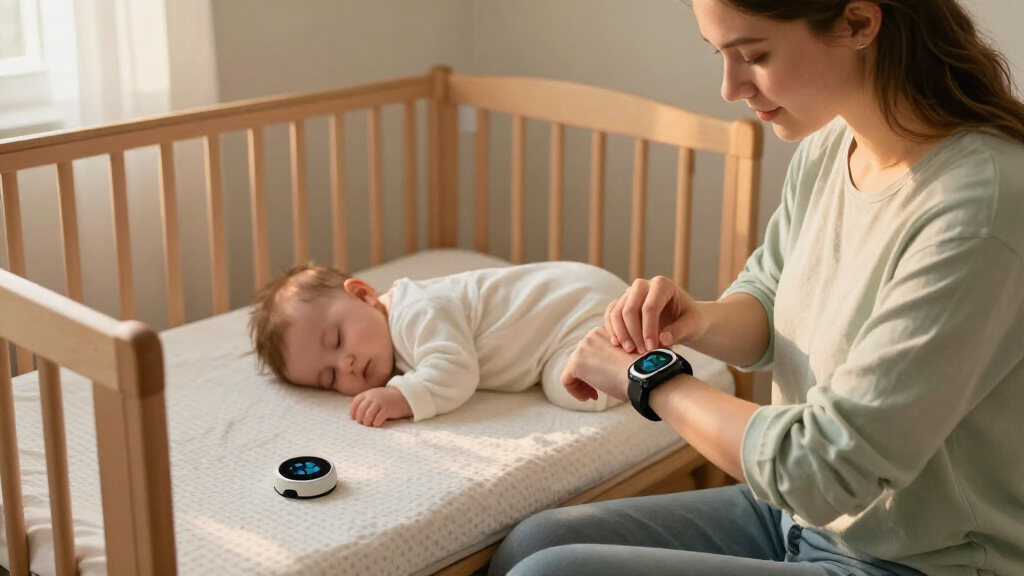
How We Picked
I ranked these options by how well they answer the practical sleep-tracking question: can a buyer wear or install the device consistently, understand its sleep information, and use it alongside the rest of their routine? I weighed comfort and form factor, the clarity and breadth of health tracking, everyday usability, setup and maintenance, and whether the device also serves a useful role beyond sleep. I treated claims from product names as feature cues, not proof that sleep-stage estimates or health measurements are clinically accurate.
The order favors flexible options that combine accessible sleep tracking with everyday usefulness, then gives higher placement to products with a distinct strength for a clear buyer type. Membership requirements, screenless operation, reliance on an app, and wearable-free versus wrist-based tracking all affect the ranking. Several listings are variations of the Fitbit Inspire 3, so I do not treat color or bundle differences as meaningful performance advantages. Lower-ranked products are not necessarily poor choices; they are more specialized, less clearly differentiated, or harder to recommend across a broad range of sleepers.
| sleep tracker | GPS |
|---|---|
| WHOOP 5.0 Screenless Fitness a | — |
| Screenless Fitness Tracker Sma | Connected GPS via smartphone |
| Fitbit Charge 5 Health and Fit | Built-in |
| Withings Sleep Under-Mattress | — |
| FITVII FINO2 Slim Fitness Trac | Via smartphone |
| Google Fitbit Inspire 3 Fitnes | — |
| Google Fitbit Edge Activity Tr | Built-in |
| Fitbit Inspire 3 Fitness Track | Via connected smartphone |
| Free Shark Smart Ring with Sle | Via smartphone |
| Fitbit Versa 4 Health and Fitn | Built-in |
| Samsung Galaxy FIT 3 [40MM] 1. | No GPS |
| Fitbit Inspire 3 Fitness Track | Via smartphone |
| Bestinn H32 Pro Fitness Tracke | Connected-phone GPS |
| Fitbit Inspire 3 Health and Fi | — |
| Google Fitbit Air Screenless A | Via smartphone |
Factors to Consider When Choosing Best Sleep Trackers
Before choosing from these 15 options, decide what you need sleep tracking to change: your bedtime habits, your training routine, or simply your awareness of overnight patterns. The right device is the one you can use consistently and whose data you can interpret without mistaking estimates for a diagnosis.
Choose a Form Factor You Can Sleep In
Overnight comfort can matter more than a long feature list because a tracker left on the bedside table cannot record your usual night. Wristbands are familiar and often do double duty during the day, but their straps, bulk, or screen can bother sensitive sleepers. A ring keeps the device compact, though proper sizing is key and some people dislike wearing jewelry to bed. An under-mattress pad avoids body-worn hardware, but it ties tracking to one sleeping surface and may not fit every bed setup. If possible, prioritize an easy return or sizing process over buying a form factor solely for its advertised sensor count.
Match Data Depth to the Decision You Want to Make
Sleep duration and regularity can be more actionable than a dashboard packed with stages and scores. If your goal is to notice late bedtimes or inconsistent routines, a simple trend view may be enough. Training-focused users may value overnight recovery signals alongside activity data, while others may find that extra detail creates noise rather than useful guidance. Do not assume that more metrics mean more accurate measurements; consumer wearables estimate sleep from signals and can disagree with one another. Pick the smallest set of information that can help you make a practical change.
Check Memberships, Apps, and Phone Compatibility
A tracker is only as useful as the data you can access and the app you are willing to open. Before choosing, check which insights require a subscription, whether a membership renews after an included period, and what remains available without it. Confirm that the companion app supports your phone and that syncing works with any health platform you already use. A screenless device may encourage fewer distractions, but it also makes the app central to reviewing results. Avoid buying based only on a device’s feature list if key reports depend on an ongoing service you do not want.
Treat Sleep Stages as Estimates, Not Medical Findings
Consumer sleep trackers can help reveal personal patterns, but their stage labels and overnight readings are not a clinical sleep study. A single night with an unusual score should not outweigh how you feel or a longer-term pattern. Use the same device under similar conditions to compare trends, rather than treating readings from different brands as directly interchangeable. If you have persistent sleep problems, loud snoring, or severe daytime tiredness, tracker data cannot diagnose the cause. Share concerns with a qualified clinician instead of trying to resolve them through a wearable alone.
Account for Charging, Maintenance, and Nightly Habits
Battery life and charging routines affect whether tracking becomes consistent, especially if the device needs to be removed overnight to recharge. Think about when you naturally charge a wearable and whether its design works with that routine. Bands need cleaning and strap adjustment; rings need a secure fit; a bed sensor needs a suitable placement and may be less portable when you travel. Water resistance can help with everyday wear, but it does not remove the need to follow the maker’s care instructions. A less feature-rich tracker that is ready each night may serve you better than one you often forget to wear.
Pay for a Distinct Benefit, Not a Longer Spec List
Spending more makes sense when a device adds something you will use, such as recovery-focused guidance, broader smartwatch functions, or tracking without wearing a band. It is harder to justify extra cost for features that duplicate a phone or another wearable you already own. The repeated Inspire 3 listings in this roundup show why buyers should compare the actual bundle and included bands rather than assume each listing represents a different tracker. For a first device, simple sleep trends may be enough to learn whether tracking helps at all. Move to a more specialized option only when you can name the limitation you want it to solve.
Frequently Asked Questions
Is an under-mattress tracker a better choice than a wristband if I dislike wearing a device at night?
It can be a better fit if wearing a band or ring interrupts your sleep, since an under-mattress sensor records without attaching anything to your body. Its main tradeoff is that it stays with the bed, making it less convenient for travel and less useful for daytime activity tracking. Check that the sensor is compatible with your mattress and bed arrangement before buying. A wristband is more versatile, but only if you can tolerate wearing it overnight. Choose based on which setup you are more likely to use consistently.
Do I need a subscription to get useful sleep information?
Not every buyer needs a membership, but the amount of information available without one varies by device and service. Before committing, check which sleep reports, historical trends, and recovery insights require a paid plan, and whether any included membership period later renews. A subscription-based tracker may make sense if you want ongoing coaching or a broader recovery picture. If you mainly want basic sleep patterns, a simpler device with accessible core reports may be a better match. Treat recurring service costs as part of the product decision, not an afterthought.
Should I choose a screenless tracker or one with a display?
A screenless tracker suits people who want a low-distraction wearable and are comfortable checking results in an app. A display makes it easier to view the time or activity details without reaching for a phone, but it can add visual presence on the wrist. Neither format guarantees better sleep data by itself. Think about whether you want to interact with the device during the day or keep it out of sight. If you already dislike checking your phone before bed, consider whether relying on an app for reports fits your habits.
How should I compare the several Fitbit Inspire 3 listings in this roundup?
Start by checking whether the listing is for the same tracker with a different color, band combination, or bundle. Those differences may affect fit, appearance, or included accessories, but they do not automatically mean the sleep-tracking functions are different. Read the precise package details and confirm which band sizes are included. Avoid choosing one variant based on its listing title alone, especially when the same core model appears multiple times. If the bundle adds nothing you need, focus on the standard model’s fit and app experience.
Can a sleep tracker tell me whether I have a sleep disorder?
No. Consumer trackers can show patterns that may be useful to discuss, but their sleep stages and health readings are estimates, not a diagnosis. A reassuring score does not rule out a problem, and an unusual reading on one night does not prove one exists. If poor sleep persists or you have symptoms such as severe daytime sleepiness or disrupted breathing, seek advice from a healthcare professional. You can bring longer-term tracker trends as context, while letting a clinician decide whether further evaluation is needed.
Conclusion
For most people who want an everyday wearable with approachable sleep tracking, I recommend the Fitbit Inspire 3 as the best overall; among its repeated listings, choose by band fit and bundle rather than color alone. Best for recovery-focused users: WHOOP 5.0, provided its membership model and screenless design suit your routine. Best for wearable-free sleep tracking: Withings Sleep, especially if you want a sensor that stays with your bed. Best value: a straightforward Inspire 3 configuration is the sensible starting point when you do not need specialized recovery features. Best for beginners: the standard Fitbit Inspire 3 offers a familiar wristband format without making a niche use case the center of the decision. If you want a compact alternative, consider a ring or slim band only after checking fit and app support; if smartwatch functions matter more, look at the Versa 4 or Galaxy Fit 3. Choose the device whose comfort, data access, and daily routine you can sustain—not the one with the longest list of measurements.