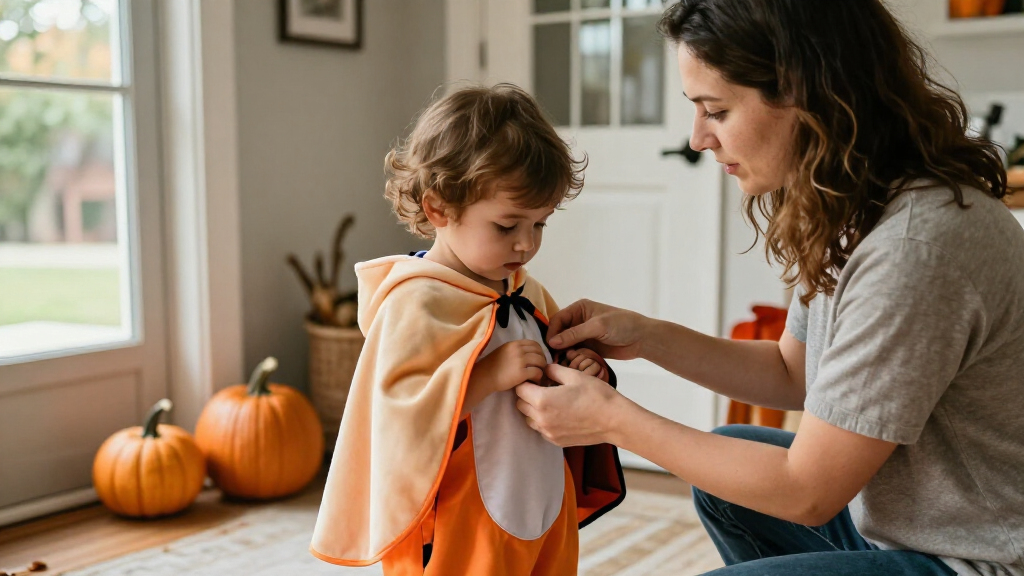

Choosing a Halloween costume for a child with sensory needs often means weighing softness, coverage, and freedom of movement against the feel of closures, warmth, and how easy it is to get dressed. My leading pick is the Adaptive Long-Sleeve Jumpsuit for its brushed interior and tagless, flat-seam construction. The Kids’ Adaptive Back-Zip Jumpsuit is a stronger match when concealed diaper access matters, while the dark-blue sensory body sock offers a stretchy, movement-focused alternative for a child who prefers pressure and active play to a conventional costume.

Turn the school run and nap time into listening time
- Thousands of audiobooks, podcasts and originals
- Listen on your phone, tablet or Echo — also offline
- Cancel anytime
These products are not interchangeable: two are full-coverage adaptive garments, and two are sensory body socks rather than Halloween costumes with character details. A snug one-piece can reduce irritating layers and limit access to clothing, but may feel restrictive or warm; a body sock allows creative movement, but offers less coverage and has sparse sizing information. I rank them by how clearly their features support a wearable Halloween option, while calling out where a family may need to add layers, check fit carefully, or choose something else entirely.
Complete the kit


Key Takeaways
- Best all-around garment: The Adaptive Long-Sleeve Jumpsuit combines brushed cotton-blend fabric, tagless labels, flat seams, and full-body coverage, but its fit details are not supplied.
- Best for concealed access: The Kids’ Adaptive Back-Zip Jumpsuit specifies a hidden YKK zipper, a dual-button flap, and an inner fabric layer; that specialized closure may slow dressing and changes.
- Best for pressure and movement: The dark-blue body sock is described as an elastic option for creative movement and deep pressure input, but it is not a full-coverage costume.
- Bright-color alternative: The yellow body sock shares the 63–66-inch height range and movement-oriented purpose of the blue option, with limited product details and no listed material composition.
- Check fit and the child’s preferences first: The jumpsuits cover the body and have back closures, while both body socks list only a narrow height specification; neither category suits every sensory preference.
| Adaptive Long-Sleeve Jumpsuit for Children with Special Needs |  | Best Overall Adaptive Costume Foundation | Fabric: 95% cotton, 5% spandex | Care: Machine wash | Origin: Imported | VIEW LATEST PRICE | See Our Full Breakdown |
| Kids’ Adaptive Back-Zip Jumpsuit for Special Needs |  | Best for Concealed Access and Reinforced Closure | Fabric: 95% cotton, 5% spandex | Care: Machine wash | Origin: Imported | VIEW LATEST PRICE | See Our Full Breakdown |
| Elastic Sensory Body Sock for Kids and Adults, Dark Blue, 63–66 in |  | Best Movement-Focused Alternative | Color: Dark blue | Height: 63–66 in | Material: Elastic | VIEW LATEST PRICE | See Our Full Breakdown |
| Elastic Sensory Body Sock for Kids and Adults, Bright Yellow, Height 63–66 |  | Best Bright-Color Body Sock | Color: Bright yellow | Height: 63–66 in | Intended users: Kids and adults | VIEW LATEST PRICE | See Our Full Breakdown |
| Halloween costumes for kids with sensory need | Fabric | Care | Origin | Coverage |
|---|---|---|---|---|
| Adaptive Long-Sleeve Jumpsuit | 95% cotton, 5% spandex | Machine wash | Imported | Full body; legs extend to ankles |
| Kids’ Adaptive Back-Zip Jumpsu | 95% cotton, 5% spandex | Machine wash | Imported | Long sleeves and legs |
| Elastic Sensory Body Sock for | — | — | — | — |
| Elastic Sensory Body Sock for | — | — | — | — |
More Details on Our Top Picks
Adaptive Long-Sleeve Jumpsuit for Children with Special Needs
This jumpsuit earns my first place because it combines the clearest set of comfort-focused construction details with full-body coverage. Its cotton-spandex blend has a soft brushed interior, and the listing specifies tagless labels and flat seams—details that may help when a child reacts to scratchy tags or raised stitching. Long sleeves and ankle-length legs make it a practical one-piece foundation for a simple Halloween look, without needing a separate top and bottom that can bunch or shift.
Its concealed rear zipper and protective dual-button flap also make it more suited than either body sock to families seeking clothing that is harder to remove or access. Compared with the Kids’ Adaptive Back-Zip Jumpsuit, this option calls out the brushed interior and reinforced zipper area, while the other specifies a YKK zipper and an inner fabric layer. The difference may help buyers decide which construction detail matters more, but neither listing provides a size chart, so I would not choose by age range alone.
The tradeoff is the design itself: a snug, enclosed one-piece can feel confining, and the rear closure can make independent dressing or quick changes less straightforward. Its long sleeves and full-length coverage may also run warm indoors or during an active evening. Compared with the body socks, it reads more like a wearable garment and offers more coverage, but less freedom for a child who wants to move without clothing boundaries. I would choose it when familiar cotton-blend clothing and a concealed closure are priorities, not when the child resists close-fitting outfits.
Pros:- Brushed interior and cotton-spandex fabric are described as soft against skin.
- Tagless labels and flat seams may reduce common sources of irritation.
- Full-body coverage and a concealed rear zipper with protective flap limit access to clothing.
- Reinforced zipper area is designed to resist tearing.
Cons:- Snug, enclosed construction may not suit a child who prefers loose clothing.
- No detailed sizing measurements are provided, making fit harder to judge.
- Long sleeves and ankle coverage may feel too warm for active or indoor wear.
Best for: Families seeking a full-coverage, soft-feeling one-piece costume base with tagless labels, flat seams, and a concealed rear closure.
Not ideal for: Children who dislike snug, enclosed clothing, need frequent rapid changes, or require a size decision based on detailed measurements that are not supplied.
- Fabric:95% cotton, 5% spandex
- Care:Machine wash
- Origin:Imported
- Sleeves:Long sleeve
- Coverage:Full body; legs extend to ankles
- Closure:Concealed rear zipper with dual-button flap
- Recommended age:3–16 years
Our verdict“I rank this first for its well-described comfort details and full coverage, provided the child accepts a snug one-piece and the family can confirm fit before ordering.”
Kids’ Adaptive Back-Zip Jumpsuit for Special Needs
This is the closest alternative to my overall pick: a full-coverage cotton-spandex jumpsuit with tagless labels, flat seams, and long sleeves and legs. Its strongest distinction is the stated closure construction: a hidden rear YKK zipper with a dual-button flap and an inner fabric layer. For a family prioritizing a covered back closure and a garment designed to resist removal or access, those details make this model a persuasive choice. It also lists reinforced stitching, which adds a durability point absent from the body-sock descriptions.
Compared with the first-place jumpsuit, this model makes the zipper specification more explicit, while the other calls out a brushed interior and a reinforced zipper area. Both describe soft, stretchy cotton blends and similar full-body coverage, so the decision may come down to which feature is more relevant to the child: a brushed feel or the named zipper and inner layer. Neither listing supplies detailed measurements, and neither can promise that a child will accept the close fit.
For Halloween, the one-piece can simplify outfit planning and provide more coverage than either sensory body sock. Yet that coverage has a cost: the long, full-length cut may feel warm, and the rear zipper may make dressing and changing less convenient. A child who needs frequent toileting or prefers to manage clothing independently may find the closure frustrating. I would put this ahead of the first pick when the specified back-zip design is the main requirement; I would skip it if speed, ventilation, or easy self-dressing matters more.
Pros:- Soft, breathable cotton-spandex fabric is designed for sensitive skin.
- Tagless labels and flat seams address common irritants.
- Hidden rear YKK zipper, button flap, and inner layer support concealed access.
- Reinforced stitching is specified for everyday wear.
Cons:- Full-length coverage may be too warm in hot weather or during active play.
- Specialized back-zip construction can make dressing and changing less convenient.
- Detailed garment measurements are not listed.
Best for: Buyers who want an adaptive full-length garment with a named hidden YKK rear zipper, button flap, and inner fabric layer.
Not ideal for: Children who dislike back closures or full-length outfits, and families who need quick access for frequent clothing changes.
- Fabric:95% cotton, 5% spandex
- Care:Machine wash
- Origin:Imported
- Closure:Hidden rear YKK zipper with dual-button flap
- Coverage:Long sleeves and legs
- Intended age range:3–16 years
- Construction:Inner fabric layer and reinforced stitching
Our verdict“Choose this over the first-place jumpsuit when its specified YKK back closure and inner layer matter more than a brushed-interior description.”
Elastic Sensory Body Sock for Kids and Adults, Dark Blue, 63–66 in
The dark-blue body sock serves a different purpose from the jumpsuits: its description centers on elastic pressure and creative movement, not on full coverage or a concealed closure. That makes it a possible Halloween choice for a child who enjoys stretchy, close-contact fabric and prefers moving freely to wearing a recognizable character outfit. The listed height range is 63–66 inches, which gives buyers one fit reference, though it is not a full sizing chart.
Compared with the yellow body sock, the blue version at least identifies its material as elastic, while both list the same height range and similar movement-oriented aims. Compared with either adaptive jumpsuit, it is less clearly an outdoor costume garment: the description does not specify sleeves, coverage, care instructions, or how the fabric handles layers. I would see it as a sensory clothing option that could be styled simply, not a ready-made Halloween costume with stated weather or visibility details.
The main limitation is how much remains unknown. The listing describes deep pressure input and sensory organization, but provides no supporting construction or use details that would let me judge how the fit feels in practice. I would not treat those stated benefits as a guaranteed outcome. Families should also check whether the child wants this kind of enclosed stretch at all; a body sock may be appealing to one child and uncomfortable to another. Choose it over the jumpsuits for movement-focused use and the dark-blue color, but skip it if you need a clearly described, full-coverage outfit or a precise fit guide.
Pros:- Elastic material is identified in the product details.
- Designed to encourage creative movement and motor awareness.
- Described as suitable for children and adults.
- Dark-blue color offers a simple alternative to the bright-yellow version.
Cons:- Height is the only stated fit measurement, with no further sizing detail.
- The description gives limited information about coverage, care, and construction.
- It is not described as a complete outdoor Halloween costume.
Best for: A child within the listed height range who prefers stretchy, movement-focused clothing and may enjoy a dark-blue sensory body sock as a simple costume base.
Not ideal for: Families seeking a conventional full-coverage costume, detailed fit guidance, or clear information about care and garment construction.
- Color:Dark blue
- Height:63–66 in
- Material:Elastic
- Intended users:Kids and adults
- Described use:Creative movement and sensory experiences
- Stated sensory aim:Deep pressure input
Our verdict“I recommend this body sock for movement-oriented sensory preferences, not as a direct substitute for the more fully specified adaptive jumpsuits.”
Elastic Sensory Body Sock for Kids and Adults, Bright Yellow, Height 63–66
This yellow body sock is the brightest, most movement-oriented choice in the lineup, but it is also one of the least specified. Like the dark-blue version, it is described as providing deep pressure input and supporting creative movement; its listed height range is 63–66 inches. It may fit a child who wants a distinctive color and a stretchy sensory experience more than a conventional costume shape.
The dark-blue body sock is the closer comparison: both cover the same height range and are aimed at sensory movement, while the blue listing identifies elastic as its material. The yellow listing does not provide a material composition, care instructions, or a more detailed fit guide. Against the adaptive jumpsuits, it trades coverage and garment construction details for a body-sock format. That difference matters for Halloween: a child may enjoy the movement, but the product description does not say it functions as a full outfit or how it should be layered for outdoor conditions.
I place it fourth because its stated sensory purpose may suit some children, yet the available information is thinner than for the other options. The bright color may appeal to a child who likes vivid clothing, but color alone does not address tactile preferences, comfort, or fit. As with the blue sock, I would not assume the described pressure effect will be useful or comfortable for every child. Choose this only if the child already enjoys this kind of stretchy body sock and the listed height range appears appropriate; skip it if you need precise material details or a clearly defined costume garment.
Pros:- Bright-yellow color gives this option a more vivid look than the dark-blue body sock.
- Designed for creative movement and sensory experiences.
- Listed for use by children and adults.
- Shares a stated height range of 63–66 inches with the blue alternative.
Cons:- Material composition is not provided in the supplied details.
- Sizing information is limited to height.
- The description offers little detail about construction, care, or costume coverage.
Best for: A child who prefers vivid yellow, enjoys movement-focused stretchy clothing, and fits the stated 63–66-inch height range.
Not ideal for: Buyers who need a complete Halloween outfit, detailed material and care information, or a broader sizing guide.
- Color:Bright yellow
- Height:63–66 in
- Intended users:Kids and adults
- Described use:Creative movement and motor awareness
- Stated sensory aim:Deep pressure input
- Material:Not specified in the supplied product details
Our verdict“Pick the yellow body sock over the blue one for its color, but choose the blue version if having elastic listed as a material is more useful to you.”

How We Picked
I compared these four options against the practical needs behind the search: fabric contact, seam and label details, coverage, movement, and closure design. Those factors can matter more than a costume’s theme when a child is sensitive to scratchy labels, tight waistbands, bulky layers, or clothing that shifts during activity. I gave the adaptive jumpsuits stronger placement as wearable costume foundations because their listings describe full coverage, stretch fabric, and construction details that relate directly to everyday comfort.
I then separated the two jumpsuits by their distinctions rather than treating them as duplicates. The first lists a brushed interior and reinforced zipper area; the second names a YKK rear zipper and an inner fabric layer. Both use a cotton-spandex blend, tagless labels, flat seams, and a concealed back closure, so neither is automatically the right choice for a child who dislikes snug garments or needs frequent, quick changes.
The body socks rank below the jumpsuits for a conventional Halloween outfit because their descriptions focus on sensory movement rather than costume coverage, character styling, or outdoor wear. I included them because a stretchy body sock may suit a child who prefers enclosed pressure or expressive movement, and because families may value comfort over a traditional costume look. The product information is limited: each lists a height range, while the blue option also identifies elastic material. I do not infer therapeutic outcomes or unlisted safety features from the descriptions.
My ranking is a guide to product fit, not a substitute for a child’s own preferences or a sizing chart. I considered stated features only and treated missing measurements, care details, or material information as genuine limits. Since sensory needs vary, I favor options with clear construction descriptions while noting that comfort is individual; a soft fabric or hidden zipper can still feel wrong to a particular child.
| Halloween costumes for kids with sensory need | Coverage | Closure | Color | Material |
|---|---|---|---|---|
| Adaptive Long-Sleeve Jumpsuit | Full body; legs extend to ankles | Concealed rear zipper with dual-button flap | — | — |
| Kids’ Adaptive Back-Zip Jumpsu | Long sleeves and legs | Hidden rear YKK zipper with dual-button flap | — | — |
| Elastic Sensory Body Sock for | — | — | Dark blue | Elastic |
| Elastic Sensory Body Sock for | — | — | Bright yellow | Not specified in the supplied product details |
Factors to Consider When Choosing Halloween Costumes For Kids With Sensory Needs
I would start by matching the garment format to the child’s actual clothing preferences, then check fit and the practical demands of the evening. A costume described as sensory-minded is not automatically comfortable for every child. These four options split into full-coverage adaptive jumpsuits and movement-focused body socks, with different compromises in coverage, closures, and available product information.
Start With What the Child Likes Wearing
Before choosing a product, think about familiar clothing: Does the child tolerate long sleeves, stretch fabric, close-fitting layers, and fabric over the legs? The jumpsuits offer a one-piece shape and cotton-spandex construction, but their snug fit and rear closure may be uncomfortable for a child who wants loose or separate garments. The body socks offer a different experience centered on elastic pressure and movement; that may appeal to a child who enjoys stretchy fabric, but it may be a poor match for someone who dislikes enclosed clothing. I would give the child’s known preferences more weight than a product’s sensory-focused wording.
If possible, involve the child in choosing between a one-piece garment and a body sock, and introduce any unfamiliar outfit before Halloween rather than making the first wear part of a busy evening. That is a practical way to learn whether a fabric, seam, or closure feels acceptable without relying on broad claims about sensory benefit.
Compare Coverage, Warmth, and Layers
Both adaptive jumpsuits cover the arms and legs, with the first specifically described as reaching the ankles. That can reduce the need to combine several separate costume pieces, but full coverage may become warm during active trick-or-treating or indoor events. The second jumpsuit has the same broad long-sleeve and leg coverage, with warmth identified as a possible drawback. Neither body sock listing supplies enough detail to compare coverage or weather suitability confidently.
For outdoor plans, I would consider the expected conditions and whether a layer can fit without making the outfit feel restrictive. Avoid assuming a body sock works as outerwear just because it is a one-piece sensory garment. The product details do not state its weather protection, visibility, or layering performance. A costume foundation can be simple and comfortable while still needing a separate plan for warmth and safe visibility.
Choose a Closure That Fits Dressing and Changing Needs
The jumpsuits use concealed rear zippers and button flaps, with the second listing a hidden YKK zipper and inner fabric layer. These features are intended to make access less direct, which may matter to some families. The reverse tradeoff is convenience: a back closure can make dressing, toileting, or a quick change less straightforward, especially if a child wants to manage clothing independently. I would weigh the closure’s purpose against the family’s routine rather than assume a hidden zipper is always an advantage.
The body socks do not list a closure system in the supplied details. That missing information makes it harder to predict how easy either one is to put on or remove. If quick changes are a priority, check the product details with the seller before deciding, and compare the garment with clothing the child already tolerates.
Treat Fit Information as a Key Purchase Detail
The jumpsuits list an intended age range of 3–16 years but do not include garment measurements in the information provided. Age alone cannot tell you whether a one-piece will feel comfortably loose or too snug. The body socks offer a height range of 63–66 inches, but no broader sizing guidance; only the blue option also identifies the material as elastic. Before choosing any option, look for current measurements and product-specific fit instructions, and contact the seller if those details are not available.
When fit is uncertain, my preference is to avoid guessing based only on age or general product language. A garment that is too tight may undermine the comfort a family is seeking, while an unsuitable fit can affect movement. The listed specifications are starting points, not a complete fit guarantee.
Separate Stated Features From Promised Outcomes
The product descriptions use phrases such as deep pressure input and sensory organization, particularly for the body socks. I treat these as descriptions of intended use, not a guarantee that a child will experience a particular result. Product information for the body socks is limited, and the supplied details do not explain testing, construction specifics, or individual suitability. The adaptive jumpsuits also cannot promise comfort simply because they list soft fabric, flat seams, and tagless labels.
Use the stated features to compare products, then let the child’s response guide the choice. If a child has specific clothing, skin, or care needs, check the fabric and fit information with a qualified professional or the product seller as appropriate. A Halloween costume should support the child’s comfort and participation, not become another demand to tolerate.
Decide Whether You Need a Costume or a Sensory Garment
None of these listings describes a character costume with themed accessories. The jumpsuits are best viewed as adaptive clothing that could serve as a simple costume base; the body socks are sensory garments described around movement. A family wanting a recognizable character may need to add a comfortable, familiar element, provided it does not introduce unwanted texture, sound, or pressure.
If the child would rather wear familiar everyday clothing, that can be a reasonable Halloween choice too. My ranking is most useful when these four products are already under consideration; it is not a claim that every child needs an adaptive costume or body sock to participate.
Frequently Asked Questions
Which option is the best starting point for a sensory-minded Halloween outfit?
I would start with the Adaptive Long-Sleeve Jumpsuit if the child is comfortable in snug, full-coverage clothing. It lists a brushed interior, tagless labels, flat seams, and a concealed rear closure, making it the most complete costume foundation in this group. If the child prefers movement-focused stretchy clothing over a conventional garment, the dark-blue body sock may be a better match, though it has less fit and construction information.
How do the two adaptive jumpsuits differ?
Both use a 95% cotton and 5% spandex blend, provide long-sleeve full coverage, and include a concealed rear zipper with a dual-button flap. The first emphasizes a soft brushed interior and a reinforced zipper area; the second specifies a hidden YKK zipper, an inner fabric layer, and reinforced stitching. I would compare those details against the child’s preferences, while keeping in mind that neither listing supplies a detailed size chart and both may feel too warm or enclosed for some children.
Are the body socks complete Halloween costumes?
The supplied descriptions present the body socks as sensory garments for pressure and creative movement, not as complete themed costumes. They do not specify costume accessories, weather suitability, or full coverage details. A family might use one as a simple outfit choice if the child enjoys the feel, but I would check the product’s full listing and plan any extra layers or costume elements around the child’s comfort.
What should I check before buying for fit?
Look for actual garment measurements and fit guidance rather than relying only on age. The jumpsuits list an age range of 3–16 years but do not provide specific measurements in the supplied information. Both body socks list a 63–66-inch height range, with no broader sizing details; the blue version names elastic as its material, while the yellow listing does not provide a material composition. If fit remains unclear, ask the seller before ordering.
Will a soft fabric or sensory-focused design suit every child?
No. Tagless labels, flat seams, and a soft fabric may address some common sources of irritation, but a child may still dislike a close fit, a particular fabric sensation, long sleeves, or a back closure. Likewise, a body sock described as providing deep pressure input may not feel comfortable or useful to every child. I would prioritize the child’s known preferences and offer a chance to try an unfamiliar garment in a low-pressure setting before Halloween.
Conclusion
For a child who tolerates a snug one-piece and needs a practical, full-coverage base, I would choose the Adaptive Long-Sleeve Jumpsuit first. Pick the Kids’ Adaptive Back-Zip Jumpsuit instead when its specified YKK zipper and inner layer are the more relevant details. For a child who prefers movement and elastic pressure to a conventional outfit, the dark-blue body sock is the more clearly specified of the two sock options; choose the bright-yellow version when its color is the deciding preference. I would skip both body socks if you need a fully described costume garment, and skip either jumpsuit if the child dislikes enclosed clothing or requires easier changes. Fit, comfort, and the child’s own choice matter more than matching a traditional Halloween look.
Halloween Picks
halloween
As an affiliate, we earn on qualifying purchases.