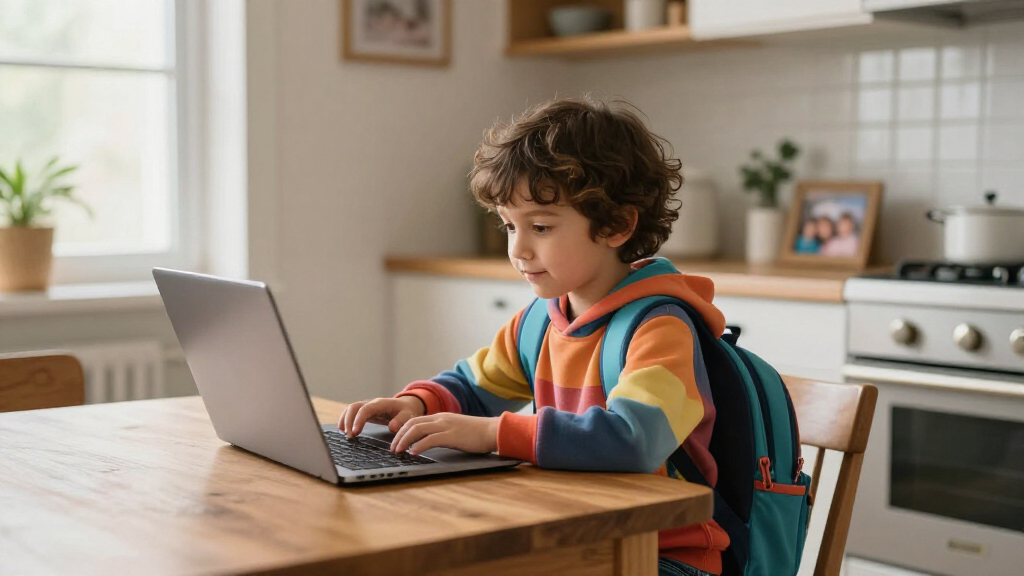

Choosing the right laptop for kids heading back to school involves balancing affordability, durability, and usability. The Lenovo 100e 81ER000BUS stands out as the best overall pick thanks to its reliable Chrome OS and sturdy build. For those on a tighter budget, the CHIBBS 10.1-Inch Kids Laptop with Android offers excellent portability and kid-friendly features. Meanwhile, the NIMO 15.6″ Student Laptop makes sense for older students who need a larger screen and more storage. The main tradeoffs in this category revolve around screen size versus portability, performance versus price, and durability versus lightweight design. Keep reading for a detailed breakdown of these options so you can find the best fit for your child’s needs.

Turn the school run and nap time into listening time
- Thousands of audiobooks, podcasts and originals
- Listen on your phone, tablet or Echo — also offline
- Cancel anytime
Complete the kit


Key Takeaways
- The best overall laptops balance performance, durability, and a kid-friendly interface, with Chromebooks leading due to their simplicity and affordability.
- Screen size varies widely, with compact models ideal for portability and larger screens better suited for multitasking and media consumption.
- Storage capacity is often limited in budget options, so consider whether cloud storage or external drives are necessary for your child’s schoolwork.
- Durability features like rubber bumpers and tough chassis are key for younger children, while older students may prioritize performance and multitasking.
- Price points range from budget-friendly to premium, but paying more often yields better build quality and longer-lasting devices.


| kids’ back to school laptop | Processor | RAM | Storage | Display |
|---|---|---|---|---|
| Lenovo 100e 81ER000BUS 11.6" H | Intel Dual-Core Celeron N3350 1.1 GHz (up to 2.4 GHz) | 4GB LPDDR4 | 16GB SSD | 11.6-inch HD (1366 x 768) LED |
| Lenovo 11.6" 300e Chromebook T | MediaTek 8173C | 4GB LPDDR3 | Up to 32GB eMMC | 11.6" HD 10-point multitouch IPS (1366 x 768) |
| HP Chromebook 11A G8 Education | AMD A4-9120C Dual Core 1.6 GHz (up to 2.4 GHz) | 4GB DDR4-1866 SDRAM | 32GB eMMC | 11.6-inch HD (1366 x 768) anti-glare |
| HP Chromebook 11-inch Laptop w | MediaTek MT8183 | 4 GB | 32 GB eMMC | 11.6-inch HD Touchscreen |
| NIMO 15.6" FHD Student Laptop | Intel N150 | 4GB DDR4 | 128GB SSD | 15.6" FHD |
| CHIBBS 10.1-Inch Kids Laptop C | Quad Core | 2GB | 64GB | — |
| HP 14 Student Laptop with Quad | Intel Celeron N150 | 4GB DDR4 | 128GB UFS | 14-inch HD (1366×768) |
| Dell Chromebook 11 3100 11.6" | Celeron N4020 | 4 GB | 16 GB Flash | — |
| CHIBBS 10.1-Inch Kids Laptop C | Quad-core 1.6 GHz | 2GB | 64GB | 10.1 inches |
More Details on Our Top Picks
Lenovo 100e 81ER000BUS 11.6″ HD Chromebook, Intel Dual-Core Celeron N3350, 4GB RAM, 16GB SSD, Bluetooth, USB Type C, 802.11ac, Webcam, Chrome OS
This Lenovo 100e Chromebook offers a simple, lightweight design focused on everyday tasks, making it ideal for younger students or those just starting with a laptop. Compared with the Lenovo 11.6″ 300e, it’s more affordable but sacrifices storage and resolution, which could be limiting for more demanding assignments. Its spill-resistant keyboard and portability are strong points, but the limited 16GB SSD and HD display may fall short for students needing more space or sharper visuals. Overall, this model is best for basic browsing, note-taking, and beginner users who prioritize affordability and durability over speed and storage.
Pros:- Lightweight and highly portable for easy carrying
- Spill-resistant keyboard enhances durability for younger users
- Decent performance for browsing, streaming, and schoolwork
Cons:- Limited storage capacity at just 16GB SSD
- HD resolution may be insufficient for detailed work or media
- No optical drive or expandable storage options
Best for: Younger students or beginners who need a simple, durable device for light tasks
Not ideal for: Older students or those doing heavy multitasking or media editing
- Processor:Intel Dual-Core Celeron N3350 1.1 GHz (up to 2.4 GHz)
- Display:11.6-inch HD (1366 x 768) LED
- RAM:4GB LPDDR4
- Storage:16GB SSD
- Graphics:Intel HD Graphics 500
- Connectivity:Bluetooth, USB Type C, 802.11ac Wi-Fi
Our verdict“This Chromebook makes sense for elementary students or beginners prioritizing affordability and durability over advanced features.”
Lenovo 11.6″ 300e Chromebook Touchscreen 2-in-1 (Renewed)
This Lenovo 300e Chromebook’s touchscreen and 2-in-1 design offer added flexibility, making it an excellent choice for students who appreciate tablet-like functionality. While the display resolution remains at 1366 x 768, its multitouch screen supports interactive learning apps better than traditional non-touch models like the Lenovo 100e. Compared with the HP Chromebook 11A G8, it’s more adaptable for creative tasks, but its renewed status may raise concerns about longevity and durability. Despite the lower-resolution display, its versatility makes it ideal for students who want to switch between laptop and tablet modes frequently.
Pros:- Touchscreen 2-in-1 design for versatile use
- Lightweight and portable for school and travel
- Decent performance for daily browsing and apps
Cons:- Low-resolution display may impact media clarity
- Limited storage at 32GB eMMC
- Renewed product might have reduced long-term durability
Best for: Students who benefit from touchscreen interaction for note-taking or creative projects
Not ideal for: Parents seeking a brand-new device with guaranteed longevity or those needing high-resolution screens
- Processor:MediaTek 8173C
- Display:11.6″ HD 10-point multitouch IPS (1366 x 768)
- RAM:4GB LPDDR3
- Storage:Up to 32GB eMMC
- Connectivity:WiFi 802.11 AC 2×2, Bluetooth v4.2
- Operating System:Chrome OS
Our verdict“Perfect for students who want a flexible, touch-enabled device for everyday learning and creative activities, despite some storage limitations.”
HP Chromebook 11A G8 Education AMD A4-9120C 4GB 32GB eMMC 11.6-inch HD Webcam Chrome OS
This HP Chromebook 11A G8 is designed with education in mind, featuring a robust full-sized backlit keyboard and a longer-lasting 47 Wh battery. Its AMD A4-9120C processor is adequate for classroom tasks but might lag behind Intel or MediaTek options when multitasking or running heavier apps. Compared to the Lenovo 100e, it offers a more comprehensive port selection and better keyboard experience, but its basic HD display and 32GB storage limit its appeal for media or storage-heavy projects. It’s a balanced choice for students needing a reliable, durable device primarily for schoolwork and web browsing.
Pros:- Full-sized, backlit keyboard improves typing comfort
- Long battery life supports all-day school use
- Multiple ports including USB-C and microSD for expandability
Cons:- Limited internal storage at 32GB eMMC
- Basic HD display may not satisfy media needs
- Processor may be underpowered for demanding tasks
Best for: Middle school students or classrooms needing dependable, long-lasting devices
Not ideal for: High schoolers or users requiring advanced multitasking and ample storage
- Processor:AMD A4-9120C Dual Core 1.6 GHz (up to 2.4 GHz)
- Display:11.6-inch HD (1366 x 768) anti-glare
- RAM:4GB DDR4-1866 SDRAM
- Storage:32GB eMMC
- Battery:47 Wh Li-ion polymer
- Ports:2 USB 3.1 Type-C, 2 USB 2.0, microSD
Our verdict“A solid choice for students who prioritize battery life and a full keyboard for everyday educational tasks over high-resolution display or storage capacity.”
HP Chromebook 11-inch Laptop with MediaTek MT8183, 4GB RAM, 32GB eMMC, HD Touchscreen, Chrome OS
This HP Chromebook offers a bright, responsive HD touchscreen and a lightweight, durable chassis, making it well-suited for students who learn remotely or move between classes. Its MediaTek processor is sufficient for browsing, streaming, and light productivity but less capable for intensive multitasking compared to Intel options like the N150. When compared to the NIMO 15.6″, it’s more portable and easier to carry, but the smaller screen and limited storage may hinder multitasking or large media files. This model is ideal for students who value mobility and a high-quality display for media consumption and basic tasks.
Pros:- Lightweight and highly portable for on-the-go use
- HD touchscreen with wide viewing angles enhances media experience
- Access to Google Play Store expands app options
Cons:- Limited internal storage at 32GB
- Processor may struggle with multitasking or demanding apps
- No dedicated graphics for demanding creative work
Best for: Students who need a portable device for media, remote learning, and light tasks
Not ideal for: Power users or those requiring extensive storage or processing power
- Processor:MediaTek MT8183
- Display:11.6-inch HD Touchscreen
- RAM:4 GB
- Storage:32 GB eMMC
- Wi-Fi:Wi-Fi 5
- Bluetooth:4.2
Our verdict“An excellent choice for students prioritizing mobility and media quality, with some compromises on storage and processing power.”
NIMO 15.6″ FHD Student Laptop for Kids & Learning, 4GB RAM, 128GB SSD, Intel N150, Backlit Keyboard, Fingerprint, Type-C, 53Wh Battery, 2-Year Warranty
This NIMO 15.6″ FHD laptop offers a spacious display and ample storage, making it ideal for students who need more screen real estate for multitasking or media projects. Its Intel N150 processor is energy-efficient but not designed for heavy multitasking or demanding applications, similar to the AMD options. Compared to the smaller, more portable Chromebooks, this model’s larger screen and 128GB SSD provide a better experience for extended use and storing files locally. The backlit keyboard and fingerprint security add convenience and security, but the modest RAM and processor could limit performance for intensive tasks. It suits students who prefer a bigger display for work and entertainment at home or school.
Pros:- Large 15.6″ FHD display ideal for multitasking and media
- 128GB SSD provides ample storage for files and projects
- Backlit keyboard and fingerprint security improve usability and safety
Cons:- Relatively modest RAM for heavy multitasking
- Processor may be underpowered for demanding applications
- Weight and size are less portable than smaller chromebooks
Best for: Middle or high school students needing more screen space and local storage for schoolwork and media
Not ideal for: Younger children or users with limited space for a larger device, or those requiring high-performance processing
- Display:15.6″ FHD
- Processor:Intel N150
- RAM:4GB DDR4
- Storage:128GB SSD
- Battery:53Wh
- Connectivity:Dual Type-C, HDMI, USB-A (3x), headphone jack, Micro SD
Our verdict“This larger-screen laptop fits students needing more storage and display space, accepting some limitations in processing power.”
CHIBBS 10.1-Inch Kids Laptop Computer, Android 12.0, Quad-Core, 2GB RAM, 64GB ROM, Camera, USB, Bluetooth, Wi-Fi, Pink
This model stands out for its colorful, child-friendly pink exterior and modern Android 12.0 OS, making it ideal for young users who primarily need browsing and simple educational apps. Compared to the CHIBBS with accessories, this version offers a similar lightweight design but lacks the included extras, which might be a drawback for parents seeking ready-to-go bundles. Its 2GB RAM is sufficient for basic tasks but can slow down with multitasking or heavier apps. The device’s connectivity options ensure kids can access online content easily, but limited processing power and no detailed battery info mean it’s best for short, supervised sessions. This pick makes the most sense for younger children who need a simple, durable device for browsing and light learning.
Pros:- Child-friendly, colorful design that appeals to young users
- Modern Android 12.0 OS supports current apps and updates
- Multiple connectivity options including Bluetooth and Wi-Fi
Cons:- Limited RAM may cause slowdowns during multitasking
- No detailed battery life information, making usage planning difficult
Best for: Parents seeking a colorful, kid-safe device primarily for browsing and educational apps at home or in supervised settings
Not ideal for: Families wanting a device capable of multitasking or running intensive apps, as the limited RAM will hinder performance
- Screen Size:10.1 inches
- Operating System:Android 12.0
- Processor:Quad Core
- RAM:2GB
- Storage:64GB
- Color:Pink
Our verdict“Best suited for younger children who need a simple, durable device for browsing and light educational activities.”
HP 14 Student Laptop with Quad-Core Processor, 4GB RAM, 128GB SSD, Windows 11, 1-Year Office 365, Copilot AI, Natural Silver
This HP 14-inch laptop makes a compelling case for students needing a versatile device with better multitasking capacity than smaller or simpler models. Compared with the Dell Chromebook 11, it offers a more familiar Windows environment and a larger screen, which enhances productivity for homework and online learning. Its 4GB RAM strikes a balance—enough for everyday multitasking, but not ideal for demanding applications or heavy multitasking. The inclusion of Windows 11 and Office 365 supports schoolwork, while Copilot AI can assist with assignments, but the basic resolution (1366×768) limits visual clarity. This device suits students who want a lightweight, capable laptop that can handle multiple tasks but don’t require high-end specs.
Pros:- Fast quad-core processor supports smooth multitasking
- Includes Windows 11 and Office 365 for school productivity
- Lightweight and portable for easy carrying
Cons:- Limited to 4GB RAM, which can restrict heavy multitasking
- Basic display resolution may not suit detailed visual tasks
Best for: Middle school or high school students needing a reliable, productivity-oriented laptop for schoolwork and casual use
Not ideal for: Heavy multitaskers or those requiring high-resolution displays for detailed visual work, as the resolution is quite basic
- Processor:Intel Celeron N150
- RAM:4GB DDR4
- Storage:128GB UFS
- Display:14-inch HD (1366×768)
- Operating System:Windows 11
- Included Software:1-Year Office 365
Our verdict“A well-rounded choice for students needing a versatile device for everyday school tasks without high-end requirements.”
Dell Chromebook 11 3100 11.6″ Chromebook – 1366 x 768, Celeron N4020, 4 GB RAM, 16 GB Flash, Chrome OS, Intel HD Graphics, US Keyboard (Renewed)
This Chromebook offers a straightforward, affordable option for kids mainly needing internet browsing, light learning, and occasional homework. Compared with the HP Chromebook 11A G8, it provides a slightly larger screen at 11.6 inches and a familiar Chrome OS environment, but the 16GB storage is quite limited for storing files locally. Its Celeron N4020 processor and 4GB RAM handle basic web applications comfortably, but the lower resolution (1366×768) and modest graphics mean it isn’t suited for multimedia-intensive tasks or multitasking. The renewed status keeps costs down but might raise concerns about longevity. This Chromebook is perfect for younger children or beginners who need a simple, portable device for browsing and light tasks on a tight budget.
Pros:- Lightweight and very portable design
- Affordable price point, especially as a renewed device
- Good for basic browsing and online learning
Cons:- Limited storage capacity (16GB), restricting downloads and local files
- Lower screen resolution impacts visual clarity for detailed tasks
Best for: Parents seeking an affordable, simple device for elementary school children for internet use and basic learning apps
Not ideal for: Students needing storage for large files or running more demanding educational software, due to limited storage and performance capacity
- Storage:16 GB Flash
- OS:Chrome OS
- Screen Size:11.6″
- Resolution:1366 x 768
- Processor:Celeron N4020
- RAM:4 GB
Our verdict“A budget-friendly device best suited for young children just starting with online learning and browsing.”
CHIBBS 10.1-Inch Kids Laptop Computer with Android 12.0, Quad-Core Processor, 2GB RAM, 64GB Storage, Bluetooth, Wi-Fi, Includes Accessories
This version of the CHIBBS 10.1-inch laptop is a comprehensive package with accessories, making it ideal for parents who want a ready-to-use device for browsing, schoolwork, and entertainment. Compared to the basic model, it includes a protective bag, mouse, and charger, which adds value but also increases initial cost. Its 2GB RAM limits multitasking, similar to the other CHIBBS model, but the inclusion of parental controls and pre-installed educational apps makes it especially suitable for younger children. Android 12.0 keeps app compatibility current, but performance may lag with multiple open apps. This device is best for casual users who need a portable device with parental controls and included accessories for immediate use.
Pros:- Includes accessories like a protective bag, mouse, and charger for convenience
- Pre-installed with educational apps and parental controls
- Lightweight and portable for kids on the go
Cons:- Limited RAM restricts multitasking and running multiple apps
- Android 12.0 may have limited app compatibility compared to more versatile OS options
Best for: Parents seeking a complete, kid-safe device for browsing, schoolwork, and entertainment, ready out of the box
Not ideal for: Older children or students who need multitasking capabilities or more storage, as the 2GB RAM and limited storage are restrictive
- Display:10.1 inches
- Operating System:Android 12.0
- Processor:Quad-core 1.6 GHz
- RAM:2GB
- Storage:64GB
- Connectivity:Bluetooth, Wi-Fi
Our verdict“Ideal for parents wanting a ready-to-go, kid-safe device for basic browsing and learning activities with extras included.”
How We Picked
I evaluated these laptops based on their suitability for students: ease of use, durability, performance, battery life, and value for money. Chromebooks dominate because they are simple, secure, and typically less expensive, making them ideal for school environments. I also considered build quality, portability, and user reviews to identify devices that can withstand daily use by kids. The ranking reflects a balance of affordability, features, and longevity, focusing on what parents need in a device that will be used frequently and sometimes roughly. Devices that offered a good mix of these attributes without excessive cost ranked higher, while tradeoffs like smaller screens or limited storage impacted lower scores.Factors to Consider When Choosing Kids’ Back To School Laptops
When selecting a kids’ back to school laptop, consider several key factors that impact usability, durability, and overall value. Understanding these can help avoid common pitfalls, such as overpaying for unnecessary features or choosing a device that won’t withstand daily wear. Prioritizing the right specs ensures your child gets a device that supports their learning without becoming a distraction or breaking down early in the year.Performance and Speed
For most school tasks, a basic processor and 4GB of RAM are sufficient. Chromebooks with Intel Celeron or MediaTek chips handle web browsing, document editing, and streaming well enough for classroom use. If your child needs to run more demanding apps or multitask extensively, consider models with more RAM or a more powerful processor, though this often increases cost. Balancing performance with budget is essential to avoid frustration or slowdowns during homework sessions.
Build Durability and Design
Children can be rough on electronics, so look for models with reinforced corners, spill-resistant keyboards, or rugged chassis. Lightweight devices are easier for younger kids to carry but may sacrifice some durability. Conversely, heavier models tend to be more robust but might be cumbersome for small hands. Consider your child’s age and activity level when choosing a design that can withstand daily bumps and knocks without frequent repairs.
Screen Size and Portability
Smaller screens (around 10-11 inches) are highly portable and fit easily into backpacks, making them ideal for younger children. Larger screens (13-15 inches) provide more workspace for multitasking and are better suited for older students who spend extended periods on their device. Keep in mind that bigger screens often mean a heavier device, which could be a concern for younger kids or those who carry their laptops frequently.
Battery Life and Charging
Long battery life (8-12 hours) allows children to use their laptops throughout the school day without needing to find a charger. Devices with shorter battery life may require carrying chargers or power banks, which adds inconvenience. Look for reviews or specifications that specify battery longevity, especially if your child has limited access to power outlets during the day.
Operating System and Ecosystem
Chromebooks dominate the back-to-school space because their simple interface, automatic updates, and integrated Google services make them easy for kids to navigate. Windows or Android-based devices may be preferred if your child needs specific applications or software not available on Chrome OS. Remember, the choice of OS impacts app availability, parental controls, and overall user experience, so match it to your child’s needs and your comfort level with managing the device.
Frequently Asked Questions
Is a Chromebook better for younger children compared to a Windows laptop?
Yes, Chromebooks are generally better suited for younger children due to their simplicity, lower cost, and cloud-based storage options. They are less prone to malware, easier to manage remotely, and typically require less maintenance. However, if your child needs specific Windows-only software or offline capabilities, a Windows laptop may be necessary. Overall, for basic schoolwork and browsing, Chromebooks offer a straightforward, kid-friendly experience.
How important is battery life for a kids’ school laptop?
Battery life is a significant factor because children often spend several hours at school or extracurricular activities without easy access to charging. Devices with longer battery life reduce the risk of interruptions during lessons or homework time. Aim for at least 8 hours of battery endurance to ensure the laptop can last through a full school day, especially if your child travels long distances or has limited power outlets in their daily routine.
Should I prioritize durability over lightweight design?
For younger children, durability often outweighs weight considerations. Devices with reinforced corners, spill-resistant keyboards, or rugged chassis are more likely to withstand drops and rough handling. For older children who carry their laptops less frequently or are more careful, a lighter device might be preferable for portability. Balancing these factors based on your child’s age and habits is key to selecting the right model.
Is storage capacity a big concern for school laptops?
Most school tasks such as browsing, document editing, and streaming do not require large local storage, especially with cloud-based solutions like Google Drive or OneDrive. Many budget models come with 16-32GB of eMMC storage, which can be sufficient if you plan to rely on cloud storage. However, if your child needs to store large files, videos, or offline resources, opting for a model with larger internal storage or external options is advisable, even if it costs a bit more.
When should I consider investing in a more premium or higher-end device?
If your child will use their laptop for more than basic tasks—such as multitasking, multimedia editing, or running specialized apps—spending more can pay off in better performance and longevity. Higher-end options often feature faster processors, larger screens, and more durable build quality, which can extend the device’s lifespan and improve the user experience. For students with advanced needs or those who will use the device for several years, investing in a premium model may be justified.