
TL;DR

Turn the school run and nap time into listening time
- Thousands of audiobooks, podcasts and originals
- Listen on your phone, tablet or Echo — also offline
- Cancel anytime
Movement monitors often alarm even when babies are safe because they rely on indirect signals like motion, which can be misleading. Many false alarms occur due to sensor issues, baby’s movement outside detection zones, or natural irregular breathing. Knowing these causes helps parents react appropriately without unnecessary panic.
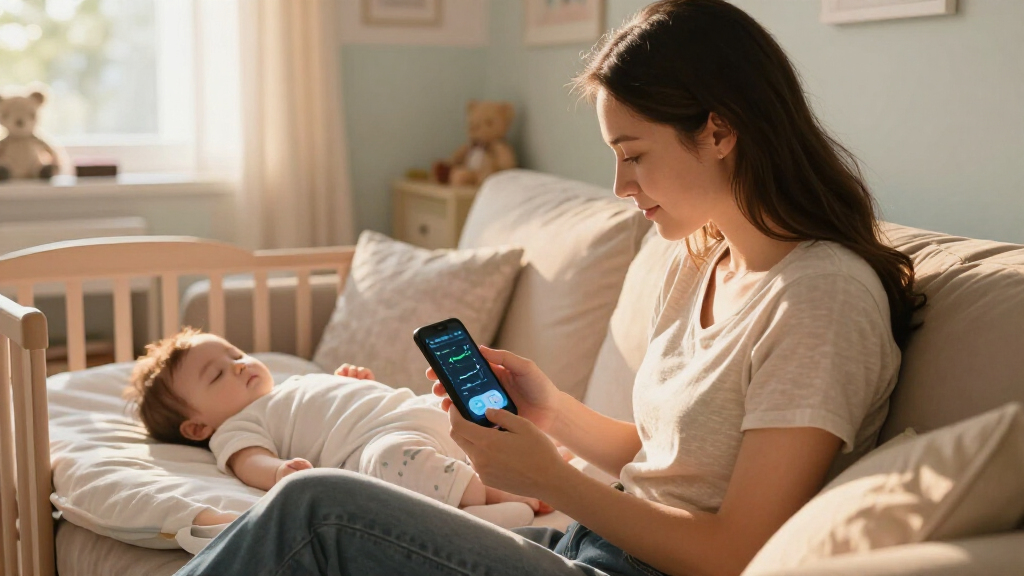
Imagine a quiet night interrupted by a loud alarm. You rush in, only to find your baby sleeping peacefully. It’s a scenario many parents know well. Movement monitors promise peace of mind, but they can sometimes trigger alarms when everything’s fine.
Understanding why these alarms happen is key. It’s not about neglect or poor caregiving — it’s how these devices work. In this guide, you’ll learn what causes false alarms, how to interpret them, and what to do when your monitor rings—especially when your baby is perfectly safe.
Movement monitors detect motion indirectly; they can’t confirm your baby’s breathing or safety.
False alarms often result from sensor issues, baby movement outside the detection zone, or natural irregular breathing.
Always check your baby first—do not rely solely on the monitor’s alarm to assess safety.
Good sleep habits and safe sleep environments are far more effective at reducing risks than monitors alone.
Modern monitors with advanced features help reduce false alarms but are not foolproof; understanding their limits is essential.
Infant monitoring • False-alarm guide
Why Movement Monitors Alarm When Baby Is Fine
A movement alarm reports that a sensor did not detect the expected signal. It does not diagnose stopped breathing—and it cannot independently confirm that a baby is safe. Position, stillness, mattress construction, fit, power, and connectivity can all create an alarming mismatch between the device reading and the baby’s actual condition.
Most consumer devices infer breathing from motion or another proxy signal.
Some monitors alert after this approximate period without detected movement.
Position, contact, stillness, surface, settings, connection, and removal.
Check breathing, color, responsiveness, and comfort before the app.
What really sets alarms off
Common false-alarm triggers
False alarms usually begin with a missed, weakened, or interrupted sensor signal. Several ordinary sleep and setup conditions can create that gap.
Baby moved away
Movement near the edge of a crib may not travel clearly to a mattress pad or may fall outside a camera or radar zone.
Wearable shifted
A loose, incorrectly positioned, or poorly fitted wearable can lose the contact needed to maintain a stable reading.
Baby became very still
Deep sleep can produce movement so subtle that it falls below a sensitive monitor’s detection threshold.
Mattress dampened motion
Thick, foam, hollow, divided, uneven, or incompatible surfaces may transmit breathing-related movement poorly.
Power or connection failed
Low batteries, Wi-Fi or Bluetooth interruptions, base-station placement, and app errors can generate technical alerts.
Monitor stayed on
Removing the baby without switching off the monitor is one of the simplest and most frequent explanations.
Traceability chain
What the monitor actually knows
Consumer devices observe a proxy, transform it into a reading, and compare that reading with a threshold. Information can be lost at every handoff.
Breathing and body motion create small physical signals.
A pad, wearable, camera, or radar attempts to capture the signal.
An algorithm separates expected movement from noise.
Too little detected signal for too long produces an alarm.
The monitor may miss real movement because of placement, surface, fit, sensitivity, or connectivity. It cannot explain the missing signal on its own.
When the alarm sounds
Check the baby first—not the app
Stay focused on direct observation. Earlier false alarms do not prove that a new alarm is harmless, so assess the baby every time before examining the device.
Look
Check for normal chest movement, healthy color, and comfortable breathing.
Touch
Gently touch or stimulate the baby if breathing or responsiveness is unclear.
Act if unwell
Respond immediately to blue or gray color, limpness, gasping, choking, or abnormal breathing.
Troubleshoot
If the baby appears well, inspect fit, position, power, connection, settings, and mattress compatibility.
If the baby is unresponsive, blue or gray, limp, gasping, choking, or not breathing normally, call emergency services immediately and begin infant CPR if trained.
Capability check
What different monitors can—and cannot—tell you
Newer sensors and algorithms may reduce nuisance alerts, but additional technology does not turn a consumer wellness device into a medical diagnosis system.
| Monitor type | Primary signal | Useful for | Key limitation | Confirms effective breathing? |
|---|---|---|---|---|
| Mattress pad | Motion through surface | Broad movement trends | Position and mattress can dampen signals | ✗ No |
| Wearable | Body motion or optical proxy | Closer sensor placement | Fit, contact, battery, and motion artifacts | ~ Not necessarily |
| Camera or radar | Remote motion analysis | Contact-free observation | Angle, obstruction, lighting, and background motion | ✗ No |
| Prescribed medical monitor | Condition-specific clinical signals | Monitoring ordered for a diagnosed need | Requires clinical guidance and remains context-dependent | ~ Depends on system |
Consumer wellness monitors and prescribed medical cardiorespiratory monitors are not interchangeable.
Why a short delay matters
Some devices sound after approximately 15–20 seconds without detected movement. Brief irregular breathing or a missed sensor reading may reach that threshold even when the baby is fine.
The stronger safety layer
Safe sleep matters more than monitoring
Consumer movement monitors have not been shown to prevent SIDS. A monitor cannot make an unsafe sleep environment safe and should never replace recommended sleep practices.
Quick answers
Frequently asked questions
Does an alarm mean breathing stopped?
Not necessarily. It usually means the expected movement or signal was not detected. Check the baby immediately rather than assuming either an emergency or a false alarm.
Can normal pauses trigger an alert?
Infants can have brief pauses and irregular breathing during sleep. A short alert threshold or missed movement may interpret that pattern as signal loss.
When should a clinician be involved?
Discuss recurring alarms with a pediatrician, especially with color change, limpness, feeding difficulty, choking, persistent coughing, poor weight gain, or observed breathing pauses.
Why Do Movement Monitors Sound Off When Your Baby Is Fine?
Movement monitors aren’t magic. They detect motion, but not breathing itself. Instead, they rely on sensors placed on the mattress or worn by your baby to pick up tiny movements. When these signals stop or become inconsistent, alarms go off—even if your baby is breathing normally.
For example, a baby might shift to the corner of the crib, moving outside the sensor’s detection zone. Or they might be so still during deep sleep that the monitor sees no movement at all. These moments can trigger alarms, despite everything being okay.
Most false alarms happen because the device is sensitive to the wrong cues or is affected by external factors — like a loose wearable or a thick mattress. It’s like trying to listen for a whisper in a noisy room. The device detects movement, but it doesn’t really know if your baby is safe.
Understanding these limitations matters because it influences how you interpret alarms. If you know that a sensor losing contact or a baby’s position change can trigger a false alarm, you can avoid unnecessary panic and decide whether immediate action is truly needed. Recognizing that these devices cannot distinguish between benign and dangerous signals helps you maintain perspective and respond more calmly.
As an affiliate, we earn on qualifying purchases.
Common Triggers for False Alarms — What Really Sets Them Off?
Knowing what causes false alarms helps you stay calm when they occur. Here are the most frequent culprits:
- The baby moved outside the detection area. Mattress sensors pick up movement where the baby isn’t. If they shift to the crib’s edge, movement might not register.
- The sensor lost contact. Wearables can shift, get covered by blankets, or become loose. Poor connection leads to missed signals.
- The baby was very still. During deep sleep phases, infants often have minimal movement, which can trick sensitive monitors into thinking something’s wrong.
- The mattress or crib is incompatible. Thick foam or uneven surfaces dampen movement signals, making detection unreliable.
- The alarm delay is too short. Many devices set off alarms after just 15-20 seconds of no detected movement. Normal pauses in breathing can then trigger false alarms.
- Connectivity or power issues. Dead batteries, Wi-Fi drops, or app glitches can produce false alarms or missed signals.
- The device wasn’t turned off when the baby was removed. Forgetting to switch off the monitor is a common mistake that triggers alarms unnecessarily.
These triggers matter because they highlight how sensitive and sometimes unreliable the detection method is. For instance, a shift in the baby’s position or a loose sensor can cause a false alarm, which may lead parents to worry unnecessarily. Similarly, environmental factors like a thick mattress or poor contact can impede the device’s ability to accurately gauge safety. Recognizing these causes helps you understand that many alarms are benign and not indicative of actual danger, reducing unnecessary stress and allowing for a more measured response.
As an affiliate, we earn on qualifying purchases.
How Should You Respond When the Alarm Goes Off?
First, don’t panic. The alarm is a signal, not a diagnosis. Your first step should always be to check on your baby directly.
- Look for normal signs: chest movement, color, responsiveness, and ease of breathing.
- Gently touch or stimulate your baby if you’re unsure about their breathing.
- If your baby is unresponsive, blue, limp, or choking, call emergency services immediately and start infant CPR if you’re trained.
- If everything seems normal, inspect the monitor’s placement, battery, and connection. Make sure it’s fitted properly and working correctly.
- Repeat alarms or ongoing concerns should prompt a discussion with your pediatrician, especially if you notice changes in your baby’s color, feeding, or behavior.
For example, if your monitor alarms while your baby sleeps peacefully, check their chest for gentle rise and fall. If they respond to your touch, calm, and look healthy, it’s likely a false alarm. Responding calmly and directly helps you verify your baby’s well-being and prevents unnecessary worry or overreaction.
baby sleep monitor with low false alarms
As an affiliate, we earn on qualifying purchases.
As an affiliate, we earn on qualifying purchases.
Safe Sleep Practices Still Matter More Than Monitors
Remember, a monitor doesn’t replace good sleep safety habits. Using one doesn’t make a cribs, sleep surfaces, or routines safer on their own.
Always place your baby on their back on a firm, flat surface. Keep loose blankets, toys, or bumpers out of the sleep area. Share a room, but avoid bed-sharing in the early months.
Environmental factors matter too: avoid overheating, exposure to smoke, and ensure the crib is free of hazards. These practices are proven to reduce SIDS risk far more than relying solely on a monitor.
Think of the monitor as a safety net, not a safety blanket. It’s a tool, not a substitute for attentive caregiving and safe sleep environments.
As an affiliate, we earn on qualifying purchases.
The Latest Tech — Are New Monitors Less Prone to False Alarms?
Newer movement monitors try to reduce false alarms with smarter sensors, better algorithms, and adjustable sensitivities. Some even use AI to distinguish between true signals and background noise.
For example, devices now incorporate pulse oximetry, radar, or video analysis to improve accuracy. Others offer alerts about poor fit or environmental interference, which can help cut down on nuisance alarms.
Yet, no device is perfect. External vibrations, poor contact, or natural irregular breathing still cause false alarms. Remember, technology advances, but it can’t eliminate all false signals.
Many parents find that setting realistic expectations and understanding device limits improves peace of mind more than chasing perfection in hardware.
In short, better tech reduces nuisance alarms but doesn’t make monitors foolproof. They’re helpful tools but not infallible safety devices.
Frequently Asked Questions
Does an alarm mean my baby stopped breathing?
Not necessarily. It usually indicates the device didn’t detect the expected movement or signal. Always check your baby immediately—don’t assume alarms are true emergencies.
How long can a normal baby pause between breaths?
Infants often pause their breathing for up to 20 seconds during sleep, especially during deep sleep phases. Any longer pause, or associated color change or limpness, needs medical attention.
Why does the monitor alarm at the same time every night?
This could be due to the baby shifting position, battery issues, or environmental vibrations. Consistent alarms at the same time might also relate to device sensitivity settings or external factors affecting detection.
Can a movement monitor prevent SIDS?
No definitive evidence shows that routine consumer movement monitors prevent SIDS. Safe sleep practices remain the most effective risk-reduction method.
Are wearable monitors more accurate than mattress pads?
Both have limitations. Wearables may shift or lose contact; mattress sensors can miss movement if the baby moves outside detection zones. Effectiveness varies by device and situation.
Conclusion
In the quiet moments of parenthood, a sudden alarm can jolt your heart. But knowing why these alarms happen — often when your baby is perfectly fine — gives you confidence. Trust your instincts first, and use monitors as helpful tools, not guarantees.
Remember, safe sleep practices and attentive caregiving remain your best defenses. The next time your monitor rings, take a deep breath, check your baby directly, and remind yourself that most alarms are just technical quirks, not emergencies.
Halloween Picks
halloween
As an affiliate, we earn on qualifying purchases.