
TL;DR
Prime for Young Adults — start your free trial
Fast free delivery, streaming and member deals for eligible 18–24 year olds.
Try it freeAs an affiliate, we earn on qualifying purchases.
Most night lights should emit less than 10 lumens of warm, soft light to ensure safety without disrupting sleep. The trick is balancing visibility with melatonin preservation, especially for young children.
Night lights are a staple in many homes, giving just enough glow to see in the dark without waking everyone up. But how dim is dim enough? Picking the right brightness isn’t just about convenience; it’s about supporting healthy sleep and safety at the same time.
In this guide, you’ll learn what brightness levels work best, how color tone impacts sleep, and what modern options can help you fine-tune your nighttime lighting. Because, honestly, the right dimness can make all the difference between a restful night and a restless one.
Keep night light brightness under 10 lumens to support sleep and safety.
Choose warm-colored (around 2700K) lights to avoid melatonin suppression.
Dimmable or adjustable night lights offer the best flexibility for different needs.
Too bright or blue-toned lights can wake your child or disrupt sleep quality.
Modern smart lights can help fine-tune brightness and color temperature automatically.
Night Light Brightness: How Dim Is Dim Enough?
The right night light reveals obstacles without telling the brain it is daytime. For most bedrooms, nurseries and hallways, the sweet spot is warm, soft light below 10 lumens.
Feedings and diaper changes
Hallways and bathroom trips
A sunset-like color tone
Likely too bright for regular sleep
Bright enough for safety. Dim enough for sleep.
Brightness is only useful when it matches the room, the activity and the sleeper’s sensitivity.
Reveal the next step
Use just enough light to identify floor edges, furniture and common hazards. Larger or cluttered spaces may need careful placement rather than more brightness.
Protect the dark signal
Excess brightness can reduce melatonin production, delay sleep onset and make nighttime waking feel more alerting than necessary.
Create a gentle cue
A low, warm glow can ease fear of the dark while reinforcing the visual message that nighttime is for winding down.
Two settings matter: lumens and kelvin.
Low output limits total illumination. Warm color reduces the stimulating blue-rich signal associated with cooler light.
Keep both dials in the sleep-friendly zone.
A lamp can look small yet still be too intense or too cool. Check the listed lumen output, choose a warm setting and test it after your eyes have adjusted to darkness.
Target: below 10 lm · around 2700KChoose brightness by the job.
Duration matters too: brief task lighting is less disruptive than leaving a brighter lamp on throughout the night.
| Brightness | Best for | Sleep fit | Advantage | Watch for |
|---|---|---|---|---|
| 1–3 lm | Feedings, diaper changes and close-range checks | ✓Very gentle | Minimal disturbance for nearby sleepers | May not reveal hazards across a large room |
| 4–10 lm | Hallways, stairs and bathroom navigation | ✓Best all-round range | Usually enough to identify obstacles | Sensitive sleepers may prefer the lower end |
| 11–20 lm | Short tasks that require more detail | ~Use briefly | Makes temporary tasks easier | Can become disruptive with prolonged exposure |
| 20+ lm | Temporary room illumination | ✗Poor overnight fit | High visibility | More likely to wake sleepers and fragment rest |
Rule of thumb: start at the lowest setting, wait for your eyes to adapt, then increase only until the route is safely visible.
A five-step path to the right glow.
Every choice should connect back to one outcome: safe movement with the least possible sleep disruption.
Name the task
Comfort, navigation, caregiving—or a mix of all three.
Start below 10
Choose low lumens before adding extra brightness.
Set it warm
Aim near 2700K and avoid cool or blue-rich modes.
Keep it low
Shield direct glare and illuminate the walking path.
Adjust in darkness
Fine-tune after full eye adaptation in the actual room.
Technology helps when the fundamentals come first.
Automation adds flexibility, but it cannot compensate for a lamp that remains too bright or too cool.
Features worth prioritizing
Look for controls that reduce unnecessary exposure and let the light respond to changing nighttime needs.
- Dimming that reaches below 10 lumens
- Warm or tunable color near 2700K
- Motion activation for brief, targeted use
- Schedules that dim further as the night progresses
- Memory settings that preserve your preferred level
The dimmest useful light is usually the right light.
Choose warm illumination around 2700K, keep the source out of direct sight and use dimming, motion sensing or schedules to limit exposure. The goal is not complete darkness at any cost—it is safe visibility without turning nighttime into daytime.
What Makes a Night Light Bright Enough—or Too Bright?
Night lights are measured in lumens, which tell you how much light they emit. For safe navigation in a dark room, a light emitting less than 10 lumens usually does the trick. Think of a candle’s glow—soft, gentle, and enough to see without blinding your eyes.
However, the importance of this measurement extends beyond mere visibility. When the lumen level is too high, it can interfere with your body’s natural melatonin production, which is crucial for initiating and maintaining restful sleep. This means that even if a light seems dim or acceptable, its actual brightness can compromise sleep quality if it exceeds the threshold. Conversely, lights that are too dim may not provide enough visibility for safety, increasing the risk of accidents or injuries—especially in unfamiliar or cluttered spaces. The goal is to find a balance: enough light to see hazards, but not so much that sleep is disrupted. This tradeoff underscores why understanding lumen levels is vital—it’s not just about safety, but about optimizing sleep health.
So, the rule of thumb? Keep it under 10 lumens for most nighttime needs. But don’t just rely on numbers. The color of the light matters, too.
dimmable night light with warm color
As an affiliate, we earn on qualifying purchases.
As an affiliate, we earn on qualifying purchases.
Why Warm Light Is Better Than Cool or Blue Tones at Night
Warm white light—think of a gentle sunset or a cozy fireside—is less likely to interfere with sleep. It typically falls between 2700K and 3000K on the color temperature scale. Cooler, blue-toned lights—above 4000K—are more stimulating, like midday daylight, and can suppress melatonin.
Imagine walking into a nursery lit with a candle-like glow versus a cold, blue LED. The warm glow feels soothing, almost like a lullaby for your eyes.
For example, a night light in a child’s room that emits a warm, amber hue at 2700K helps create a calming environment, promoting easier bedtime and better rest. The reason warm light is preferable is that it mimics natural evening light, which signals to your body that it’s time to wind down. Cool or blue tones, on the other hand, send a different message—one of alertness—making it harder for the brain to produce melatonin. Therefore, choosing a warm-colored night light doesn’t just mean aesthetic preference; it directly impacts your child’s ability to fall asleep and stay asleep, highlighting the importance of color temperature in sleep hygiene.
As an affiliate, we earn on qualifying purchases.
How to Choose a Night Light That Balances Safety and Sleep
- Determine your main purpose: safety, comfort, or both.
- Look for lights with less than 10 lumens for gentle illumination.
- Select warm-colored lights (around 2700K).
- Opt for dimmable or adjustable models to customize brightness.
- Test different settings in your space to find what feels right—bright enough to see but not disruptive.
When selecting a night light, consider not just the lumen output but also how the light’s brightness and color interact with your environment. A light that’s too bright can cause your body to produce less melatonin, delaying sleep onset and reducing sleep quality. On the other hand, a dimmer, warm-toned light can serve as a visual cue that it’s time to wind down, helping your brain transition into sleep mode. Using dimmable lights allows you to adapt to different needs—bright enough for safety during late-night checks, yet soft enough to promote relaxation. Testing in your specific space is essential because room size, furniture, and personal sensitivity all influence how light affects sleep. The key is to find a setup that balances visibility with the natural sleep cycle, acknowledging that the right choice supports both safety and restorative rest.
As an affiliate, we earn on qualifying purchases.
The Latest in Night Light Tech: Smarter, Safer, More Sleep-Friendly
Smart night lights let you control brightness remotely and schedule when they turn on or off. They often include features like motion sensors, color adjustment, and even sleep tracking. For example, a smart light might automatically dim at midnight or turn on only when it detects movement.
Some models now filter blue light or shift to warmer hues as the night progresses, helping you preserve melatonin. These innovations make it easier to adapt lighting to your family’s sleep routines.
However, remember: the most advanced features won’t matter if the brightness is too high or the color tone too cool for sleep. It’s important to understand that technology alone doesn’t guarantee better sleep—it must be paired with thoughtful choices about light levels and color. The integration of adjustable features offers flexibility, but the core principles of low lumen output and warm tones remain essential for truly sleep-friendly lighting. When choosing these smart options, prioritize those that allow you to set and maintain brightness levels below 10 lumens and select warm color settings to maximize sleep benefits.
smart night light with color temperature control
As an affiliate, we earn on qualifying purchases.
As an affiliate, we earn on qualifying purchases.
Quick Comparison: Brightness Levels and When to Use Them
| Brightness (Lumens) | Best For | Pros | Cons |
|---|---|---|---|
| 1-3 | Nighttime feedings, diaper changes | Very gentle, minimal disturbance | Limited visibility, may not be enough in larger spaces |
| 4-10 | Navigating hallways, bathroom trips | Safe, enough to see obstacles without waking others | Potentially disruptive if over 10 lumens in sensitive sleepers |
| 11-20 | Brightening a room temporarily | Good for quick tasks | Likely disruptive to sleep if used regularly at high levels |
Most parents find that staying below 10 lumens covers most needs—anything brighter risks waking everyone. Choosing the right brightness involves considering the specific activity and environment. For instance, a lower lumen setting might be perfect for late-night feedings or diaper changes, where minimal disturbance is desired. Slightly higher levels could be acceptable for brief hallway navigation, but prolonged exposure or higher brightness can interfere with the sleep cycle. Recognizing these nuances helps you make informed choices, balancing safety with sleep quality.
What Happens When the Light Is Too Bright or Too Dim?
If a night light is too bright—say, exceeding 20 lumens—it can wake your child or partner, disrupting sleep cycles. Bright, cool-toned lights suppress melatonin more aggressively, making it harder to fall asleep or stay asleep. This can lead to longer sleep latency and fragmented sleep, which impacts overall rest and mood.
On the flip side, a light that’s too dim—like 0.5 lumens—may look lovely but won’t provide enough illumination to safely navigate, especially in unfamiliar rooms. You might stumble over toys or furniture, increasing the risk of falls or injuries. This inadequate lighting can also cause frustration or anxiety, especially for children learning to navigate their environment. Finding the right balance is crucial because too much light compromises sleep, while too little can compromise safety. Recognizing these risks underscores the importance of selecting a night light that offers just enough brightness—enough to see hazards clearly but not so much that it disrupts sleep.
Your Best Bet: Keep It Soft, Warm, and Under 10 Lumens
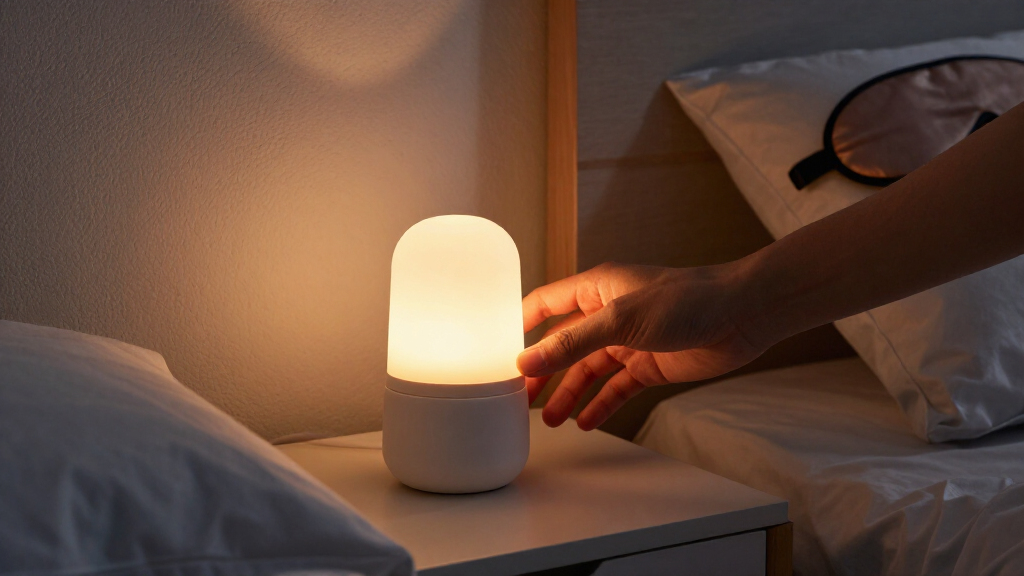
The sweet spot for most night lights? Less than 10 lumens, with a warm hue around 2700K. It’s enough to see obstacles without waking anyone up. Think of it as a gentle candle flicker—soft enough to comfort, not disturb.
For example, a dim amber night light in a toddler’s room helps them feel safe and cozy, promoting longer, more restful sleep. Adjusting brightness based on the night’s needs makes a big difference. This balance ensures that the light acts as a gentle guide rather than a disruptive force, allowing your child’s natural sleep cycle to remain undisturbed. It’s a practical approach rooted in understanding how light influences circadian rhythms and melatonin production. Ultimately, this strategy supports both safety and sleep health, creating a peaceful environment for everyone.
Remember: The goal isn’t total darkness, but a gentle glow that supports both safety and sleep health.
Frequently Asked Questions
How dim should a night light be for a child’s room?
Most experts recommend less than 10 lumens with a warm hue (around 2700K). This level provides enough light for safety without interfering with melatonin production, helping your child fall asleep faster and stay asleep longer.
Can a night light be too dim to be useful?
Yes, if it’s so faint that you can’t see obstacles or navigate safely, it defeats its purpose. Aim for a balance—enough to see but not enough to wake everyone. Recognizing that overly dim lights can compromise safety is key; they might look cozy but can lead to accidents, especially in unfamiliar environments or for children still learning to navigate their space.
Does the color of the night light matter?
Absolutely. Warm tones (2700K) are best for sleep, while cool or blue lights can suppress melatonin and make it harder to rest. Choose night lights that emit a soft amber or orange glow for ideal sleep support. The color influences how the light interacts with your biological clock—warm hues support melatonin production, whereas cooler tones send alert signals to your brain, making it harder to wind down.
Are smart night lights worth it?
They can be very helpful, offering remote control, scheduling, and color adjustments. Just ensure they still adhere to the rule of keeping brightness under 10 lumens and using warm tones. The value lies in their flexibility—being able to adjust brightness and color without physically reaching for the device helps maintain optimal sleep conditions while providing safety and convenience.
How do I test if my night light is the right brightness?
Start by measuring its lumens (many models specify this). Then, observe how it feels in your space—safe and enough to see obstacles, but not so bright it wakes everyone. Adjust if needed. The key is to assess the light’s impact on sleep and safety in real conditions, considering factors like room size, furniture, and individual sensitivity. If it allows you to see hazards clearly without disturbing sleep, it’s the right choice.
Conclusion
The right night light isn’t about blinding brightness but gentle, warm illumination that guides without waking. It’s a small detail with a big impact on sleep quality and safety.
Next time you set up a night light, remember: less is more. Bright enough to see, warm enough to sleep. Your child’s restful night depends on it—and so does yours.
NFL season / tailgating Picks
team gear
As an affiliate, we earn on qualifying purchases.