
TL;DR

Turn the school run and nap time into listening time
- Thousands of audiobooks, podcasts and originals
- Listen on your phone, tablet or Echo — also offline
- Cancel anytime
Steam sterilizers use hot water vapor to kill microbes and work well on heat-resistant items. UV sterilizers use germicidal UV-C light to inactivate microorganisms but require careful placement. Both need thorough cleaning beforehand and have unique pros and cons.
Imagine waking at 3 a.m. to a crying baby, desperately needing a sterile bottle. You want quick, reliable cleaning — but which method is best? Steam vs UV sterilizers each promise germ-free results, yet they use very different tricks. Understanding how each works, and their strengths and weaknesses, can save you time, money, and stress during those middle-of-the-night feeds.
In this guide, you’ll learn what sets these two cleaning styles apart — from their core mechanisms to practical tips for everyday use. Whether you’re handling bottles, pacifiers, or tiny household objects, knowing their limits helps you make smarter choices for your family’s health.
Thorough cleaning before sterilization is essential for both methods to work effectively.
Steam sterilizers excel with heat-resistant objects and provide quick, reliable germ kill.
UV-C sterilizers are better suited for heat-sensitive items but require careful loading and maintenance.
Neither method guarantees absolute sterilization unless validated; many household devices are sanitizers, not sterilizers.
Match the sterilization method to your objects’ material composition and your specific needs for safety and convenience.
Steam vs UV Sterilizers
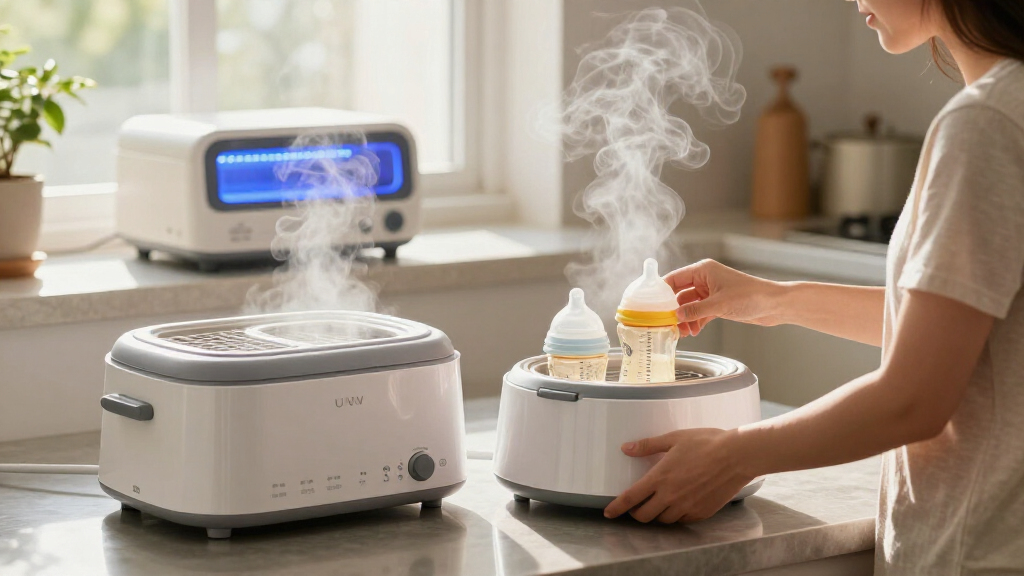
Two cleaning styles, one essential goal: reducing microorganisms on bottles, pacifiers, pump parts, and household objects. Steam relies on hot vapor; UV-C relies on germicidal light. The best choice depends on material, loading, coverage, and the way your household actually uses it.
Heat surrounds. Light targets.
Both methods can reduce bacteria, viruses, and fungi, but their mechanisms create very different strengths and blind spots.
Hot vapor damages essential structures
Moist heat denatures microbial proteins and disrupts cellular structures. Properly circulated steam can reach curved surfaces, crevices, and uneven areas more forgivingly than directional light.
Light damages microbial DNA or RNA
UV-C energy prevents exposed microorganisms from reproducing. The process is waterless and usually adds little heat, but effectiveness depends on a sufficient dose reaching every target surface.
Different tools for different objects
Steam generally offers broader physical coverage; UV-C offers a dry, low-heat process. Neither compensates for poor cleaning or incompatible materials.
| Aspect | Steam | UV-C |
|---|---|---|
| Mechanism | Moist heatDamages proteins and cellular structures. | Germicidal lightDamages DNA or RNA and prevents reproduction. |
| Water | ✓Required to generate steam. | —Usually a waterless process. |
| Heat | ✓Typically around 100°C. | ~Little or no significant heat. |
| Coverage | More forgivingSteam circulates around properly spaced items and can enter small crevices. | Line-of-sightOnly surfaces receiving enough light are effectively treated. |
| Best suited to | Heat- and moisture-resistant bottles, silicone items, and metal tools. | Compatible heat-sensitive objects that can be fully exposed inside an enclosed chamber. |
| Main limitation | Heat and moisture can warp plastics, weaken seals, degrade adhesives, or damage electronics. | Shadows, distance, overlaps, dirt, and declining lamp output can reduce the delivered dose. |
| Maintenance | Descale the unit and clean the water reservoir. | Clean reflective surfaces, inspect LEDs or lamps, and replace lamps when required. |
| Safety | Hot surfaces, steam, and burn risk. | Eye and skin injury risk if UV-C escapes the enclosed chamber. |
0–60 min
What matters more than the marketing
A percentage claim alone does not establish true sterilization. Outcomes depend on preparation, exposure, device condition, organism tested, loading pattern, and validation standards.
Wash first
Organic residue can protect microbes from heat and physically block UV-C light.
Respect the load
Disassemble parts, avoid nesting, leave space, and follow the device loading diagram.
Match the material
Check manufacturer guidance for temperature, moisture, and UV compatibility.
Dry and store carefully
Moist or openly handled items can be recontaminated after a successful cycle.
“99.9% reduction” is not the same as sterilization
True sterilization means eliminating all viable microorganisms, including highly resistant bacterial spores, under validated conditions. Many household products are more accurately described as sanitizers or disinfecting devices.
Check the object before choosing the cycle
Repeated treatment can shorten product life even when a material survives the first cycle. Manufacturer instructions should decide what goes inside.
Steam works best when…
The object is designed to withstand both high temperature and moisture.
- Bottles and parts specifically labeled steam-safe
- Heat-resistant silicone products
- Compatible metal tools and simple components
- Items are separated so vapor reaches every surface
UV-C works best when…
The object is UV-compatible and can be arranged for complete light exposure.
- Heat or moisture would damage the item
- Parts can be disassembled and spaced apart
- All sides can face the light or be repositioned
- The chamber is enclosed and operated as directed
A device is only one link in the process
The final result depends on everything that happens before, during, and after the cycle.
Wash thoroughly
Remove milk, grease, dirt, and visible residue.
Disassemble and space
Open threads, folds, valves, and nested pieces.
Run the correct cycle
Follow the specified load, time, water, and placement rules.
Dry and protect
Limit handling and use clean, closed storage.
Choose steam
When you want quick, dependable, broad coverage and every item is confirmed heat- and moisture-resistant.
Choose UV-C
When you need a dry, low-heat process and can ensure direct light exposure to every relevant surface.
The practical verdict
For either method: clean first, load carefully, verify material compatibility, maintain the device, and treat household “sterilization” claims with appropriate caution.
How Each Method Kills Germs — What You Need to Know
Steam sterilizers use hot water vapor, typically around 100°C, to destroy microbes. Moist heat damages proteins and cell structures, killing bacteria, viruses, and fungi. This process is highly effective because many microorganisms cannot survive the sudden and sustained heat, especially when combined with the moisture that helps penetrate crevices and porous surfaces. The implication here is that steam sterilization offers a broad-spectrum approach that works well for most heat-resistant objects, ensuring a high level of hygiene. However, it also means certain plastics or electronic components may warp or degrade if not designed for heat exposure, which is a critical tradeoff to consider.
In contrast, UV-C sterilizers bathe objects in ultraviolet light, usually near 254 nm, which damages the DNA or RNA of microorganisms. This prevents them from reproducing and effectively neutralizes their ability to cause infection. The significance of this mechanism is that UV-C sterilization is rapid and chemical-free, making it suitable for delicate materials that could be harmed by heat or moisture. Yet, because UV light only reaches surfaces directly exposed to it, shadowed areas or crevices may not be disinfected unless the object is repositioned or the UV source is moved around. The tradeoff here is that UV sterilizers may require more careful handling and multiple cycles to ensure comprehensive coverage, especially for complex-shaped items.
electric steam sterilizer for baby bottles
As an affiliate, we earn on qualifying purchases.
As an affiliate, we earn on qualifying purchases.
Steam vs UV-C: The Showdown in a Side-by-Side Table
| Aspect | Steam | UV-C |
|---|---|---|
| Main Mechanism | Moist heat damages microbes’ proteins and cell walls, leading to cell death. It’s highly effective across a broad range of organisms, including bacteria, viruses, and fungi, because heat denatures essential biomolecules. | Ultraviolet light damages DNA/RNA, preventing microorganisms from reproducing. This process is fast and chemical-free but limited to surfaces directly exposed to UV light, which can leave shadowed areas untreated. |
| Requires Water? | Yes, water is essential to generate steam, which acts as the sterilizing agent. | No, UV-C uses light energy, making it a waterless process that is suitable for water-sensitive objects. |
| Uses Heat? | Yes, typically around 100°C, which can pose risks for heat-sensitive plastics or electronics. | Minimal heat is involved; the primary sterilizing agent is UV light, making it safer for delicate materials but less effective on heat-resistant items. |
| Cycle Time | Often 5-15 minutes, depending on the device, with some requiring additional drying time. Longer cycles can impact convenience but ensure thorough sterilization. | Typically 10-60 minutes, depending on the device and cycle settings. Longer cycles may be necessary for complex or densely packed items to ensure adequate UV exposure. |
| Coverage | Steam reaches around surfaces and inside small crevices, providing comprehensive coverage. Its ability to penetrate porous and uneven surfaces makes it effective for a wide range of objects. | UV light only affects surfaces directly exposed; shadows or occluded areas may remain untreated unless repositioned or multiple cycles are performed. |
| Best For | Heat- and moisture-resistant items like bottles, silicone toys, and metal tools. It’s ideal for items that can withstand high temperatures without damage. | Objects sensitive to heat or moisture, such as electronics, certain plastics, or delicate seals. It’s also useful for quick sanitizing of small items without waiting for a cycle to complete. |
| Limitations | Repeated use can degrade plastics, seals, and electronics. It may warp or damage heat-sensitive components, so materials must be compatible with high temperatures. | Shadowed areas may not be disinfected, and some materials may degrade or discolor after repeated UV exposure. Proper handling and cycle planning are necessary to maximize effectiveness. |
As an affiliate, we earn on qualifying purchases.
Practical Tips for Using Steam Sterilizers
If your bottles and small objects tolerate heat, a steam sterilizer is quick and reliable. Load items properly — avoid overcrowding, ensure each piece is exposed to steam. Use distilled water if possible to prevent mineral buildup, and remember to descale regularly.
For example, a busy mom might run a 10-minute cycle on her electric steam sterilizer before bed. She makes sure bottles are spaced apart, with no nested parts blocking steam flow. The result? Clean, ready-to-use bottles in minutes.
baby bottle sterilizer UV and steam
As an affiliate, we earn on qualifying purchases.
As an affiliate, we earn on qualifying purchases.
How to Get the Most from UV-C Sterilizers
UV-C sterilizers are ideal for items that can’t handle heat or moisture — like electronics or certain plastics. Always disassemble bottles, pumps, and accessories so UV light reaches all surfaces. Follow the manufacturer’s instructions carefully, especially regarding placement and cycle duration. Proper positioning is crucial because shadowed areas won’t be disinfected, which could leave some microbes alive and compromise the sterilization process. Repositioning items or running multiple cycles can help improve coverage, but this also means planning for longer overall sterilization times. The importance of thorough preparation lies in the fact that UV sterilization’s surface-only action makes it critical to maximize exposure for effective results, especially in busy households where quick turnaround is often needed.
For instance, a parent with multiple silicone pacifiers may run them through a UV cycle, spacing them evenly inside the enclosed chamber. Repositioning may be necessary if the device recommends it. Remember, UV doesn’t reach shadowed spots — so cleaning first is essential.
compact UV sterilizer for pacifiers
As an affiliate, we earn on qualifying purchases.
As an affiliate, we earn on qualifying purchases.
Material Compatibility: What Can and Can’t Handle These Methods
Steam can warp plastics, degrade adhesives, and damage electronics with repeated use. Check labels — heat-sensitive bottles, silicone teething toys, and certain seals may not survive steam sterilization. The implication is that not all objects are suitable for high-temperature processes, and frequent use can shorten the lifespan of delicate items. Testing small batches can help determine compatibility without risking your entire collection.
UV-C can discolor or weaken some plastics, especially clear or thin materials. Repeated UV exposure may cause cracking or embrittlement, reducing the structural integrity of items over time. This means that while UV sterilization is gentle on heat-sensitive objects, it still has limitations that could lead to material degradation if used excessively. Always verify with manufacturer guidelines before exposing items multiple times, and consider whether the longevity of your objects aligns with your sterilization routine.
In essence, choose the method that matches your objects’ material makeup — no one-size-fits-all.
Debunking the Myth: Is ‘Sterilization’ Always Achieved?
Many products claim to ‘sterilize,’ but this can be misleading. True sterilization involves the complete destruction of all microorganisms, including bacterial spores, which are notoriously resistant. Most household sterilizers, especially consumer-grade ones, are better described as sanitizers or disinfectants—they significantly reduce microbial presence but may not eliminate every trace. The importance of understanding this distinction lies in setting realistic expectations. For example, a UV cabinet claiming to ‘kill 99.9% of germs’ relies heavily on correct usage and proper loading. If items are improperly positioned, or if shadowed areas are neglected, some microbes can survive, creating a false sense of security. Recognizing that consumer devices often provide high levels of hygiene rather than absolute sterilization helps prevent complacency and encourages proper handling and reprocessing when necessary.
Choosing the Right Method for Your Needs
If your main concern is reliably sterilizing heat-tolerant bottles and pump parts, a steam sterilizer often makes the most sense. It’s straightforward, usually faster, and well-tested, making it a trusted choice for busy households that need quick turnaround times. The comprehensive coverage and proven efficacy reduce the risk of missing germs, which is critical for infant safety.
For items that can’t withstand heat or moisture, or if you prefer a waterless, enclosed system, UV-C sterilizers are appealing. They are especially useful for quick sanitizing of small items like pacifiers or electronics, but require careful setup, proper positioning, and regular maintenance, such as replacing UV lamps and cleaning the interior chamber to prevent dust or residue buildup. The tradeoff is that UV sterilization offers a gentler approach but demands more attention to detail to ensure effectiveness. Many families find that a combination approach—using a washer, then a sterilizer—provides a layered defense that maximizes safety while accommodating different object materials.
Common Questions About Steam and UV Sterilization
- Does UV sterilization work as well as steam? It can significantly reduce microbes if the UV dose reaches all surfaces. However, because UV light only affects directly exposed areas, it’s less comprehensive than steam, especially for complex objects or those with shadowed regions. The effectiveness depends on proper placement and cycle duration, making it essential to understand the limitations of UV light’s surface-only action.
- Do I need to wash items before sterilizing? Yes. Cleaning removes milk, grease, and dirt that shield germs from the sterilizer’s action. Skipping this step can reduce the effectiveness of both methods, as contaminants can protect microbes from heat or UV exposure, leading to incomplete sterilization.
- Is UV-C safe for baby bottles? When the manufacturer approves, and the unit is enclosed, UV-C can be safe. However, repeated UV exposure can weaken plastics and cause discoloration, so it’s important to follow guidelines and avoid unnecessary exposure to prevent material degradation over time.
- Can UV light reach inside a bottle? Only if the UV source and bottle position allow light to enter. Narrow openings or opaque materials block this, which means UV sterilization alone may not fully disinfect the interior of bottles or objects with complex geometries. Combining cleaning or using other sterilization methods may be necessary for thorough disinfection.
- Are sterilized items protected forever? No. Handling, storage, and environmental exposure can reintroduce germs. While sterilization reduces microbial loads effectively, ongoing hygiene practices—such as proper storage and periodic re-sterilization—are essential to maintain safety over time.
Conclusion
Choosing between steam and UV sterilizers isn’t about which is better — it’s about which suits your household. Consider your objects’ material, your lifestyle, and safety priorities. Both methods can be effective, but only when used correctly and with proper cleaning beforehand.
So, when your baby’s next bottle needs a quick refresh, remember: clean thoroughly first, then pick the tool that fits your needs best. A little understanding makes those middle-of-the-night feeds smoother and safer.
Columbus Day / Indigenous Peoples' Day Picks
long weekend sales
As an affiliate, we earn on qualifying purchases.