
TL;DR

Turn the school run and nap time into listening time
- Thousands of audiobooks, podcasts and originals
- Listen on your phone, tablet or Echo — also offline
- Cancel anytime
Smart thermometer readings vary by body site because of physiological differences and external factors. Knowing where and how to measure ensures you interpret results correctly, leading to better health insights.
Ever wonder why your digital thermometer sometimes shows different numbers depending on where you stick it? Or why a forehead scan feels less precise than a traditional oral reading? The truth is, your body’s temperature isn’t the same everywhere, and how you measure it makes all the difference.
In this guide, you’ll learn why temperature readings vary by body site, how new smart thermometer tech improves accuracy, and practical tips for getting reliable results at home. Knowing these details can mean the difference between catching a fever early or missing it altogether—especially when every second counts in the middle of the night.
Your body’s temperature varies across different sites; rectal and ear readings are closest to core temperature.
External factors like sweat, drafts, or recent activity can skew surface measurements, so timing and technique matter.
Smart thermometers with improved sensors and AI analysis offer reliable, non-invasive temperature tracking.
Always measure from the same site and follow device instructions for best accuracy.
Understanding the typical differences between measurement sites helps you interpret results correctly.
Why Your Body Temperature Changes from Head to Toe
Body temperature isn’t a single number but a range that varies depending on where you measure. The core—inside your chest, abdomen, and ear—is usually warmer than the surface—your forehead or skin. For example, rectal temperatures tend to be about 0.5°C (0.9°F) higher than oral readings, because they reflect core temperature more directly.
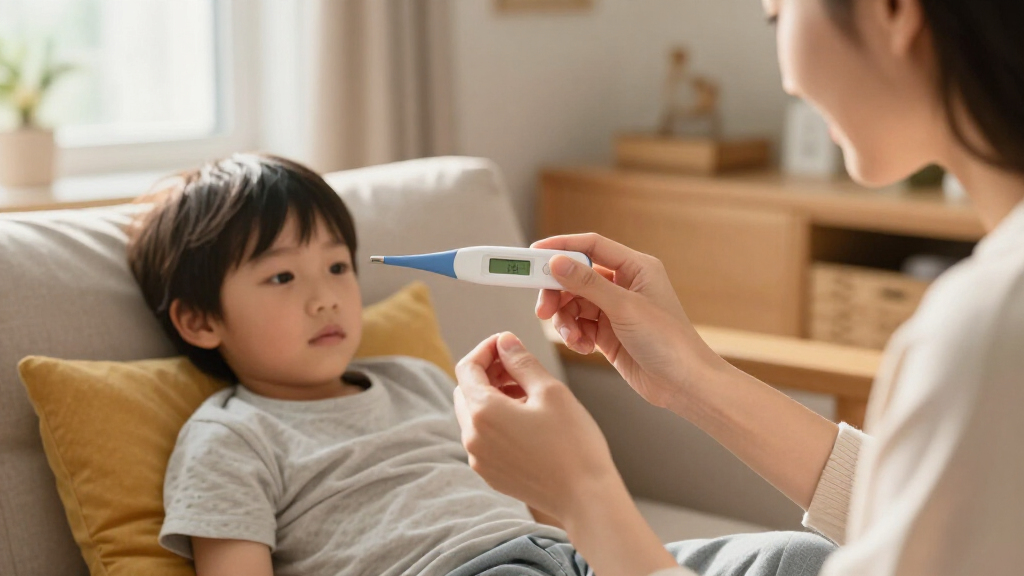
Imagine a child with a fever: an oral reading might show 38°C (100.4°F), but a superficial forehead scan might only read 37.2°C (99°F). That difference can impact whether you think your child needs urgent care or not. Your body’s internal temperature is tightly regulated, but the surface is more exposed to external influences like heat, cold, or sweat.
Physiologically, the ear and rectal sites are closest to core temperature because they’re inside the body or near blood-rich areas. Surface sites—like the forehead or underarm—are more affected by external temperature and skin conditions, making them less reliable in some situations.
smart digital thermometer for home use
As an affiliate, we earn on qualifying purchases.
As an affiliate, we earn on qualifying purchases.
How Measurement Site Impacts Your Thermometer’s Accuracy
Choosing the right site for measurement is key. For example, a forehead scan might be slightly lower than an ear measurement, which in turn is close to rectal temperature. Here’s a quick comparison:
| Site | Closest to core temp? | Typical temperature difference | Ideal use case |
|---|---|---|---|
| Rectal | Yes | +0.5°C (0.9°F) | Infants, very young children, accurate diagnosis |
| Ear (tympanic) | Yes | +0.2°C to +0.3°C (0.36°F to 0.54°F) | Quick, reliable for all ages |
| Oral | Moderate | Base for other readings | Comfortable, common for adults |
| Forehead (temporal artery) | Less | Varies with external factors | Non-invasive, quick screening |
| Axillary (armpit) | Lowest | -0.5°C to -1°C (-0.9°F to -1.8°F) | Less accurate, used when others aren’t feasible |
Using the wrong site or technique can skew your results. For example, measuring on a sweaty forehead or immediately after physical activity can lower or raise the reading unexpectedly. Proper placement and timing matter.
ear and forehead infrared thermometer
As an affiliate, we earn on qualifying purchases.
As an affiliate, we earn on qualifying purchases.
How External Factors and Technique Skew Your Readings
Ever notice how your forehead scan gives a different reading if you’re sweaty or in a draft? External influences like sweat, ambient temperature, or recent physical exertion can throw off surface measurements. For instance, a child playing outside in the sun might show a falsely high forehead temperature.
Technique is equally important. Holding a thermometer too loosely, not positioning it correctly, or rushing the scan can all distort results. Remember, even the best device is only as good as how you use it. For example, inserting an ear thermometer too shallow or at an angle will give an inaccurate reading.
To improve accuracy, always follow the manufacturer’s instructions carefully. Clean sensors regularly, avoid external heat sources, and wait a few minutes after physical activity before measuring.
As an affiliate, we earn on qualifying purchases.
The Latest Tech in Smart Thermometers That Boost Accuracy
Smart thermometers are evolving fast, making temperature tracking easier and more reliable. Infrared sensors in temporal artery thermometers have become more sensitive, reducing errors caused by external factors. Some devices now use AI algorithms to interpret trends, not just isolated readings.
Recent advancements include:
- Enhanced sensor precision for quicker, more consistent readings
- Smartphone integration to track temperature over time
- AI analysis that alerts you if a fever is likely or trending upward
- Regulatory approvals ensuring they meet clinical accuracy standards
These innovations aim to make non-invasive measurements as close to core temperature as possible, giving you peace of mind during illnesses or routine checks.
As an affiliate, we earn on qualifying purchases.
Deciphering the Differences: Which Site Should You Trust?
When it’s a matter of health, knowing which site gives the most reliable read is essential. Rectal and ear measurements are closest to your core temperature, making them best choices for accuracy. However, they may not always be practical or comfortable.
Many parents rely on temporal artery thermometers for quick, non-invasive checks, especially in children. When used correctly—by sweeping smoothly across the forehead—they offer reliable readings. Still, external factors like sweat or hot environments can affect results.
In everyday use, choose a site that balances accuracy with comfort and convenience. Remember: consistency is key. Always measure from the same site, and learn how your device behaves in different conditions.
Best Practices for Accurate Home Temperature Checks
Getting a trustworthy reading isn’t just about the device—it’s how you use it. Here are five tips:
- Read the instructions carefully, especially for new smart devices.
- Measure at the same site each time to track trends accurately.
- Avoid measuring immediately after physical activity or external heat exposure.
- Ensure sensors are clean and positioned correctly.
- Take multiple readings if unsure, and average them for accuracy.
For example, if your child wakes up sweaty, wait a few minutes, then re-measure to get a more accurate baseline. Small adjustments in technique can make a big difference.
Frequently Asked Questions
Which body site provides the most accurate temperature reading?
Rectal and ear measurements are closest to core temperature, making them the most accurate for detecting fever or hypothermia. However, choose based on age, comfort, and convenience.
Can I rely on forehead (temporal) thermometers for accurate readings?
When used correctly—sweeping smoothly across the forehead—temporal artery thermometers are quite reliable. External factors like sweat or drafts can affect accuracy, so follow best practices.
Why do my readings differ between devices or measurement sites?
Differences often stem from measurement site, device calibration, technique, or external influences. Consistency and proper use improve reliability.
Are smart thermometers more accurate than traditional ones?
Many smart thermometers match traditional digital devices in accuracy, especially with advanced sensors and AI features. Proper technique remains essential.
How should I interpret readings from different sites?
Remember that surface measurements tend to be lower than core readings. For example, an oral reading of 38°C (100.4°F) might be about 37.5°C (99.5°F) axillary.
Conclusion
Knowing why your thermometer readings vary by body site transforms how you interpret those numbers. It’s not just about the device but how and where you measure. With proper technique and understanding, you’ll catch fevers earlier and manage your family’s health more confidently.
The next time you take a temperature, remember: precision starts with placement. A simple change in technique could be the difference between peace of mind and a missed warning.
Evergreen bestsellers Picks
bestsellers
As an affiliate, we earn on qualifying purchases.