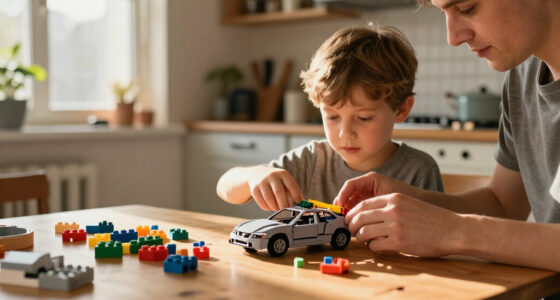
Use this guide to choose educational toys for a toddler, check that they are appropriate for the child’s age and abilities, and introduce them through simple play. It is for parents and caregivers with no special teaching experience. Plan for about 30-60 minutes to review the child’s needs, compare options, inspect the toys, and set up a small play area.

Turn the school run and nap time into listening time
- Thousands of audiobooks, podcasts and originals
- Listen on your phone, tablet or Echo — also offline
- Cancel anytime

LeapFrog Learning Friends 100 Words Book
- ✔ Brand: LeapFrog
- ✔ Age range: 18 months–4 years
- ✔ Word count: More than 100

Airbition Talking Flash Cards for Toddlers, 224 Words, English, Blue
- ✔ Brand: Airbition
- ✔ Age range: 1+ years
- ✔ Word count: 224

LeapFrog 2-in-1 LeapTop Touch Educational Toy
- ✔ Brand: LeapFrog
- ✔ Model: 80-600900
- ✔ Age range: 2–5 years
Difficulty: Beginner | Time: 30-60 minutes
What You’ll Need
Tools & Materials:
- A note or phone for recording the child’s interests and toy options
- A clear, supervised play area
- Toy packaging or manufacturer information for age and safety guidance
Knowledge:
- The toddler’s approximate age and current interests
- The child’s usual mouthing, throwing, or climbing behaviors
Adult supervision remains necessary, even when a toy is labeled for toddlers. If the child has a known developmental, sensory, or motor need, ask their pediatrician or an appropriate specialist for suggestions. Toy age labels and safety details vary by product and location; read the information supplied with each item.
LeapFrog Learning Friends 100 Words Book
For a first educational toy that brings words into a familiar picture-book format, the Learning Friends 100 Words Book is our most versatile choice. A toddler can touch an image to hear its word, a related fact, or a sound effect, then move among topics such as animals, food, colors, and activities. That makes the book more exploratory than Airbition’s card reader, where each illustrated card is the focus, and less button-driven than the LeapTop.The standout difference is English and Spanish audio. Families who want both languages in one toy get an option the other two products do not provide. Songs and a light-up star add variety, though the central activity remains vocabulary listening and picture tapping. Its stated 18-month-to-4-year range makes it a plausible choice for younger toddlers than the LeapTop, which starts at age 2.The tradeoffs are straightforward: the book needs two AA batteries, and the included batteries are for demonstration, so regular play calls for replacements. Its 100-plus words also means less listed vocabulary than Airbition’s 224 cards. Choose this one for a more varied, bilingual picture experience; skip it if rechargeable power or the largest word set matters more.
Pros:
- Touch-activated words, facts, and sound effects invite picture-by-picture exploration.
- Offers English and Spanish play in one book.
- Covers more than 100 toddler-friendly words in varied categories.
- Songs and a light-up star add another way to engage.
Cons:
- Requires two AA batteries, with new batteries recommended for regular use.
- Its 100-plus words are fewer than Airbition’s 224 illustrated cards.
Best for: Families seeking a picture-led vocabulary toy with English and Spanish options for toddlers from 18 months through age 4.
Not ideal for: Buyers who prioritize rechargeable operation, a larger stated word set, or keyboard-style letter and number practice.
Bottom line: We recommend this as the strongest all-around toddler pick when bilingual, picture-based vocabulary matters more than rechargeable power or maximum word count.
“We recommend this as the strongest all-around toddler pick when bilingual, picture-based vocabulary matters more than rechargeable power or maximum word count.”
Airbition Talking Flash Cards for Toddlers, 224 Words, English, Blue
Airbition is the pick for caregivers who want a substantial set of illustrated vocabulary cards in a compact, repeatable format. Its 224 words span topics including animals, food, vehicles, colors, and shapes. The reader speaks each word and can play animal sounds, while a repeat button lets a child hear an item again without needing an adult to restart the activity.Compared with the Learning Friends book, Airbition lists more than twice as many words, but gives up bilingual playback: the reader is English-only. Five volume levels make it easier to adjust the sound for different rooms or listening preferences, and the auto-off function helps limit unnecessary power use. At 1+ years, its age guidance begins earlier than the LeapTop’s, though the cards and reader create a different interaction from the book’s built-in picture pages.The reader recharges by USB and offers up to four hours per charge. That avoids stocking AA batteries, but introduces a charging routine and makes the toy less ready if the battery runs down mid-play. The plastic construction may also feel less like a traditional book. We’d choose it for vocabulary variety and repeat listening, but pass if Spanish content or a toy with built-in activities is central.
Pros:
- 224 illustrated cards cover a wide range of everyday topics.
- Reader speaks words, plays animal sounds, and includes a repeat button.
- Five volume levels help tailor sound output.
- USB rechargeable with up to four hours of use per charge and an auto-off function.
Cons:
- English-only audio does not match the bilingual option in the LeapFrog book.
- Needs recharging after up to four hours of use.
- Plastic construction and separate cards may not suit buyers seeking a book-like format.
Best for: Caregivers looking for a large, English-language vocabulary set with adjustable volume and rechargeable operation.
Not ideal for: Families who need bilingual word playback or prefer an all-in-one book or keyboard toy without loose cards.
Bottom line: Choose Airbition when a larger English vocabulary set and rechargeable reader outweigh bilingual play and the convenience of a self-contained toy.
“Choose Airbition when a larger English vocabulary set and rechargeable reader outweigh bilingual play and the convenience of a self-contained toy.”
LeapFrog 2-in-1 LeapTop Touch Educational Toy
The LeapTop Touch suits toddlers who are ready to explore letters and numbers through a more button-centered toy. It changes from a laptop-style keyboard to a touch tablet, with A–Z keys, number buttons from 1 to 10, and five modes for letters, numbers, games, music, and messages. That range makes it a broader activity toy than either vocabulary option, especially for a child who enjoys pressing controls and switching tasks.Its age range of 2–5 years gives it a later starting point than both the Airbition cards and the Learning Friends book. Parents can customize it to help a child practice spelling their name, giving the toy a personal element the other two do not offer. The take-along handle also makes it easy to carry, although at 1.3 pounds it is not the lightest option listed.We rank it third for this toddler roundup because its learning focus is less concentrated on early spoken vocabulary. Compared with the Learning Friends book’s bilingual words or Airbition’s larger card set, the LeapTop spreads play across several modes and is aimed at an older age band. It also requires three AA batteries, so it shares the battery upkeep of the book while using one more. Pick it for varied button play and early letter practice; skip it if your toddler is younger or your priority is bilingual vocabulary.
Pros:
- Transforms between laptop and touch tablet modes.
- Five modes include letters, numbers, games, music, and messages.
- Can be customized to practice spelling a child’s name.
- Take-along handle supports portability.
Cons:
- Requires three AA batteries for regular use.
- Its stated age range starts at 2, later than the other two picks.
- Its multiple modes make it less focused on vocabulary than the book or flash cards.
Best for: Families with children ages 2–5 who want letter and number buttons, several activity modes, and a portable laptop-to-tablet format.
Not ideal for: Caregivers of younger toddlers or anyone primarily seeking bilingual vocabulary, a large word-card set, or rechargeable power.
Bottom line: This is the better fit for older toddlers who want varied button activities, but the other picks serve early vocabulary learning more directly.
“This is the better fit for older toddlers who want varied button activities, but the other picks serve early vocabulary learning more directly.”
As an Amazon Associate we earn from qualifying purchases.
Before You Start
Decide what you want the toy to support, such as sorting, pretend play, movement, language, or hand coordination. Treat “educational” as a description of what a child can explore through play, not as a promise that a product will teach a specific skill. Avoid toys with small detachable pieces for children who still put objects in their mouths. Check current product safety notices in your area if you are buying a used or older toy.
Step-by-Step Instructions
Step 1: Note the child’s interests and play habits
Write down two or three things the toddler enjoys, such as animals, vehicles, music, stacking, water play, or copying household routines. Then note how the child handles objects: whether they mouth items, pull pieces apart, throw toys, or prefer quiet activities. Use these observations to narrow the choices to toys the child is likely to explore.
Tip:Choose activities the child already enjoys, then look for a toy that adds one manageable challenge.
Check: You have a short list of interests and behaviors to use when comparing toys.
Step 2: Choose one play skill to support
Select one main kind of exploration for the toy: building and fitting, pretend play, movement, music, sensory discovery, or early problem-solving. For example, large nesting cups invite filling, stacking, and comparing sizes; a sturdy toy animal can support naming, imitation, and pretend care. Write down what the child might do with the toy and what they can explore.
Tip:Prefer toys that let the toddler act, test, and repeat. A toy that only plays sounds or lights after a button press may offer fewer ways to explore.
Check: You can explain in a sentence what the child might do with the toy and what they can explore.
Step 3: Match the toy to age and ability
Read the age guidance on the packaging, then compare it with the child’s actual abilities. Look for pieces that are easy for the toddler to grasp and actions they can attempt without repeated adult help. Reject toys intended for older children, with complicated instructions, or with pieces the child could swallow. Treat age guidance as a starting point; it does not replace supervision or judgment about the individual child.
Tip:When in doubt about choking risk, do not offer the toy. Keep small components, including loose batteries and accessories, out of reach.
Check: The toy’s intended age range and the child’s handling abilities are compatible, with no small parts the child may mouth.
Step 4: Inspect construction and product information
Inspect the toy for cracks, sharp edges, loose seams, peeling paint, exposed stuffing, or parts that detach when gently tugged. Check that battery compartments close securely and that cords or straps do not create a strangulation hazard. Read the manufacturer’s cleaning and use instructions. For secondhand items, check whether the model has been recalled and confirm that all safety-critical parts are present.
Tip:Skip toys with damage or missing pieces. Do not assume a toy is safe because it was previously used by another family.
Check: The toy is intact, has secure parts, and comes with usable safety and care information.
Step 5: Compare options for open-ended play
Compare a few suitable options by checking whether the toddler can use each toy in more than one simple way. For example, blocks can be stacked, lined up, or used in pretend play; a board book can be explored by naming pictures, pointing, and turning pages. Check whether each toy fits your storage space and can be cleaned as needed. Choose a small number of useful toys instead of buying several that do the same thing.
Tip:Simple toys often leave more room for the child to invent what happens next.
Check: You have selected one or two toys that fit the child’s interests, ability, safety needs, and play space.
Step 6: Prepare a supervised play space
Place the toy on a stable, clear surface or on the floor away from stairs, hot items, cords, and other hazards. Remove packaging, plastic film, and any parts not meant for play. Store accessories that are too small for the child out of reach. Sit close enough to see how the toddler handles the toy and intervene if a piece becomes damaged or unsafe.
Tip:Offer one new toy at a time. A crowded play area can make it harder for the child to focus and for you to notice loose pieces.
Check: The play space is clear, the toy is ready to use, and an adult can supervise nearby.
Step 7: Introduce the toy with a simple demonstration
Demonstrate one or two possible actions, such as placing a large block on another or rolling a ball back and forth. Use short phrases to name what the child is doing, then pause and give them time to try. Follow the toddler’s lead instead of directing every move. If the child uses the toy differently and the play remains safe, allow them to explore.
Tip:Do not turn play into a test. Repeating an action, watching closely, or briefly walking away can all be part of exploring a new toy.
Check: The child has a chance to handle the toy independently while you remain close and attentive.
Step 8: Review the toy after play
After play, check the toy for damage, loose pieces, or wear. Clean it according to the manufacturer’s directions and store it where the toddler cannot access any unsafe components. Note whether the child returned to the toy, tried new actions, or needed a simpler demonstration. Use those observations to decide whether to keep offering it, adjust how you introduce it, or select a different option.
Tip:Put away toys with damaged parts until they are repaired safely or discarded.
Check: The toy is clean, intact, stored safely, and you have a practical idea for the next play session.
Common Mistakes to Avoid
- Buying a toy because it promises advanced learning results. — Choose based on the child’s interest, safe use, and opportunities to explore. A product claim cannot guarantee a particular learning outcome.
- Offering a toy that has small parts because the child is close to the labeled age. — Consider whether the child mouths objects and inspect every detachable piece. Keep choking hazards away regardless of a birthday milestone.
- Demonstrating too many actions or correcting the child’s play. — Show one simple action, then pause. Let the toddler repeat or vary it while you supervise.
- Leaving many new toys out at once. — Offer one or two toys at a time. Store the rest and rotate them when the child’s interest changes.
Troubleshooting
Problem: The toddler ignores the new toy.
Solution: Put it away and try again another day, or connect it to a familiar interest by showing one brief action. Do not pressure the child to play with it.
Problem: The child becomes frustrated with the toy.
Solution: Simplify the activity, remove extra pieces, and demonstrate one achievable action. If the toy still requires more skill than the child has, set it aside and try again later.
Problem: A part becomes loose or the toy breaks.
Solution: Stop the play session, remove the toy and any detached pieces, and follow the manufacturer’s repair or disposal guidance. Do not let the child use it while damaged.
Problem: The toy is hard to clean or store.
Solution: Follow the care instructions and keep the toy out of play until it is dry. If its upkeep or size does not suit your home, choose a simpler toy next time.
What Success Looks Like
You have chosen a toy that fits the toddler’s interests and current abilities, checked it for hazards and damage, and prepared a supervised place to play. During use, the child can explore at least one action safely, and you know how to inspect, clean, and store the toy. Interest may change from one session to another, so success means the toy offers safe opportunities to play, not that the child masters a skill on a schedule.
Next Steps
Offer the toy again when the child is rested and interested, and watch for new ways they use it. Rotate toys occasionally to keep the play area manageable. Recheck items for wear, loose pieces, and current product safety notices, especially for secondhand toys. As the child grows, revisit age guidance and choose new challenges that remain safe and enjoyable.
Frequently Asked Questions
How many educational toys should a toddler have available at once?
There is no required number. Start with one or two toys in the play area and store the rest safely. A smaller selection can make it easier to supervise and see what holds the child’s interest.
Are electronic toys educational for toddlers?
Some electronic toys provide sound, music, or simple interactions, but a toy’s label does not establish how much a child will learn from it. Check age guidance and safety information, and include opportunities for the child to handle objects, communicate, move, and use imagination.
Should I choose toys above the child’s age to help them advance?
Do not select a toy with safety risks or demands beyond the child’s ability. Follow the age guidance, account for mouthing and handling habits, and choose a manageable challenge the toddler can explore with supervision.
What should I do if my toddler only uses a toy in one way?
Repeated play can be normal and enjoyable. Join in by naming the action or offering one gentle variation, such as stacking a second block, then let the child decide whether to try it.