TL;DR

Turn the school run and nap time into listening time
- Thousands of audiobooks, podcasts and originals
- Listen on your phone, tablet or Echo — also offline
- Cancel anytime
A small kitchen needs a compact, efficient sterilizer that fits easily on your counter. Modern models are faster, multi-functional, and energy-efficient, making safe sterilization simple without cluttering your space.
Measure your available space carefully before choosing a sterilizer.
Microwave sterilizers are often the best for tiny kitchens due to size and speed.
Select a capacity that matches your routine—usually 2-4 bottles for small spaces.
Prioritize models with simple controls and easy cleaning features.
Always verify safety certifications and BPA-free materials.
How to Choose a Bottle Sterilizer for a Small Kitchen
Think compact, quick, and safe. The right sterilizer protects your baby without taking over the counter. Balance footprint, cycle speed, capacity, and maintenance to build a calm feeding station in even the tightest kitchen.
Measure the routine, not just the counter
An appliance can fit on paper and still obstruct cabinets, vents, outlets, or food preparation. Map where it will operate, cool, drain, and live between cycles before comparing features.
Measure the full zone
Record counter width and depth, then add clearance for handles, power cords, steam, and an opening lid.
Plan its off-duty home
Lightweight, nesting, folding, or microwave models are easier to move when the counter must serve several jobs.
Match one feeding cycle
A compact 2–4 bottle capacity is usually more useful than a large chamber that consumes permanent counter space.
Check bottle geometry
Wide-neck, tall, angled, or anti-colic bottles may need more internal clearance than the stated bottle count suggests.
Reduce cleaning friction
Choose removable trays, accessible reservoirs, few crevices, and parts that are simple to descale and dry.
Verify materials and controls
Look for BPA-free food-contact parts, heat-resistant construction, clear instructions, and recognized safety certification.
Electric or microwave?
Microwave sterilizers usually win on footprint and price. Electric models earn their space through consistency, automatic controls, and optional drying. UV devices can be compact, but cycle design and item compatibility vary.
| Decision factor | Electric steam | Microwave | UV cabinet |
|---|---|---|---|
| Counter impact | Permanent appliance footprint; compact models are available. | ✓Easy to store and uses an appliance already in the kitchen. | Varies widely; cabinet-style units may be tall or bulky. |
| Cycle speed | Usually about 8–15 minutes for sterilization. | ✓Often about 5–10 minutes, depending on microwave wattage. | Often longer; cycle duration depends on the device. |
| Consistency | ✓Controlled heating and sensors can reduce guesswork. | Effective when water level, loading, wattage, and timing are correct. | Items must be arranged so required surfaces receive exposure. |
| Drying | ✓Available on multi-function models, reducing drying-rack clutter. | Usually no active drying function. | Some models combine disinfection, drying, and storage. |
| Best match | Parents prioritizing automation and repeatable routines. | The tightest kitchens, quick cycles, and lower budgets. | Selected small items when device guidance confirms suitability. |
Compact-space winner: microwave · convenience winner: electric steam with drying
Choose the smallest unit that completes your normal load
Larger chambers reduce the number of cycles but occupy more space. Smaller units are easier to store, yet can create extra work if every feeding requires two rounds.
Count the bottles, nipples, rings, caps, pacifiers, and pump parts you typically process together. Then confirm that the chamber holds them without crowding or blocking steam circulation.
Sterilization works as a connected process
Sterilizing does not replace cleaning. Reliable results depend on each step: remove residue, load items correctly, run the specified cycle, and handle clean parts without recontamination.
Disassemble
Separate bottles, nipples, rings, valves, and caps.
Wash thoroughly
Remove milk residue before the sterilization cycle begins.
Allow circulation
Position parts according to the device instructions.
Run the full cycle
Use the correct water amount, time, and microwave wattage.
Dry and store
Handle with clean hands and keep parts protected until use.
Measure before shopping
Include lid opening, ventilation, cord access, and storage space.
Start with microwave models
They are often the strongest choice when counter space is the main constraint.
Aim for 2–4 bottles
Select capacity around your normal load, including accessories.
Minimize maintenance
Favor intuitive controls, auto shut-off, removable parts, and easy descaling.
Verify every safety claim
Confirm BPA-free materials, certification, bottle compatibility, and manufacturer instructions.
Small-kitchen sterilizer FAQ
Product instructions and your child’s health circumstances should guide the final routine. When in doubt, ask a qualified healthcare professional.
How much room does a compact model need?
Many small models are under 10 inches wide and around 6 inches deep, but always verify the exact dimensions and operating clearance.
Are microwave sterilizers effective?
Yes, when used correctly. Match cycle time to microwave wattage, add the specified water, and follow loading instructions closely.
How often should bottles be sterilized?
Needs vary by age and health circumstances. Newborns and medically vulnerable babies may require more frequent sanitizing; follow current professional guidance.
Can other baby items go inside?
Many devices accept pacifiers, pump parts, teething items, and utensils, provided their materials and dimensions are approved for the method.
How to Pick a Space-Saving Sterilizer That Actually Fits
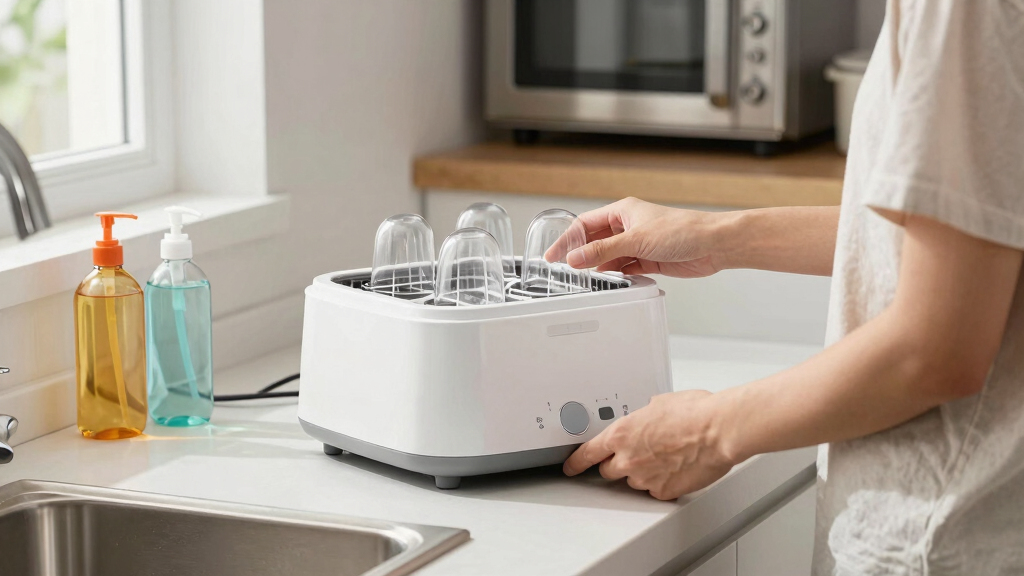
In a tiny kitchen, size is everything. You need a sterilizer that fits on your countertop without overwhelming it. Look for models labeled as ‘compact’ or ‘small footprint’—they often measure under 10 inches wide. Measure your available space first. Think about where you’ll store it when not in use, and choose models that are lightweight enough to move around easily.
For example, a sterilizer measuring 8 inches by 6 inches can slide into a corner or tuck behind other appliances. Some models even fold or collapse for storage. Remember, a bulky sterilizer isn’t just a space hog — it can also make your kitchen feel cluttered and stressful.
Choosing the right size isn’t just about fitting it in; it’s about ensuring it doesn’t become an obstacle in your daily routine. A sterilizer that’s too large can crowd your workspace, making it harder to prepare bottles efficiently, especially when you’re juggling multiple tasks. Conversely, a model that’s too small may not accommodate your typical bottle sizes or accessories, forcing you to sterilize in multiple rounds or use less effective methods. Prioritize models that strike a balance—compact enough to save space but large enough to meet your sterilization needs in one go.
compact bottle sterilizer for small kitchen
As an affiliate, we earn on qualifying purchases.
As an affiliate, we earn on qualifying purchases.
Electric vs. Microwave: Which Sterilizer Type Suits Small Kitchens Better?
| Feature | Electric Sterilizers | Microwave Sterilizers |
|---|---|---|
| Effectiveness | Fast, consistent steam sterilization, usually in 8-15 minutes. Electric sterilizers often have built-in sensors for optimal steam generation, ensuring thorough sterilization. This consistency reduces the risk of bacteria surviving, which is crucial in small kitchens where clutter can lead to overlooked cleaning steps. | Equally effective if used properly, sterilizes in about 5-10 minutes. Microwave sterilizers rely on the microwave’s power, which can vary. While quick, inconsistent microwave wattages or uneven heating can lead to spots that aren’t fully sterilized. This makes understanding your microwave’s wattage and performance critical to achieving reliable results. |
| Size | Varies, but many compact models available. Electric sterilizers often have a fixed size, but newer compact models are designed to fit small spaces without sacrificing capacity. | Typically small, fits in most microwave sizes. They are especially advantageous if you already own a microwave, avoiding extra countertop clutter. However, size compatibility with your microwave is essential to ensure it fits comfortably without blocking vents or controls. |
| Ease of Use | Plug in, load bottles, press start. Electric models often feature simple controls, auto shut-off, and clear indicator lights, reducing guesswork and ensuring safety. | Place bottles in container, microwave for set time. Microwave sterilizers are straightforward but require careful timing and monitoring to prevent overheating or uneven sterilization. They are ideal for parents who prefer a quick, hands-off approach but may need to adjust settings based on microwave wattage. |
| Additional Features | Drying cycle, automatic shut-off, some with storage compartments. These features add convenience, especially in small kitchens where space for drying racks is limited. They help streamline the feeding prep process, reducing the need for additional drying equipment. | Primarily sterilization, no drying, depends on microwave wattage. While they are space-savers, lack of drying means you might need a separate method for drying bottles, which could add clutter or time to your routine. |
For small kitchens, microwave sterilizers win on compactness and speed, making them ideal if space is at a premium. However, electric models often provide more consistent results and additional features like drying, which can be a real time-saver. The choice depends on your routine—if you value speed and minimal counter space, microwave is great; if you want more features and reliability, electric might be worth the extra footprint.
As an affiliate, we earn on qualifying purchases.
Understanding the Importance of Sterilization Speed and Capacity
Speed and capacity are crucial factors that impact your daily routine and overall safety. A sterilizer that works quickly allows you to keep up with frequent bottle feedings, especially in the early months when sterilization is needed multiple times a day. Conversely, a model with larger capacity reduces the number of cycles needed, saving time and energy.
Choosing a sterilizer that balances speed and capacity means considering your typical feeding schedule and bottle size. For example, if you have multiple bottles and need to sterilize several at once, look for models with larger capacity. If your routine involves sterilizing just a couple of bottles quickly, a smaller, faster model will do. The tradeoff is often between size and sterilization time — larger units may take longer but handle more bottles, while smaller units are faster but hold fewer bottles. Understanding your needs helps you select a model that optimizes safety without adding unnecessary steps or clutter to your routine.
small capacity baby bottle sterilizer
As an affiliate, we earn on qualifying purchases.
As an affiliate, we earn on qualifying purchases.
Frequently Asked Questions
How much space does a typical small sterilizer take?
Most compact sterilizers measure under 10 inches wide and 6 inches deep. They can fit comfortably on a standard countertop or be stored away easily when not in use.Are microwave sterilizers just as good as electric ones?
Yes, when used correctly, microwave sterilizers are quick, effective, and space-efficient. They sterilize in about 5-10 minutes, making them perfect for small kitchens.How often should I sterilize bottles in a small kitchen?
For newborns, daily sterilization is recommended, especially in the first year. As your baby grows, you can reduce frequency but maintaining regular sterilization helps prevent bacteria buildup.Can I sterilize other baby accessories in these devices?
Most sterilizers can handle pacifiers, teething toys, and small utensils. Just check the size and material compatibility first.What safety features should I look for?
Ensure the sterilizer is BPA-free, has safety certifications, and includes features like auto shut-off and heat-resistant materials for safe, worry-free use.energy-efficient baby bottle sterilizer
As an affiliate, we earn on qualifying purchases.
As an affiliate, we earn on qualifying purchases.
Conclusion
A small kitchen doesn’t mean sacrificing safety or convenience. Pick a sterilizer that fits your space, meets your needs, and keeps your baby’s bottles safe. The right choice turns a cluttered countertop into a calm, efficient station for feeding success. Think compact, quick, and safe — and enjoy the peace of mind that comes with it.Cold & flu season Picks
humidifiers
As an affiliate, we earn on qualifying purchases.