
TL;DR

Turn the school run and nap time into listening time
- Thousands of audiobooks, podcasts and originals
- Listen on your phone, tablet or Echo — also offline
- Cancel anytime
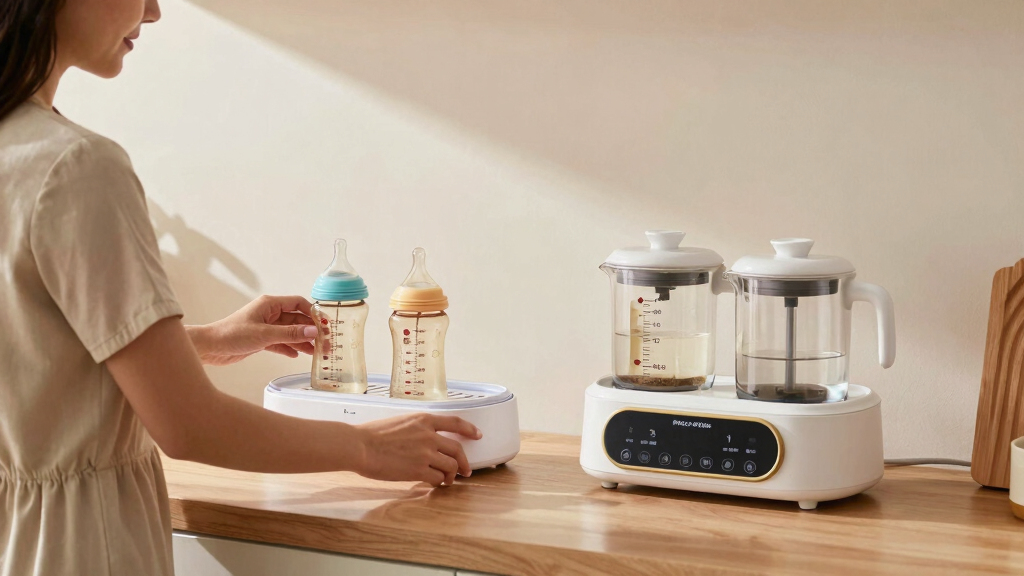
Steam sterilizers use high heat to kill germs, while UV sterilizers rely on ultraviolet light for disinfection. Steam is more thorough, especially against spores, but UV offers quick, portable options. Both have their place, depending on your needs.
Ever stared at two sterilizers and wondered which one actually keeps your baby’s bottles safest? You’re not alone. Whether it’s a steaming device bubbling away or a sleek UV box humming softly, each promises germ-free bottles. But how do they truly compare? And which one deserves your countertop space? This guide breaks down the essentials — so you can pick the best for your little one, with confidence.
We’ll explore how each method works, their strengths and weaknesses, recent trends, and practical tips. No fluff, just honest advice from a fellow parent who’s been there at 3 a.m., trying to keep bottles spotless without adding stress.
Steam sterilizers are more effective against spores and stubborn germs, making them ideal for newborn bottles.
UV sterilizers are quicker and more portable, perfect for travel or quick disinfection, but may miss spores and shadowed surfaces.
Always follow safety guidelines: hot steam needs careful handling, and UV devices require enclosed chambers and eye protection.
Hybrid sterilizers are emerging, combining the best of both worlds for faster and more thorough disinfection.
Consider your lifestyle—home, travel, or both—when choosing between steam and UV sterilizers.
Steam vs UV Bottle Sterilizers, Compared
Steam surrounds bottles with germ-killing heat; UV-C uses light to inactivate exposed microbes. Steam offers the more comprehensive approach, while UV prioritizes speed, portability, and a heat-free routine.
Two routes to a cleaner bottle
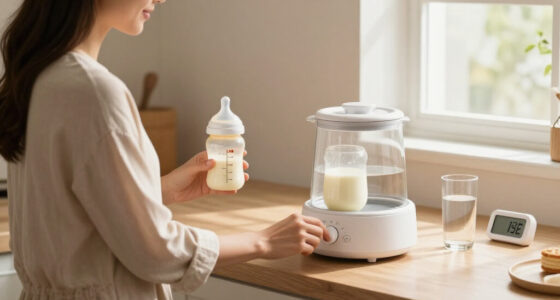
Both methods target microbes, but they do it differently. Steam transfers intense heat across wet, exposed surfaces. UV-C disrupts microbial genetic material only where enough light reaches.
Steam sterilization
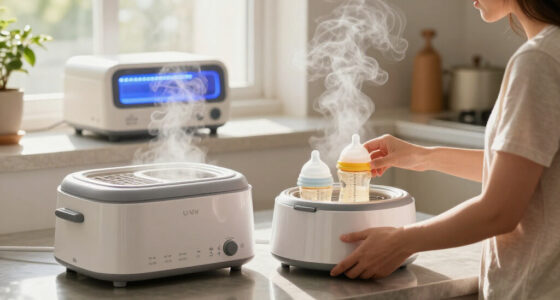
Boiling or pressurized water becomes hot vapor, enveloping bottles, nipples, valves, and accessories. The heat can reach small crevices and is effective across a broad spectrum of microbes.
UV disinfection
UV-C light damages microbial DNA or RNA, leaving exposed organisms unable to reproduce. It uses no water or high heat, making compact and portable designs possible.
Steam wins on breadth. UV wins on convenience.
The real distinction is exposure: steam can surround complex parts, while UV-C needs a clear line of sight to every surface.
| Comparison point | Steam sterilizer | UV sterilizer |
|---|---|---|
| Cycle time | 8–15 minutes | 3–10 minutes |
| Bacteria & viruses | ✓ Strong | ✓ Strong when exposed |
| Spores | ✓ More reliable | ✗ Less reliable |
| Crevices & shadows | ✓ Better penetration | ~ Line-of-sight limits |
| Water & heat | ~ Both required | ✓ Neither required |
| Portability | ~ Model dependent | ✓ Often excellent |
| Maintenance | Clean and descale | Clean chamber; maintain light source |
| Primary hazard | Hot water and burn risk | UV exposure to eyes or skin |
| Best fit | Thorough newborn bottle care | Travel and quick disinfection |
Typical cycle window
Relative maximum cycle time from the reported ranges.
Actual cycles vary by device, load, and manufacturer instructions.
Coverage spectrum
Conceptual comparison of surface disinfection versus broad, penetrating treatment.
Placement matters for both methods—and especially for UV-C.
What deserves your countertop?
There is no universal winner. Match the method to the level of protection you need, where you will use it, and how much maintenance your routine can realistically absorb.
Thoroughness comes first
You are caring for a newborn, want broad microbial coverage, regularly sterilize complex bottle parts, and can safely manage heat and drying time.
Best signal: maximum confidenceMobility matters most
You need fast, dry cycles for travel or everyday convenience and can position clean items so that UV-C reaches every intended surface.
Best signal: speed without heatYou want both modes
Emerging hybrid units combine steam and UV technologies, aiming for broader coverage with flexible finishing, drying, or storage features.
Best signal: one-device versatilityUse it safely
The next generation is smarter and more flexible
Hybrid cycles
Steam and UV functions are being combined to balance speed, drying, and broad treatment.
Smarter controls
Timers, status indicators, automatic cycles, and connected controls simplify daily use.
Portable UV-C
Compact, battery-powered chambers are expanding options for travel and outdoor routines.
Efficient designs
New products emphasize lower water use, improved UV LEDs, and more efficient energy consumption.
Pick for the life you actually live.
Steam is the more comprehensive choice when broad germ coverage—including resistant spores—and access to complex surfaces are priorities. That makes it especially compelling for newborn bottle care.
UV-C is the convenience choice when quick, dry, portable disinfection is more valuable. Its success depends on clean items, correct placement, sufficient exposure, and a properly enclosed device.
How Do Steam and UV Sterilizers Actually Work?
Steam sterilizers use high-temperature steam to drown germs in heat. Imagine boiling water turned into vapor, enveloping bottles and accessories in a hot, moist hug that kills bacteria, viruses, and even spores. This method’s deep penetration is crucial because heat can reach into tiny crevices and complex surfaces, ensuring thorough sterilization. The implication is that steam is highly reliable for complete disinfection, which is especially important for newborns with developing immune systems. However, the tradeoff is the need for careful handling—hot steam can cause burns, and some materials may degrade with repeated exposure to high heat. The sterilization process also takes a bit longer and requires proper maintenance, like descaling, to keep the device functioning effectively.
In contrast, UV sterilizers rely on ultraviolet light — specifically UV-C — which damages the DNA or RNA of microbes, rendering them inactive. Think of UV as a tiny, invisible sword that zaps germs on contact, without heat or water involved. This method’s advantage is speed and convenience; UV sterilizers can often disinfect in just a few minutes and are highly portable. But their effectiveness hinges on direct exposure: shadows, uneven surfaces, or bottles placed improperly can create blind spots where germs survive. The implication is that UV sterilizers are excellent for quick, on-the-go sterilization but may not guarantee complete sterilization of all surfaces, especially in complex or shadowed areas. Thus, understanding these differences helps you decide based on the level of sterilization needed, balancing thoroughness with convenience.
As an affiliate, we earn on qualifying purchases.
Which Method Is More Effective at Killing Germs?
Steam sterilizers are generally considered more comprehensive because heat can penetrate into every nook and cranny of bottles and accessories, ensuring that bacteria, viruses, fungi, and spores are effectively eliminated. This thoroughness is vital when sterilizing items for newborns, whose immune systems are immature and vulnerable to even the tiniest traces of pathogens. The high temperature—often boiling or near boiling—destroys even the most resilient microorganisms, reducing the risk of infections. The tradeoff is the longer cycle times and the need for careful handling of hot equipment to prevent burns or damage to delicate materials.
UV sterilizers work well against common bacteria and viruses because UV-C light effectively damages their genetic material, rendering them inactive. However, their limitation lies in their inability to reliably kill spores and some fungi, which are more resistant. Moreover, UV efficacy depends on direct line-of-sight exposure; shadows or uneven surfaces can create blind spots where germs survive. This means that UV sterilizers might leave some microbes behind if not properly used or if the bottles have complex shapes. The implication is that UV sterilizers are best suited for quick surface disinfection and are less reliable for deep sterilization, especially for items that require the highest safety standards for newborns. Ultimately, knowing these strengths and limitations helps you choose the right sterilizer based on the level of disinfection necessary for your family’s needs.
UV baby bottle sterilizer portable
As an affiliate, we earn on qualifying purchases.
As an affiliate, we earn on qualifying purchases.
Conclusion
Understanding the strengths and limits of steam versus UV sterilizers helps you pick what truly fits your family’s routine. Whether it’s the deep, reliable heat of steam or the quick, portable power of UV, your choice shapes a safer start for your baby’s day.
Imagine a world where your bottles are always germ-free — simple, safe, and stress-free. That’s the goal. Now, choose the sterilizer that makes that a reality for you.
steam bottle sterilizer for newborns
As an affiliate, we earn on qualifying purchases.
As an affiliate, we earn on qualifying purchases.
As an affiliate, we earn on qualifying purchases.
Halloween Picks
halloween
As an affiliate, we earn on qualifying purchases.