TL;DR

Turn the school run and nap time into listening time
- Thousands of audiobooks, podcasts and originals
- Listen on your phone, tablet or Echo — also offline
- Cancel anytime
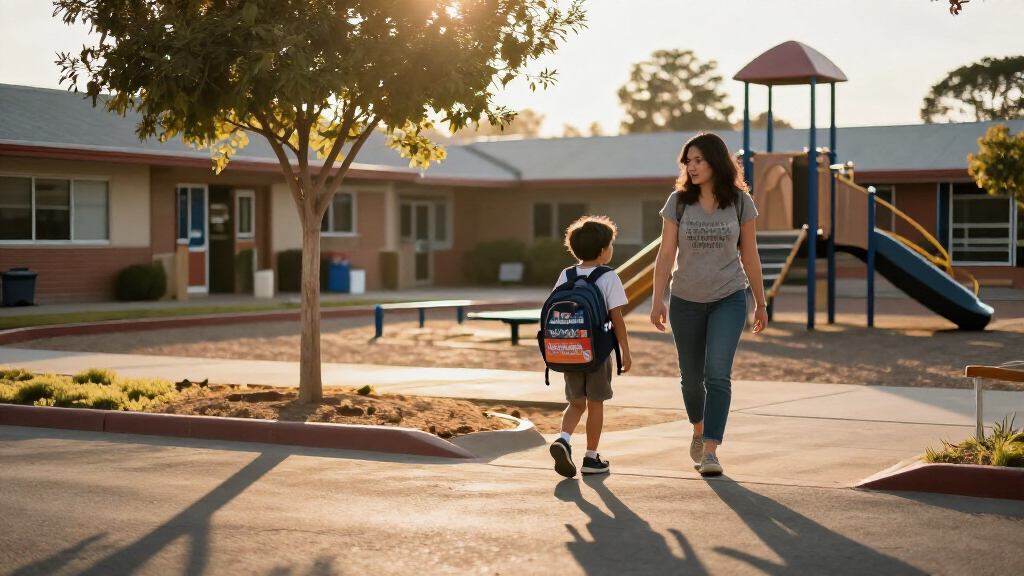
California heat waves are reaching more school campuses, while many student areas have little tree cover. An EdSource analysis found 45% of K-12 students attend schools where 5% or less of student zones is shaded by tree canopy; districts and state programs are pursuing greening projects, but funding and the pace of campus upgrades remain challenges.
Heat exposure is growing at California schools, but many campuses still have little shade where students spend time, according to an EdSource analysis. About 45% of the state’s K-12 students—more than 2.6 million—attend schools where tree canopy covers 5% or less of student zones, as heat waves increasingly overlap with the school year.
EdSource’s analysis found that on Oct. 5, during a heat wave that pushed temperatures close to 100 degrees in parts of Los Angeles and the Bay Area, about 4,900 public schools were in areas the state rated at high or severe heat risk. That was nearly double the number recorded on Aug. 10, when about 2,600 campuses—more than a quarter of the state’s schools, including charter schools—were in areas rated at high heat risk. The figures describe schools located in state-designated risk areas; they do not establish the temperature inside each campus or classroom.
Tree cover is limited and often poorly placed for students, the analysis found. The median tree-canopy coverage in student zones is 6.4%, according to Green Schoolyards America. Less than half of school tree canopy is accessible to students, while about 55% of trees and greenery are around perimeters, entrances or parking lots. The analysis also found that 44% of public schools have 5% or less canopy in student zones, 45% have 6% to 15%, and about 11% have more than 15%.
Some districts are changing their campuses. At Parkway Elementary in Sacramento, a 2024 collaboration with Green Schoolyards America transformed 15,000 square feet of mostly blacktop into an outdoor learning area, adding 58 trees and 44 shrubs. Sacramento City Unified sustainability manager Chamberlain Segrest said the project began with a focus on shade but brought broader benefits. Separately, Gov. Gavin Newsom announced transformations at 215 schools through CalFire’s Green Schoolyards Grant Program.
Heat Risk Meets Bare Schoolyards
For students, the mismatch between hotter conditions and sparse shade can affect how schools manage outdoor time, recess and physical activity. Districts have already adjusted summer programs by reducing time outside and changing activities; experts are concerned that heat is extending into the fall, when more students are in session. The risk is not uniform: EdSource found that Los Angeles, Fresno and San Bernardino counties have the largest percentages of schools in high-heat-risk areas, and nearly 60% of the campuses in the Aug. 10 high-risk group were elementary schools.
UCLA urban planning and geography professor Kelly Turner said heat responses should account for the work children’s bodies must do to cool down. Shade, air conditioning, pools, schedule changes and water breaks can help, she said. Tree planting also takes time, and schools with limited budgets may struggle to pay for major infrastructure improvements. Green schoolyards may offer play and learning opportunities alongside shade, but the available source does not establish that these projects alone reduce heat-related illness or improve academic outcomes.
As an affiliate, we earn on qualifying purchases.
Projects Expand Across California
California’s average summer temperatures have risen by roughly 3% since 1896, with more than half of that increase occurring since the 1970s, according to the Scripps Institution of Oceanography, as cited in the report. The source describes this as a percentage increase, not a temperature change in degrees. Heat-risk figures cited by EdSource come from CalHeat scores, which rate areas rather than reporting measured conditions inside individual schools.
Greening projects take different forms across the state. At Washington Elementary in Berkeley, a long-standing mix of natural and synthetic surfaces has developed into a playground set among trees. Students at 122nd Street Elementary in Los Angeles planted wildflower seeds as part of a campus transformation. Green Schoolyards America founder and CEO Sharon Gamson Danks said school trees are often planted in places used by adults, such as parking areas and perimeters, rather than where children play and learn. She said many schools are aiming for 30% shade or green space.
““We specifically need more trees where the need is the greatest, where the places the schools are in are the hottest environments and have the least capacity to change that themselves financially.””
— Sharon Gamson Danks, CEO and founder of Green Schoolyards America
outdoor classroom shade structures
As an affiliate, we earn on qualifying purchases.
As an affiliate, we earn on qualifying purchases.
Funding and Campus Conditions
The analysis identifies heat-risk areas and tree-canopy coverage, but it does not provide a school-by-school account of indoor temperatures, heat-related health incidents, or the effectiveness of each intervention. It is also unclear from the source how many of the 215 schools named in the state grant announcement have completed work, what funding each received, or how quickly projects will expand.
Canopy figures describe student zones across schools and do not show whether shade is available at the times and places students need it. The report also does not quantify how many campuses have air conditioning or other cooling measures. Turner said many California schools lack funding for basic safety upgrades, but the source gives no statewide cost estimate for the proposed improvements.
As an affiliate, we earn on qualifying purchases.
More Heat, More Campus Changes
As temperatures remain a concern during the school year, districts may continue to use immediate steps such as shifting recess, increasing water breaks and changing outdoor activities, while longer-term projects add trees and other shaded spaces. State grant work and local efforts will determine how quickly those changes reach campuses, particularly in hotter areas with limited resources.
The next clear measures to watch are whether additional schools complete funded projects, how districts adapt schedules during heat events, and whether future reporting tracks student-zone canopy and campus heat conditions over time. The source does not give a timetable for statewide upgrades or identify a single policy deadline.
portable shade canopies for outdoor activities
As an affiliate, we earn on qualifying purchases.
As an affiliate, we earn on qualifying purchases.
Key Questions
How many California students attend schools with very little tree cover?
EdSource found that more than 2.6 million K-12 students, about 45% of the state’s total, attend schools where tree canopy covers 5% or less of student zones.
How did the number of schools in high-heat-risk areas change?
EdSource’s analysis of state CalHeat scores found about 2,600 public schools in high-heat-risk areas on Aug. 10 and about 4,900 in high or severe risk areas on Oct. 5. These are area-based risk ratings, not readings of indoor school temperatures.
What are California schools doing to address heat?
Reported measures include adding trees and natural play areas, reducing outdoor time during summer sessions, changing physical activities, shifting recess and adding water breaks. Shade and air conditioning can also help, according to UCLA professor Kelly Turner.
Do tree-planting projects cover most California schools?
No statewide coverage figure for projects is provided in the report. It describes local campus efforts and a CalFire grant program through which the governor announced transformations at 215 schools.
Source: rss
Fall Picks
fall essentials
As an affiliate, we earn on qualifying purchases.