TL;DR

Turn the school run and nap time into listening time
- Thousands of audiobooks, podcasts and originals
- Listen on your phone, tablet or Echo — also offline
- Cancel anytime
Evaporative humidifiers naturally regulate humidity using a wick and fan, while ultrasonic models use vibrations to produce a quiet mist. Both have advantages and maintenance needs; choosing depends on your space, budget, and preference for noise or ease of cleaning.
Imagine a humidifier quietly humming in the corner of a nursery, keeping the air just right during a sleepless night. Humidifiers aren’t all the same, and knowing the difference can save you time, money, and headaches. Whether you’re soothing a newborn’s cough or simply balancing dry winter air, understanding the core distinctions between evaporative and ultrasonic models helps you pick what truly works for your home.
This guide breaks down how each type works, their advantages, and what to watch out for. Armed with this knowledge, you’ll make a smarter choice—one that keeps your family comfortable, safe, and breathing easy.
Evaporative humidifiers naturally regulate humidity, reducing the risk of over-humidifying, making them ideal for larger or less monitored spaces.
Ultrasonic models are quieter and more energy-efficient but require more frequent cleaning to prevent bacteria and mold growth.
Using distilled or filtered water significantly reduces health risks associated with mineral dust and germs in ultrasonic units.
Maintenance routines are key—regular cleaning every 1-3 days prevents germs and mineral buildup, regardless of type.
Modern features like Wi-Fi control and antimicrobial filters are making both types safer and more user-friendly.
Evaporative vs Ultrasonic Humidifiers
One uses a wick and fan to let moisture evaporate naturally. The other vibrates water into a nearly silent mist. The better choice depends on your room, routine, budget and tolerance for noise.
Choose evaporative for natural humidity regulation and broader coverage. Choose ultrasonic for quiet, efficient operation—but pair it with diligent cleaning and distilled or filtered water.
Output slows as room humidity rises, reducing the chance of excess moisture.
High-frequency vibration creates mist without a fan’s steady hum.
Standing water and residue can support bacteria or mold in either design.
Two different routes to comfortable air
Both add moisture, but the delivery system changes their sound, energy use, maintenance burden and ability to regulate the room.
Evaporative
A porous wick absorbs water. A fan draws dry room air through the wet material, releasing invisible water vapor. As the room becomes more humid, evaporation naturally slows.
Ultrasonic
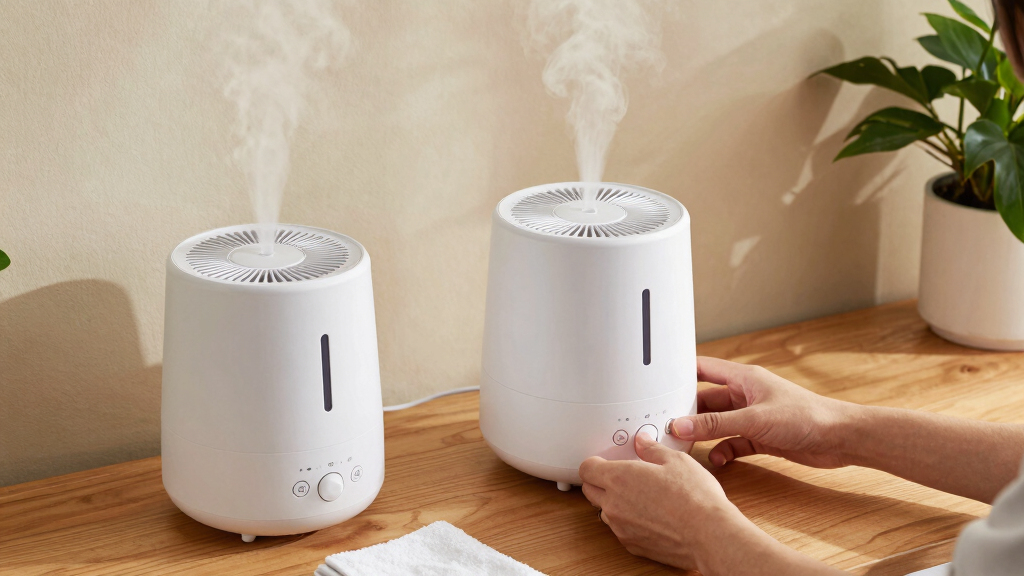
A vibrating plate breaks water into microscopic droplets. The visible mist enters the room without a fan, enabling extremely quiet operation and low power use.
Where each technology wins
Neither type is maintenance-free. The practical trade is self-regulation and filter costs versus quiet performance and water-quality sensitivity.
| Decision factor | Evaporative | Ultrasonic |
|---|---|---|
| Self-regulation | ✓Naturally slows as humidity rises | ~Needs humidistat or monitoring |
| Noise | ~Audible fan hum | ✓Nearly silent |
| Energy use | ~Fan draws more power | ✓Low-power vibration |
| Large-room suitability | ✓Steady, broad coverage | ~Often best for targeted areas |
| Replacement filters | ✕Required every 1–3 months | ✓Usually filter-free |
| Mineral “white dust” | ✓Wick captures many minerals | ✕Possible with mineral-rich water |
| Upfront price | ✓Typically $30–$70 | ~Typically $50–$150 |
Quiet convenience has a trade-off
These relative scores summarize the typical strengths of each design. Exact performance varies by unit size, settings and built-in controls.
Relative strengths
Higher scores indicate a stronger typical advantage.
The humidity comfort zone
Aim for roughly 40–50%. Excess moisture can encourage mold and dust mites; very dry air can irritate skin and airways.
Clean water in. Clean mist out.
Moist reservoirs can support bacteria and mold. Ultrasonic units may also send dissolved minerals into the air, so maintenance and water choice matter as much as technology.
Refresh the water
Empty stale water, rinse the reservoir and refill it regularly. For ultrasonic units, aim to clean every 1–3 days.
Control minerals
Use distilled or filtered water in ultrasonic models to reduce airborne mineral dust and internal scale.
Replace the wick
Clean evaporative units weekly and replace filters approximately every 1–3 months, following the manufacturer’s guidance.
Price now versus upkeep later
Evaporative units often win on purchase price. Ultrasonic units avoid routine filter costs, but distilled water can become an ongoing expense.
Lower entry price
- Replacement filter: about $10–$20
- Filter changes: roughly every 1–3 months
- Fan adds modest energy use
- Good value for larger rooms
Higher upfront, no wick
- Usually no disposable filter
- Lower electricity demand
- Distilled water may add cost
- More frequent hands-on cleaning
Match the machine to your routine
The right humidifier is the one you can operate safely, monitor consistently and clean without letting the routine slide.
For a quiet nursery
Near-silent operation suits naps and nighttime. Select a model with a humidistat, use distilled water and clean it every few days.
For a larger room
Natural self-regulation supports steady coverage without constant adjustment. Accept the fan sound and budget for replacement filters.
For hands-off monitoring
Wi-Fi controls, mobile alerts, antimicrobial materials and precise humidistats can make either technology easier to manage.
A safer-humidity chain
Quiet mist or natural balance?
Evaporative: best when self-regulation, steady coverage and a lower purchase price matter most.
Ultrasonic: best when low noise, low energy use and filter-free operation lead the decision.
For either: monitor room humidity, refresh standing water and follow the unit’s cleaning instructions.
For sensitive rooms: a humidistat and distilled water add useful protection against excess moisture and mineral dust.
How Do Evaporative and Ultrasonic Humidifiers Actually Work?
Evaporative humidifiers use a simple, natural process. A wick filter soaks up water, and a fan blows air through it. As air passes, water evaporates into the room in a steady, self-regulating way. Imagine a damp sponge drying out slowly; the air naturally takes on humidity without overdoing it.
Ultrasonic humidifiers, on the other hand, use high-frequency vibrations—like tiny musical notes—to turn water into a fine mist. No fan needed. They produce a visible vapor that gently floats into the air, making them whisper-quiet companions during night hours or in quiet spaces.
For example, if your nursery needs gentle, near-silent operation, ultrasonic models shine. But if you prefer a device that naturally keeps humidity in check without constant adjustments, evaporative models do the trick.
Popular right now

Ninja Flip Toaster Oven and Air Fryer, 8-in-1, Stainless Steel, SP151

Vitamix Propel Series 510 Professional-Grade Blender, 3 Programs, Black

Bose QuietComfort True Wireless Earbuds with Active Noise Cancellation, Black
As an affiliate, we earn on qualifying purchases.
Self-Regulation and How They Prevent Over-Humidifying Your Space
Evaporative humidifiers are like a built-in thermostat—they slow down as humidity rises. When the air reaches roughly 40-50%, evaporation naturally decreases, stopping excess moisture. This self-regulation makes them safer for larger rooms or areas where you want consistent humidity without constant monitoring.
Ultrasonic models don’t do this automatically. They can pump out a lot of mist, especially if the control isn’t precise. Without a good humidistat, they risk making the room too damp, which can lead to mold or dust mite growth. For example, if you forget to turn down the settings, your baby’s crib area might feel damp and stuffy.
Choosing the right model means considering whether you want a self-regulating system or are comfortable with manual adjustments.
Maintenance Matters: Cleaning, Filters, and Bacteria Risks
Evaporative humidifiers need regular filter changes—every 1-3 months—and weekly cleaning to prevent mold, bacteria, and mineral buildup. Think of it like changing the filter in your air purifier; neglect it, and you risk dispersing germs into your child’s room.
Ultrasonic humidifiers are generally easier to clean because they lack filters. However, their fine mist can spread bacteria and mold if not cleaned every few days. Using distilled or filtered water can greatly reduce this risk, especially if your water is hard or mineral-rich.
For example, during winter, a neglected ultrasonic humidifier can become a breeding ground for bacteria if not cleaned properly, leading to potential health concerns. Regular maintenance is key regardless of the type.
Noise and Energy: Which Is Quieter and More Efficient?
If a peaceful nursery matters, ultrasonic humidifiers are your best bet—they operate almost silently, like a whisper. Evaporative models, with their fans, tend to produce a gentle hum, which might be noticeable during naps or sleep.
Energy-wise, ultrasonic units are more frugal. They use less power, thanks to their vibration technology, whereas evaporative models consume more because of the fan. Imagine running your device on low power while still keeping the room comfortably humid.
For a quiet, energy-efficient choice in a baby’s room, ultrasonic is often preferred. But if you don’t mind the noise and want a more natural regulation, evaporative can still work well.
How Much Do They Cost and What’s the Ongoing Expense?
Upfront, evaporative humidifiers are usually cheaper—think $30-$70 for basic models—though you’ll need to buy replacement filters every few months. Those filters cost about $10-$20 each, adding to long-term expenses.
Ultrasonic models tend to be a bit pricier initially, around $50-$150, but they don’t require filters. Instead, the main ongoing cost is cleaning supplies and occasional replacement parts. It’s like paying a little more now for less hassle later.
For example, if you’re budget-conscious but willing to do regular filter swaps, evaporative units might fit your pocket. But if you prefer low-maintenance, ultrasonic models could save you money over time.
Latest Tech and Trends in Humidifiers: What’s New?
Today’s humidifiers come smarter. Both types now often include Wi-Fi connectivity and mobile apps, letting you monitor and adjust humidity remotely. Imagine setting your nursery’s humidity from your bed or while you’re out shopping.
New antimicrobial filters and materials help fight bacteria and mold, making devices safer. Hybrid models combining evaporative and ultrasonic features are emerging, offering the best of both worlds.
Energy efficiency is also a focus. Manufacturers are designing ultrasonic units that produce a consistent mist with less power, reducing your electric bill while keeping your home comfortable.
The Real Risks: Bacteria, Mold, and Mineral Dispersal
Both humidifier types can pose health risks if not maintained properly. Bacteria and mold thrive in moist environments—especially if water sits too long or isn’t cleaned regularly.
Ultrasonic models can disperse minerals or bacteria into the air as tiny particles, which might aggravate allergies or asthma. Using distilled water helps reduce this risk.
For example, a neglected ultrasonic humidifier in a baby’s room might seem harmless but could introduce germs if kept dirty. Regular cleaning and water choice are your best defenses.
Always follow manufacturer instructions and check for recalls or safety notices, especially for devices used around children.
Picking the Right Humidifier for Your Nursery or Home
Choosing a humidifier depends on your space, needs, and lifestyle. For a quiet, low-maintenance option in a small nursery, ultrasonic units excel. They’re whisper-quiet and easy to clean.
If you have a larger room or want a device that naturally prevents over-humidifying, evaporative models are reliable and self-regulating.
Budget-wise, evaporative units often cost less upfront but need filter replacements. Ultrasonic models cost more initially but require less ongoing upkeep.
For example, if you’re balancing noise, budget, and maintenance, a mid-range ultrasonic with a humidistat might be the best fit. Think about your routine and environment before buying.
Frequently Asked Questions
Which humidifier is better for a baby’s nursery?
Both types can work well if kept clean. Ultrasonic models are quieter, making them ideal for a sleeping baby, but you must ensure regular cleaning to prevent bacteria. Evaporative units self-regulate humidity and are less prone to over-humidifying, which can also be a plus.
Are ultrasonic humidifiers safe around children and pets?
Yes, they are generally safe, but regular maintenance is essential. Using distilled water helps prevent mineral dispersal, reducing allergy or asthma triggers. Always follow manufacturer instructions and keep the device clean to ensure safety.
How often should I clean my humidifier?
Ultrasonic models should be cleaned every 1-3 days to prevent bacteria buildup. Evaporative units need weekly cleaning and filter changes. Proper upkeep keeps the air healthy and your device working efficiently.
Can humidifiers cause mold or bacteria growth?
Yes, if water sits too long or cleaning is skipped. Regularly disinfect and use clean, preferably distilled, water to minimize these risks. This is true for both evaporative and ultrasonic units.
Which type is more energy-efficient?
Ultrasonic humidifiers typically consume less power because they don’t use fans. They also produce mist quietly, making them a more eco-friendly choice for many households.
Conclusion
Choosing between evaporative and ultrasonic humidifiers is about balancing noise, maintenance, space, and budget. Both can deliver healthy, comfortable air—if you keep up with cleaning and water quality.
Remember, the best humidifier is the one you’ll use consistently and maintain properly. With a clear understanding, you can breathe easier—literally—and create a safer, more comfortable environment for your family.