
TL;DR

Turn the school run and nap time into listening time
- Thousands of audiobooks, podcasts and originals
- Listen on your phone, tablet or Echo — also offline
- Cancel anytime
White dust from a humidifier is usually mineral residue from water dispersed by an ultrasonic or impeller model. Distilled or demineralized water is the most reliable way to reduce it; regular cleaning, correct cartridge use, and sensible humidity levels also matter. Appearance alone cannot identify every deposit, so clean the unit by its manual and ask a clinician about respiratory concerns.
White dust from ultrasonic and impeller humidifiers is usually mineral residue carried in water droplets.
Distilled or demineralized water is the most reliable way to reduce that residue, though it can cost more.
Cartridges may help when compatible and replaced on schedule; their performance varies by model and water.
Clean, dry, and refill the humidifier as its manual directs, and never mix cleaning products.
Aim for indoor humidity around 30–50% where practical, and ask a clinician about respiratory concerns.
Home air guide / Humidifier basics
White Dust From Your Humidifier: What It Is and How to Stop It
A pale film near the mist outlet is often mineral residue carried from the water. Learn why it appears, how to reduce it, and what a dusty surface can—and cannot—tell you.
01 / Read the residue
What the white dust usually is
In mist-dispersing humidifiers, tiny droplets carry water into the room. When they evaporate, minerals can remain as a fine powder on nearby surfaces. A recurring chalky haze near the outlet is consistent with mineral residue, but appearance alone cannot identify every particle.
A useful clue, not a lab result
A dry white film is commonly mineral residue rather than mold. Water and device conditions vary, though, and dust may include other particles from the water or unit. If you also notice slime, an unusual odor, or visible growth, clean the humidifier as its manual directs and check for damage.
02 / Compare the mechanism
Why some humidifiers leave more dust
Ultrasonic and impeller units disperse droplets made from tank water. Evaporative and steam models tend to leave more minerals inside the device, though they still need cleaning and part replacement.
| Humidifier type | How it makes moisture | What can happen to minerals |
|---|---|---|
| Ultrasonic | Vibrations create a cool mist | May travel with droplets and settle as dust |
| Impeller | A rotating disk creates mist | May disperse minerals into the room |
| Evaporative | Air passes through a wet wick or filter | Minerals tend to collect in the wick |
| Steam vaporizer | Water is heated to make steam | Minerals generally remain in the unit as scale |
DESIGN AFFECTS WHERE MINERALS COLLECT · FOLLOW THE MODEL’S MANUAL
03 / Practical fixes
How to stop white dust from returning
Start with water, then check cartridge compatibility and maintenance. Each step addresses a different part of the problem; cleaning alone does not make mineral-rich water mineral-free.
Try distilled or demineralized water
Use the type allowed by your manual. It is the most reliable way to reduce mineral residue, though it may cost more than tap water.
Check for a cartridge
Some models support demineralization cartridges. Results vary with the device, water, and cartridge condition.
Clean and descale as directed
Follow the maker’s instructions for products, timing, and parts. Never mix cleaning products.
Refresh filters on schedule
A worn or clogged filter or cartridge may work less effectively. Use the replacement guidance for your model.
Redirect the mist
Choose a stable, easy-to-clean surface. Keep mist away from walls, furniture, and electronics.
Use only approved additives
Do not add disinfectants, essential oils, or other substances unless the manufacturer says the model is designed for them.
04 / Follow the chain
Small changes, aimed at the source
If a dusty crescent appears on the wall, redirect the mist and try distilled water for several uses. If residue drops but remains, check the cartridge fit and replacement interval.
Use a damp cloth
Wiping damp helps avoid stirring dry residue back into the air. A different humidifier style may make airborne mineral residue less noticeable, but it still needs routine care.
Empty, dry, and refill
Follow the manufacturer’s schedule. Poorly maintained humidifiers can disperse microorganisms as well as moisture; do not simply add fresh water over an unusual smell.
Keep room humidity in range
Consistently high humidity can encourage mold and dust mites. A hygrometer can help you track the room, especially overnight.
What white humidifier dust usually is
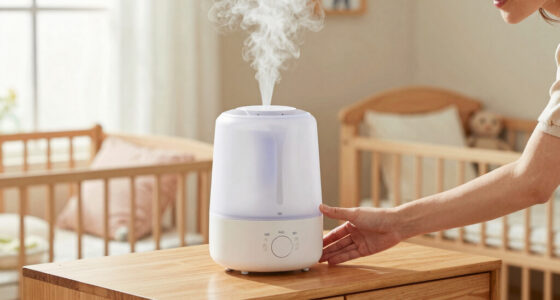
White dust from your humidifier is usually mineral residue from water that a mist-dispersing unit has sent into the air. In an ultrasonic humidifier, fast vibrations break water into tiny droplets; an impeller model uses a rotating disk. When those droplets evaporate, minerals such as calcium and magnesium can remain as a fine powder on nearby surfaces. [1] You may notice it as a chalky haze on a dark bedside table, a faint ring around the humidifier, or a soft film on a shelf in the path of the mist. A family using hard tap water might wipe the dresser on Monday and see the same dust return by Thursday. That pattern points toward water minerals, though it does not prove the residue’s exact contents. The phrase “white dust” describes how a deposit looks, not a lab result. It is generally mineral residue rather than mold, but water and device conditions vary, and appearance alone cannot identify every particle. If you see a dry powder, minerals are a common explanation; if you also find slime, an unusual odor, or growth in the tank, clean the unit according to its manual and check for signs of damage. Think of mist like a delivery truck: it carries tiny droplets into the room, and evaporation leaves some of their cargo behind. The minerals do not vanish when the water does. That is why the choice of water can make a visible difference.Popular right now

Apple AirPods Pro 3 Wireless Earbuds with Active Noise Cancellation

Samsung 42-Inch S90H OLED 4K Smart TV Bundle

KitchenAid Artisan 5-Quart Tilt-Head Stand Mixer, Almond Cream
As an affiliate, we earn on qualifying purchases.
Why ultrasonic models leave dust more often
White dust is most noticeable with ultrasonic and impeller humidifiers because these models disperse tiny droplets made from the water in the tank. Evaporative models send air through a wet wick or filter, where more minerals tend to stay behind; steam vaporizers boil water and generally leave minerals inside the unit as scale. [1] | Humidifier type | How it makes moisture | What can happen to minerals | |—|—|—| | Ultrasonic | Vibrations create a cool mist | Minerals may travel with droplets and settle as dust | | Impeller | A rotating disk creates mist | Minerals may also disperse into the room | | Evaporative | Air passes through a wet wick or filter | Minerals tend to collect in the wick | | Steam vaporizer | Water is heated to make steam | Minerals generally stay in the unit and can form scale | Imagine two rooms on the same street. One has a small ultrasonic unit beside a dark wood dresser; the other has an evaporative model with a wick. The first family may see a visible white coating near the mist, while the second may need to replace a mineral-stained wick instead. Neither style is maintenance-free, and each model’s manual is the best guide to cleaning and replacement. The difference matters if dust keeps returning despite careful wiping. It suggests that the humidifier design and water supply deserve a look, rather than another round of polishing. An evaporative model may make airborne mineral residue less noticeable, but it still needs routine cleaning and timely wick changes.How to stop white dust from returning
To reduce white dust from your humidifier, start with the water, then check compatible cartridges and maintenance instructions. Distilled or demineralized water is the most reliable way to reduce mineral residue in a model that disperses mist. [1]- Try distilled or demineralized water. Use the type allowed by your manual. It usually contains far fewer minerals than tap water, though buying it regularly can cost more and add another errand.
- Check for a compatible cartridge. Some models accept demineralization cartridges. Their results depend on the humidifier, water, and replacement schedule, so treat the cartridge as a possible aid rather than a guarantee.
- Clean and descale as directed. Cleaning removes buildup inside the unit; it does not make hard tap water mineral-free. Follow the model’s instructions for products, timing, and parts.
- Replace filters and cartridges on schedule. A clogged or worn part may not work as intended. Keep the model’s replacement guidance where you’ll see it.
- Set the unit up thoughtfully. Place it on a stable, easy-to-clean surface and keep mist away from walls, furniture, and electronics.
What the dust means for your family’s air
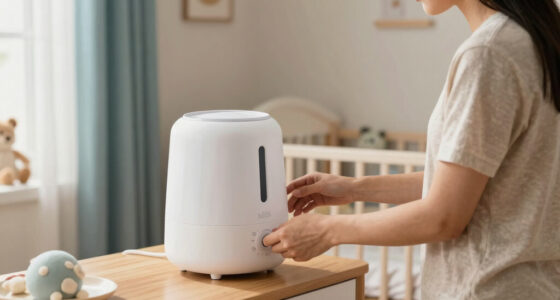
White dust often signals that a mist-dispersing humidifier is sending waterborne particles into the room, but the dust alone does not show exactly what those particles contain or what health effect they may have. The residue is commonly mineral material; the amount and contents depend on the water and device. [1] That distinction helps you respond calmly. A white film beside the humidifier is a reason to review water choice and maintenance, not proof that your child has been harmed. If someone in your home has asthma, allergies, or another respiratory sensitivity, ask their clinician whether reducing exposure or choosing another humidifier type makes sense for them. Maintenance matters for a separate reason: a poorly maintained humidifier can disperse microorganisms as well as moisture. Empty, dry, and refill the tank as directed, and follow the manufacturer’s cleaning intervals. For instance, if you find an odd smell when you lift the tank after a busy week, don’t just add fresh water over it; check the manual and clean the unit before using it again. Keep indoor humidity around 30–50% where practical, and use a hygrometer if you’re unsure how damp the room gets. A humidifier running all night can push a small nursery past a comfortable range if the door stays shut. Persistent high humidity can encourage mold and dust mites, so more mist is not automatically better. For infant health or breathing concerns, follow pediatric guidance rather than relying on the appearance of dust.How to tell mineral residue from other deposits
A dry, powdery white deposit near the mist outlet is often mineral residue, while slime, a musty smell, or visible growth inside the tank deserves cleaning and closer inspection. Still, you cannot identify a substance with certainty from its color or texture alone. [1] Say you find pale powder on the dresser and a little crust around the tank opening. That fits a familiar mineral pattern, especially if you use tap water and the powder returns after the humidifier runs. Now imagine the tank feels slick, smells stale, or has patches that look fuzzy. Those clues call for a careful cleaning and a review of the manual’s guidance before you run the unit again. A quick practical check can help you notice where the deposit appears, but it cannot replace the manufacturer’s directions or a professional assessment when one is needed. Note whether the residue collects along the mist path, whether it appears after using the unit, and whether the tank itself has odor or buildup. If you recently changed water types or replaced a cartridge, note that too; it gives you a clearer comparison over the next few uses. For furniture, use a damp cloth and follow the care instructions for the surface. On painted wood or a delicate finish, test in an inconspicuous spot first. Avoid sweeping powder into the air with a dry duster, especially if someone in the room has respiratory sensitivities.When changing humidifier types may make sense
If white dust keeps returning, an evaporative humidifier may be worth considering because minerals tend to remain in its wick instead of traveling into the room. That can reduce visible airborne residue, though it shifts some upkeep to wick cleaning or replacement. [1] The choice depends on what bothers you most and what you can maintain consistently. For one parent, carrying distilled water upstairs every few days may be manageable. Another may prefer a wick-based model and a reminder to replace the wick, even if the unit needs more frequent hands-on care. Steam vaporizers generally leave minerals in the unit, where they can build up as scale; they also use heat, so follow age-appropriate safety guidance and keep hot units out of a child’s reach. For example, if the nursery’s black bookshelf shows a new white film every morning, a water change may be the simplest first test. If distilled water is inconvenient or the dust persists, compare models by how they handle minerals and what their manuals require for cleaning. Check the product’s age-appropriateness and look up CPSC recall information before buying or using a child-related product. Every type needs care. An evaporative model can still develop buildup or microbial growth if neglected, and its wick may need scheduled replacement. Choose the setup you can clean and maintain on an ordinary Tuesday, not just the one that sounds easiest in a product description.Frequently Asked Questions
Is white dust from a humidifier dangerous?
It is usually mineral residue, but the particles released depend on the water and humidifier. The dust alone cannot show its health effect; if someone has asthma, allergies, or another respiratory condition, ask their clinician whether to reduce exposure.
Is the white residue mold?
Dry, powdery residue is usually mineral material, but color alone cannot identify it. Slime, an unusual odor, or visible growth inside the tank calls for cleaning and checking the manufacturer’s instructions before you use the unit again.
Will distilled water stop the dust completely?
Distilled water should greatly reduce mineral residue in a mist-dispersing model because it contains far fewer minerals than typical tap water. It may not prevent ordinary household dust from settling nearby, and results can vary with the unit and water.
Can I use tap water in my humidifier?
Check your model’s manual. Tap water may be allowed, but water with higher mineral content can leave more residue in ultrasonic or impeller humidifiers and can contribute to scale inside the unit.
Do demineralization cartridges work?
Some humidifiers support cartridges that reduce minerals, but results depend on the specific model, water, and cartridge condition. Use only a compatible cartridge and replace it on the schedule in the manual.
Can I add vinegar, bleach, or essential oils to the tank?
Only use substances the manufacturer specifically permits for your model. Do not mix cleaning products, and do not add disinfectants or essential oils to the water unless the unit is designed for them.