TL;DR
The best nursery humidifier for easy cleaning combines simple design, antimicrobial materials, and smart features. Regular cleaning with distilled water prevents mold and bacteria, keeping your baby’s air safe and fresh.
Choose humidifiers with wide openings and removable parts for easy access during cleaning.
Prioritize models with antimicrobial materials or coatings to inhibit bacteria and mold growth.
Always use distilled or filtered water to minimize mineral deposits and bacterial buildup.
Establish a weekly cleaning routine: soak, scrub, rinse, and dry thoroughly.
Look for smart or self-cleaning features that reduce manual maintenance.
Nursery air · practical buyer’s guide
How to Choose a Nursery Humidifier You’ll Actually Clean
The best model is the one whose tank you can reach, scrub, rinse and dry without a fight. Prioritize wide openings, removable parts, non-porous materials and useful maintenance alerts—then pair them with distilled water and a weekly cleaning habit.
01 · Start with the physical design
If your hand cannot reach it, you probably will not clean it well.
Ignore the feature list for a moment and inspect the water path. Every wet surface should be visible, reachable and simple to dry. Fewer seams and hidden cavities mean fewer places for residue to linger.
Wide top opening
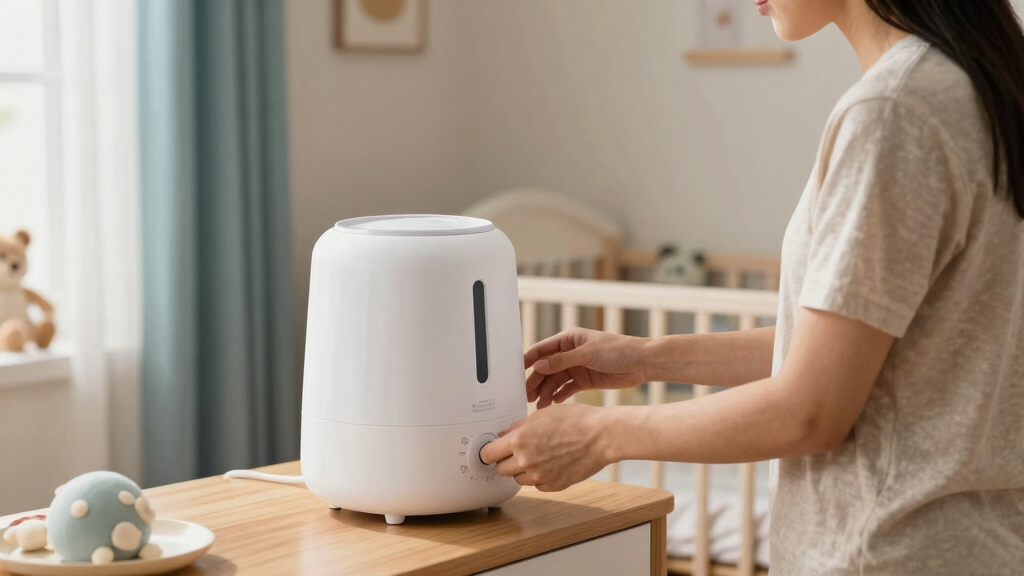
Choose a tank opening large enough for your hand and a soft brush. Full access makes slime, scale and corners easier to see and remove.
Tool-free parts
The tank, lid, mist outlet and tray should separate quickly. Avoid assemblies with narrow tubes, trapped water or delicate pieces that complicate weekly care.
Smooth, non-porous surfaces
Mold-resistant plastics and simple interior geometry are easier to wipe and less likely to retain deposits than textured surfaces or deep internal channels.
02 · Choose the maintenance burden

Levoit Top Fill Humidifiers for Bedroom, 2.5L Tank for Large Room, 28dB
𝙁𝙖𝙨𝙩 𝙃𝙪𝙢𝙞𝙙𝙞𝙛𝙞𝙘𝙖𝙩𝙞𝙤𝙣 𝘼𝙡𝙡 𝙉𝙞𝙜𝙝𝙩: Runs for up to 25 hours on low thanks to its SUPER LARGE capacity…
As an affiliate, we earn on qualifying purchases.
As an affiliate, we earn on qualifying purchases.
Humidifier type changes what lands on your weekly to-do list.
For many nurseries, an ultrasonic model with a broad opening offers the simplest routine. Its filter-free design reduces disassembly, though mineral scale still needs attention—especially when tap water is used.
Illustrative maintenance-ease score based on part count, filter handling and typical access. Individual model design matters more than category alone.
| Type | Cleaning access | Ongoing burden | Watch for | Nursery verdict |
|---|---|---|---|---|
| Ultrasonic | ✓ Often simple Few moving parts |
Regular rinsing and descaling | Mineral “white dust” with hard tap water | Best when the tank is wide and fully accessible |
| Evaporative | ~ Moderate Tray plus fan housing |
Wick checks and replacement | Damp filters that stay in service too long | Useful, but budget time and money for filters |
| Steam vaporizer | ~ Variable Scale can collect near heater |
Descaling and energy use | Hot water and steam around children | Consider placement and burn risk carefully |
| Complex filtered unit | ✗ More involved Multiple wet components |
Cleaning plus filter schedules | Hidden chambers and missed replacement dates | Choose only if every wet part is easy to inspect |
✓ lower burden · ~ model dependent · ✗ higher burden
03 · The weekly reset
Levoit Top Fill Humidifiers for Bedroom, 2.5L Tank for Large Room, 28dB
𝙁𝙖𝙨𝙩 𝙃𝙪𝙢𝙞𝙙𝙞𝙛𝙞𝙘𝙖𝙩𝙞𝙤𝙣 𝘼𝙡𝙡 𝙉𝙞𝙜𝙝𝙩: Runs for up to 25 hours on low thanks to its SUPER LARGE capacity…
As an affiliate, we earn on qualifying purchases.
As an affiliate, we earn on qualifying purchases.
A four-step routine keeps maintenance predictable.
Unplug the unit and follow its manufacturer instructions. Empty stagnant water frequently, then use this simple weekly sequence as a planning framework.
Loosen deposits
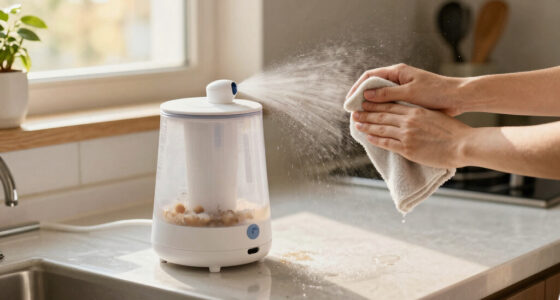
Soak removable, manufacturer-approved parts in the recommended vinegar-water solution. A common example uses about 15 minutes.
Reach every surface
Use a soft brush or cloth on corners, seams, the reservoir and mist path. Stop and address any visible slime or mold.
Remove residue
Rinse thoroughly with clean water so loosened scale and cleaning solution do not remain inside the device.
Leave no trapped moisture
Air-dry every part completely before reassembly or storage. Residual moisture gives microbes another opportunity to grow.
Empty, refresh and inspect. Do not simply top off old water. If mist output drops, odor appears, or slime is visible, clean the unit before the next scheduled reset.
04 · Smart help, not a free pass
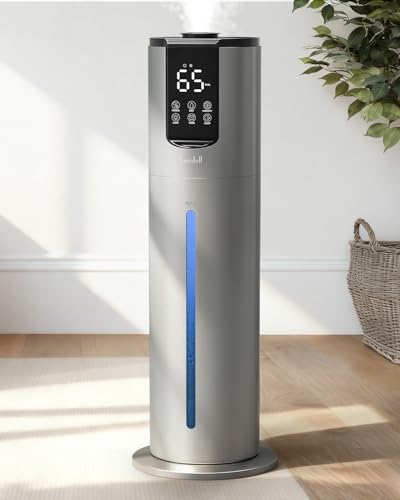
Lacidoll 8L Humidifiers for bedroom up to 500 sq ft, Easy to Clean Humidifier with Washable Parts, Ultrasonic Cool Mist Humidifier for Home Plants Baby Nursery Office, Dark Grey
【Large Capacity & Leak-Proof Top Filling】 Our humidifiers for bedroom features an 8L (2.1Gal) large removable tank. With…
As an affiliate, we earn on qualifying purchases.
As an affiliate, we earn on qualifying purchases.
Useful technology reduces friction—but cannot make dirty water harmless.
The strongest innovations either slow microbial growth, prevent excessive humidity or tell you exactly when maintenance is due. Treat them as support for a routine, not a substitute for one.
Antimicrobial materials
Coatings or infused plastics can inhibit growth on treated surfaces and add a layer of defense between cleanings.
Cleaning and descaling alerts
Timers and sensors reduce guesswork by prompting maintenance before buildup becomes obvious.
Humidistat control
Automatic output control helps avoid over-humidification, which can encourage dampness elsewhere in the nursery.
UV or self-cleaning modes
These features may reduce germs or deposits in specific areas, but manual cleaning is still needed for the full water path.
Levoit Top Fill Humidifiers for Bedroom, 2.5L Tank for Large Room, 28dB
𝙁𝙖𝙨𝙩 𝙃𝙪𝙢𝙞𝙙𝙞𝙛𝙞𝙘𝙖𝙩𝙞𝙤𝙣 𝘼𝙡𝙡 𝙉𝙞𝙜𝙝𝙩: Runs for up to 25 hours on low thanks to its SUPER LARGE capacity…
As an affiliate, we earn on qualifying purchases.
As an affiliate, we earn on qualifying purchases.
The clean-air chain
The bottom line
Buy for the cleanup, not just the mist output.
A wide-opening ultrasonic model with removable parts is often the easiest starting point. Add smooth materials, distilled water, complete drying and a weekly reminder. If persistent mold remains after proper cleaning—or inaccessible parts stay contaminated—replace the affected component or device.
What Makes a Humidifier Easy to Clean? Look for These Features
Not all humidifiers are created equal when it comes to cleaning. The first step is choosing a model with features that make scrubbing and rinsing straightforward. Wide openings allow you to reach all corners easily, enabling you to remove buildup and mold more effectively. Removable parts mean you can disassemble the device without tools, which is crucial for thorough cleaning and maintenance. These features reduce the effort needed and improve the overall hygiene of the device, thereby lowering the risk of mold and bacteria growth that can harm your baby’s respiratory health.
Materials matter, too. Opt for non-porous, mold-resistant plastics that do not trap bacteria or mineral deposits, making them easier to clean and less prone to harboring germs. Check if the manufacturer recommends simple cleaning routines or compatible cleaning tools like brushes or cloths, which can make the process faster and more effective. Investing in these features means less time scrubbing and more peace of mind knowing your baby’s air is clean.
Which Type of Humidifier Is Easiest to Maintain?
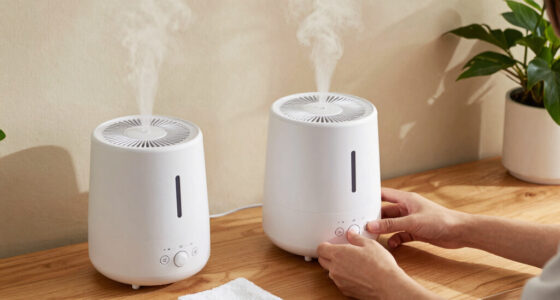
When it comes to types, ultrasonic humidifiers with wide openings are generally the easiest to clean because they lack complex components like wicks or filters that trap dirt and require frequent replacement. Ultrasonic models produce a fine mist through high-frequency vibrations, which means fewer parts that need disassembly. Their simple design allows for quick draining, rinsing, and scrubbing, making weekly maintenance less of a chore. This ease of cleaning directly impacts hygiene because less complicated maintenance routines decrease the likelihood of neglect, which can lead to mold or bacteria buildup. Conversely, evaporative units with wick filters can be more challenging—they require regular filter replacement and more intricate cleaning, which increases the chance of missing spots and harboring germs. Choosing ultrasonic models with accessible parts can significantly reduce the risk of contamination, ensuring your nursery remains a healthy environment for your baby.
How to Spot a Humidifier That Won’t Be a Bacteria Breeding Ground
| Feature | Why It Matters |
|---|---|
| Antimicrobial Materials | Using materials infused with antimicrobial agents or coatings helps inhibit bacterial and mold growth on the surface of the humidifier. This feature is crucial because it can significantly delay or reduce the frequency of deep cleaning needed, thereby lowering the risk of germs that could cause respiratory issues or infections in your baby. While no material is completely germ-proof, antimicrobial features provide an extra layer of defense that supports a healthier nursery environment. |
| Large, Wide Opening | A wide opening facilitates thorough cleaning, allowing parents to reach all internal surfaces easily. This reduces leftover residue that can serve as breeding grounds for bacteria and mold. Proper rinsing and scrubbing of these accessible areas prevent slime buildup, which is often invisible but dangerous. The ease of cleaning directly correlates with fewer bacteria and mold colonies, making the nursery safer for your baby. |
| Self-Cleaning Modes | Advanced models incorporate ultrasonic vibrations, UV sterilization, or other tech to actively reduce germs and mineral deposits without manual effort. These modes can be scheduled or activated regularly, ensuring consistent hygiene and decreasing the likelihood of neglect. While self-cleaning features are convenient, they should complement regular manual cleaning routines for optimal safety. |
| Smart Sensors | Equipped with sensors, these humidifiers can alert you when cleaning or descaling is necessary, preventing the buildup of mold or bacteria due to oversight. They promote proactive maintenance, which is vital because bacteria can proliferate quickly in humid environments. Smart sensors help you maintain a cleaner, safer device with less guesswork, ultimately protecting your baby’s health. |
Choosing a humidifier with these features can significantly cut down on bacteria growth and make your weekly cleaning routine more manageable. Understanding the importance of each feature helps you select a device that balances ease of cleaning with effective germ prevention, ensuring a safer nursery environment.
Practical Tips for Maintaining a Clean Nursery Humidifier
- Use distilled or filtered water — mineral deposits from tap water can clog your device, promote bacterial growth, and create a breeding ground for mold. Using pure water minimizes mineral buildup, which not only extends the lifespan of the humidifier but also keeps the mist cleaner and healthier for your baby.
- Clean weekly — soaking parts in a vinegar-water solution helps dissolve mineral deposits and kill bacteria. Gently scrubbing with a soft brush or cloth ensures all surfaces are free of slime and mold. Rinsing thoroughly removes vinegar residue, preventing any potential irritation or damage to the device. Regular cleaning is essential because neglecting it allows bacteria and mold to establish, increasing health risks.
- Dry all parts completely — moisture left inside the tank or on components can encourage mold growth. Air-drying all parts before reassembly ensures no residual water remains, reducing the chance of microbial proliferation. Proper drying routines are a simple yet effective way to maintain hygiene and prolong the life of your humidifier.
- Check for visible slime or mold — if you notice any buildup, scrub again with a vinegar solution or use a soft brush. If mold persists, replacing parts or the entire device might be necessary. Prompt action prevents the spread of mold spores, which can cause respiratory issues or allergic reactions in your baby.
- Follow manufacturer instructions — each model may have specific cleaning requirements. Adhering to these ensures you don’t damage delicate components and that the device functions optimally. Proper maintenance routines aligned with manufacturer guidelines help sustain the device’s effectiveness and safety.
For example, soaking all removable parts in vinegar for 15 minutes, then gently scrubbing with a soft brush, rinsing well, and air drying overnight creates a simple, effective weekly routine. This proactive approach keeps your humidifier safe, hygienic, and efficient, ensuring your baby breathes clean air every day.
The Latest Tech That Makes Cleaning Easier
Emerging technologies are transforming how we maintain clean humidifiers. Some models feature self-cleaning modes that vibrate ultrasonic elements or use UV light to actively kill germs, drastically reducing manual scrubbing. These innovations help ensure the device stays hygienic with minimal effort, which is especially beneficial in busy nurseries.
Other advancements include descaling systems that automatically prevent mineral buildup, eliminating the need for frequent manual descaling. Antimicrobial coatings applied during manufacturing create a surface less hospitable to bacteria and mold, further supporting hygiene. These features work together to cut cleaning time and improve safety, making it easier for parents to maintain a healthy nursery environment.
For example, a recent ultrasonic humidifier might incorporate a self-cleaning cycle every 24 hours, effectively minimizing slime and mineral deposits without extra effort from you. Such innovations are game-changers for busy parents seeking hassle-free solutions that keep their baby’s air pure and safe.