TL;DR

Turn the school run and nap time into listening time
- Thousands of audiobooks, podcasts and originals
- Listen on your phone, tablet or Echo — also offline
- Cancel anytime
Hygrometers measure indoor humidity, and keeping it between 40-60% prevents dryness and mold. Accurate readings help you adjust humidifiers or dehumidifiers to maintain comfort and health for your baby.
Imagine a nursery where your baby sleeps peacefully, free from dry skin, congestion, or mold. It sounds ideal, but the secret lies in understanding those tiny numbers on a hygrometer. Monitoring humidity levels isn’t just about comfort — it’s about health, safety, and peace of mind.
In this guide, you’ll learn how to interpret hygrometer readings, what ideal humidity looks like, and how to fine-tune your nursery environment for your little one’s best start in life.
Always keep nursery humidity between 40% and 60%.
Choose a hygrometer that’s easy to calibrate for accurate readings.
Monitor humidity daily, especially during seasonal shifts or weather changes.
Use humidifiers or dehumidifiers to fine-tune moisture levels based on your hygrometer’s readings.
Regularly calibrate your hygrometer to maintain trust in the numbers.
Hygrometers and Humidity: What the Numbers Mean for a Nursery
A tiny percentage can reveal whether the air is soothing your baby’s skin and airways—or creating conditions for dryness, mold and allergens. Read the number, spot the trend and make a measured adjustment.
One number, three very different environments
A hygrometer measures relative humidity: the moisture currently in the air compared with the maximum the air can hold at that temperature. The reading changes as both moisture and temperature shift.
Too dry
Dry skin, chapped lips, nasal congestion and irritated airways can appear sooner in babies because their skin and respiratory systems are especially sensitive.
Comfort zone
Balanced moisture supports comfortable breathing and healthy skin while making the room less hospitable to mold proliferation.
Too damp
Excess moisture encourages mold, mildew and dust mites—potential sources of allergens and respiratory irritation in a nursery.
Five habits that make the reading useful
A hygrometer is not a set-and-forget decoration. Its value comes from placing it thoughtfully, checking it consistently and acting on patterns instead of chasing every tiny fluctuation.
Key takeaways
Analog, digital or smart?
Budget matters, but clarity and calibration matter more. Digital models usually offer the best balance of precision and ease; smart models add alerts when constant manual checking is impractical.
Analog
A mechanical dial provides an at-a-glance estimate. It is affordable, but may drift over time and can be difficult to read precisely.
Digital
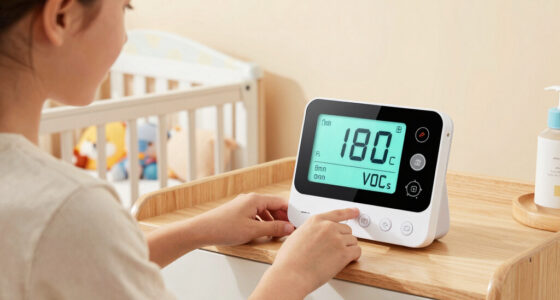
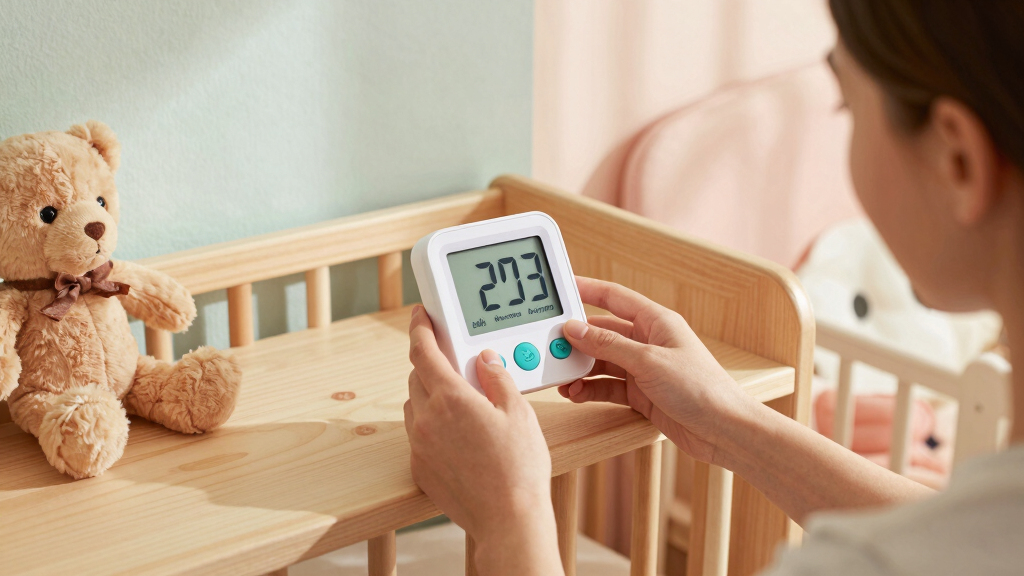
An exact percentage display reduces guesswork. Temperature readings and calibration controls make day-to-day decisions easier.
Smart
App connectivity, history and alerts can flag out-of-range conditions promptly—even when you are not standing beside the crib.
| Feature | Digital hygrometer | Analog hygrometer |
|---|---|---|
| Accuracy | ✓High, especially with calibration options. | ~Moderate; mechanical drift may develop over time. |
| Ease of reading | ✓Exact percentage on a clear display. | ~Pointer position requires interpretation. |
| Extra features | ✓Temperature, history, connectivity and alerts. | ✗Usually limited to a basic humidity reading. |
| Typical price | ~Usually $20–$50. | ✓Often under $20. |
| Calibration | ✓Often straightforward; some models automate it. | ~Manual adjustment may be required and overlooked. |
| Nursery fit | ✓Best for precise, repeatable adjustments. | ~Useful for broad trends if regularly verified. |
The nursery humidity loop
Humidity can change hourly with heating, cooling, outdoor weather and doors or windows. Use a calm feedback loop: check the room, choose one response and confirm that it worked.
Read the hygrometer
Check at least daily and note whether the reading is rising, falling or stable.
Compare with 40–60%
Identify dry, balanced or damp conditions before changing the room.
Make one adjustment
Add moisture, remove moisture or improve ventilation as needed.
Measure again
Allow the room to respond, then verify that it is moving toward the target.
If the reading is below 40%
Add moisture carefully and continue checking so the room does not overshoot the comfort range.
If the reading is above 60%
Remove moisture early to reduce the time mold, mildew and dust mites have favorable conditions.
A simple monitoring rhythm
Consistency reveals patterns that a single reading cannot. Place the device away from direct mist, radiators, open windows and other localized conditions that can distort the room-wide picture.
When to check
Start with one daily reading, then increase attention whenever the nursery environment changes.
Calibration in three moves
Follow the manufacturer’s calibration instructions and repeat the check periodically or whenever readings seem inconsistent.
Compare against a trusted reference or approved calibration method.
Apply the model’s offset or manual adjustment if a difference appears.
Confirm the correction before relying on the nursery reading.
What exactly do humidity numbers tell you about your nursery?
Hygrometers give you a percentage — that’s the amount of moisture in the air relative to the maximum amount the air can hold at a given temperature. A reading of 35% indicates very dry air, which can cause dry skin, chapped lips, and nasal congestion in babies because their delicate skin and respiratory systems are more sensitive to dryness. Conversely, a reading of 65% suggests excess moisture, which can lead to mold growth and dust mites, both of which pose health risks for infants. Staying within the 40-60% range is crucial because it maintains a balance that supports healthy skin, reduces respiratory irritation, and inhibits mold proliferation. Consider the implications: too dry, and your baby might develop skin and breathing issues; too damp, and mold and allergens can compromise their immune system. Recognizing these nuances emphasizes why regular monitoring is essential—so you can intervene before discomfort or health problems arise.
As an affiliate, we earn on qualifying purchases.
How to pick the right hygrometer for your nursery — digital, analog, or smart?
- Determine your budget — analog models are cheaper but less precise, which might lead to less reliable readings over time, potentially causing you to misjudge your nursery’s humidity. Investing in a digital hygrometer with calibration features can provide more consistent and accurate data, helping you make better adjustments.
- Decide if extra features matter — some digital hygrometers display temperature, which is important because temperature influences humidity levels. Others connect to smartphone apps, offering convenience and real-time alerts, which are invaluable if you want constant oversight without manual checks.
- Think about convenience — smart hygrometers can send notifications directly to your phone when levels go outside your desired range, allowing you to respond promptly. This reduces the risk of prolonged periods of inappropriate humidity, which can affect your baby’s health.
- Check reviews for accuracy — recent models tend to be more reliable and easier to calibrate, ensuring your readings reflect true humidity levels. Remember, a slightly more expensive but precise device can save you from unnecessary discomfort or health issues caused by inaccurate readings.
For example, a parent noticed her baby’s dry skin and realized her analog hygrometer was off by 10%. Upgrading to a digital model with calibration features helped her keep the humidity steady, preventing further skin irritation and congestion.
As an affiliate, we earn on qualifying purchases.
Comparison table: Digital vs. Analog hygrometers — which is better for your nursery?
| Feature | Digital Hygrometers | Analog Hygrometers |
|---|---|---|
| Accuracy | High, with calibration options that help maintain precise readings over time, which is critical for sensitive environments like nurseries. | Moderate, may drift over time due to mechanical factors, risking inaccurate readings that can mislead you about your nursery’s humidity. |
| Ease of reading | Clear digital display that shows exact percentages, reducing guesswork and enabling precise adjustments. | Dial with pointer, which can be harder to read accurately, especially in low light or for those with vision difficulties. |
| Features | Temperature display, connectivity options, alerts for out-of-range levels, making it easier to maintain optimal conditions. | Basic humidity reading only, requiring manual interpretation and adjustments. |
| Price | Usually $20-$50, but investing in calibration features can add value. | Under $20, making it accessible but often less reliable long-term. |
| Calibration | Often easy, some models auto-calibrate, maintaining accuracy over time, which is vital for consistent nursery conditions. | Requires manual adjustment, which may be neglected, leading to less trustworthy readings. |
As an affiliate, we earn on qualifying purchases.
How often should you check humidity levels, and why?
In a nursery, humidity can fluctuate daily or even hourly — especially with weather shifts, seasonal changes, or indoor heating and cooling. Regular checks, ideally at least once a day, are essential because they allow you to identify trends and respond before conditions become uncomfortable or unsafe. For instance, during winter, indoor heating can rapidly dry out the air, causing dry skin, nasal congestion, and respiratory irritation. If you check daily, you can turn on a humidifier proactively, preventing discomfort. Conversely, in humid seasons or climates, frequent monitoring helps you detect rising moisture levels early, so you can activate a dehumidifier before mold or dust mites become a concern. Smart hygrometers with alert features make this easier by notifying you immediately when levels are outside the safe range, reducing the need for manual checks and ensuring continuous protection for your baby. Consistent monitoring allows you to maintain a stable environment, which is especially important for infants with sensitive skin and developing respiratory systems.
As an affiliate, we earn on qualifying purchases.
Simple ways to fix humidity issues — boost or dry out the air
- To increase humidity: Use a humidifier, which adds moisture directly and can be adjusted to maintain target levels. Placing bowls of water near heat sources allows evaporation, gradually increasing humidity; however, this method is less precise and requires frequent monitoring. Adding indoor plants like ferns or peace lilies can also help, as they naturally release moisture into the air, creating a more humid environment. These methods are beneficial when humidity drops below 40%, especially in winter, because dry air can cause dry skin, chapped lips, and nasal congestion, all of which impact your baby’s comfort and health.
- To reduce humidity: Turn on exhaust fans, open windows during dry weather, or run a dehumidifier to remove excess moisture. High humidity above 60% fosters mold growth and dust mites, which can trigger allergies and respiratory issues. Using a dehumidifier in such conditions helps prevent these problems. Regularly check your hygrometer to see if your adjustments are effective. For example, after turning on a dehumidifier, a parent observed the reading drop from 65% to 50% within a few hours, alleviating mold concerns and improving air quality for her baby.
Can you trust digital or analog hygrometers to be accurate?
Digital hygrometers tend to be more precise, especially if they feature calibration options that allow you to fine-tune the device to your environment. This is crucial because even small inaccuracies can lead to inappropriate adjustments—either too much or too little humidity—potentially harming your baby. Analog models are simple and often reliable initially, but they are susceptible to drift over time due to mechanical wear or environmental factors, which can cause inaccurate readings. Regular calibration, whether manual or automatic, is essential regardless of type. For example, calibrating a digital hygrometer monthly ensures it remains accurate, helping you maintain the ideal 40-60% range. An analog hygrometer might require you to adjust it using a salt test or calibration kit periodically. The key is consistency—accurate, trustworthy readings allow you to make informed decisions that protect your baby’s health and comfort.
How seasonal changes affect nursery humidity and what you can do about it
In winter, indoor heating often dries out the air, dropping humidity below 30%, which can cause dry skin, chapped lips, and congestion in babies. If unchecked, prolonged exposure to such dry conditions can lead to respiratory issues and skin irritation. Conversely, in summer or rainy seasons, humidity can rise above 60%, creating a breeding ground for mold, dust mites, and bacteria, which can trigger allergies or respiratory problems. To maintain comfort and safety, it’s important to adapt your humidity control strategies seasonally. During winter, run a humidifier and keep windows open briefly if outdoor conditions permit, to add moisture and prevent dryness. In summer, use a dehumidifier or air conditioner to remove excess moisture, reducing the risk of mold and allergens. Regularly check your hygrometer to ensure levels stay within the safe 40-60% range. For example, a parent noticed her nursery’s humidity dropped to 32% in January; using a humidifier raised it to a comfortable 45%, significantly improving her baby’s skin and breathing comfort, illustrating the importance of seasonal adjustments.
Frequently Asked Questions
What is the ideal humidity level for a nursery?
The best range is between 40% and 60%. This zone supports healthy skin, eases breathing, and prevents mold growth.
How often should I check humidity levels in my nursery?
At least once a day, especially during seasonal changes or if you notice signs of discomfort like dry skin or congestion.
What’s the difference between digital and analog hygrometers?
Digital hygrometers are generally more accurate and easier to calibrate, while analog models are simple but may drift over time. Regular calibration helps keep readings trustworthy.
How can I tell if my nursery is too humid or too dry?
Signs of low humidity include dry skin, cracked lips, and stuffy noses. High humidity can cause mold, musty smells, and dust mites. Use your hygrometer to keep levels within the safe range.
Are there baby-safe humidifiers and dehumidifiers?
Yes. Look for models with non-toxic materials, auto-shutoff features, and easy cleaning to ensure safety in your nursery environment.
Conclusion
Getting a handle on your nursery’s humidity isn’t rocket science — it’s about small, consistent checks and adjustments. A good hygrometer acts like a trusted friend, guiding you to create a cozy, safe space for your baby.
Remember, the goal isn’t perfection — it’s balance. When in doubt, aim for that gentle 50% mark, and your little one will thank you with peaceful sleep and happy, healthy skin.
Fall Picks
fall essentials
As an affiliate, we earn on qualifying purchases.