
TL;DR

Turn the school run and nap time into listening time
- Thousands of audiobooks, podcasts and originals
- Listen on your phone, tablet or Echo — also offline
- Cancel anytime
HEPA ratings indicate how effectively an air purifier filters out tiny particles—99.97% at 0.3 microns for true HEPA. Choosing a filter with the right efficiency, size, and ozone-free operation ensures a healthier nursery environment.
Creating a safe space for your baby means controlling what’s floating around in the air. But not all filters are created equal, and the term “HEPA” gets thrown around a lot. Knowing what those ratings really mean helps you avoid gimmicks and pick a purifier that actually makes a difference.
In this guide, you’ll learn how HEPA ratings work, what to look for in a nursery-friendly purifier, and how to spot the real deal from the marketing fluff. Because when it comes to your little one’s lungs, clarity isn’t just helpful — it’s essential.
True HEPA filters trap 99.97% of 0.3-micron particles, making them highly effective against common nursery allergens.
Always verify the ‘True HEPA’ label and check for ozone-free certification before buying a nursery air purifier.
Size, noise level, and additional features like air quality sensors are crucial for choosing the right device for your baby’s room.
HEPA filters need regular replacement—every 6-12 months—to maintain their effectiveness.
Air purifiers complement, but don’t replace, good cleaning and ventilation practices in the nursery.
Nursery Air Purifiers: What HEPA Ratings Really Mean
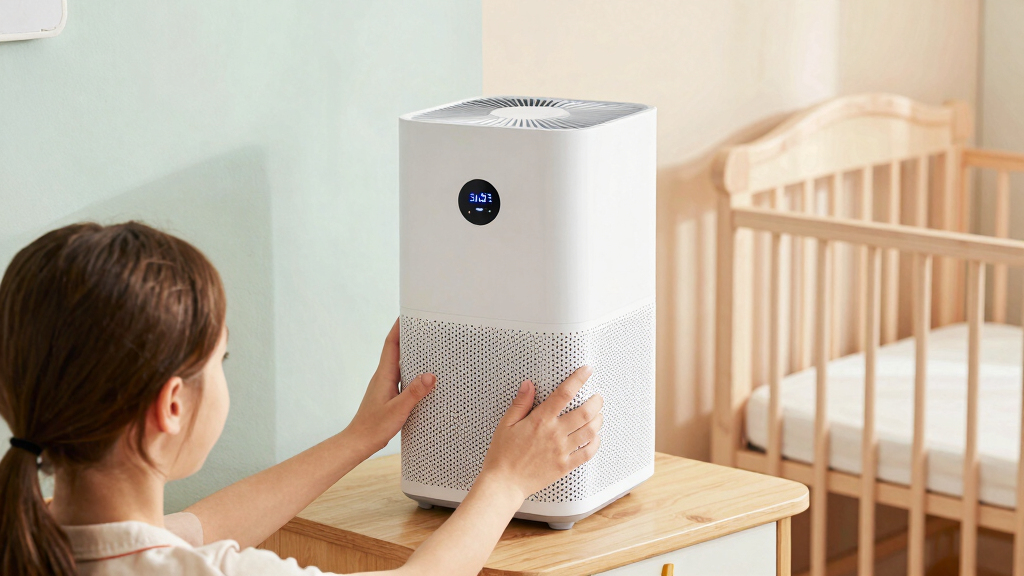
A True HEPA filter is a powerful defense against airborne nursery irritants—but the label is only the beginning. Room coverage, clean-air delivery, noise, ozone safety, placement, and maintenance determine whether the purifier makes a meaningful difference.
Minimum capture efficiency for particles measuring 0.3 microns.
Typical replacement interval, subject to usage and manufacturer guidance.
A nursery purifier should clean the air without creating a respiratory irritant.
A fine-particle barrier for everyday nursery air
HEPA media works like a dense, engineered maze. Air passes through while particles collide with fibers and remain trapped. This reduces airborne irritants; it does not remove settled dust, replace cleaning, or solve every gaseous pollutant.
Dust & pollen
Frequently carried into the nursery on clothing, open-window airflow, and household movement.
Pet dander
Lightweight fragments can remain suspended and circulate between rooms for long periods.
Mold spores
Filtration can capture airborne spores, but the moisture source still needs to be corrected.
Some bacteria
HEPA can trap many particle-bound microbes; it is filtration, not room sterilization.
“HEPA” is a standard. “HEPA-like” is marketing.
The most important distinction is whether the product explicitly meets the True HEPA efficiency benchmark. MERV and CADR provide useful information, but they describe different aspects of filtration and performance.
| Label or rating | What it tells you | Defined benchmark? | Nursery value | Buying verdict |
|---|---|---|---|---|
| True HEPA | Particle capture efficiency at 0.3 microns | ✓ 99.97% | Strong fine-particle filtration | ✓ Preferred |
| HEPA-type / HEPA-like | Manufacturer-defined resemblance to HEPA | ✗ Not equivalent | Performance may be substantially lower | ✗ Verify carefully |
| MERV 13–16 | Overall filter efficiency across particle bands | ✓ Rated scale | Useful for capable HVAC filtration | ~ System dependent |
| CADR | Volume of clean air delivered per unit of time | ✓ Performance metric | Helps match airflow to room size | ✓ Compare models |
| Ionizer / ozone mode | Electronic particle charging or reactive-gas output | ~ Varies widely | Can introduce avoidable respiratory concerns | ✗ Avoid ozone |
Read the fine print: a prominent “HEPA” phrase on a box is not enough. Look for the efficiency statement, replacement-filter details, room coverage, CADR, and independent safety certification.
The last percentage points matter
A lower-grade “HEPA-type” claim may sound close to True HEPA, but repeated air circulation magnifies performance differences. The purifier also needs enough airflow to pull the room’s air through the filter consistently.
Illustrative capture claims
The performance equation
True HEPA media captures at least 99.97% of 0.3-micron test particles.
A unit that is too small cannot circulate and clean nursery air quickly enough.
Clear intake space, a sensible location, and timely filter changes protect performance.
A quiet speed that runs regularly can be more useful than an intrusive setting left off.
Match the machine to the room—and the routine
The right purifier should disappear into nursery life: quiet enough for sleep, powerful enough for the floor area, simple to maintain, and designed without ozone-producing operation.
Ozone-free
Avoid ozone-generating modes. Check the product specification and look for CARB compliance where applicable.
Coverage & CADR
Use the nursery’s actual floor area and compare clean-air delivery—not just a generous marketing claim.
Quiet operation
Compare noise ratings at the fan speed you expect to use overnight, not only the lowest setting.
Filter alert
A change indicator reduces guesswork. Confirm replacement filters are available and affordable.
Carbon layer
Activated carbon can help reduce odors and some VOCs that particle-only HEPA media does not capture.
Air sensor
Real-time sensors and automatic fan adjustment can respond to changing particle levels without constant input.
From product claim to cleaner nursery air
No single specification guarantees the outcome. Follow the entire chain: verify the filter, confirm safety, size the purifier, install it correctly, and maintain it on schedule.
Filter the air, then manage the environment.
A True HEPA purifier can significantly reduce airborne particles, but it complements rather than replaces vacuuming, damp dusting, source control, humidity management, and safe ventilation. Cleaner air comes from a system of good choices—not a single appliance.
True HEPA + correct size + zero ozone + fresh filterWhat Does a HEPA Filter Actually Do in Your Nursery?
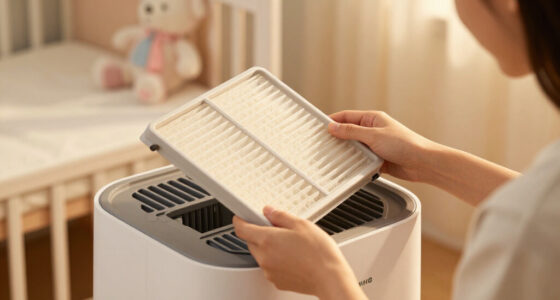
HEPA filters are like a giant strainer for the air. They trap tiny particles—dust, pet dander, mold spores, and even some bacteria—that are small enough to irritate your baby’s sensitive lungs. A true HEPA filter removes at least 99.97% of particles as tiny as 0.3 microns.
Understanding this helps you realize why a HEPA filter can be a game-changer for nursery air quality. Tiny particles like pet dander and mold spores are common triggers for allergies and asthma in children, and the presence of these allergens can lead to respiratory issues, interrupted sleep, or long-term health problems. By trapping these particles effectively, a HEPA filter acts as a barrier, reducing the load of irritants your baby breathes in. However, it’s crucial to recognize that the filter’s effectiveness depends on proper maintenance—clogged or old filters will lose their ability to trap particles, negating their benefits. Additionally, the placement and size of the purifier matter; a small unit in a large room may not provide the level of filtration needed to make a real difference. So, choosing a high-quality, appropriately rated HEPA filter and maintaining it well are key steps toward a healthier nursery environment.
Popular right now

Ninja Flip Toaster Oven and Air Fryer, 8-in-1, Stainless Steel, SP151

Bose QuietComfort True Wireless Earbuds with Active Noise Cancellation, Black

Vitamix Propel Series 510 Professional-Grade Blender, 3 Programs, Black
As an affiliate, we earn on qualifying purchases.
What Do HEPA Ratings Really Tell You?
HEPA ratings are more than just a number; they reflect a filter’s ability to trap tiny particles, which directly impacts your baby’s health. A true HEPA filter must capture at least 99.97% of 0.3-micron particles. This standard is critical because particles of this size are among the most difficult to filter, yet they are common in indoor environments—dust, pollen, pet dander, and some bacteria are all in this size range. If a filter doesn’t meet this standard, it might only trap larger particles, leaving smaller irritants free to circulate and potentially trigger allergies or respiratory issues.
Many consumers get confused between different ratings like MERV, CADR, or claims like “HEPA-like” or “HEPA-type,” which can be misleading. For example, a filter labeled “HEPA-like” might only trap 85% of particles, which isn’t sufficient for protecting a vulnerable infant. MERV ratings, which range from 1 to 20, indicate a filter’s overall efficiency but don’t necessarily guarantee the presence of true HEPA filtration. The implications are significant: investing in a purifier with a non-HEPA or substandard filter can give a false sense of security, leaving your child exposed to allergens. Therefore, verifying certifications, reading the fine print, and choosing products explicitly labeled “True HEPA” ensures you get a filter that meets the critical 99.97% standard. This level of filtration is especially important in nurseries where even small amounts of allergens can have outsized effects on health and comfort.
How to Pick the Right Size and Features for Your Nursery
Choosing the right air purifier isn’t just about the filter; it’s about matching the device’s capacity to your nursery’s size and your family’s needs. A purifier rated for a 150-square-foot room will clean the air more thoroughly and quickly than a tiny unit meant for a closet. This matters because faster air turnover means fewer allergens lingering in the air, reducing the risk of respiratory irritation and allergy flare-ups.
Beyond size, consider features that enhance usability and safety. Quiet operation is essential—especially if your baby naps during the day or sleeps at night. An overly loud purifier can disturb sleep and become a source of stress. Ozone-free operation is non-negotiable; ozone can irritate delicate lungs and exacerbate asthma. Additional features like filter change alerts prevent guesswork, ensuring filters are replaced before their efficiency drops. Real-time air quality sensors are also valuable—they provide immediate feedback, helping you understand how well the purifier is working and whether adjustments are needed. For example, a purifier that covers 200 sq ft, operates quietly, and includes an indicator for filter replacement can seamlessly integrate into your nursery routine, maintaining a healthy environment with minimal fuss. Choosing a model with these features ensures you’re not just filtering air but actively managing your baby’s indoor air quality with confidence.
What’s New in Nursery Air Purifiers? Tech and Trends
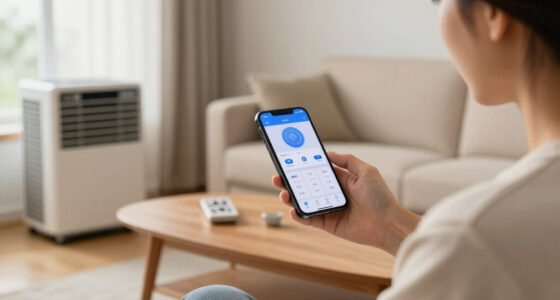
Modern purifiers are incorporating smarter technology to better serve busy parents and ensure safety. Wi-Fi connectivity and app controls allow you to monitor air quality remotely, giving peace of mind even when you’re away from the nursery. Built-in sensors can automatically adjust fan speed based on real-time air quality readings, optimizing filtration without manual intervention. This adaptive technology helps maintain consistently clean air, reducing allergens and pollutants efficiently. Additionally, many new models include multi-layered filtration systems that combine HEPA with activated carbon filters to absorb odors, VOCs, and chemical fumes from cleaning products or furniture. This is especially important because volatile organic compounds can cause irritation or long-term health effects if not properly managed. The focus on ozone-free technology is also a key trend; the latest devices avoid ozone emissions altogether, aligning with safety standards and protecting your baby’s developing lungs. For example, a recent model might detect smoke or dust and automatically increase filtration, providing a safer, healthier environment without constant manual adjustments. These innovations are making nursery air purification more effective, convenient, and safe—giving parents a powerful tool to safeguard their child’s health effortlessly.
Certifications and Safety Checks to Trust
Certifications from reputable organizations like the California Air Resources Board (CARB) and the AHAM Verified mark are critical indicators of a product’s safety and performance. These certifications verify that the purifier meets strict standards for filtration efficiency, safety, and ozone emissions. For parents, choosing a certified product means you’re reducing the risk of exposure to harmful emissions like ozone, which can irritate lungs and worsen respiratory conditions. It’s important to scrutinize packaging and product descriptions to confirm ozone-free operation—look for clear labels stating “ozone-free” and check for certification logos. In addition, consider reading reviews and seeking out products with transparent testing data. This due diligence helps ensure the purifier you select is both effective and safe for your baby’s sensitive lungs. Remember, an uncertified or poorly tested device might emit ozone or other harmful substances, undermining its purpose and potentially causing harm. By prioritizing certified, ozone-free models, you protect your child from unintended health risks, giving you peace of mind that your nursery environment is as safe as possible.
How Often Do You Need to Change the Filters?
Regularly replacing filters is essential for maintaining the effectiveness of your nursery air purifier. Over time, filters trap dust, dander, and other particles, but they can become clogged or saturated, reducing airflow and filtration efficiency. A clogged filter not only diminishes the purifier’s ability to clean the air but can also become a source of mold or bacteria if not replaced timely. Typically, HEPA filters should be changed every 6-12 months, but this varies based on usage and air quality—more pollutants in the environment may necessitate more frequent replacements. Using models with filter change indicators simplifies this process, alerting you when it’s time for a swap. Neglecting to replace filters regularly can lead to decreased air quality and even re-circulation of trapped allergens, defeating the purpose of your investment. Proper maintenance ensures your purifier continues to operate at peak performance, providing a healthier nursery environment for your baby and peace of mind for you.
Can an Air Purifier Replace Good Cleaning and Ventilation?
While air purifiers are powerful tools for reducing airborne allergens and pollutants, they are not a substitute for good cleaning and proper ventilation. Regular cleaning routines—dusting, vacuuming with HEPA filters, and wiping surfaces—remove the sources of many indoor irritants at their origin, preventing them from becoming airborne. Ventilation, such as opening windows when weather permits, helps dilute indoor pollutants and introduces fresh air, further reducing allergen buildup. Relying solely on an air purifier can create a false sense of security; it won’t eliminate mold growth in hidden areas or prevent dust from settling on surfaces. Think of the purifier as part of a comprehensive approach: it filters the air that circulates, but it can’t do the job alone. Combining regular cleaning, adequate ventilation, and the use of a high-quality air purifier provides a layered defense—significantly improving indoor air quality and creating a safer environment for your baby.
Frequently Asked Questions
Are HEPA filters safe for babies?
Yes, when paired with ozone-free purifiers, HEPA filters are safe and highly effective at reducing airborne allergens and pollutants. Always check for certifications and avoid models that emit ozone or other harmful gases.
How often should I change the filter?
Most filters should be replaced every 6-12 months, but check your device’s instructions. Regular changes ensure the purifier stays effective in removing dust, dander, and other particles.
Can air purifiers eliminate all allergens and pollutants?
They significantly reduce many airborne irritants but won’t eliminate every source of indoor pollution. Combine their use with good cleaning, ventilation, and smoke-free habits for best results.
Are expensive air purifiers worth it?
Higher-quality units with true HEPA filters and safety certifications tend to perform better and last longer. However, there are also affordable safe options that meet essential standards for nursery use.
Do I need an air purifier if my home is always clean?
Even in a tidy home, dust, pet dander, and indoor pollutants can linger. An air purifier adds an extra layer of protection, especially for babies with allergies or asthma.
Conclusion
Understanding what HEPA ratings truly mean helps you pick a safer, more effective nursery air purifier. A true HEPA filter combined with ozone-free operation and proper sizing can make a real difference in your baby’s health.
Remember, a cleaner nursery isn’t just about filters — it’s about a complete approach to indoor air safety that grows with your little one. When you choose wisely, you breathe easier knowing you’re giving your baby the best start.