
TL;DR
Open a free Amazon Business account
Business pricing, bulk buying and tax-exempt orders.
Create a free accountAs an affiliate, we earn on qualifying purchases.
Regular cleaning, tightening loose parts, and using distilled water can quiet a noisy humidifier. If noise persists or the unit is old or malfunctioning, replacing it is often the best move for peace and safety.
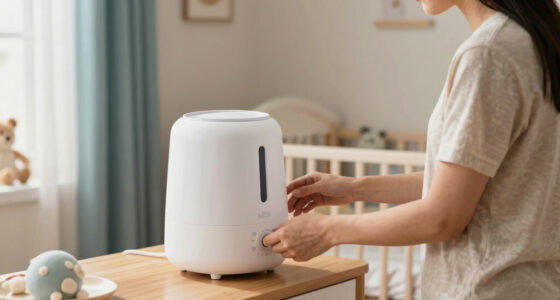
Nothing disrupts a peaceful nursery like a loud, rattling humidifier in the middle of the night. You want your child’s space to be calm and cozy, not filled with squeals and vibrations. But before rushing to buy a new one, know that many noises are fixable — and some signs point clearly to when it’s time to retire your current unit.
This guide will walk you through practical steps to quiet a noisy humidifier, from simple maintenance to when it’s better to replace. Because a quiet, efficient humidifier isn’t just a comfort — it’s a key part of your child’s healthy sleep environment.
Regular cleaning and using distilled water can significantly cut down on noise caused by mineral buildup.
Tightening loose parts and replacing filters often restores quiet operation without needing a new unit.
Most humidifiers last 3-5 years; beyond that, parts wear out, and noise usually increases.
Modern humidifiers are designed for near-silent operation, making them better choices for nurseries.
Watch for persistent noise, poor performance, or frequent repairs — these are signs it’s time to replace.
How to Quiet a Noisy Humidifier—and When to Replace It
Start with cleaning, tightening, and distilled water. If the sound survives maintenance—or the unit is aging, unreliable, or unsafe—replacement is usually the quieter and smarter move.
Listen to what the noise is telling you
A sudden change in sound is useful evidence. Match the noise to the likely cause before opening the unit, then unplug it before inspecting or cleaning anything.
Panels or parts vibrating
Screws, clips, tanks, and removable covers can loosen and resonate against the housing.
Sound: rattle / buzzMineral deposits building up
Scale forces the fan, transducer, or motor to work harder and can accelerate wear.
Sound: hum / squealFilter or wick clogged
A dirty filter restricts airflow, reduces output, and makes mechanical components strain.
Sound: whine / rushFan or motor failing
Grinding, wobbling, or persistent squealing after cleaning often indicates worn components.
Sound: grind / scrapeFive steps from noisy to nursery-ready
Work in order. The early steps address the most common and least expensive causes; the final step helps prevent the deposits from returning.
Power down
Turn off and unplug the humidifier before touching the tank, fan, filter, or internal parts.
Clean deeply
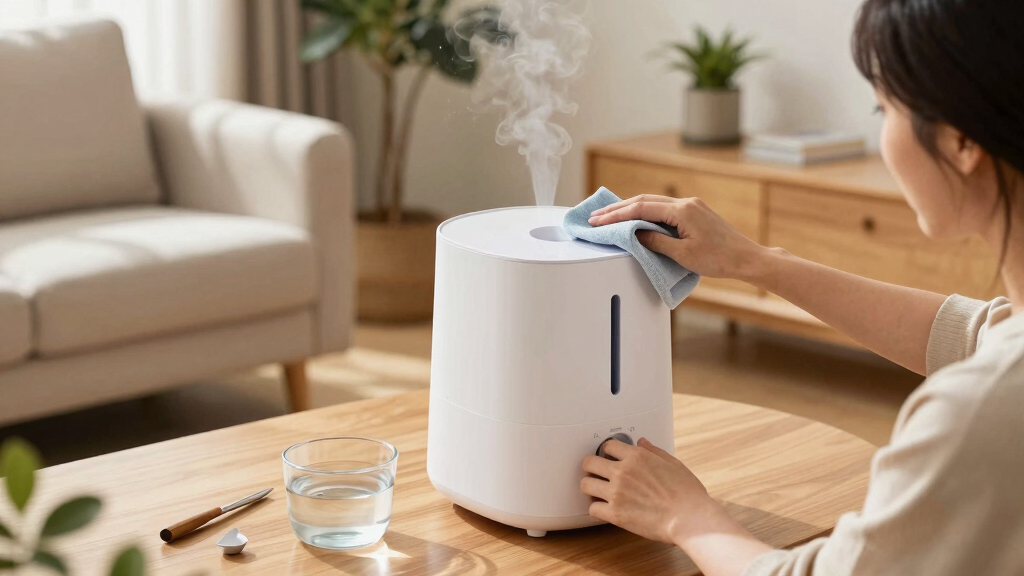
Soak removable parts for about 15 minutes. Use a soft brush on deposits, then rinse thoroughly.
Tighten and level
Secure loose screws or clips. Set the unit on a stable, level surface away from walls.
Renew airflow
Replace a dirty filter or wick and confirm that accessible fan blades move without wobbling.
Change the water
Use distilled water to minimize mineral deposits and reduce future strain and noise.
Cleaning note: Follow the manufacturer’s instructions first. Never immerse the electrical base, and never operate the humidifier while cleaning solution is inside it.
Modern models turn down the volume
Newer designs often combine quieter fans, sound-dampening materials, improved mineral management, automatic controls, and updated safety features.
| Feature | Older models | Newer models |
|---|---|---|
| Noise level | ✗ Moderate to loud; rattling or squealing may increase with age | ✓ Near-silent options, often rated below 30 dB |
| Sound control | ~ Basic fan and mechanical design | ✓ Quieter fans, dampening materials, and sleep modes |
| Mineral handling | ✗ Limited management; deposits accumulate readily | ✓ Improved filtration and mineral-reduction systems |
| Controls | ~ Manual settings and basic shutoff | ✓ Humidistats, timers, app controls, and quiet modes |
| Energy & safety | ~ Standard efficiency and basic safeguards | ✓ Efficient operation, safer materials, and antimicrobial options |
Repair the cause—or retire the unit?
Cleaning and tightening are sensible first moves. Replacement becomes the stronger choice when noise persists, performance falls, repairs repeat, or the humidifier approaches the end of its expected service life.
The quiet-humidifier chain
Choose quiet, safe, and easy to maintain
A low noise rating matters, but long-term quiet also depends on hygiene, mineral management, durable components, and precise humidity control.
Below 30 dB
Look for a published sleep-mode or operating noise rating.
Easy-clean design
Wide tank openings and accessible components simplify upkeep.
Humidity control
An adjustable humidistat helps avoid excessive moisture.
Hygiene features
Consider antimicrobial materials and effective filtration.
Durability reviews
Check long-term feedback about noise, leaks, and reliability.
Frequently asked questions
Why did my humidifier suddenly become loud?
Mineral buildup, a clogged filter, loose panels, unstable placement, or a failing motor are the most likely causes.
Can I quiet it without buying a new one?
Often, yes. Unplug it, clean removable components, tighten loose parts, replace the filter, level the base, and switch to distilled water.
Are newer humidifiers actually quieter?
Many are. Look for models with published ratings below 30 dB, sleep modes, sound-dampening design, and automatic humidity controls.
When is noise a replacement signal?
Replace the unit when noise continues after maintenance, performance is poor, repairs recur, safety concerns appear, or age exceeds five years.
Why Is My Humidifier Making So Much Noise? Here's What’s Really Going On
Most noise from a humidifier comes down to common issues you can often fix yourself. Vibrations from loose panels or parts cause rattling sounds. Mineral buildup from hard water deposits can make the fan or motor struggle, leading to squealing or grinding noises. And a failing motor or worn-out fan will produce stubborn, persistent sounds.
Understanding why these noises happen is crucial because it directly impacts the longevity and efficiency of your humidifier. For instance, ignoring mineral buildup might seem harmless at first, but over time it can cause the motor to overheat or seize, leading to costly repairs or total failure. Similarly, loose parts might seem minor, but they can cause continual vibrations that not only disturb sleep but also accelerate wear and tear on the device. Recognizing these signs allows you to weigh whether a simple fix suffices or if replacement is the safer, more cost-effective choice in the long run.
As an affiliate, we earn on qualifying purchases.
How to Quiet Your Humidifier in 5 Easy Steps
- Turn off and unplug your humidifier. Before touching anything, disconnect it to avoid electric shocks or further damage.
- Clean all components thoroughly. Use a mixture of white vinegar and water (1:1 ratio) to soak the tank and removable parts for about 15 minutes. Scrub away mineral deposits with a soft brush. Rinse well.
- Check for loose parts or panels. Tighten screws or clips that may have come loose over time. Make sure the fan blades spin freely without wobbling.
- Replace filters or wicks if needed. Dirty or clogged filters cause extra noise. Swap them out for fresh ones, typically every 1-3 months.
- Use distilled water. Hard water causes mineral buildup, which worsens noise. Switching to distilled water minimizes deposits and keeps your unit running smoothly.
Regular maintenance not only reduces noise but also prolongs the lifespan of your humidifier. Think of it as preventative care: just as regular oil changes keep a car running smoothly, consistent cleaning and part checks prevent the buildup of mineral deposits and mechanical issues that cause noise. This proactive approach minimizes the need for costly repairs or early replacements, saving you money and ensuring your nursery remains peaceful.
As an affiliate, we earn on qualifying purchases.
Modern Humidifiers Are Quieter — Should You Upgrade?
| Feature | Older Models | Newer Models |
|---|---|---|
| Noise Level | Moderate to loud, often squealing or rattling | Designed for near-silent operation, often below 30 dB |
| Technology | Basic fans and mechanics | Noise-reducing fans, sound-dampening materials, smart controls |
| Mineral Handling | Minimal, often causes buildup and noise | Advanced filters and minerals management to decrease deposits and noise |
| Energy & Safety | Standard features, basic safety | Energy-efficient, antimicrobial surfaces, safer materials |
Upgrading to a newer model can significantly reduce unwanted noise, which is especially important if your current humidifier is over 3-5 years old and still noisy despite regular cleaning. Modern units incorporate advanced technologies that not only operate more quietly but also enhance safety and efficiency. For example, noise-reducing fans and sound-dampening materials minimize disruptive sounds, allowing your nursery to stay peaceful during sleep times. Additionally, these models often feature better mineral management systems, reducing deposits that cause noise and mechanical failure. While investing in a new humidifier might seem costly initially, the long-term benefits—quiet operation, fewer repairs, and improved safety—can justify the expense, especially if your current unit is nearing the end of its lifespan.
As an affiliate, we earn on qualifying purchases.
When Should You Seriously Think About Replacing Your Humidifier?
If cleaning and tightening don’t quiet the hum, and the noise becomes unbearable, consider replacing your unit. But also look at its age — most humidifiers last about 3-5 years. Beyond that, parts wear out, mineral buildup worsens, and efficiency drops, which can lead to increased noise levels and higher energy costs. Continuing to use an aging humidifier can also pose safety risks, such as mold growth or electrical issues due to worn components.
Another sign is frequent breakdowns or costly repairs. If you find yourself fixing the same thing repeatedly, it’s often cheaper and safer to buy a new, quieter model that offers improved safety features and energy efficiency. And if your current humidifier isn’t humidifying well despite maintenance, it’s likely time to retire it. The tradeoff is clear: investing in a new unit may have an upfront cost, but it ensures reliable performance, quieter operation, and peace of mind, especially in a nursery setting where safety and comfort are paramount.
For example, a humidifier that was quiet for two years might suddenly squeal every night after its third birthday. That’s a clear sign it’s reached the end of its lifespan and risks becoming a safety concern or causing sleep disturbances.
As an affiliate, we earn on qualifying purchases.
How to Choose a Quiet, Safe, and Long-Lasting Humidifier
- Look for noise ratings below 30 dB. It’s almost silent, perfect for nurseries.
- Check for antimicrobial features. These keep mold and bacteria at bay, especially important in nurseries.
- Opt for units with easy-to-clean parts. Simplifies maintenance and keeps noise low.
- Read reviews about durability and noise. Real user feedback can reveal quietness and longevity.
- Prefer models with adjustable humidity settings. Ensures a comfortable environment without over-humidifying.
Choosing the right humidifier involves balancing quiet operation, safety, and ease of maintenance. A quiet, well-designed humidifier not only creates a peaceful nursery environment but also reduces the risk of mold, bacteria, and mechanical failure. Features like antimicrobial surfaces and easy-to-clean parts help maintain hygiene and performance over time. Additionally, adjustable humidity controls allow you to fine-tune the air quality without over-humidifying, which can lead to mold growth or dust mites. Remember, investing in a reliable, quiet model with good reviews and safety features ensures peace of mind for you and a healthier environment for your baby.
Frequently Asked Questions
Why is my humidifier suddenly so loud?
It’s often due to mineral buildup, loose parts, or a failing motor. Regular cleaning and tightening can fix many of these issues.How can I make my humidifier quieter without buying a new one?
Clean all parts thoroughly, tighten loose screws, and switch to distilled water to reduce mineral deposits. These simple steps often reduce noise significantly.When should I replace my humidifier?
If it’s over 3-5 years old, noisy despite maintenance, or keeps breaking down, it’s probably time to get a new, quieter unit.Are newer humidifiers actually quieter?
Yes, many newer models are designed with noise reduction in mind, often running below 30 decibels — nearly silent in a nursery setting.What are the signs my humidifier needs replacing?
Persistent loud noise, poor humidification despite cleaning, frequent repairs, or age over 5 years are strong indicators that it’s time for a new unit.Conclusion
Quiet, safe, and efficient humidifiers make a real difference in your nursery’s comfort. Regular maintenance keeps noise down and prolongs their life, but don’t hesitate to replace when needed. A newer, quieter model can turn sleepless nights into peaceful dreams.
Remember, a calm nursery starts with a well-functioning humidifier. Keep it clean, stay alert to signs of wear, and choose a unit that’s built for silence and safety. Nighttime peace is worth it.
College move-in / dorm season Picks
dorm essentials
As an affiliate, we earn on qualifying purchases.