
TL;DR

Turn the school run and nap time into listening time
- Thousands of audiobooks, podcasts and originals
- Listen on your phone, tablet or Echo — also offline
- Cancel anytime
A successful beach house monitor setup balances simple, standardized connections, solid networking, glare management, and coastal protection. One primary workstation plus portable options covers most needs, reducing hassle and maximizing comfort.
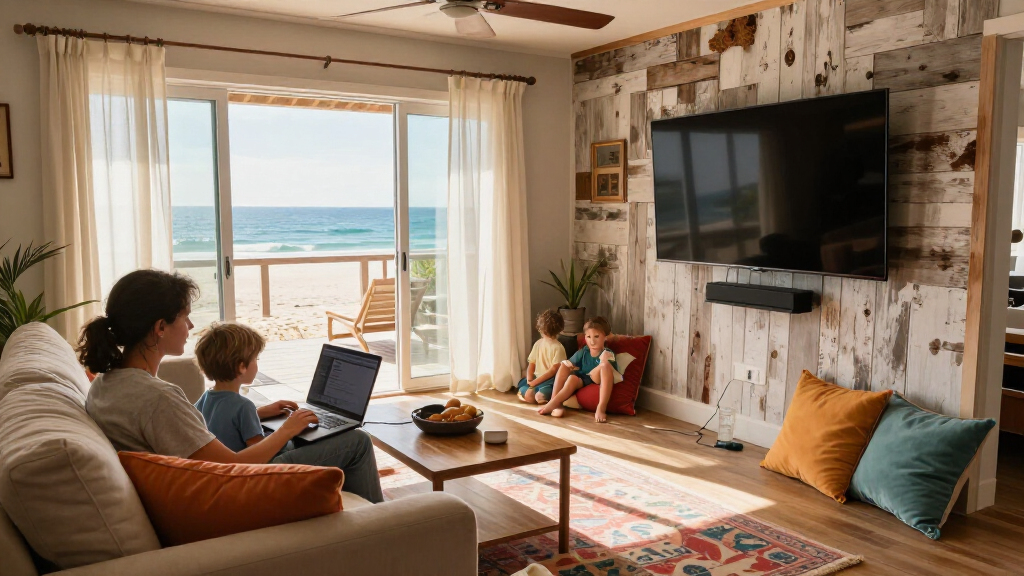
Imagine waking up in a sun-drenched beach house, your laptop ready, and a sleek monitor waiting in the next room. Setting up a multi-room workspace here isn’t about replicating a permanent office; it’s about flexibility, speed, and resilience. Coastal environments throw in salt, humidity, and sunlight — complicating your tech game. But with smart choices, you can create a setup that feels effortless, whether you’re working, streaming, or just relaxing.
This guide walks through how to design a monitor system that’s simple, reliable, and suited for multi-room vacation living. You’ll learn what to prioritize—connections, protection, networking—and get practical tips to make your beach house both a sanctuary and a productivity hub.
Use standardized, single-cable connections like USB-C or Thunderbolt docks for simplicity and flexibility.
Prioritize reliable networking—wired Ethernet or mesh Wi-Fi—to keep multi-room video calls and streaming smooth.
Position monitors to minimize glare, and choose high-brightness, matte screens for sunny rooms.
Protect equipment from salt, humidity, and temperature swings with covers, indoor placement, and regular inspections.
Match displays to your specific tasks—smaller for casual use, larger or 4K for detailed work—and set up guest-friendly stations with clear instructions.
Monitors at the Beach House: Multi-Room Vacation Setups
Salt, humidity, glare, and power surges complicate coastal tech. This guide shows how to design a monitor system that is simple, reliable, and suited for multi-room vacation living — one that turns your beach house into both sanctuary and productivity hub.
What Does “Multi-Room” Really Mean?
You don’t need to replicate a permanent office. Different needs call for different setups — each with its own cost, complexity, and flexibility tradeoffs. Pick the model that matches how your household actually uses the house.
Portable Monitor, Room to Room
One slim display carried between rooms. Economical, quick to adapt, and easy to store in a padded, dry sleeve after use — a real advantage in coastal air.
Central Dock + Fixed Displays
A USB-C or Thunderbolt dock at each desk, or one shared dock that connects whichever laptop is present. One cable handles video, data, and charging.
TV as Display + KVM Switch
TVs double as casual computer displays for streaming and light work; a KVM switch lets multiple computers share one monitor without cable swapping.
Choose Simple, Standardized Connections
In salty, humid air, every extra cable is a potential point of failure and corrosion. Compare your options before buying — and always verify your laptop supports DisplayPort Alt Mode, USB4, or Thunderbolt before assuming USB-C video output works.
| Connection | Pros | Cons | Best For |
|---|---|---|---|
| USB-C (DP Alt Mode) | ✓ One cable: video + data + power | ✗ Not all laptops support video out | PRIMARY CHOICE |
| Thunderbolt 4 / USB4 Dock | ✓ Multiple displays, fastest link | ✗ Pricier; needs compatible laptop | POWER USERS |
| HDMI | ✓ Universal compatibility | ~ Separate power, multiple cables | BACKUP / TVS |
| DisplayLink Dock | ✓ Extra monitors when native support runs out | ~ Compression; bad for gaming & editing | OFFICE WORK |
| Wireless Casting | ✓ Zero cables, easy sharing | ✗ Latency & compression artifacts | CASUAL USE ONLY |
Placement Beats Brightness
Beach houses are flooded with sunlight. Smart positioning — not just a brighter panel — is the most effective weapon against glare. Placement effectiveness by technique:
Check Before You Buy
- Max external displays: some laptops run only one native display even on a multi-output dock
- Resolution & refresh rate supported by your GPU and ports
- USB-C charging: supported? Required wattage?
- Clamshell mode compatibility for laptop-closed setups
- Every guest laptop supports the chosen dock standard
Guard Against Salt, Humidity & Power Surges
Salt-laden air accelerates corrosion in ports and connectors; coastal storms bring surges and outages. Follow this protection routine to keep equipment alive season after season.
Place Smart
Keep monitors indoors, away from open windows. Patios only with outdoor-rated displays.
Clean Carefully
Dry or lightly damp microfiber cloth. Never spray cleaner directly onto a display.
Store & Inspect
Padded dry sleeves for portables; check cables and connectors periodically for corrosion.
Power Protection
Surge protector on every station; a small UPS bridges brief outages and enables safe shutdowns.
The Beach House Playbook
Standardize on single-cable connections — USB-C or Thunderbolt docks for simplicity and flexibility across rooms.
Prioritize networking — wired Ethernet or mesh Wi-Fi keeps multi-room video calls and streaming smooth.
Fight glare with placement — perpendicular to windows, matte screens, 300+ nits for sunny rooms.
Protect from the coast — covers, indoor placement, regular corrosion inspections, surge protection and UPS.
Match displays to tasks — smaller panels for casual use, larger or 4K for detailed work, and guest-friendly stations with clear, simple instructions.
What Does ‘Multi-Room’ Really Mean in a Beach House?
In a beach house, ‘multi-room’ can mean different things depending on your needs. Maybe you want a portable monitor you carry between rooms, or fixed displays in each workspace. Perhaps you prefer a central dock that connects to whichever laptop is in use, or you want your TV to double as a computer monitor for casual work or entertainment.
Understanding these options is crucial because each approach affects your setup’s complexity, cost, and flexibility. For instance, portable monitors offer quick adaptability but may lack the stability and ergonomics of fixed displays. Conversely, dedicated setups in each room provide a seamless experience but require more investment and planning. Clarifying what ‘multi-room’ entails helps you make informed choices that balance convenience with durability, especially considering the coastal environment’s impact on equipment longevity.
USB-C monitor for multi-room setup
As an affiliate, we earn on qualifying purchases.
As an affiliate, we earn on qualifying purchases.
Choose Simple, Standardized Connections for Easy Setup
In a beach house, reliable and straightforward connections matter more than fancy features. USB-C with DisplayPort Alt Mode is king because it handles video, data, and charging with one cable, reducing clutter and potential points of failure. This simplicity is vital when dealing with salty air and humidity, which can corrode or damage more complex setups. Choosing a standard connection minimizes troubleshooting and ensures compatibility across devices, saving time and stress.
However, the tradeoff is that not all laptops support USB-C video out, especially older models. HDMI provides a universally compatible backup, but it often requires separate power for docks and multiple cables, which can be cumbersome in a coastal environment where cable management is more challenging. Wireless casting, while convenient, introduces latency and compression—factors that can diminish the quality of your work or entertainment—so understanding these tradeoffs helps you optimize your setup for both reliability and performance.
mesh Wi-Fi router for coastal environments
As an affiliate, we earn on qualifying purchases.
As an affiliate, we earn on qualifying purchases.
Check Your Laptop’s Display Limits Before Buying
Your laptop’s hardware and OS determine how many external monitors you can connect and at what quality. This is critical because overestimating your device’s capabilities can lead to frustration, reduced productivity, or hardware damage. For example, many ultrabooks are limited to a single external display at 1080p or 60Hz, which might be insufficient for detailed tasks or multitasking needs. Gaming or workstation laptops often support multiple high-resolution monitors, but this capability depends on the graphics card and ports.
Understanding these limitations allows you to select docks, cables, and monitors that match your hardware. If your device can’t support your desired setup, you risk poor performance or hardware strain, which is especially problematic in coastal environments where repairs are more complicated. Checking specifications in advance helps you avoid costly mismatches, ensuring your setup is both effective and durable over time.
matte high-brightness monitor 300 nits
As an affiliate, we earn on qualifying purchases.
As an affiliate, we earn on qualifying purchases.
Manage Glare and Bright Rooms with Smart Placement
Beach houses are often flooded with sunlight, which can cause severe glare and reflections on screens, making work or entertainment uncomfortable and reducing visibility. Proper placement of monitors isn’t just about aesthetics—it’s about reducing eye strain and maintaining productivity. Positioning monitors perpendicular to windows minimizes direct light hitting the screen, while using blinds or curtains can control ambient brightness. Choosing matte screens with around 300 nits brightness helps diffuse reflections and improve clarity in sunny conditions.
The tradeoff is that higher-brightness displays can sometimes wash out colors if not calibrated properly, so balancing brightness with color accuracy is essential. Adjustable monitor arms enable quick repositioning as the sun shifts throughout the day, ensuring your workspace remains comfortable. In outdoor or patio settings, weatherproof screens are necessary, but for indoor use, strategic placement combined with high-brightness, matte screens creates a glare-free environment that’s conducive to both work and relaxation.
waterproof monitor cover for beach house
As an affiliate, we earn on qualifying purchases.
As an affiliate, we earn on qualifying purchases.
Protect Your Equipment from Salt, Humidity, and Heat
Salt air and high humidity accelerate corrosion and damage to electronics, which can lead to costly repairs or replacements. Ports, connectors, and internal components are especially vulnerable, as salt particles can lodge in crevices, causing short circuits and deterioration over time. For example, leaving a monitor near an open window exposes it to salt spray and condensation, significantly reducing its lifespan. Regular maintenance, such as wiping down screens with microfiber cloths and avoiding direct spraying cleaners, helps prevent buildup of corrosive particles.
Using protective covers or storing portable monitors in padded, dry sleeves after use can shield equipment from moisture and salt when not in use. Indoors, placing equipment away from open windows and ensuring good ventilation helps reduce humidity-related issues. For outdoor use, consider specialized outdoor-rated displays, though these are more expensive and less common. Regular inspection of cables and ports for signs of corrosion—like discoloration or stiffness—can prevent unexpected failures, ensuring your investment lasts longer despite the coastal environment’s challenges.
Prepare for Power Fluctuations and Outages
Coastal storms, power surges, and outages are common, making reliable power management essential. A surge protector is a fundamental safeguard, preventing voltage spikes from damaging your monitors, docks, and other equipment. For added protection, a small uninterruptible power supply (UPS) can keep your critical devices running during brief outages and allow safe shutdowns, which is vital to avoid data loss or hardware stress.
Imagine a sudden thunderstorm knocking out the power. With a UPS, your laptop and essential peripherals stay operational long enough to save your work and shut down properly. The tradeoff is that UPS units add cost and require regular maintenance, but in coastal environments where outages are frequent and repairs more complicated, this investment pays off by preserving your equipment and data integrity. Proper surge protection combined with backup power creates a resilient setup that withstands coastal weather unpredictability.
Network Smarts Keep Multi-Room Connections Stable
Reliable networking is the backbone of a seamless multi-room setup. In coastal environments, wired Ethernet connections are ideal because they eliminate interference from humidity and salt, providing a stable, high-speed connection essential for video calls, streaming, and data transfer. If wiring isn’t feasible, a mesh Wi-Fi system with strategically placed access points can extend coverage and improve stability. Testing each room’s network quality before setting up monitors ensures a smooth experience, preventing frustrating disconnects or lag.
For example, placing a mesh node in the living room and another in the bedroom ensures consistent signals, while using Ethernet backhaul between nodes further stabilizes the network. Separating guest and main networks enhances security, especially when visitors are present. Wireless casting can be useful for casual viewing but introduces latency and compression; understanding these limitations allows you to choose the right tools for your needs, whether for high-speed tasks or casual entertainment.
Tradeoffs exist: wired connections are more reliable but less flexible, while wireless offers convenience at the expense of some latency. Recognizing these factors helps you build a robust, coastally resilient network foundation that supports your multi-room setup effectively.
Match Monitors to Your Work and Play Needs
Selecting the right monitor isn’t just about size or resolution; it’s about understanding your specific tasks and ergonomic comfort. For general office tasks, a 24- to 27-inch monitor at 1440p offers a good balance of clarity, size, and portability—easy to move between rooms or use as a secondary display. Creative professionals or those doing detailed editing benefit from larger, 4K monitors with accurate color reproduction, wide viewing angles, and adjustable stands, which reduce eye strain and improve productivity during long sessions.
Features like IPS panels, VESA mount compatibility, and adjustable height are essential for ergonomic comfort. Higher refresh rates and low input lag are critical for gaming or fast-paced editing, ensuring smooth visuals and responsiveness. Brightness levels should match your environment—around 250 nits for typical indoor use, with higher brightness for sunlit areas to combat glare. Balancing these factors ensures your display enhances your work and leisure without causing fatigue or inaccuracies.
Set Up Guest-Friendly Workstations That Are Easy to Use
Creating guest-friendly workstations involves making setups intuitive and straightforward. Clear labeling of cables, providing multiple connection options like USB-C and HDMI, and including simple instructions encourage guests to connect quickly without frustration. Avoid complex software configurations or proprietary apps that might confuse users unfamiliar with tech setups. Instead, focus on plug-and-play solutions that work reliably in the coastal environment.
For example, a station equipped with a USB-C dock, a spare HDMI cable, and a quick-start guide allows guests to switch devices effortlessly. Incorporate a webcam, keyboard, mouse, and a monitor light for enhanced usability. Using short, high-quality cables minimizes clutter and connection issues, which are more common when dealing with salt and humidity. Ensure the dock’s power delivery matches the most demanding laptops in your household, so they stay charged during use. This thoughtful setup ensures everyone, including less tech-savvy visitors, can enjoy a smooth, productive experience.
Protect Privacy and Household Boundaries
In shared beach house environments, maintaining privacy and respecting household boundaries is essential for a stress-free experience. Positioning monitors away from common areas prevents accidental exposure of sensitive work, personal notifications, or private conversations. Using privacy screens or curtains adds an extra layer of confidentiality, especially when working in open spaces. Encouraging the use of headphones minimizes audio disruptions and further safeguards privacy.
Setting up user profiles and locking screens ensures that personal data remains secure, even if multiple people have access to the same device. Cameras should have shutters or be unplugged when not in use to prevent unauthorized surveillance. These precautions are especially important in a coastal setting where you might have guests or family members nearby, and the risk of accidental data exposure increases. Implementing these measures creates a secure environment that fosters trust and reduces stress, making remote work at the beach house more manageable and private.
Practical Models for Multi-Room Beach House Setups
Different needs call for different setups, each with its own advantages and tradeoffs. A portable setup, featuring a compact 14-16″ USB-C monitor, lightweight cables, and a padded sleeve, offers flexibility for occasional use and easy storage, ideal for travelers or infrequent visitors. A one-dock-per-room approach, with each room equipped with a monitor, keyboard, and dock, provides a stable, high-performance environment suited for regular multi-room work, but requires more upfront investment and space planning. A centralized workstation with remote access, such as a powerful PC in one room accessed via remote desktop, saves space and simplifies management but depends heavily on network quality—so robust Wi-Fi becomes critical. Using a TV as a monitor, especially a 4K model with low input lag and proper calibration, can serve as an affordable, large-format display for casual work or entertainment, blending flexibility with comfort.
Choosing the right model depends on your usage frequency, available space, and budget. Most households find a primary, dedicated station complemented by portable or secondary displays offers the best balance of performance and flexibility, especially in coastal environments where durability and ease of setup matter most.
What’s New in Multi-Room Monitor Tech for Beach Homes?
Recent technological advancements significantly enhance multi-room setups, especially in challenging coastal environments. USB-C, USB4, and Thunderbolt docks now support multiple monitors through a single cable, reducing clutter and points of failure—crucial where salt and humidity can cause corrosion. Portable OLED monitors offer stunning contrast and fast response times, making them ideal for high-quality visuals, though at a higher cost and with some fragility. Wi-Fi 6 and mesh systems provide broader, more reliable coverage, minimizing dead zones and interference that can be exacerbated by coastal conditions. HDMI 2.1 supports high-resolution, high-refresh-rate gaming and streaming, expanding entertainment options. Modern operating systems now have improved wireless display support, making wireless setups more dependable, though compatibility remains a consideration. Smart monitors with integrated streaming apps are becoming common, transforming them into all-in-one entertainment hubs that are resilient to environmental factors.
These innovations facilitate flexible, high-performance work and entertainment zones with less fuss, even amid salt, humidity, and power fluctuations typical of coastal areas. Staying updated on these trends helps you design a future-proof, durable setup that simplifies maintenance and enhances user experience.
Avoid These Common Mistakes in Coastal Multi-Room Setups
Many common errors can turn a well-intentioned coastal tech setup into a recurring headache. Assuming every USB-C port supports video can lead to compatibility issues, especially with older or budget laptops, resulting in frustration or incomplete setups. Purchasing docks without verifying your device’s capabilities risks damage or underperformance, which is costly and difficult to repair in remote or coastal locations. Using indoor monitors outdoors or near open windows exposes them to salt spray and moisture, accelerating corrosion and reducing lifespan. Positioning screens directly opposite large windows causes glare and reflections, which can strain your eyes and diminish productivity. Relying on TVs as monitors often results in fuzzy text and poor ergonomics, especially if settings aren’t optimized for close-up work. Forgetting to disconnect or protect equipment during hurricanes or storms can lead to severe damage or loss, which is particularly problematic when repairs are complicated by coastal logistics.
To avoid these pitfalls, thoroughly test setups before replicating them across rooms, and always consider environmental factors. Proper planning and cautious investment save money and extend equipment lifespan, ensuring your coastal setup remains functional and efficient over time.
Your Questions Answered: Common Beach House Monitor Concerns
Can one laptop use the same setup in several rooms? Yes. By equipping each room with compatible docks, monitors, and input devices, you can connect your laptop via a single cable and move between spaces without unplugging. However, the stability of this setup hinges on your network’s reliability and the quality of your cables, especially in coastal environments where interference can be higher.
Can I run monitors in multiple rooms from just one computer? Yes, but over longer distances, active cables or remote desktop software are necessary. Wireless options introduce latency and compression, which may impact your experience—important to consider if your work demands precision or real-time responsiveness.
Is USB-C enough for power and video? Only if your device and monitor support full power delivery and video over USB-C. Otherwise, separate power supplies or additional cables are needed, increasing complexity and potential points of failure.
Can a TV replace a monitor? For casual use, large-format displays like 4K TVs with low input lag can suffice, especially for streaming or presentations. However, for close-up work requiring detail and ergonomic comfort, dedicated monitors with proper calibration and features are preferable.
How bright should my monitor be? 250–300 nits generally suits indoor environments, providing a comfortable viewing experience without glare. In sunlit rooms or outdoor settings, higher brightness levels (around 400 nits or more) help combat reflections, but excessive brightness can cause eye strain if not balanced with ambient lighting. Proper placement, matte screens, and adjustable brightness settings are key to maintaining clarity and comfort.
Conclusion
Creating a multi-room monitor setup at the beach house means blending simplicity, durability, and smart planning. Focus on standard connections, stable networks, and protecting your gear from coastal elements. With these steps, your workspace becomes a seamless extension of your relaxing escape—ready for work, play, or both.
Think of it as turning your beach house into a flexible, stress-free tech haven. Every time you glance at a well-placed monitor, you’ll remember that good design makes all the difference—especially by the sea.
Fall Picks
fall essentials
As an affiliate, we earn on qualifying purchases.