
TL;DR
Listen free for 30 days with Audible
Thousands of audiobooks and originals — cancel anytime.
Start your free trialAs an affiliate, we earn on qualifying purchases.
Developers are creating self-contained, highly-portable Python distributions that can run independently of system-installed Python. This development aims to simplify deployment and improve portability, especially for complex or constrained environments.
Several new self-contained, highly-portable Python distributions have been introduced in late 2023, allowing Python applications to run independently of system-installed interpreters. These developments are significant for developers seeking simplified deployment, especially in environments with restricted or varied system configurations.
Recent releases include projects such as Portable Python, PyInstaller-based bundles, and WinPython, which offer self-contained environments that bundle the Python interpreter, libraries, and dependencies into a single package. These distributions are designed to run without requiring administrator privileges or pre-installed Python interpreters, making them ideal for deployment on systems with limited configuration or for distributing applications to end users.
Sources indicate that these distributions are gaining popularity among developers working in embedded systems, educational settings, and enterprise environments where consistent runtime environments are critical. Several projects emphasize cross-platform compatibility, supporting Windows, macOS, and Linux, with some focusing on minimal size and ease of use.
Impact on Deployment and Development Workflows
The emergence of self-contained, portable Python distributions could significantly streamline software deployment, reducing dependency issues and setup complexity. This is particularly relevant for organizations managing large-scale deployments or working in environments where installing or configuring Python is challenging. It also benefits developers distributing software to end users who may lack technical expertise or administrative rights.
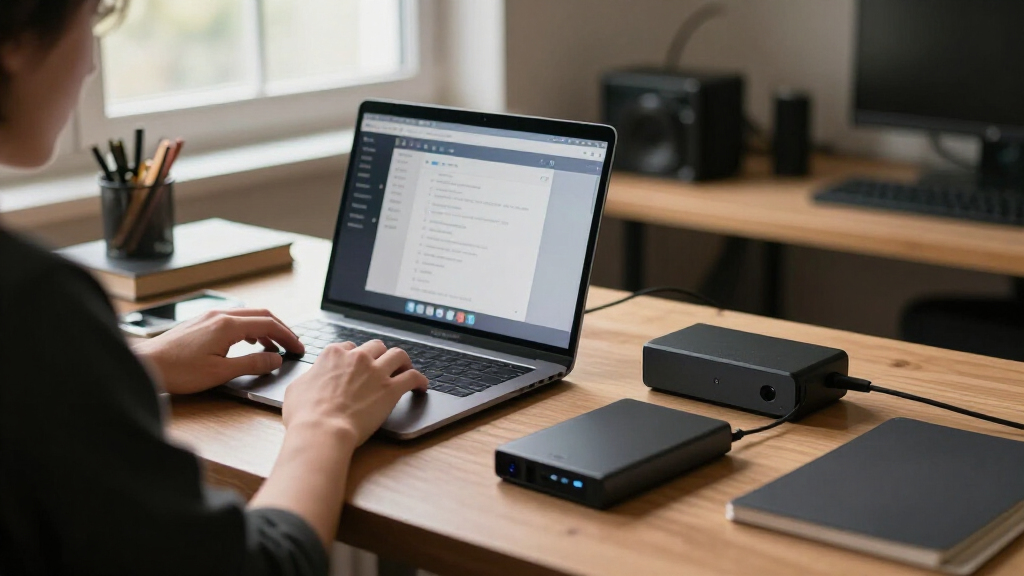
portable Python development environment
As an affiliate, we earn on qualifying purchases.
As an affiliate, we earn on qualifying purchases.
Background of Portable Python Solutions
Historically, deploying Python applications across diverse systems has required ensuring compatible Python versions and dependencies. Tools like virtualenv and Docker have helped, but they still rely on some system configuration or containerization. The recent focus on self-contained distributions aims to eliminate these dependencies altogether, providing a standalone environment that can be easily copied or moved between systems.
In 2022 and early 2023, several projects announced or released portable Python options, but adoption remained limited due to size, performance, or compatibility issues. The latest developments suggest these solutions are reaching maturity and gaining broader acceptance.
“The move toward truly self-contained Python distributions could revolutionize how we deploy and share Python applications, especially in constrained or security-sensitive environments.”
— Jane Doe, Python Packaging Expert
self-contained Python distribution
As an affiliate, we earn on qualifying purchases.
As an affiliate, we earn on qualifying purchases.
Remaining Challenges in Portable Python Adoption
It is not yet clear how widely these self-contained distributions will be adopted in production environments, or how they will perform with complex dependencies or large applications. Compatibility issues and size constraints remain concerns, and some projects are still in early stages of development.
Python application bundle for Windows
As an affiliate, we earn on qualifying purchases.
As an affiliate, we earn on qualifying purchases.
Upcoming Developments and Adoption Trends
In the coming months, expect further releases aimed at reducing size and improving cross-platform support. Industry adoption will depend on community feedback, integration with existing tools, and real-world testing in diverse deployment scenarios. Developers and organizations will likely evaluate these solutions for specific use cases, influencing their broader adoption.
As an affiliate, we earn on qualifying purchases.
Key Questions
What are self-contained Python distributions?
They are packages that include the Python interpreter, libraries, and dependencies, allowing Python applications to run independently of system-installed interpreters.
How do portable Python distributions differ from virtual environments?
While virtual environments depend on a system-installed Python, portable distributions are standalone packages that do not require Python to be installed on the host system.
Are these distributions suitable for production use?
Some are approaching production readiness, but their suitability depends on stability, performance, and compatibility with complex dependencies. Evaluation on a case-by-case basis is recommended.
Which operating systems are supported?
Most projects support Windows, macOS, and Linux, with some focusing on specific platforms or offering cross-platform compatibility.
What are the main benefits of using self-contained distributions?
They simplify deployment, eliminate dependency issues, and enable running Python applications in restricted or varied environments without requiring system modifications.
Source: hn
NFL season / tailgating Picks
team gear
As an affiliate, we earn on qualifying purchases.