
TL;DR

Turn the school run and nap time into listening time
- Thousands of audiobooks, podcasts and originals
- Listen on your phone, tablet or Echo — also offline
- Cancel anytime
Nursery projector lights can create a calming sleep environment, but their effectiveness varies. Choosing safe, adjustable models and observing your child’s response is key.
Imagine a soft, starry sky gently glowing over your baby’s crib, transforming bedtime into a peaceful moment. Nursery projector lights promise to turn a child’s room into a calming haven, but do they truly soothe or just distract? As a parent, you’re balancing the desire for a quiet night with the need to avoid overstimulation.
This guide will help you understand what nursery projector lights do, how to pick safe and effective ones, and when they might be more distraction than help. Because at 3am, clarity matters more than gimmicks.
Nursery Projector Lights: Calming Feature or Distraction
A soft starry ceiling can become a reassuring sleep cue—or the most interesting thing in the room. The deciding factor is not the gadget itself, but the brightness, motion, timing, placement, and your child’s response.
A sleep cue—not a sleep guarantee
Projectors can make bedtime feel secure and familiar by linking a gentle visual scene with the same calming routine each night. Individual temperament still determines whether the scene soothes or fascinates.
Familiar celestial scenes
Stars and soft skies can create a cozy focal point when movement is slow and brightness remains low.
Waves, forests and clouds
Natural imagery may feel less stimulating than vivid patterns, especially when transitions are smooth and subtle.
Light paired with sound
White noise, lullabies and nightlight modes can reinforce a routine—but sudden sounds and feature overload work against calm.
The child disengages naturally
Breathing slows, eyes become heavy, body movement settles and attention drifts away from the projection.
The child keeps tracking the show
Eyes remain fixed, alertness rises, movement increases, vocalizing continues or fussiness starts when the scene changes.
Calming settings versus stimulating settings
The same projector can sit on either side of this comparison. Configuration and timing often matter more than the number of features on the box.
| Feature | Calming setup | Overstimulating setup |
|---|---|---|
| Brightness | ✓Low to moderate, adjustable | ×Bright or high-intensity |
| Projection style | ✓Soft, static or slow-moving | ×Fast-moving or flashing |
| Sound | ✓Steady white noise or lullaby | ×Sudden changes or loud audio |
| Timer | ✓Automatic stop after 15–30 min | ×Continuous or inconsistent use |
| Child response | ✓Drowsy, relaxed, less resistant | ×Fixated, excited or fussy |
Stimulus load rises quickly
This qualitative scale translates the guidance into a visual comparison. Gentle motion and low brightness preserve calm; flashing light adds the highest distraction risk.
Use the response loop, not guesswork
A projector becomes useful when each choice is connected to an observable response. Start conservatively, watch what happens, and adjust one variable at a time.
Place it safely
Keep the unit secure, out of reach and angled away from direct eye contact.
Start dim and slow
Select the lowest brightness, gentle motion and a short timer.
Read the child
Look for drowsiness and relaxed movement—or alertness, fixation and fussiness.
Keep, reduce or skip
Repeat what settles them. Dim, shorten or replace the projector when it excites them.
It supports a predictable wind-down
Turn it on roughly 15 minutes before sleep, pair it with a quiet routine, and switch it off when your child becomes drowsy.
It becomes bedtime entertainment
If your child tracks every movement or becomes more energetic, try a simple dim nightlight or steady white noise instead.
Five features worth prioritizing
Choose a device that gives you control over stimulation and meets applicable safety standards. More projection modes are less valuable than reliable adjustment and safe construction.
Adjustable brightness
Allows a genuinely low-light starting point instead of a fixed vivid display.
15–30 minute timer
Prevents the projection from continuing long after the wind-down period.
Remote or app access
Lets you lower or stop the display without re-entering the sleep space.
Gentle scene options
Static stars, soft waves and slow transitions provide adaptable visual cues.
Certified materials
Look for relevant electrical testing, durable construction and non-toxic, BPA-free materials.
Clarity matters more than gimmicks.
The best projector is the one you can dim, time, position safely and switch off without disrupting the room. If it makes your child more alert, it is not serving its purpose.
What Do Nursery Projector Lights Really Do for Sleep?
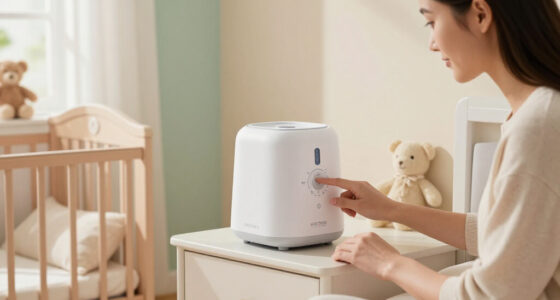
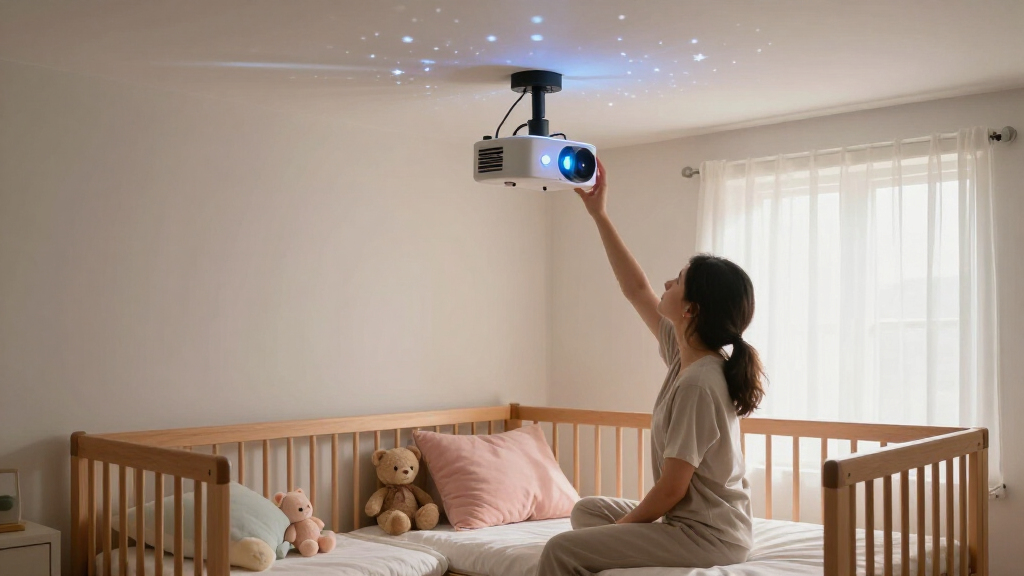
Nursery projector lights aim to create a peaceful environment by projecting calming images—like stars, nature scenes, or gentle waves—onto walls or ceilings. The idea? They help your baby associate soft visuals with sleep, easing anxiety and establishing routines.
For example, a parent might turn on a star projector as part of bedtime, watching the twinkling lights slowly fade as the baby drifts off. Many find that these visual cues help reduce bedtime resistance and make sleep time feel cozy and secure.
But not all children respond the same. While some find the projections mesmerizing and soothing, others become fixated or overexcited, making it harder to settle down. The effectiveness depends on individual temperament, and over time, parents may need to adjust or switch off these devices if they notice signs of overstimulation or fussiness. Recognizing these variations is crucial because it highlights that nursery projectors are not a one-size-fits-all solution. They can be powerful tools for calming if used thoughtfully, but they also carry the risk of becoming a distraction if they overstimulate or excite your child, potentially delaying sleep onset or causing irritability.
nursery star projector night light
As an affiliate, we earn on qualifying purchases.
As an affiliate, we earn on qualifying purchases.
Are Nursery Projector Lights Actually Safe for Babies?
Nursery projector lights are generally safe when used correctly. Look for models made from non-toxic, BPA-free plastics, and ensure they meet safety standards in your country.
Placement matters too. Keep projectors out of your baby’s reach, and avoid overly bright or flashing lights that could overstimulate or disturb sleep.
For example, a parent might attach a projector securely to the crib or mount it high on a wall, avoiding direct eye contact or prolonged exposure to bright images. Proper placement is essential because it minimizes the risk of accidental damage or injury, and ensures the light does not directly shine into your baby’s eyes, which could cause discomfort or interfere with sleep. Additionally, choosing devices with safety certifications provides reassurance that the product has undergone testing for electrical safety, material toxicity, and durability. Remember, even safe devices can pose risks if misused — such as placing a projector too close or leaving it on for extended periods. Therefore, understanding and following safety guidelines is crucial for peace of mind and your child’s well-being.
baby sleep projector with adjustable brightness
As an affiliate, we earn on qualifying purchases.
As an affiliate, we earn on qualifying purchases.
Do Projector Lights Help Babies Sleep or Just Distract Them?
Many parents swear by nursery projector lights for better sleep, citing calmer bedtimes and more restful nights. According to BabyUI, gentle projections coupled with lullabies can promote relaxation and help establish a bedtime routine.
However, some babies become overstimulated by bright or flashing images, which can delay sleep or cause fussiness. The impact of projector lights depends heavily on how they are used and the individual child’s temperament. For instance, a baby who responds well to slow-moving, soft images might settle faster and associate the visuals with sleep, creating a calming cue. Conversely, a child prone to hyperactivity might fixate on moving lights or become overly excited, which could make it harder to fall asleep. This variability underscores the importance of observing your child’s reactions and adjusting accordingly. For some children, the visual stimulus is a positive sleep cue; for others, it becomes a distraction. The key is to find a balance—using the projector in moderation, with dim settings, and paying close attention to how your child responds over time. This way, you can harness the benefits of visual calming cues without inadvertently overstimulating your little one.
calming nursery projector for infants
As an affiliate, we earn on qualifying purchases.
As an affiliate, we earn on qualifying purchases.
What Features Make a Nursery Projector Light Good for Sleep?
Not all projector lights are created equal. Look for these features:
- Adjustable brightness: So you can set it low enough not to disturb sleep.
- Timer function: To turn off after 15-30 minutes, preventing overstimulation.
- Remote or app control: For easy operation without disturbing your child.
- Multiple projection options: To switch between stars, nature scenes, or calming waves.
- Safety certifications: Ensuring the device meets safety standards.
Choosing a model with these features allows you to customize the environment, making bedtime routines smoother and more adaptable. For example, an adjustable brightness and timer let you set the visual environment to match your child’s mood and sleep cues. This flexibility helps prevent overstimulation and encourages a calm, predictable bedtime. The ability to control the projector remotely or via an app also means you can make quick adjustments without disturbing your child, maintaining a peaceful environment. Safety certifications are critical because they indicate the device has been tested for electrical safety and material safety, reducing potential hazards. Investing in a model with these features ensures you can create a tailored, safe, and calming sleep environment that adapts to your child’s needs over time.
As an affiliate, we earn on qualifying purchases.
Comparison Table: Calming vs. Overstimulating Projector Lights
| Feature | Calming Projector Lights | Overstimulating Lights |
|---|---|---|
| Brightness | Low to moderate, adjustable | Bright, flashing, or high-intensity |
| Projection Style | Soft, slow-moving images | Fast-moving, flashing lights |
| Sound Integration | Lullabies or white noise | Sudden or loud sounds |
| Timer | Yes, 15-30 mins | No or inconsistent |
| Child Reaction | Calm, sleepy | Fussiness, overstimulation |
When Should You Use or Skip the Nursery Projector?
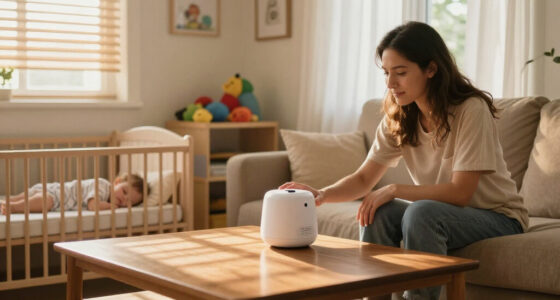
Using a projector as part of the bedtime routine can be helpful if your child responds well to visual calming cues. Turn it on about 15 minutes before sleep, and switch it off once your child is drowsy.
But skip it if your baby tends to fixate on moving lights or gets overly excited. In that case, a simple nightlight or white noise machine might be better.
For example, if your toddler loves watching stars but then gets hyper, try turning off the projector earlier or replacing it with a softer glow to avoid overstimulation.
How to Avoid Overstimulation and Make It Work for Your Baby
Start with the lowest brightness setting and a short projection time, around 15 minutes. Watch how your baby reacts—if they seem distracted or alert, turn it off earlier.
Mix visual cues with calming sounds. For example, pair a star projection with gentle white noise or lullabies to create a peaceful atmosphere.
Remember, consistency helps. Use the projector at the same time each night to build a predictable routine that signals sleep time.
For instance, a parent might turn on a star projector while singing a lullaby, then turn it off once the baby is drowsy, reinforcing the calming environment.
Key Takeaways from Using Nursery Projector Lights Effectively
- Choose models with adjustable brightness and timers to tailor the environment for your child’s needs.
- Observe your child’s reactions—if overstimulated, reduce projection time or brightness.
- Pair projections with soothing sounds like lullabies or white noise for better calming effects.
- Use projector lights as part of a consistent bedtime routine to help your child associate visuals with sleep.
- Be cautious with flashing or overly bright projections, which can disrupt sleep.
Frequently Asked Questions
Are nursery projector lights safe for babies?
Yes, when used according to the manufacturer’s instructions and with safety standards in place, nursery projector lights are generally safe. Always choose products made from non-toxic materials and place them securely out of your baby’s reach.Do projector lights actually help babies sleep better?
Many parents find that calming projections paired with gentle sounds help establish a relaxing environment. However, every child reacts differently—some may become overstimulated, so observe your baby’s response.What features should I look for in a nursery projector light?
Look for adjustable brightness, timer functions, remote or app control, multiple projection options, and safety certifications. These features help tailor the experience to your child’s needs.Can projector lights replace traditional nightlights?
They can complement nightlights but aren’t always a substitute. Some models combine both functions, offering soft illumination alongside projections.Are there risks with projector lights?
Overly bright or flashing projections can overstimulate or disturb sleep. Also, improper placement or low-quality devices may pose safety hazards. Always follow safety guidelines.Conclusion
Nursery projector lights can be a gentle way to create a soothing bedtime environment—if used thoughtfully. The key is to pick the right model, keep the visuals soft and brief, and watch how your child responds.
At the end of the day, the goal isn’t just a quiet night but a peaceful, healthy sleep routine. With a little trial and observation, you can turn these lights into a helpful sleep partner—without turning bedtime into a distraction.
Fall Picks
fall essentials
As an affiliate, we earn on qualifying purchases.