
TL;DR
Placing a sound machine too close to a baby monitor can cause interference, leading to distorted sound or missed alerts. Keeping devices 3-6 feet apart and choosing tech with interference-resistant features helps maintain clear audio, ensuring safety and peace of mind.
Imagine this: it’s 3 a.m., your baby is snoozing peacefully, but the static crackles from your sound machine and monitor drown out the soft whimper. Not ideal for safety or peace of mind. If you’re using both devices, their signals can clash, causing more noise than comfort.
In this guide, you’ll discover how to place your sound machine and baby monitor for clear, interference-free sound. You’ll learn what features to look for and simple tips to keep your baby’s environment safe and peaceful—especially when every sound counts.
Keep your sound machine and baby monitor at least 3-6 feet apart to prevent signal clashes.
Choose devices with digital, FHSS, or adaptive frequency hopping technology for better interference resistance.
Adjust volume and sensitivity settings to minimize static and false alarms during night use.
Regularly update device firmware to ensure optimal interference mitigation.
Position devices on opposite sides of the nursery, away from reflective surfaces and interference sources.
Why Audio Clashes Happen and How They Affect You
Audio clashes happen when a sound machine and a baby monitor send signals on overlapping frequencies. This causes static, false alarms, or missed cues—like your monitor not alerting you when your baby fusses. It’s like trying to listen to two radios tuned to the same station.
For example, a parent once told me she missed her baby’s cry because the monitor’s audio was drowned out by her sound machine’s static. That’s a safety concern you want to avoid.
Research shows interference can cause up to 30% of false alarms or missed alerts in wireless baby monitors. That’s a real risk to safety and peace of mind.
Understanding why these conflicts occur helps you see the importance of strategic device placement and choosing technologies that minimize interference. When signals overlap, your monitor’s ability to detect your baby’s needs diminishes, increasing the risk of missed cues in critical moments. Recognizing this helps prioritize safer device choices and placement strategies, ultimately protecting your child’s safety and your peace of mind.

VTech Baby Monitor No WiFi, 5" Screen & Remote Pan-Tilt-Zoom for Newborns – Hack-Proof, 17Hr Battery, 1000ft Range, Auto Night Vision, Temperature Sensor, Two-Way Talk | VM924
- 360° Pan, Tilt, and Zoom: Remote control from parent unit
- Long Battery Life: Up to 17 hours on a single charge
- All-Night Monitoring: Battery lasts through the night
As an affiliate, we earn on qualifying purchases.
As an affiliate, we earn on qualifying purchases.
How to Place Your Devices to Keep Sound Clear
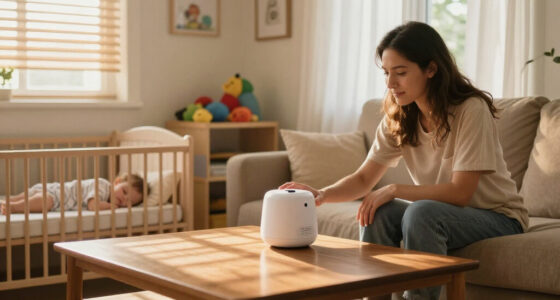
- Keep devices at least 3 to 6 feet apart. This distance helps prevent their signals from overlapping, reducing static and false alarms. The tradeoff is that if you place them too far apart, you might have difficulty hearing alerts or sounds from your baby’s area. Finding the right balance ensures clear sound without sacrificing accessibility.
- Avoid placing them next to metal objects or mirrors, which reflect signals and cause echoes or distortions. Metal surfaces can act as unintended antennas, amplifying interference and making it harder for signals to stay clear. This can lead to inconsistent audio, where sounds are muffled or interrupted, impacting your ability to monitor your baby effectively.
- Steer clear of windows or doors near Wi-Fi routers, as they can amplify interference by allowing signals to escape or bounce unpredictably. Windows and open doors can act as conduits for external signals, increasing the likelihood of disruptions. This may result in static or missed alerts, especially during high-traffic Wi-Fi usage periods, which can compromise your baby’s safety.
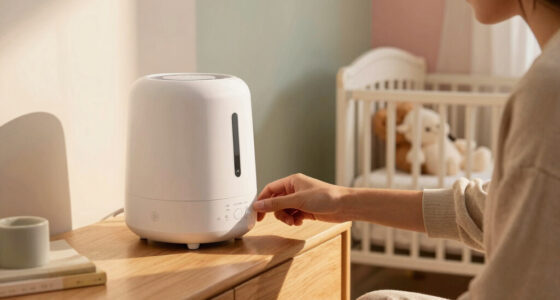
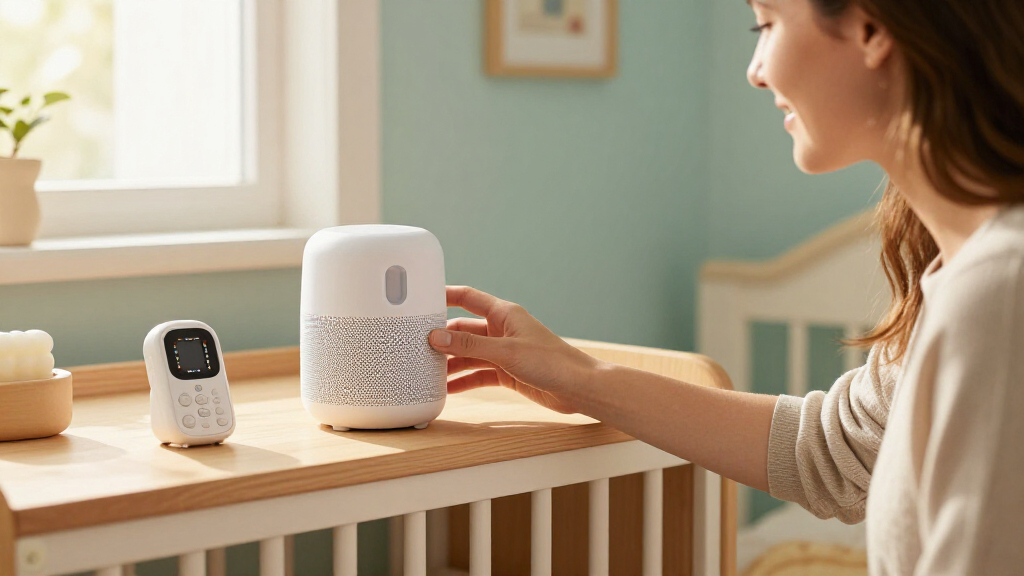
- Position the sound machine away from the baby monitor, ideally on opposite sides of the nursery. This strategic placement ensures that the signals don’t collide directly, minimizing the chance of static or false alarms. However, if placed too far apart, you might lose some sound clarity or have difficulty hearing your baby. Balancing proximity for sound clarity and distance for interference reduction is key.
- Use wall shelves or high furniture to elevate devices, reducing signal reflection and interference. Elevation can diminish the impact of reflective surfaces and reduce the chance of interference from household electronics. Proper placement enhances sound clarity and reduces static, but over-elevation might make devices harder to access or adjust.
For instance, I once helped a parent move her sound machine to the far corner of the nursery. Suddenly, her monitor’s static vanished, and she could finally hear her baby clearly at night. Proper placement not only improves sound quality but also enhances overall safety by reducing interference risks.

Adaptive Sound Technologies LectroFan Classic Sound Machine, Black
- Compact Sleep Sound Machine: Small design with multiple sounds
- 20 Non-Looping Sounds: Variety for personalized sleep experience
- Sleep Timer Function: Automatic shut-off for convenience
As an affiliate, we earn on qualifying purchases.
As an affiliate, we earn on qualifying purchases.
Choosing Devices That Play Nice Together
| Feature | Why It Matters |
|---|---|
| Digital or FHSS Technology | Reduces interference by hopping frequencies rapidly, making signals more stable. This means less static and fewer missed alerts, which are crucial during nighttime monitoring when every sound matters. However, these features may come at a higher cost or require specific compatibility considerations. |
| Operate on Different Bands | Devices on 1.8 GHz or other less crowded bands are less prone to clashes, allowing more reliable communication. Choosing the right band can be a tradeoff, as some devices only operate on certain frequencies, so verify compatibility before purchase. |
| Adjustable Frequency Settings | Allows you to manually select less congested channels, reducing the chance of interference. This feature offers flexibility, especially in homes with many wireless devices, but it requires some technical know-how to optimize settings effectively. |
When shopping, look for models with these features. They can make a significant difference in your experience. For example, a monitor with FHSS technology was a game-changer for a family struggling with static noise every night, providing a more reliable and clear connection that enhanced safety and peace of mind.

Momcozy Baby Sleep Bundle: Portable Sound Machine and App Remote Control White Noise Machine for Sleeping, Baby Registry, Newborn Essentials, Baby Shower Gifts
- Bundle Includes: Full-size and portable sound machines
- Cost Savings: Save more with bundle purchase
- Consistent Sleep Routines: Supports routines at home and on-the-go
As an affiliate, we earn on qualifying purchases.
As an affiliate, we earn on qualifying purchases.
How Settings and Volume Control Help Prevent Interference
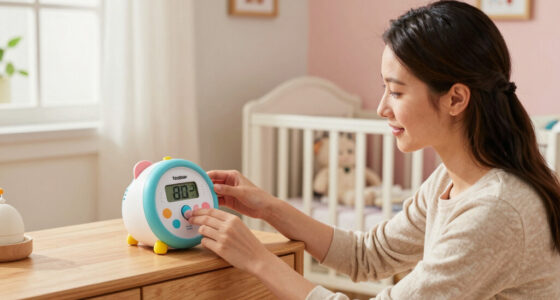
Keeping your sound machine at a moderate volume prevents it from overwhelming the monitor’s microphone or speakers. If the volume is too high, static and background noise can drown out your baby’s cries, potentially causing missed alerts. Conversely, setting it too low might reduce the soothing effect, making it less effective for your baby’s comfort.
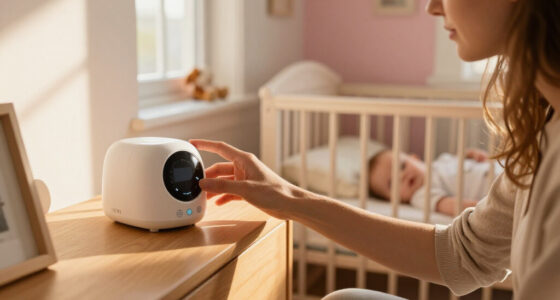
Adjust the monitor’s sensitivity settings. Lower sensitivity settings can help prevent false alarms caused by ambient noise or interference, but setting it too low might cause you to miss subtle sounds. Finding the right balance ensures you’re alerted to real needs without being overwhelmed by false signals. This fine-tuning enhances safety without sacrificing comfort, and understanding the tradeoffs helps you optimize device performance for your specific environment.
For example, a parent lowered her sound machine volume to a gentle hum, which still soothed her baby but kept the monitor’s alerts reliable. This adjustment struck a balance, ensuring safety and peace of mind.

GoodBaby 5" Baby Monitor with Camera and Audio No WiFi
- Large 5-inch HD Display: Crystal-clear nursery view with pan and tilt
- Extended Battery Life: Up to 30 hours with VOX mode
- Smart VOX Power Saving: Auto-wake screen on baby crying detection
As an affiliate, we earn on qualifying purchases.
As an affiliate, we earn on qualifying purchases.
Recent Tech That Makes Interference Less of a Problem
New baby monitors now often feature encrypted digital signals, which are much harder for interference to disrupt. This encryption ensures that signals are secure and less susceptible to external interference, providing more reliable monitoring. Some models use adaptive frequency hopping, which constantly scans and switches channels to avoid crowded or noisy frequencies, significantly reducing static and missed alerts.
Many smart devices connect via Wi-Fi, but they also come with apps to control placement and settings easily. These features allow you to optimize device positioning and configuration remotely, reducing the need for trial-and-error adjustments that could cause interference. These technological advancements mean fewer static nights and more dependable alerts, giving parents peace of mind during critical hours.
For example, a tech-savvy parent switched to a Wi-Fi monitor with noise-cancellation features. The clarity improved instantly, and she no longer worried about missing her baby’s cries. The combination of encryption and adaptive features ensures a more resilient and interference-resistant monitoring experience.
Key Facts You Need to Know to Prevent Audio Clashes
- Interference can cause false alarms, missed alerts, and distorted audio, risking safety and peace of mind. Understanding this helps you appreciate the importance of proper device placement and technology choices, which directly impact your ability to monitor your baby effectively.
- Devices on the 2.4 GHz band are most prone to interference, especially in homes with many Wi-Fi devices. However, newer models with adaptive frequency hopping or operating on less congested bands can mitigate this issue, offering more reliable monitoring options.
- Maintaining a 3-6 foot distance between devices is essential, but understanding that this is a guideline rather than a strict rule allows you to balance safety with practical placement considerations. Sometimes, slight adjustments can significantly reduce interference without sacrificing sound clarity.
- Updating firmware regularly not only improves device performance but also enhances interference resistance. This ongoing maintenance is crucial, as manufacturers often release patches that address known issues, keeping your devices functioning optimally.
Knowing these facts helps you make smarter choices and avoid nights of static chaos. When you understand why interference occurs and how to prevent it, you can create a safer, more reliable monitoring environment for your little one.
Your Most Common Questions About Device Interference
Q1: How close can I place a sound machine to my baby monitor without causing interference? Keep them at least 3 feet apart. Closer than that, and static or false alarms become more likely. The closer proximity increases the chances of overlapping signals, which can compromise the clarity of audio alerts and the monitor’s ability to detect your baby’s sounds accurately. Proper distance is a simple yet effective way to reduce this risk.
Q2: Are some brands better at avoiding interference? Yes, look for models with digital or FHSS technology. Brands that emphasize interference resistance tend to perform better because their signals are designed to hop frequencies or encrypt data, minimizing static and missed alerts. Investing in reputable brands with these features can provide peace of mind, especially during critical monitoring times.
Q3: Can I use Wi-Fi-enabled devices safely together? Yes, but ensure they operate on different bands or have interference mitigation features. Keeping firmware updated is also essential, as manufacturers often release patches to address interference issues. Proper placement and configuration are key to ensuring these devices work harmoniously without compromising safety.
Q4: What’s the best way to troubleshoot interference issues? Try moving devices apart, lowering volume, or updating firmware. Testing on different channels can help identify the clearest frequencies. Sometimes, simply repositioning devices or adjusting settings can resolve static problems, but persistent issues may require technical support or choosing different models.
Q5: How do I know if my devices are interfering? Static noises, missed alerts, or unusual device behavior are signs. Test by moving devices and noting the changes. If interference persists despite adjustments, consulting the manufacturer’s guidance or replacing devices with more advanced features may be necessary for optimal safety.
Conclusion
Clear sound isn’t just about volume—it’s about smart placement and choosing the right tech. Keep devices apart, pick models with interference-resistant features, and tweak settings to suit your environment. Your baby’s safety and your peace of mind depend on it.
Imagine a night free of static, where every cry cuts through the silence clearly. That’s the goal. Take these simple steps, and you’ll sleep easier knowing your little one is truly heard.