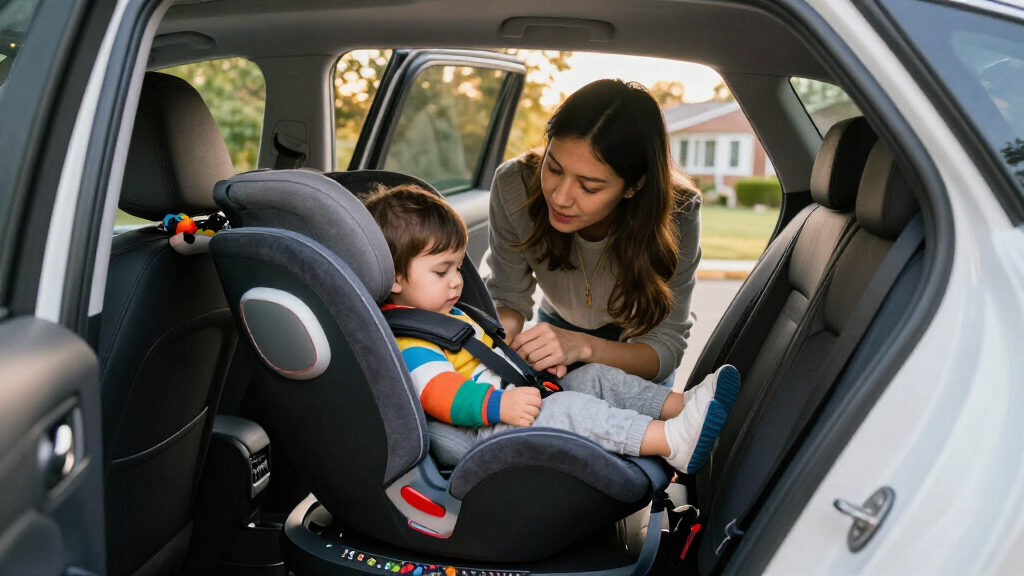

Convertible car seats for toddlers have to do two jobs at once: keep a squirming two-year-old safe and make daily life easier for whoever is buckling them in. After comparing 11 leading models, the Chicco Fit360 Zip ClearTex stands out as the best overall pick because its rotating seat solves the hardest part of toddler car seat ownership — the awkward leaning-and-twisting buckle dance. Budget-minded families should look at the Graco TriRide 3-in-1, while the Graco Extend2Fit remains the benchmark for extended rear-facing legroom. The main tradeoffs in this category come down to rotating convenience versus price, 3-in-1 longevity versus day-to-day bulk, and how much reinstall hassle you’re willing to tolerate. Keep reading for the full breakdown of what separates these seats and which one fits your family.

Turn the school run and nap time into listening time
- Thousands of audiobooks, podcasts and originals
- Listen on your phone, tablet or Echo — also offline
- Cancel anytime
Complete the kit


Key Takeaways
- Rotating seats (Chicco Fit360 Zip, Fit360 SE, Joie Chili Spin 360) dominated on daily usability — the 360-degree spin turns a two-minute buckle battle into a ten-second task, but every rotating model carries a price and weight penalty over fixed seats.
- The Safety 1st Ellaris appears three times in this lineup purely as color variants (London Blue, Smokey Haze, Peacock Blue) — the differences are cosmetic, so buy whichever color is cheaper, not whichever is ranked higher.
- Graco‘s Extend2Fit offered the best extended rear-facing legroom of any fixed seat here, which matters most for taller toddlers riding rear-facing past age two.
- 3-in-1 and 4-in-1 seats (TriRide, Ellaris, Grow and Go, Joie Saffron) win on longevity — one seat from toddler through booster — but they tend to be bulkier front-to-back in rear-facing mode than dedicated 2-in-1 models.
- Across the lineup, cover machine-washability and no-rethread harnesses separated the pleasant seats from the frustrating ones; a seat you can’t clean easily after a juice-box incident becomes a daily irritation regardless of its safety credentials.
| Safety 1st Ellaris 3-in-1 Convertible Car Seat, London Blue |  | Best Budget Pick | Modes: Rear-facing infant, rear-facing toddler, forward-facing | Weight Range: 5–65 lbs | Forward-Facing: 30–65 lbs | VIEW LATEST PRICE | See Our Full Breakdown |
| Chicco Fit360 Zip ClearTex Rotating Convertible Car Seat with Mirror |  | Best Premium Pick | Rotation: 360° one-hand rotation | Rear-Facing Weight: 4–40 lbs | Forward-Facing Weight: 26.5–65 lbs | VIEW LATEST PRICE | See Our Full Breakdown |
| Safety 1st Ellaris 3-in-1 Convertible Car Seat, Smokey Haze |  | Best for Travel and Tight Back Seats | Modes: Rear-facing infant, rear-facing toddler, forward-facing | Weight Range: 5–65 lbs | Rear-Facing Toddler: 30–40 lbs | VIEW LATEST PRICE | See Our Full Breakdown |
| Graco TriRide 3-in-1 Convertible Car Seat, Kipling |  | Best Long-Term Value | Modes: Rear-facing harness, forward-facing harness, highback booster | Rear-Facing Weight: 5–40 lbs | Forward-Facing Weight: 26.5–65 lbs | VIEW LATEST PRICE | See Our Full Breakdown |
| Joie Saffron SI 4-in-1 Convertible Car Seat |  | Best Extended Use Through Booster Stage | Modes: Rear-facing, forward-facing harness, high-back booster, backless booster | Total Weight Range: 4–120 lbs | Rear-Facing Harness: 4–40 lbs; up to 43 in | VIEW LATEST PRICE | See Our Full Breakdown |
| Chicco Fit360 SE Rotating Convertible Car Seat |  | Best for Easy Loading | Rotation: 360 degrees | Rear-facing weight range: 12–40 lbs. | Forward-facing weight range: 26.5–65 lbs. | VIEW LATEST PRICE | See Our Full Breakdown |
| Safety 1st Grow and Go All-in-One Convertible Car Seat, Black Phantom |  | Best Longevity Value | Stages: Rear-facing, forward-facing, belt-positioning booster | Rear-facing limits: 5–40 lb; 19–40 in | Forward-facing limits: 30–65 lb; 34.4–49 in | VIEW LATEST PRICE | See Our Full Breakdown |
| Graco TriRide 3-in-1 Convertible Car Seat, Redmond |  | Best All-in-One Comfort | Rear-facing harness weight: 5–40 lb | Forward-facing harness weight: 26.5–65 lb | Highback booster weight: 40–100 lb | VIEW LATEST PRICE | See Our Full Breakdown |
| Safety 1st Ellaris 3-in-1 Convertible Car Seat, Peacock Blue |  | Best Compact and Travel Pick | Modes: Rear-facing infant, rear-facing toddler, forward-facing | Rear-facing infant weight: 5–30 lbs. | Rear-facing toddler weight: 30–40 lbs. | VIEW LATEST PRICE | See Our Full Breakdown |
| Graco Extend2Fit 2-in-1 Convertible Car Seat, Gotham |  | Best for Extended Rear-Facing | Seat type: 2-in-1 convertible car seat | Rear-facing weight range: 4–50 lb | Forward-facing weight range: 26.5–65 lb | VIEW LATEST PRICE | See Our Full Breakdown |
| Joie Chili Spin 360 2-in-1 Rotating Convertible Car Seat (Thunder) |  | Best Rotating Seat for Tight Budgets | Brand: Joie | Model: Chili Spin 360 | Type: 2-in-1 rotating convertible car seat | VIEW LATEST PRICE | See Our Full Breakdown |
| convertible car seats for toddler | Headrest Positions | Installation |
|---|---|---|
| Safety 1st Ellaris 3-in-1 Conv | 5 | Hook-style LATCH |
| Chicco Fit360 Zip ClearTex Rot | 15 | LeverLock self-tensioning seat belt system |
| Safety 1st Ellaris 3-in-1 Conv | 5 | Hook-style LATCH |
| Graco TriRide 3-in-1 Convertib | 10, no-rethread harness | — |
| Joie Saffron SI 4-in-1 Convert | 10 | — |
| Chicco Fit360 SE Rotating Conv | 15 | Vehicle seat belt with LeverLock self-tensioning system |
| Safety 1st Grow and Go All-in- | — | Vehicle seat belt or seat anchors |
| Graco TriRide 3-in-1 Convertib | 10 | — |
| Safety 1st Ellaris 3-in-1 Conv | 5 | Hook-style LATCH |
| Graco Extend2Fit 2-in-1 Conver | — | — |
| Joie Chili Spin 360 2-in-1 Rot | — | Lower anchors (LATCH) or vehicle seat belt |
More Details on Our Top Picks
Safety 1st Ellaris 3-in-1 Convertible Car Seat, London Blue
This option stands out as the straightforward, no-frills entry point in this lineup. It covers all three conversion modes — rear-facing infant, rear-facing toddler, and forward-facing — for a 5–65 lbs range, which is respectable coverage for a lower-cost seat. Compared with the Graco TriRide, the Ellaris skips booster mode and offers only five headrest positions instead of ten, so it won’t carry your child to 100 lbs. Where it earns its place is practicality: the slim footprint helps in tighter back seats, and the machine-washable, dryer-safe pad plus dishwasher-safe cup holders make messes less of an event. The tradeoff is convenience — the hook-style LATCH takes more patience than the Chicco Fit360’s self-tensioning LeverLock, and there’s no rotating base or magnetic harness hardware.
Pros:- Three modes cover 5–65 lbs, so the seat adapts through toddlerhood
- Slim design saves back-seat space in smaller vehicles
- Machine-washable, dryer-safe pad and dishwasher-safe cup holders simplify cleanup
- Airplane-ready for families who fly
Cons:- No booster mode, so most kids will outgrow it before they’re ready for a seat belt alone
- Hook-style LATCH installation is less forgiving than self-tensioning systems on pricier seats
Best for: Budget-conscious families who want full toddler coverage from one seat without premium convenience features
Not ideal for: Parents who want a seat that lasts through booster years — forward-facing tops out at 65 lbs with no booster mode
- Modes:Rear-facing infant, rear-facing toddler, forward-facing
- Weight Range:5–65 lbs
- Forward-Facing:30–65 lbs
- Headrest Positions:5
- Seat Pad:Machine-washable and dryer-safe
- Installation:Hook-style LATCH
- Travel:Airplane-ready
- Safety Standards:Federal safety standards; federal Side Impact standard
Our verdict“A sensible pick for families who want dependable three-stage coverage at an approachable price and don’t need rotation or booster mode.”
Chicco Fit360 Zip ClearTex Rotating Convertible Car Seat with Mirror
The Fit360 Zip makes the most sense for buyers who prioritize daily loading convenience above all else. Its one-hand 360° rotation means you can turn the seat to face the door, buckle a squirmy toddler, and spin them back into position — something no fixed seat in this lineup, including the Graco TriRide or Joie Saffron, can match. The LeverLock self-tensioning installation removes much of the guesswork that plagues seat-belt installs, and the 15-position headrest dwarfs the five positions on the Safety 1st Ellaris. Materials are also a step up: flame-retardant-free ClearTex fabric with GREENGUARD Gold certification appeals to chemical-sensitive households. The tradeoffs are real, though — it stops at 65 lbs forward-facing with no booster mode, and rotating seats carry a premium you pay for convenience rather than longevity.
Pros:- One-hand 360° rotation makes buckling a toddler dramatically easier
- LeverLock self-tensioning installation reduces user error
- Zip-off machine-washable fabrics and dishwasher-safe cup holders
- Flame-retardant-free ClearTex materials, GREENGUARD Gold certified
Cons:- No booster mode, so a second seat purchase is likely later
- Rotating mechanism adds bulk and cost compared with fixed seats like the Ellaris
Best for: Parents of rear-facing toddlers who load kids into the car multiple times a day and want the easiest possible experience
Not ideal for: Families seeking one seat through booster age — there’s no booster mode, and the rotating mechanism adds cost and weight
- Rotation:360° one-hand rotation
- Rear-Facing Weight:4–40 lbs
- Forward-Facing Weight:26.5–65 lbs
- Headrest Positions:15
- Installation:LeverLock self-tensioning seat belt system
- Harness:Magnetic chest clip, flex-forward buckle, magnetic harness holders
- Materials:Flame-retardant-free ClearTex, GREENGUARD Gold
- Included:Mirror, two flexible dishwasher-safe cup holders
Our verdict“Worth the premium if daily loading ease and low-chemical materials top your list; skip it if you want one seat from toddler to seat belt.”
Safety 1st Ellaris 3-in-1 Convertible Car Seat, Smokey Haze
This is the same Ellaris platform as the London Blue version, and I’m treating the colorways as one decision — so choose between them on looks, not specs. What separates the Ellaris from the rest of this roundup is its compact, airplane-ready footprint. Where the Joie Saffron weighs over 23 lbs and the Chicco Fit360 adds a rotating base, the Ellaris stays slim and simple, which matters if you’re installing it on a plane, moving it between vehicles, or squeezing it beside two other seats. The washable, dryer-safe pad is a genuine plus for travel messes. Be clear-eyed about limits: with a 65 lbs forward-facing cap and no booster mode, this seat serves toddlerhood well but ends there, and the five-position headrest offers less fine-tuning than the ten-position setups on the Graco and Joie models.
Pros:- Compact, airplane-ready design certified for travel
- Slim profile fits three-across or tight back seats more easily than rotating seats
- Dryer-safe washable pad handles travel spills
- Dishwasher-safe removable cup holders
Cons:- Five headrest positions offer less growth adjustment than the 10–15 positions on pricier rivals
- Hook-style LATCH is less user-friendly than LeverLock or push-on systems
Best for: Frequent flyers and three-across families who need a slim, lightweight-feeling seat that’s easy to move
Not ideal for: Buyers wanting the longest usable life — no booster mode means this seat retires around 65 lbs
- Modes:Rear-facing infant, rear-facing toddler, forward-facing
- Weight Range:5–65 lbs
- Rear-Facing Toddler:30–40 lbs
- Headrest Positions:5
- Cup Holders:2 removable, dishwasher-safe
- Installation:Hook-style LATCH
- Travel:Airplane-ready compact design
- Color:Smokey Haze
Our verdict“The pick for families whose seat lives in airplanes, grandparents’ cars, or crowded back rows rather than being a decade-long fixture.”
Graco TriRide 3-in-1 Convertible Car Seat, Kipling
This model is better suited to families who want one seat to span toddlerhood through the booster years. With a booster mode rated to 100 lbs, the TriRide outlasts both the Chicco Fit360 and the Safety 1st Ellaris, which top out at 65 lbs in harness mode. The no-rethread harness — headrest and straps adjust together across ten positions — removes the fiddly rethreading chore, and the steel-reinforced frame with multi-directional crash protection adds reassurance the budget Ellaris doesn’t advertise. Six recline positions also beat the three on the Joie Saffron, helping you get a proper angle on sloped vehicle seats. What you give up is refinement: no rotation, no magnetic harness hardware, and the seat pad requires machine washing without the zip-off convenience of the Fit360. It’s honest value over luxury.
Pros:- Booster mode extends use to 100 lbs, outlasting harness-only rivals
- No-rethread harness adjusts across 10 headrest positions
- Six recline positions help achieve correct angles in varied vehicles
- Steel-reinforced frame designed for frontal, side, rear, and rollover protection
Cons:- No rotating base, so loading a rear-facing toddler still requires leaning in
- Seat pad is machine-washable but not zip-off, making removal more of a chore
Best for: Families who want a single purchase covering 5–100 lbs without rethreading hassles or rotating-seat pricing
Not ideal for: Parents who load kids in daily and crave the convenience of a rotating seat like the Fit360
- Modes:Rear-facing harness, forward-facing harness, highback booster
- Rear-Facing Weight:5–40 lbs
- Forward-Facing Weight:26.5–65 lbs
- Booster Weight:40–100 lbs
- Headrest Positions:10, no-rethread harness
- Recline Positions:6
- Frame:Steel-reinforced
- Cup Holders:2
Our verdict“The smart middle path for buyers who value maximum usable lifespan per dollar over convenience features.”
Joie Saffron SI 4-in-1 Convertible Car Seat
Compared with every other seat here, the Saffron SI stretches the timeline furthest: four modes spanning 4–120 lbs, including both high-back and backless booster modes to 120 lbs. That’s 20 lbs beyond the Graco TriRide’s booster ceiling and double the coverage of the Safety 1st Ellaris. The magnetic chest clip is a genuinely thoughtful touch — the kind of detail usually reserved for the pricier Chicco Fit360 — and the ten-position no-rethread headrest matches the TriRide for growth adjustment. The integrated flip foot for rear-facing recline is smarter than a simple multi-position dial for getting the right angle. The tradeoffs: it weighs about 23 lbs, so it’s not a seat you’ll enjoy moving between cars, its three recline positions trail the TriRide’s six, and booster modes carry a minimum age of four.
Pros:- Four modes cover 4–120 lbs, the widest range in this roundup
- Magnetic chest clip eases daily buckling
- Integrated rear-facing flip foot simplifies correct recline
- Headrest and harness adjust together across ten positions
Cons:- At approximately 23 lbs, it’s cumbersome to move between cars or through airports
- Only three recline positions, fewer than the Graco TriRide’s six
- Booster modes require a minimum age of 4 years
Best for: Families committed to a single purchase from infancy through the backless-booster years
Not ideal for: Anyone who regularly transfers the seat between vehicles — at roughly 23 lbs it’s the heaviest-feeling option here
- Modes:Rear-facing, forward-facing harness, high-back booster, backless booster
- Total Weight Range:4–120 lbs
- Rear-Facing Harness:4–40 lbs; up to 43 in
- Forward-Facing Harness:30–65 lbs; up to 49 in
- Backless Booster:40–120 lbs; up to 60 in; minimum age 4
- Headrest Positions:10
- Dimensions:22 × 19 × 24.5–33 in
- Product Weight:Approximately 23.1 lbs
- Certification:FMVSS 213a and 213b
Our verdict“The longest-haul choice here — buy it once, use it to 120 lbs, provided you rarely need to carry it anywhere.”
Chicco Fit360 SE Rotating Convertible Car Seat
Rotation is the whole story here, and it changes daily life more than any spec sheet suggests. The 360-degree swivel means you can turn the seat toward the door to buckle a squirming toddler, then spin it back rear- or forward-facing — no more leaning across the back seat at a bad angle. Compared with the Joie Chili Spin 360, the Fit360 SE adds a 15-position headrest and Chicco’s LeverLock self-tensioning belt installation, which removes much of the guesswork from seat-belt setups. The ClearTex flame-retardant-free fabrics and GREENGUARD Gold certification will matter to chemical-conscious families. The tradeoff is longevity: unlike the Safety 1st Grow and Go, it stops at 65 lb with no booster mode, and it can’t be used from birth — children must be at least 12 lbs.
Pros:- 360-degree rotation makes loading and buckling far easier
- LeverLock self-tensioning belt installation reduces installation errors
- 15-position headrest keeps pace with growth
- Flame-retardant-free ClearTex materials with GREENGUARD Gold certification
Cons:- Cannot be used before 12 lbs, so it isn’t a from-birth seat
- No booster mode, so it won’t be the last seat you buy
Best for: Parents of toddlers who dread daily buckling and want swivel access plus straightforward belt installation
Not ideal for: Newborn families or anyone wanting one seat through the booster years, since it starts at 12 lbs and ends at 65 lbs
- Rotation:360 degrees
- Rear-facing weight range:12–40 lbs.
- Forward-facing weight range:26.5–65 lbs.
- Headrest positions:15
- Installation:Vehicle seat belt with LeverLock self-tensioning system
- Materials:ClearTex flame-retardant-free materials
- Certification:GREENGUARD Gold Certified
Our verdict“Buy this if daily loading ease is your top priority; skip it if you want one seat from birth through booster age.”
Safety 1st Grow and Go All-in-One Convertible Car Seat, Black Phantom
This is the seat that follows one child from hospital discharge to the end of booster age — 5 to 100 lbs across three stages. Where the Graco TriRide covers similar ground, the Grow and Go’s QuickFit harness tightens height and harness length in one motion, which is genuinely faster when a growth spurt hits mid-winter. Removable infant padding makes the early months workable, and the washer-and-dryer-safe pad plus dishwasher-safe cupholders handle the mess toddlers generate. The honest downsides: published details are thin. There’s no stated crash-test engineering program comparable to Graco’s ProtectPlus, and Safety 1st doesn’t list seat weight or dimensions, which is frustrating if you’re fitting three across or planning travel. It’s a practical buy, not a data-rich one.
Pros:- Covers three stages from 5 to 100 lbs
- QuickFit harness adjusts height and harness together in one motion
- Washer-and-dryer-safe pad and dishwasher-safe cupholders
- Removable infant pillows and three recline positions
Cons:- No crash-test or safety-rating details provided
- Seat weight and dimensions not published, complicating fit planning
Best for: Budget-minded families who want one purchase covering birth through 100-lb booster use
Not ideal for: Research-driven buyers who want documented crash-test engineering and published dimensions before committing
- Stages:Rear-facing, forward-facing, belt-positioning booster
- Rear-facing limits:5–40 lb; 19–40 in
- Forward-facing limits:30–65 lb; 34.4–49 in
- Booster limits:40–100 lb; 43.4–52 in
- Harness:QuickFit adjustable harness
- Installation:Vehicle seat belt or seat anchors
- Recline positions:3
- Cleaning:Washer-and-dryer-safe seat pad; dishwasher-safe cupholders
Our verdict“A sensible one-and-done purchase for pragmatic families, as long as you’re comfortable with limited published safety detail.”
Graco TriRide 3-in-1 Convertible Car Seat, Redmond
What separates the TriRide from other 3-in-1 seats in this lineup is adjustability: ten headrest positions and a 6-position recline, the most recline options among the Graco and Safety 1st picks here. That matters in two ways — a sleeping toddler stays better supported on long drives, and extra recline angles help you achieve a proper install on sloped vehicle seats. Like the Graco Extend2Fit, it carries ProtectPlus engineering for side and frontal impact testing, and the no-rethread Simply Safe Adjust system moves harness and headrest together. The gap versus the Extend2Fit is rear-facing capacity: the TriRide stops at 40 lbs versus 50, so legroom and longevity rear-facing are shorter. Its 26.5-lb forward-facing minimum also nudges some kids out of the earliest forward-facing window.
Pros:- Three modes from rear-facing harness through highback booster
- Harness and headrest adjust together with no rethreading
- 10 headrest positions and 6-position recline
- ProtectPlus engineering for side and frontal impact testing
Cons:- Rear-facing capacity ends at 40 lbs, less than the Extend2Fit’s 50 lbs
- Forward-facing minimum of 26.5 lbs limits early forward use
Best for: Families prioritizing recline flexibility and long-drive comfort in a seat that lasts through booster age
Not ideal for: Parents committed to extended rear-facing past 40 lbs, who should look at the Graco Extend2Fit instead
- Rear-facing harness weight:5–40 lb
- Forward-facing harness weight:26.5–65 lb
- Highback booster weight:40–100 lb
- Headrest positions:10
- Recline positions:6
- Harness adjustment:No-Rethread Simply Safe Adjust Harness System
Our verdict“The pick if recline options and booster longevity top your list; choose the Extend2Fit if rear-facing duration matters more.”
Safety 1st Ellaris 3-in-1 Convertible Car Seat, Peacock Blue
Of the three Ellaris colorways in this roundup, this Peacock Blue version earns its spot by being the slim, airplane-ready option — the only seat here designed with air travel explicitly in mind. Next to the Chicco Fit360 SE, it gives up the rotating door-swivel convenience but compensates with a narrow footprint that helps in compact cars or three-across back seats, and it’s certified to federal standards including side-impact requirements. Splitting rear-facing into separate infant (5–30 lbs) and toddler (30–40 lbs) modes shows the design is genuinely tuned for small passengers. The compromises are real, though: only 5 headrest positions versus the TriRide’s 10, hook-style LATCH rather than a belt-tensioning system, and a forward-facing minimum of 30 lbs — higher than either Graco seat.
Pros:- Slim design saves space in compact vehicles
- Airplane-ready for family travel
- Machine-washable and dryer-safe seat pad
- Meets or exceeds federal safety standards including side-impact
Cons:- Only 5 headrest positions limits fine-tuned fit
- Forward-facing use doesn’t start until 30 lbs
Best for: City families with small cars and frequent flyers who need a narrow, certified-for-travel seat
Not ideal for: Parents who want maximum adjustability or early forward-facing use, since headrest positions are limited and the forward minimum is 30 lbs
- Modes:Rear-facing infant, rear-facing toddler, forward-facing
- Rear-facing infant weight:5–30 lbs.
- Rear-facing toddler weight:30–40 lbs.
- Forward-facing weight:30–65 lbs.
- Headrest positions:5
- Installation:Hook-style LATCH
- Travel:Airplane-ready, compact design
Our verdict“The clear choice if space or air travel drives your decision; otherwise the TriRide offers more adjustability for similar coverage.”
Graco Extend2Fit 2-in-1 Convertible Car Seat, Gotham
If you’ve decided to keep your toddler rear-facing as long as pediatric guidance allows, this is the seat built for exactly that. Its 50-lb rear-facing limit is the highest in this batch — ten pounds beyond the TriRide and Grow and Go — and the four-position extension panel adds up to 5 inches of legroom, solving the folded-up-knees problem that pushes most parents to turn their child forward too early. The no-rethread harness and ProtectPlus engineering match what Graco offers on the TriRide, so you’re not sacrificing safety features for the rear-facing focus. What you give up is range: this is strictly a 2-in-1 seat with no booster mode, so unlike the Safety 1st Grow and Go it won’t carry your child to 100 lbs, and it lacks the Chicco Fit360’s rotating convenience.
Pros:- Highest rear-facing capacity in this lineup at 4–50 lbs
- Extension panel adds up to 5 inches of legroom for rear-facing toddlers
- No-rethread harness adjusts with the headrest
- ProtectPlus engineering for side and frontal impact testing
Cons:- No booster mode, so a second seat purchase is eventual
- Forward-facing minimum of 26.5 lbs may not suit every child’s timeline
Best for: Parents committed to maximizing rear-facing time who don’t mind buying a booster later
Not ideal for: Families wanting a single purchase through booster age, or anyone who values a rotating seat for daily loading
- Seat type:2-in-1 convertible car seat
- Rear-facing weight range:4–50 lb
- Forward-facing weight range:26.5–65 lb
- Extension panel:4 positions; adds up to 5 in of legroom
- Harness adjustment:No-rethread; headrest and harness adjust together
- Safety engineering:Graco ProtectPlus Engineered for side and frontal impact testing
Our verdict“The definitive pick for extended rear-facing families; accept the later booster purchase as the cost of that focus.”
Joie Chili Spin 360 2-in-1 Rotating Convertible Car Seat (Thunder)
Rotation used to be a premium perk reserved for seats like the Chicco Fit360, and the Joie Chili Spin 360 stands out for bringing that same swivel convenience to a more accessible price point. The 360° turn means you can spin the seat toward the door to buckle a squirming toddler, then rotate it rear- or forward-facing without reinstalling — a real back-saver compared with fixed seats like the Graco Extend2Fit, where every direction change means a full reinstall.
The tradeoffs are real, though. Unlike the Graco TriRide or Joie Saffron SI, this is a 2-in-1 rather than a 3-in-1 or 4-in-1, so there’s no booster mode down the road, and the 65 lb weight ceiling caps its lifespan. The swivel base also makes it bulkier front-to-back than non-rotating competitors, which matters in smaller back rows. Still, for families who value daily ease over long-term versatility, this pick makes the most sense.
Pros:- 360° rotation makes loading and buckling a toddler far easier on your back
- No-rethread harness adjusts with the headrest as your child grows
- Both LATCH and vehicle belt installation with LockTight lock-off for a secure fit
- Machine-washable fabrics handle inevitable snack spills
Cons:- 2-in-1 design skips booster mode, shortening overall usable lifespan versus 3-in-1 and 4-in-1 rivals
- Rotating base adds bulk that can crowd smaller vehicles or three-across setups
- Height limits and exact age range are not clearly documented, complicating fit planning
Best for: Parents of toddlers who want rotating-seat convenience without paying Fit360-level prices, especially those with back or mobility issues
Not ideal for: Families planning to keep one seat through booster age — the 65 lb limit and lack of booster mode mean you’ll buy again later
- Brand:Joie
- Model:Chili Spin 360
- Type:2-in-1 rotating convertible car seat
- Rotation:360°
- Child weight capacity:Up to approximately 65 lb
- Harness:5-point, no-rethread adjustable
- Installation:Lower anchors (LATCH) or vehicle seat belt
- Key features:Side impact protection, LockTight lock-off, multiple recline positions
- Fabric:Plush, machine-washable
Our verdict“Buy this if rotating convenience matters more to you than a decade of use; skip it if you want one seat from toddler to big-kid booster.”

How We Picked
I evaluated each seat against the factors that actually drive long-term satisfaction with convertible car seats for toddlers: ease of daily loading and buckling, rear-facing legroom and extended-use limits, ease of installation and harness adjustment, cleanability, and how well the seat fits real vehicles rather than showroom floors. Rotating models got extra scrutiny for whether the spin mechanism felt secure over time and whether the rotation added meaningful bulk. Fixed seats were judged on how much of the rotating-seat convenience they could approximate through better harness access and recline design.
The ranking favors seats that balance those criteria rather than excelling at just one. A seat with superb crash-test heritage but a miserable buckle angle ranks below a seat that a caregiver can load a tantruming toddler into without back strain. I also flagged duplicate models — the Ellaris and TriRide each appear in multiple colors — so the ordering reflects genuine differences between designs, not packaging. Value was judged per year of usable life: a 4-in-1 seat that costs more but lasts through booster age can undercut a cheaper seat’s cost-per-year.
| convertible car seats for toddler | Installation |
|---|---|
| Safety 1st Ellaris 3-in-1 Conv | Hook-style LATCH |
| Chicco Fit360 Zip ClearTex Rot | LeverLock self-tensioning seat belt system |
| Safety 1st Ellaris 3-in-1 Conv | Hook-style LATCH |
| Graco TriRide 3-in-1 Convertib | — |
| Joie Saffron SI 4-in-1 Convert | — |
| Chicco Fit360 SE Rotating Conv | Vehicle seat belt with LeverLock self-tensioning system |
| Safety 1st Grow and Go All-in- | Vehicle seat belt or seat anchors |
| Graco TriRide 3-in-1 Convertib | — |
| Safety 1st Ellaris 3-in-1 Conv | Hook-style LATCH |
| Graco Extend2Fit 2-in-1 Conver | — |
| Joie Chili Spin 360 2-in-1 Rot | Lower anchors (LATCH) or vehicle seat belt |
Factors to Consider When Choosing Convertible Car Seats For Toddlers
Before locking in a pick, it helps to understand the forces that shape every decision in this category — because the tradeoffs you accept on day one are the ones you live with for years.Rotating vs. Fixed Seats: Is the Spin Worth It?
Rotating seats exist for one reason: toddlers fight the buckle. Being able to turn the seat toward the door, load your child at a normal angle, and spin them back into position removes the single most frustrating part of toddler car seat ownership. The catch is that rotation mechanisms add weight, cost, and potential bulk — a rotating seat is often several pounds heavier, which matters if you ever move it between cars or take it on flights. Fixed seats close the convenience gap partly through no-rethread harnesses that adjust with a pull rather than a half-hour of rethreading. My honest take: if you load your child into the car more than twice a day, rotation pays for itself quickly. If your toddler rides infrequently or mostly with a second caregiver who won’t learn the mechanism, a well-designed fixed seat is the smarter spend.
Rear-Facing Limits and Toddler Legroom
American Academy of Pediatrics guidance recommends keeping children rear-facing as long as the seat allows, and for toddlers this is where seats diverge sharply. Two numbers matter: the rear-facing weight limit (typically 40–50 pounds across this lineup) and the rear-facing height limit, usually defined by a headrest position or one inch of shell above the head. Taller toddlers often hit the height limit long before the weight limit, which is why seats with extendable legroom panels — the Extend2Fit approach — buy real extra months of rear-facing time. Parents sometimes flip their toddler forward-facing early because the child’s knees touch the seatback, but bent legs are comfortable for toddlers; running out of shell height is the actual limit. If your toddler is tall for their age, prioritize shell height and legroom over the marketed weight cap.
3-in-1, 4-in-1, and What Those Numbers Actually Mean
Marketing labels like 3-in-1 and 4-in-1 describe how many modes a seat covers: rear-facing, forward-facing with harness, and high-back booster, sometimes plus a backless booster stage. The appeal is buying one seat that lasts from toddlerhood through the booster years. The tradeoff is that multi-mode seats compromise on each stage — they’re often bulkier in rear-facing mode and heavier than dedicated designs, and their booster mode frequently fits less well than a dedicated booster would. A common mistake is assuming a 4-in-1 eliminates future purchases entirely; many families end up buying a slim dedicated booster anyway for carpooling or a second vehicle. Multi-mode seats make the most sense for families who want one installed-and-forgotten seat; families with multiple cars or carpool duties may do better pairing a simpler convertible with a later booster purchase.
Fit in Your Actual Vehicle
The most common convertible car seat mistake happens before installation: buying a seat without checking its front-to-back depth against your car. Rear-facing convertibles, especially multi-mode models with tall shells, can push front seats so far forward that front passengers lose legroom entirely. Compact cars and coupes feel this most, but even midsize SUVs can struggle behind the driver’s seat when the driver is tall. Check the manufacturer’s vehicle-fit guidance and measured rear-facing depth before buying, and buy from a retailer with easy returns in case the fit doesn’t work. Also consider where the seat will live — a middle-position install demands different belt paths than an outboard position, and rotating seats sometimes can’t rotate fully in tight center spots.
Cleaning, Harness Adjustment, and Daily Frustrations
Every parent learns this too late: the seat’s spec sheet matters less than how it behaves during a potty-training setback or a melted snack incident. Look for machine-washable covers that come off without uninstalling the seat — seats requiring full removal for cover cleaning turn a fifteen-minute chore into an hour-long reinstall. No-rethread harness adjustment matters just as much, because toddler growth means raising the shoulder height several times a year. Cup holders sound trivial until you’re debating whether a sippy cup goes on the floor again. These daily-interaction features are what separate a seat you tolerate from a seat you’d recommend to friends, and they cost little at the design level — which tells you something about manufacturers who skip them.
When to Pay More — and When Not To
All seats sold in the US must pass the same federal crash standards, so price differences mostly buy convenience, longevity, and fit refinement rather than baseline safety. Paying more makes sense when you’re buying rotation, premium fabrics like ClearTex that resist stains and odors, or extended weight limits that add years of usable life. Paying more is harder to justify when the premium buys cosmetic differences — which is exactly why the color-variant duplicates in this roundup are worth calling out. A sensible strategy: set your must-haves first (rotation or not, rear-facing duration, vehicle fit), then buy the least expensive seat that meets all of them. The families who overspend are usually the ones who bought features they’ll never use, like a 4-in-1 for a child already in a dedicated booster setup.
Frequently Asked Questions
Is a rotating car seat safer than a regular convertible seat?
Rotation doesn’t change crash performance — every seat here meets the same federal standards, and the rotating mechanism is a convenience feature, not a safety feature. What rotation can do is reduce installation errors, because caregivers who aren’t straining to reach across a seat tend to buckle harnesses correctly more often, and a correctly tightened harness is one of the biggest real-world safety factors. The tradeoffs are added weight and bulk, and a slightly more complex mechanism that some caregivers never fully learn. If your household will use the rotation daily, the Fit360 Zip or Joie Chili Spin 360 are worth their premium; if the seat mostly stays installed with one careful primary user, a fixed seat like the Extend2Fit delivers the same core protection for less.
My toddler’s knees touch the seatback rear-facing — should I turn her forward?
Bent legs are not a safety problem, and most toddlers actually prefer having something to brace against. The real rear-facing limit is when the top of your child’s head is within one inch of the shell’s top, or when she exceeds the seat’s rear-facing weight limit — whichever comes first. Toddlers are far more flexible than adults, and the position that looks cramped to you rarely bothers them. Rear-facing dramatically better protects the head and neck in frontal crashes, so every additional month is worth it. If legroom disputes become a daily battle anyway, a seat with an extendable legroom panel, like the Extend2Fit, adds inches of space without turning forward early.
Why do the Safety 1st Ellaris and Graco TriRide appear multiple times in different colors?
Those repeat listings are genuine color variants of the same seat, not different models. The Ellaris in London Blue, Smokey Haze, and Peacock Blue are functionally identical, as are the TriRide in Kipling and Redmond. Manufacturers list each colorway separately, which can make a roundup look larger than it is — and occasionally one color variant is priced differently for no functional reason. The practical takeaway: choose your model first, then buy whichever color is available at the better price. Color should never influence your ranking among seats; fit, features, and your vehicle should.
Is a 3-in-1 or 4-in-1 seat really a better value than buying separate seats?
It depends on how you’ll actually use it. On paper, one seat covering toddler through booster age beats buying two or three seats, and the per-year cost usually favors multi-mode models like the TriRide, Saffron SI, or Grow and Go. In practice, multi-mode seats are heavier and bulkier in rear-facing mode, and their booster stage often fits less well than a slim dedicated booster — so families with multiple vehicles or carpool needs frequently end up buying a booster anyway. Multi-mode seats shine for single-car households that want one install-and-forget purchase. If you rotate seats between cars often, a lighter dedicated convertible plus a later booster purchase may serve you better despite the higher total spend.
Can I install a convertible car seat without the LATCH system once my toddler is heavier?
Yes — and at toddler weights you often have to. LATCH anchors have weight limits (typically 65 pounds combined child-plus-seat, though exact rules vary by manufacturer), after which you must install using the vehicle seat belt and tether. Check your seat’s manual for the specific LATCH cutoff, because it arrives earlier than most parents expect with heavier toddlers. Seat-belt installation is equally safe when done correctly, and most seats in this lineup have color-coded belt paths that make it straightforward. If reading install diagrams makes you nervous, many local fire stations and child-passenger-safety technicians will check your install for free — worth doing once even if you’re confident.
Conclusion
Mapping these picks to buyer types closes the decision cleanly. For best overall, the Chicco Fit360 Zip ClearTex earns the top spot by solving the daily toddler-loading problem better than anything else here, with stain-resistant fabric as a bonus. The Chicco Fit360 SE is the right call for budget-conscious rotation seekers — same core spin mechanism, fewer frills. For best value, the Graco TriRide 3-in-1 covers toddler-through-booster longevity at a mid-range price, and the Safety 1st Grow and Go undercuts it further for families prioritizing pure cost-per-year. The Safety 1st Ellaris (in whichever color suits your budget) is my pick for beginners — straightforward installation and adjustment with no mechanisms to learn. For extended rear-facing specifically, nothing in this lineup matches the Graco Extend2Fit’s legroom panel for taller toddlers. Families wanting rotation at a lower price than the Chicco pair should look at the Joie Chili Spin 360, while the Joie Saffron SI 4-in-1 suits longevity-focused buyers who don’t need the spin. Decide first whether rotation, rear-facing duration, or total lifespan drives your purchase — that single answer narrows these eleven listings down to one or two real candidates.
Fall Picks
fall essentials
As an affiliate, we earn on qualifying purchases.