
TL;DR

Turn the school run and nap time into listening time
- Thousands of audiobooks, podcasts and originals
- Listen on your phone, tablet or Echo — also offline
- Cancel anytime
Baby scale accuracy depends on the scale, its setup, and the conditions of each weighing. Use the same scale on a firm, level surface and weigh under similar conditions; look at patterns over time rather than reacting to one reading. A home scale supports tracking, but your child’s clinician should interpret growth or feeding concerns.
At 3 a.m., a baby’s heel is kicking the scale, the display keeps changing, and you’re trying to decide whether that number means anything. A baby scale reading is a snapshot, shaped by movement, clothing, a recent feed, and the floor under the scale. One surprising number can feel loud in the quiet of the night.
This guide explains what affects baby scale accuracy, how to get steadier readings safely, and what home measurements can and cannot tell you. You’ll also see why a trend is more useful than a single result, and when it makes sense to contact your child’s healthcare provider. A scale can help you keep track; it cannot diagnose a growth or feeding problem.
Use the same scale on a firm, level surface, with your baby centered and weighed under similar conditions.
Movement, clothing, diapers, feeds, and elimination can shift a reading without showing a meaningful change in growth.
A displayed increment is not a promise of accuracy; follow the manufacturer’s instructions for setup, calibration, and care.
Treat a home scale as a tracking aid. Ask your child’s clinician to interpret growth or feeding concerns.
Follow clinician advice on weighing frequency, and contact them about weight gain, feeding concerns, fewer wet diapers, unusual sleepiness, or illness.
PARENT GUIDE / MEASUREMENT & GROWTH
Baby Scale Accuracy: Wiggly Babies and Steady Readings
At 3 a.m., a kicking heel and a changing display can make one number feel urgent. A baby scale reading is a snapshot, shaped by movement, clothing, feeds, elimination, and the surface beneath the scale. Learn how to make comparisons steadier—and what a home measurement can tell you.
One reading is a snapshot. Growth is a pattern.
Weight makes more sense when measurements are compared consistently and interpreted alongside your child’s health and development.
Accuracy ≠ repeatability
Accuracy asks how close a reading is to your baby’s actual weight. Repeatability asks whether the scale gives similar readings under the same conditions. A scale may repeat a number consistently and still differ from a clinical scale.
Conditions can move the number
A feed, a wet diaper, different clothes, or a wriggle can change a reading without showing a meaningful change in growth. If one week’s measurement is before a feed and the next is after a feed in a damp diaper, several conditions have changed at once. Patterns over time are more useful than reacting to one number. Growth checks bring measurements together with age, length, feeding, health, and a growth chart.
Why a wiggly baby’s number jumps around
Small shifts can come from the weighing setup as well as from your baby. Removing avoidable differences makes readings easier to compare.
Kicks & shifting
Movement can make the display fluctuate as weight shifts across the surface. Motion or hold features vary by model and do not remove other sources of variation.
Floor & scale
A soft rug or uneven floor can make a scale rock or settle differently. Follow the manual and use a firm, level surface.
Diapers & layers
Clothes and a wet or soiled diaper add weight. Use similar clothing or diaper conditions for each comparison when safe and appropriate.
Feeds & elimination
Feeding and elimination can temporarily change weight. A similar time and point in the feeding routine can improve comparability.
Increments & calibration
The smallest displayed increment tells you how finely a value is shown—not whether it is guaranteed accurate. Check setup, calibration, and care instructions.
Position & support
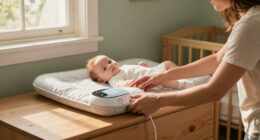
Center your baby and keep a hand close without pressing or supporting their weight. Never leave a baby unattended on a scale.
Consistency is the practical goal
Use the same scale, a stable surface, and similar weighing conditions. Consistency reduces avoidable noise; it cannot guarantee identical readings.
Safety comes first
If your baby is too unsettled to weigh safely, stop and try later. A usable measurement is never more important than preventing a fall.
Get a steadier reading in five steps
Keep it brief, follow the scale’s instructions, and record the result consistently. Do not choose whichever number feels most reassuring.
Set up
Place the scale on a hard, level floor and check that it sits firmly as directed.
Match conditions
Use the same scale and a similar time, diaper, clothing, and feeding routine.
Center safely
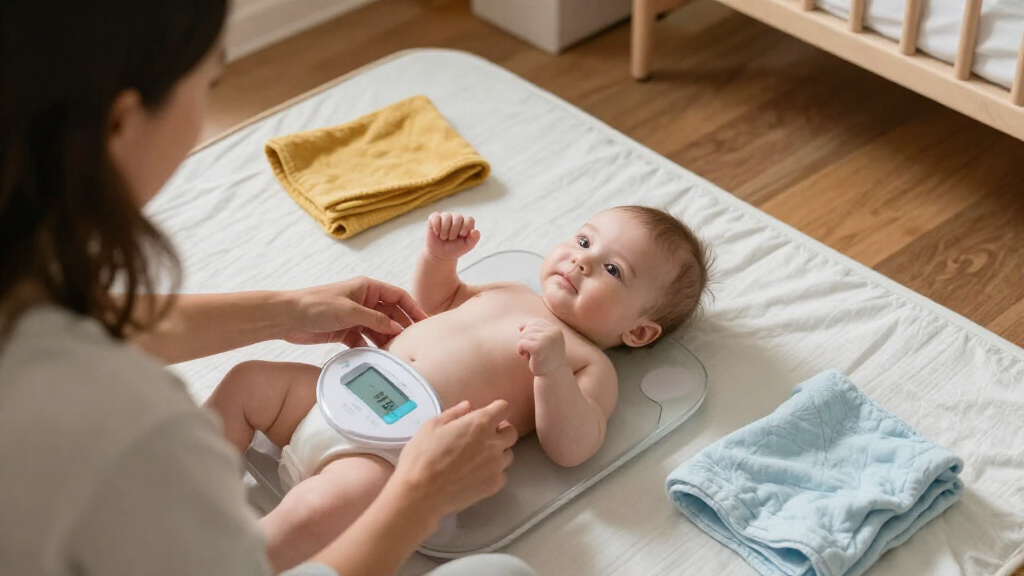
Keep your baby centered. Keep a hand close without pressing down or holding their weight.
Wait briefly
Use a motion or hold feature only as the manufacturer describes. Stop if the position is unsafe.
Record calmly
If the number jumps, check the setup and repeat once or twice. Note a stable result or range.
Tare a blanket only if the manufacturer permits it and the scale can safely handle the added load. If readings differ substantially, check the setup and compare with a clinical measurement.
Helpful tools organize readings; they do not interpret growth
Scale features can make numbers easier to capture or log. The feature itself does not establish accuracy or clinical meaning.
| Feature or condition | Can help with | Does not establish |
|---|---|---|
| Motion stabilization / hold | ✓ Capturing a value while a baby moves | ~ That the value reflects a meaningful growth change |
| Fine display increments | ✓ Showing smaller numeric steps | ~ Guaranteed measurement accuracy |
| Bluetooth / app logging | ✓ Organizing readings over time | ~ A reliable health interpretation |
| Stable, consistent setup | ✓ More comparable home measurements | ~ A diagnosis or replacement for a growth check |
Ask what the model documentation supports
Features and performance vary. Check the specific scale’s instructions for setup, calibration, care, and suitability; do not assume a kitchen or bathroom scale is appropriate for an infant.
Follow the clinician’s schedule
Avoid frequent weighing unless your child’s clinician recommends it. Day-to-day variation can be difficult to interpret and may create worry without explaining its cause.
A home scale can track. Your clinician can interpret.
Growth is assessed over time and in context. A single home reading cannot determine whether growth is healthy or a feeding plan is working.
Notice a pattern
Record readings and relevant conditions if monitoring has been recommended.
Share the context
Include timing, feeding routine, diaper or clothing conditions, and any setup concerns.
Contact the clinician
Ask about weight gain, feeding concerns, fewer wet diapers, unusual sleepiness, or illness.
Use the weighing frequency and method your child’s healthcare provider recommends. Contact them about concerns rather than trying to diagnose growth or dehydration from home measurements.
Why one baby scale reading can send you in the wrong direction
Baby scale accuracy is about how close a reading comes to your baby’s actual weight, while repeatability is about whether the scale gives similar readings under the same conditions. These qualities answer different questions: accuracy asks whether the number is near the truth; repeatability asks whether the setup produces a stable result. A home scale can be useful for tracking weight over time, but one reading is only a snapshot. A small change may reflect weighing conditions as much as a true change in your baby’s weight.
Think of each reading like a photograph taken in different light. A feed, a wet diaper, a fleece sleeper, or a wriggle can change the number without saying anything useful about the longer pattern. If you weigh your baby before a feed one week and after a feed in a damp diaper the next, you have changed several things at once. Even a working scale cannot tell you which difference came from your baby’s weight and which came from the conditions, so the comparison gives less useful information.
Growth checks bring measurements together with age, length, health, feeding, and a growth chart. That wider view matters because a number has meaning only in context: clinicians look at how a child is growing over time, rather than treating each measurement as a pass-or-fail result. A single home reading cannot establish whether growth is healthy or whether a feeding plan is working. For example, a parent might see a lower number after a messy diaper change and feel alarmed; looking at the circumstances and discussing ongoing concerns with the clinician is more informative than treating that one reading as a verdict.
Patterns matter more than tiny differences. If you’ve been asked to monitor weight, follow the schedule and instructions your child’s clinician gives you, since the right frequency and method depend on the reason for monitoring. Without that advice, frequent weighing can produce many opportunities to see normal variation without helping you understand its cause. Keep the scale in its proper role: a note-taking tool that may help you describe a pattern, not a doctor in the nursery.
Popular right now

Bose QuietComfort Wireless Earbuds with Active Noise Cancellation, Dewdrop Mint

Vitamix Propel Series 510 Professional-Grade Blender, 3 Programs, Black

Dyson Ball Animal 3 Upright Vacuum
As an affiliate, we earn on qualifying purchases.
What makes a wiggly baby’s number jump around?
A moving baby can make the display fluctuate because kicking and shifting change how weight is distributed on the weighing surface. Movement is only one source of variation: an uneven floor, a full diaper, different clothes, and timing around a feed can all change the result. Motion stabilization or a weight-hold display may help capture a number, but features and performance vary by model. That convenience has a tradeoff: a held value is easier to record, but it does not remove other sources of variation or prove that the captured number reflects a meaningful change.
The floor matters more than many parents expect. A scale set on a soft rug can rock or settle differently under pressure; a hard, level surface gives it a steadier base. If the base shifts, the scale may not be measuring under the same conditions from one attempt to the next, making comparisons less dependable even if the display looks precise. Follow the manual’s setup instructions, and avoid assuming that the kitchen counter or bathroom scale is suitable for a small infant. Displayed increments tell you how finely the number is shown, not whether the measurement is guaranteed accurate.
Clothing and diapers add weight, and feeds and elimination can temporarily change it too. Say you weigh your baby in a clean diaper on Monday, then in a damp diaper and cotton pajamas on Thursday. The scale may be working perfectly, yet the comparison includes those extra differences as well as any change in your baby’s body weight. Keeping conditions similar reduces that noise, though it cannot make every reading identical or replace clinical interpretation.
Position and safety matter alongside the measurement. Center your baby on the weighing surface, keep a hand close without pressing on or supporting their body during the reading, and never leave a baby unattended on a scale. Supporting the baby can make the displayed weight lower, while reaching to steady them can put them at risk of slipping; safety comes first, so don’t trade a stable number for an unsafe position. If your baby is too unsettled to weigh safely, stop and try again later. A calm, brief attempt beats wrestling with a number while your baby wriggles near the edge.
How to get a steadier reading without turning weighing into a project
To get a steadier reading, use the same scale on a firm, level surface and repeat the measurement under similar conditions. These steps make readings more comparable by removing avoidable differences, although they cannot guarantee a perfect measurement. Keep the process short and safe, follow the scale’s instructions, and don’t choose whichever number feels most reassuring. Consistency is the practical goal; a home reading does not need to be a lab-grade event to help you keep an organized record.
- Set the scale up as directed. Place it on a hard, level floor and check that it sits firmly. A stable base helps the scale respond consistently instead of rocking or settling differently each time.
- Use comparable conditions. Stick to the same scale, a similar time, and a clean diaper or no clothing if appropriate and safe. This makes week-to-week comparisons easier because fewer changes compete with the one you are trying to track.
- Center your baby. Keep a hand close for safety without pressing down or holding the baby’s weight. If you cannot do that safely, stop; a usable measurement is never more important than preventing a fall.
- Wait for the display to settle. Use a motion or hold feature only as the manual describes. It may help record a value during movement, but it cannot correct a poor setup or explain what the number means.
- Repeat once or twice if needed. If the display jumps, note the stable result or the small range rather than picking the most comforting number. Repeating can reveal that the reading is unstable, but repeated attempts do not turn an unclear measurement into a diagnosis.
- Check the setup if results differ substantially. If you remain concerned, ask about a comparison on a clinical scale. A clinician can help distinguish a setup difference from a change that deserves attention.
Picture a wiggly baby kicking as the scale flashes between two numbers. A single calm pause may be enough; if the readings still vary widely, check that the scale is on a level surface and that your baby is centered. A blanket can help with comfort only if the manufacturer permits it and the scale can safely handle the added load; tare it only as the instructions allow. Otherwise, the blanket’s weight becomes another difference in the measurement.
Weighing every day may sound like a way to gain control, but ordinary day-to-day variation can be difficult to interpret and may cause needless worry. More measurements can create a denser record without making the underlying trend clearer, especially if the conditions vary. Follow your clinician’s schedule if they’ve recommended home monitoring. If the baby cannot be weighed safely, stop and try at another time rather than forcing a reading.
What a home scale can tell you—and what it can’t
A home scale can help you record measurements taken under similar conditions, but it cannot interpret your baby’s growth or replace a clinical check. A trend is more informative than a lone number, and clinicians interpret weight alongside age, length, health, feeding, and the child’s growth chart. Those other details help explain whether a change fits the child’s overall growth and circumstances. A scale may repeat a number consistently and still differ from the clinic’s equipment.
Accuracy and repeatability are related, but they are not the same thing. Imagine a scale that gives nearly the same result each time you place the same load on it; that shows repeatability. If its readings are consistently offset from a clinical scale, repeatability alone doesn’t make it accurate. The scale could be consistently wrong, which is why a neat sequence of home readings cannot by itself confirm the true weight. Small changes can also fall within the combined uncertainty of the scale and the conditions of the weighing.
This is why comparing a Tuesday home reading with a clinic measurement from Friday can be confusing. Different scales, clothing, timing, surfaces, and techniques can all contribute to a difference, so the gap does not automatically mean your baby gained or lost that amount. If you have concerns about the gap, ask the clinician to interpret it rather than trying to calculate a correction at home.
A home scale can help you keep track, but a single number cannot diagnose a growth problem.
That distinction matters during a worried moment. If a recent number seems unexpected, record the conditions and, if your clinician has asked you to monitor, follow their plan. If you’re worried about weight gain or feeding, contact the child’s healthcare provider instead of relying on a string of home measurements to diagnose the cause. The record can help you explain what you observed; the clinician can decide what it means and whether anything needs to change.
When smart features help—and when they’re just extra noise
Smart features can make readings easier to capture or organize, but Bluetooth logging and app tracking do not automatically improve accuracy. A motion-hold display may make it easier to record a value while a baby moves, and an app may keep a timeline in one place. Those features address convenience and recordkeeping; neither fixes a scale placed on a soft rug or tells you what a measurement means for your child. Their value depends on whether they make it easier to follow a clinician’s plan without making uncertain readings seem more certain.
Think of the app as a notebook with a tidy cover. It can save dates and numbers so you don’t need to hunt through a scrap of paper, especially if your clinician has asked you to track measurements. But a neat graph can make uncertain data look more authoritative than it is: a line between points does not show whether the scale, clothing, or timing changed. The details still matter, including which scale you used, when you weighed, and whether your baby wore the same kind of diaper or clothing.
Claims about precision, clinical validation, or suitability for medical decisions should be checked against the specific model’s documentation and, when relevant, independent testing. A fine-grained display can look impressive without guaranteeing that each small increment reflects a true change. If the manual is unclear about setup, calibration, or care, check with the manufacturer or your child’s clinician before relying on the number. The practical tradeoff is simple: extra features may save effort, but they do not remove the need for consistent technique or clinical judgment.
For example, if you see a sudden dip in an app after one restless weighing, don’t let a red arrow do the interpreting for you. Check whether the conditions changed, follow any clinician-provided monitoring plan, and raise meaningful concerns with the healthcare provider. Good records support a conversation; an app cannot replace one. A trend is useful only when the measurements behind it are comparable and interpreted in context.
When a weight worry belongs with your child’s clinician
Contact your child’s healthcare provider if you are worried about weight gain, feeding, fewer wet diapers, unusual sleepiness, or other signs of illness. Don’t try to diagnose dehydration or a feeding problem from home scale readings. A number cannot show why a baby is feeding differently or feeling unwell, and waiting for more weigh-ins may delay useful advice. Your clinician can consider the whole picture, including your baby’s health and feeding, and tell you what to do next.
A measurement can raise a question without answering it. For instance, you might notice a lower result on a day your baby seems unusually sleepy or has fewer wet diapers. The accompanying signs matter more than trying to confirm the number with repeated checks: call for clinical advice, because home weighing cannot establish the cause. Seek urgent care for severe symptoms or if your baby appears seriously unwell.
If a reading differs substantially from the clinic’s measurement, tell the clinician how and when you took it, what your baby wore, and which scale you used. Those details can help explain why the numbers don’t match and whether a comparison under similar conditions would help. There is no need to subtract the diaper or clothes by guessing their weight; matching conditions is more useful than doing home arithmetic, which can add another source of error.
For babies weighed as part of a specific care plan, use the frequency and method your clinician recommends. That plan is designed around the reason for monitoring, so more frequent checks are not necessarily more helpful. If you weren’t asked to weigh routinely, frequent checks may add stress without giving you a clearer answer. When concern is about feeding, growth, or illness, make the call and let a healthcare professional guide the next step.
Frequently Asked Questions
Can I weigh my baby while they’re moving?
Movement can make a scale display fluctuate, though a motion or hold feature may help depending on the model. Follow the manual, wait for the display to settle, and repeat if needed. If you can’t weigh your baby safely, stop and try again later.
Should I subtract my baby’s diaper or clothes from the reading?
It’s better to weigh under similar conditions than to estimate and subtract clothing or diaper weight. A clean diaper, or no clothing when suitable and safe, can make comparisons easier. If a clinician has given you a specific method, follow their instructions.
How often should I weigh my baby?
Follow the schedule recommended by your child’s clinician. Routine daily weighing is generally not needed unless they specifically advise it. Day-to-day changes can be difficult to interpret and may cause unnecessary worry.
Why is my home reading different from the clinic’s?
The scales, clothing, timing, surface, and weighing technique may differ. Compare readings taken on the same scale under similar conditions, and share any meaningful concern with your clinician. They can interpret the measurements in the context of your baby’s growth.
Can I weigh myself with and without my baby on a bathroom scale?
That approach may be too imprecise for small changes in an infant’s weight. Use an infant scale designed for the purpose or have your baby weighed by a healthcare professional. A small difference between two bathroom-scale readings may reflect the limits of the method.
Do smart features make a baby scale more accurate?
Not by themselves. Apps and connectivity can help you save readings, while accuracy depends on the scale’s design, condition, setup, and use. Check the specific model’s documentation before relying on claims about precision or medical suitability.
When should I call my baby’s healthcare provider?
Contact the clinician if you’re worried about weight gain, feeding, fewer wet diapers, unusual sleepiness, or other signs of illness. Don’t use home readings to diagnose dehydration or another medical problem. Seek urgent care if your baby seems seriously unwell or has severe symptoms.
Conclusion
Remember the pattern, not the panic of one number. If you’re tracking at home, use the same scale, choose similar conditions, and follow your child’s clinician’s advice about how often to weigh. Record what you observe without trying to turn a single reading into a diagnosis.
When a number comes with a real worry about feeding, growth, or illness, call your healthcare provider. Let the scale keep notes; let a clinician help you read the story.