TL;DR

Turn the school run and nap time into listening time
- Thousands of audiobooks, podcasts and originals
- Listen on your phone, tablet or Echo — also offline
- Cancel anytime
Movement monitor pads sense movement indirectly through the mattress, while wearables measure signals directly from the baby’s body. Neither replaces safe sleep practices, but knowing how each works helps you choose wisely.
When it comes to keeping your baby safe during sleep, understanding how different monitors work can feel like decoding a foreign language. You might see a device marketed as a ‘movement monitor’ and wonder: how does it actually sense my baby’s breathing or movement? Or, what’s the difference between a sensor pad tucked under the mattress and a wearable strapped to little limbs?
In this guide, you’ll learn exactly how each approach detects baby movement—what they measure, their strengths, their limitations—and how to choose the right one for your family. Knowing the nuts and bolts helps you avoid false alarms, unnecessary worries, and mistaken confidence. Because at 3am, clarity matters more than tech jargon.
Movement monitor pads sense baby movement indirectly via pressure or vibrations passing through the mattress, not by measuring actual breathing or oxygen level…
Wearables attach directly to the baby’s body, capturing physiological signals like pulse, oxygen saturation, and chest movement, offering more specific data.
Both systems are prone to false alarms and missed events; they are tools for peace of mind, not replacements for safe sleep practices.
Pad performance depends on mattress type and installation, while wearables require proper fit and skin contact for accuracy.
Choosing the right device depends on your priorities—detached sensors for simplicity or body-specific data for detailed monitoring.
Movement Monitor Pads vs Wearables: How Each One Senses
Movement pads listen for tiny mechanical changes traveling through a mattress. Wearables collect signals at the baby’s body. Both can add information, but each sees only what its sensor and setup allow it to see.
Two routes from baby to alert
The crucial question is not simply “Does it monitor movement?” Ask what physical signal enters the sensor, what can interrupt that signal, and what the device infers from it.
Mechanical movement travels through layers
Breathing-related motion presses, bends, vibrates, or changes the electrical field around a sensor. Software then decides whether the pattern qualifies as movement.
Bending or compression generates a small electrical signal.
Detects subtle shifts in weight distribution.
Registers changes within a nearby electrical field.
Listens for movement transmitted through the sleep surface.
Signals begin at skin, clothing, or body motion
A foot, ankle, chest, abdomen, diaper, clothing, or wrist sensor gathers product-specific data. Direct contact does not automatically make every measurement clinical-grade.
Red and infrared light estimate SpO₂ and pulse rate.
Tracks movement, orientation, activity, or inferred chest motion.
Measures chest-related electrical change or heart activity.
Measures skin or nearby temperature, depending on placement.
Trace the signal before trusting the alert
Every stage can add noise, lose information, or create an incorrect inference. An alert is the end of a chain—not a diagnosis.
Physical event
Movement, pulse, light absorption, chest expansion, or temperature.
Signal transfer
Through a mattress, skin contact, clothing, adhesive, or reflected light.
Sensor capture
Hardware converts the physical event into electrical data.
Algorithm
Software filters noise and classifies patterns against thresholds.
Caregiver alert
The device signals that its programmed condition was met.
What each system can—and cannot—tell you
“Direct” describes sensor contact, not universal diagnostic accuracy. The meaning of a wearable reading depends on whether it measures oxygen, motion, electrical activity, or another signal.
| Aspect | Under-mattress pad | Wearable monitor |
|---|---|---|
| Sensor contact | ✕No direct attachment to the baby | ✓Attached to body or clothing |
| Primary signal | Pressure, vibration, force, or mattress movement | Oxygen estimate, pulse, motion, electrical activity, or temperature |
| Measures breathing directly? | ✕Usually no; it detects mechanical motion through the mattress | ~Usually no; capability depends on the specific sensor and claim |
| Position changes | ~Baby may move beyond the effective sensing zone | ✓May continue collecting when the baby changes position |
| Setup dependency | Mattress compatibility, pad position, bed base, and support board | Fit, placement, skin contact, charging, and connectivity |
| Typical interference | Fans, appliances, traffic, crib contact, thick bedding, or flexible slats | Motion, poor contact, cold extremities, moisture, displacement, or signal dropout |
| Practical strength | No hardware worn by the baby; simple overnight routine | Body-specific measurements and more detailed signal categories |
A motion sensor can detect chest movement without proving that airflow or oxygenation is effective. Likewise, a pad’s lack-of-movement alert does not identify the reason for the missing signal.
Where false alarms and missed events begin
These qualitative bars show how strongly common setup factors can influence the signal path. They are not clinical performance scores and do not compare individual products.
Pad vulnerability
Anything between the baby and sensor—or anything shaking the crib—can alter what reaches the pad.
Higher bar = greater setup sensitivity
Wearable vulnerability
Body-specific data depends on a stable interface between the sensor, the baby, and the device software.
Higher bar = greater setup sensitivity
Match the device to the tradeoff you accept
Consider a pad
Best suited to families who prefer nothing attached to the baby and can carefully confirm mattress, base, and sensing-zone compatibility.
Consider a wearable
Best suited to families who value body-specific trends and are comfortable managing fit, skin contact, charging, and connectivity.
Read the claim precisely
Check exactly what the sensor measures, its intended use, validation, alarm logic, placement rules, and response instructions.
A monitor is an extra layer, not a safety system.
Neither pads nor consumer wearables replace safe sleep practices, attentive caregiving, or medical advice. They have not been shown to prevent SIDS. If a baby appears unresponsive, has trouble breathing, or shows abnormal color, follow emergency guidance rather than waiting for a device reading.
Safe sleep first · technology secondHow Do Movement Monitor Pads Detect Baby Movement?
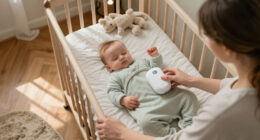
Movement monitor pads sense your baby’s tiny motions indirectly, through the mattress or sleep surface. Instead of attaching to the baby, these pads sit beneath or on top of the mattress, picking up pressure changes, vibrations, or electrical shifts caused by your baby’s breathing and movement.
They often use piezoelectric sensors, which generate an electrical signal when bent or compressed, or capacitance sensors, which detect subtle changes in an electrical field. Some models listen for vibrations transmitted through the mattress, like a faint heartbeat or gentle breath. If the monitor detects no movement for about 15–20 seconds, it may trigger an alarm.
Understanding this indirect sensing is crucial because it highlights potential vulnerabilities: the device’s accuracy heavily depends on the mattress type, bedding, and environmental noise. For instance, a soft mattress or thick bedding can dampen signals, reducing sensitivity. Conversely, external vibrations—like from a nearby washing machine—might cause false alarms. Recognizing these tradeoffs helps parents set realistic expectations and avoid over-reliance on the device’s readings alone.
This indirect method is advantageous in that it’s non-invasive and doesn’t require attaching anything to the baby, but it also means that the device’s ability to detect subtle or distant movements is limited. If your baby rolls to the far side of the crib or moves off the sensing zone, the monitor might not register their movement, increasing the risk of false alarms or missed events. Appreciating these nuances ensures that parents understand both the strengths and the limitations, emphasizing the importance of combining monitor use with vigilant caregiving.
As an affiliate, we earn on qualifying purchases.
How Do Wearable Baby Monitors Sense Baby Movement?
Wearables attach directly to your baby’s body—on the wrist, ankle, chest, or diaper—and measure signals from their skin and muscles. This direct contact allows them to gather physiological data that is more precise and immediate than pads. They often use pulse oximetry, accelerometers, or electrical sensors to collect this information.
Pulse oximeters emit light into the skin and analyze the absorption to estimate blood oxygen levels and pulse rate. This direct measurement provides vital information about your baby’s oxygenation and heart rate, which are critical indicators of respiratory health. Because they measure signals from the body, these devices can detect subtle changes—like a decrease in oxygen saturation—that may precede more serious issues.
Accelerometers detect movement, position, and activity levels by sensing changes in acceleration. They can identify patterns such as restlessness, position shifts, or pauses in movement that might indicate a breathing irregularity. For example, if a baby remains very still for an extended period, the device might alert caregivers to a potential breathing concern.
Electrical sensors, such as ECG or impedance-based contacts, monitor heart activity and chest expansion, providing highly detailed data. These signals can reveal nuances in your baby’s vital signs that are otherwise difficult to detect visually or with less sensitive equipment. However, they require proper placement and good skin contact, and can be affected by moisture or dislodgement.
Understanding this direct sensing approach is important because it highlights the potential for more accurate, real-time data about your baby’s physiological state. However, it also underscores the need for correct placement and maintenance — a loose strap or dislodged sensor can compromise the data’s reliability. Recognizing these factors helps parents weigh the benefits of detailed physiological monitoring against the practical considerations of device management.
As an affiliate, we earn on qualifying purchases.
The Big Differences in How They Sense Baby Movement
Let’s put it all side by side. Movement monitor pads and wearables differ mainly in what they physically measure and how they do it. Here’s a clear comparison:
| Aspect | Under-mattress Pad | Wearable Monitor |
|---|---|---|
| Sensor contact | No direct contact with baby; placed under the mattress | Attached directly to baby’s body or clothing |
| Primary signal | Pressure, vibration, mattress movement | Blood oxygen, pulse, chest movement, electrical signals |
| Measures breathing directly? | No, indirectly through mattress | Usually, yes—via signals from the body |
| Strengths | Simple to use, no hardware on baby, no charging needed | Specific physiological data, continues working when baby moves |
| Limitations | Sensitive to mattress type, environmental vibrations, placement | Fit, skin irritation, signal dropout, displacement |
| Alerts | No movement detected | Movement, oxygen, pulse, position, connectivity |
| False alarm causes | Baby outside sensing zone, poor installation | Loose fit, motion, poor contact, cold extremities |
The key takeaway? Pads sense movement through the mattress—an indirect method—while wearables measure signals directly from your baby’s body, often with more precision but with their own set of challenges. Recognizing these differences helps parents understand the tradeoffs involved: simplicity versus detailed data, indirect versus direct sensing, and the importance of proper setup to ensure safety and reliability.
baby breathing and movement sensor
As an affiliate, we earn on qualifying purchases.
As an affiliate, we earn on qualifying purchases.
Accuracy, False Alarms, and When They Miss Something
Both types of monitors can produce errors—false alarms or missed events. Understanding why these errors happen helps parents interpret monitor alerts correctly and avoid unnecessary panic. For pads, false alarms often result from environmental factors like vibrations from nearby appliances or if the baby moves outside the sensing zone, such as rolling to the far side of the crib. These scenarios can lead to missed detections or false positives, which may cause parents to either ignore alarms or become anxious about false triggers.
Wearables, on the other hand, depend on proper placement and consistent contact. If the strap is too loose, the sensor can dislodge or lose contact, resulting in inaccurate readings or missed events. Movement artifacts—like a sudden jerk or the baby shifting—can also cause false alarms or data inaccuracies. Recognizing these limitations is important because it underscores that no device can guarantee perfect monitoring. Instead, they serve as supplementary tools to enhance awareness and prompt timely checks.
Furthermore, both systems are not substitutes for vigilant caregiving. An alarm should trigger an immediate visual check—looking for normal breathing, responsiveness, and color—rather than solely relying on the device’s alert. Understanding these potential errors emphasizes the importance of integrating monitor use with routine safe sleep practices, rather than depending entirely on technology for safety assurance. This balanced approach helps mitigate risks associated with false alarms or missed events, fostering a safer sleep environment.
indirect vs direct baby movement monitor
As an affiliate, we earn on qualifying purchases.
As an affiliate, we earn on qualifying purchases.
Safe Sleep Still Comes First—Monitors Aren’t a Magic Bullet
Consumer monitors, whether pads or wearables, cannot replace good sleep safety habits. The American Academy of Pediatrics stresses placing your baby on their back on a firm, flat surface. Keep soft bedding, pillows, and toys out of the sleep area. No monitor can fix unsafe sleep environments, and overreliance on technology might lead to complacency in caregiving. It’s essential to maintain vigilant supervision and adherence to established safety guidelines.
Wearables shouldn’t add loose cords or straps that could pose a risk of strangulation or suffocation. They should be used according to manufacturer instructions, ensuring that straps are snug but not too tight and that sensors are positioned correctly for reliable readings. Pads should be installed exactly as instructed, ensuring the mattress remains firm and even. Improper setup can lead to false alarms or missed detections, creating a false sense of security.
Think of these devices as aids—additional tools to support your awareness—not substitutes for attentive caregiving. An alarm sounding at 3am is a prompt to check on your baby, not a guarantee of safety. Following safe sleep guidelines remains the foundation of infant safety, and technology should complement, not replace, these practices.
Who Prefers Which? Picking the Right Device for Your Family
Choosing between a pad and a wearable depends on your priorities. If you want nothing attached to your baby, a pad might be your choice. It’s simple, requires no charging, and can be placed under the mattress for overnight peace of mind. However, this simplicity comes with tradeoffs: potential sensitivity to mattress type, environmental vibrations, and placement accuracy. Understanding these factors helps set realistic expectations about reliability.
If you prefer detailed, body-specific data—like oxygen saturation or activity trends—then a wearable could be better. It continues to monitor even if your baby moves around or changes sleep positions, providing a more comprehensive picture of your infant’s physiological state. Yet, wearables require proper fit and maintenance; a dislodged sensor or skin irritation can compromise data accuracy. Recognizing these considerations allows families to choose a device aligned with their safety goals and daily routines.
Ultimately, neither device replaces good caregiving, but selecting the right one depends on your comfort level, your baby’s needs, and your environment. Thoughtful choice ensures the device supports safe sleep habits rather than creating additional concerns or complications.
Frequently Asked Questions
Can a movement monitor prevent SIDS?
No. No consumer device, pad or wearable, can prevent SIDS. They are designed to alert you to potential issues, but safe sleep practices—like placing your baby on their back on a firm surface—are essential.
How accurate is a wearable pulse oximeter compared to hospital equipment?
Consumer pulse oximeters may not match hospital-grade monitors exactly. Factors like sensor placement, movement, and skin temperature can influence readings. They are helpful for trends but shouldn’t replace medical-grade devices for clinical decisions.
Will a pad work with any mattress?
No. Compatibility depends on mattress thickness, material, and support type. Always follow manufacturer instructions, as some mattresses may block signals or cause false alarms.
Do wearables irritate the baby’s skin?
They can, especially if the fit is poor or the device is left on too long. Check for redness, discomfort, or skin irritation regularly, and follow usage instructions carefully.
What should I do if the alarm sounds?
Always check your baby immediately. Look for normal breathing, responsiveness, and color. If your baby seems unresponsive or unwell, call emergency services and perform infant CPR if needed—do not rely solely on the monitor.
Conclusion
Understanding the fundamental differences in how pads and wearables sense baby movement helps you make smarter safety choices. Remember, no device can replace vigilant caregiving or following safe sleep guidelines. Use monitoring as an extra layer of peace of mind, not a substitute for attentive parenting.
Imagine a quiet nursery, softly lit, your baby sleeping peacefully, and your monitor quietly confirming what you already know: your baby is safe. That’s the goal—supporting safe sleep, one mindful choice at a time.
Halloween Picks
halloween
As an affiliate, we earn on qualifying purchases.