TL;DR

Turn the school run and nap time into listening time
- Thousands of audiobooks, podcasts and originals
- Listen on your phone, tablet or Echo — also offline
- Cancel anytime
Movement monitors use sensors like accelerometers, gyroscopes, and infrared detectors to track motion. Recent advances include AI-driven accuracy, miniaturization, and seamless connectivity, making them vital for health, safety, and security. Privacy remains a key concern with some sensor types.
Ever wondered how your child’s wearable detects every little move? Or how a security system knows when someone crosses a room? Movement monitors rely on tiny, smart sensors that interpret motion—sometimes as subtle as a finger tap, other times as dramatic as a fall. These sensors are the secret sauce behind health trackers, security cameras, and elder safety devices.
In this guide, you’ll discover what makes these sensors tick, how they turn raw signals into meaningful data, and the latest tech that’s making them better and smaller than ever. Whether you’re a parent, a caregiver, or just a tech enthusiast, understanding these tiny sensors helps you see what’s really happening behind the scenes of your favorite gadgets.
Movement sensors convert physical motion into electrical signals through technologies like accelerometers and infrared detectors.
AI and machine learning have sharpened sensor accuracy, reducing false alarms and improving activity recognition.
Placement and environmental factors heavily influence sensor reliability; proper calibration is essential.
Advancements in miniaturization and connectivity make sensors more seamless and practical for everyday use.
Privacy concerns are significant—always consider data security and consent when deploying sensors.
Movement Monitors Explained: How the Sensors Work
Tiny sensors turn motion into meaning. From a wrist-worn step counter to an elder-care fall alert, movement monitors capture physical change, clean the signal, recognize a pattern, and trigger a useful response.
From physical movement to a meaningful alert
A monitor does not “see” an activity immediately. It builds an interpretation through four linked stages. Weak data or poor calibration at the beginning can undermine everything downstream.
Collect raw data
Acceleration, rotation, reflected sound, heat, or distance enters the device as a stream of electrical measurements.
Filter the noise
Software removes vibration, drift, and environmental interference so genuine movement stands out.
Recognize patterns
Rules or machine-learning models distinguish walking, falling, turning, occupancy, and subtle tremors.
Trigger an action
The system logs activity, changes a setting, sends an alert, or requests help in near real time.
Five ways to detect movement
No single sensor is best everywhere. Designers balance motion detail, environmental robustness, power demand, privacy, and cost—often combining two technologies for a stronger result.
| Sensor | What it detects | Best use | Power | Privacy | Key limitation |
|---|---|---|---|---|---|
| Accelerometer | Velocity change and orientation | Steps, falls, activity | Rotation can be ambiguous | ||
| Gyroscope | Rotation and angular movement | Turns, twists, form | Drift accumulates over time | ||
| Infrared | Heat or interrupted IR light | Rooms, night security | Heat and obstacles interfere | ||
| Ultrasound | Reflected sound and distance | Occupancy, proximity | Sound and surfaces affect echoes | ||
| LiDAR / Radar | Spatial position and movement | Precise mapping, security | Higher cost and complexity |
One principle, many forms
Movement monitors can travel with a person, remain fixed in a room, or disappear into furniture and everyday objects. The right form depends on the behavior and setting being observed.
On-body tracking
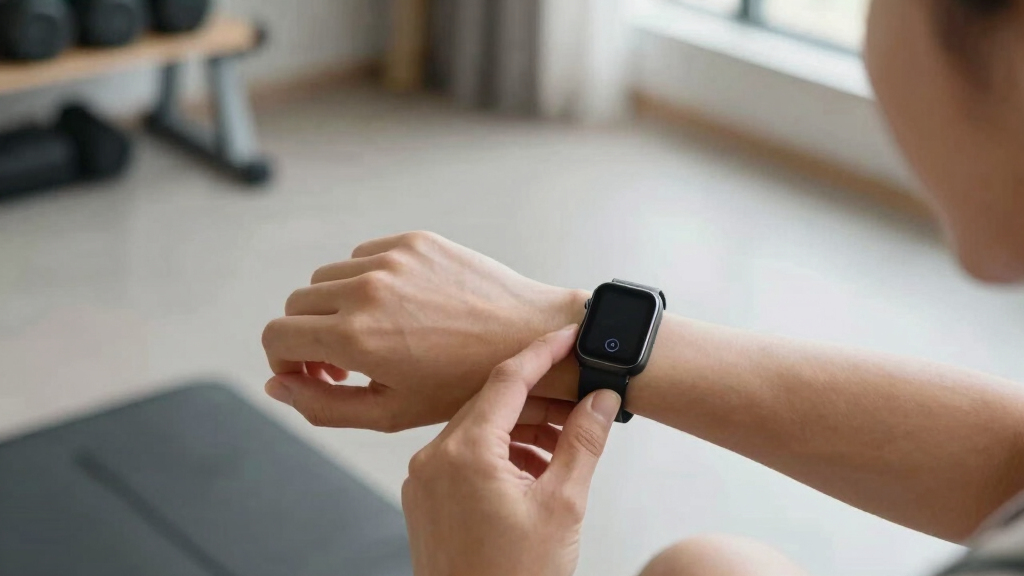
Smartwatches and fitness bands capture steps, gait, falls, sleep, and exercise close to the source.
Contact-free sensing
Bed pads, wall detectors, and radar systems monitor presence and activity without requiring a device on the body.
Ambient awareness
Sensors embedded in rooms or furniture identify occupancy, routine changes, and restricted-area movement.
Safety signals
Monitors support fall detection, rehabilitation, tremor tracking, and personalized activity insight.
Intrusion awareness
Infrared, radar, and camera systems detect boundary crossings, unexpected presence, and spatial change.
Performance detail
Fused motion sensors analyze speed, rotation, technique, and form for coaching and injury prevention.
Capability is a balancing act
These relative profiles illustrate common engineering trade-offs rather than universal test scores. Actual performance changes by model, placement, calibration, and operating environment.
Relative motion detail
How much movement information each technology can typically resolve.
What shifts reliability
The same sensor can perform very differently as these variables move.
A loose wristband or obstructed room detector changes the signal before software sees it.
Heat, vibration, sound, reflective surfaces, and obstacles can introduce false events.
Filtering and pattern recognition determine whether raw movement becomes a trustworthy conclusion.
Why modern monitors feel seamless
Miniaturization puts sensors into clothing and tiny wearables. AI distinguishes similar actions, connectivity enables real-time updates, and improved batteries make continuous monitoring practical.
Before you trust the alert
Detailed sensing can improve safety while creating sensitive behavioral data. Treat consent, security, retention, and real-world testing as core system requirements.
What Are Movement Sensors? The Tiny Tech Powering Your Devices
Movement sensors are small electronic components that detect motion through various physical changes. They convert physical movement into electrical signals that computers can interpret. For example, a fitness tracker on your wrist uses an accelerometer to sense every step you take, whether it’s a quick jog or a gentle shake.
Different types of sensors serve different purposes. Some detect heat, some measure rotation, and others track proximity or sound waves. All aim to give devices a sense of ‘what’s around you’ and ‘what’s happening now.’
Understanding these distinctions is crucial because each sensor type has unique strengths and limitations. For instance, accelerometers excel at detecting linear motion but may struggle with rotational movements unless paired with gyroscopes. Recognizing what each sensor can and cannot do helps in designing systems that are both accurate and reliable, especially in safety-critical applications like fall detection or security alerts. Moreover, the choice of sensor impacts power consumption and device size, influencing how seamlessly these sensors can be integrated into everyday objects.
As an affiliate, we earn on qualifying purchases.
How Do Sensors Detect Movement? The Step-by-Step Magic
- Raw Data Collection: Sensors gather signals—like acceleration, rotation, or heat—directly from movement. The quality of this data depends on sensor sensitivity and environmental stability. For example, a sensor placed in a noisy environment might pick up irrelevant vibrations, leading to false alarms or missed events.
- Signal Processing: The device’s software filters out noise, focusing on genuine movement patterns. Advanced filtering algorithms are essential because they determine whether a detected motion is meaningful or just background disturbance. Poor filtering can cause false positives or negatives, undermining trust in the device’s reliability.
- Pattern Recognition: Algorithms analyze the processed data, recognizing specific activities—like walking, falling, or even subtle tremors. This stage often involves machine learning models trained on large datasets to differentiate between similar motions, such as distinguishing a fall from sitting down quickly. The effectiveness of this step directly influences the device’s ability to deliver timely and accurate alerts.
- Action or Alert: Based on the interpretation, the device prompts an alert, logs activity, or adjusts settings. The speed and accuracy of this response can be life-saving, especially in elder care or security scenarios. For instance, an immediate fall alert can prevent further injury by summoning help quickly.
These steps highlight why sensor quality, placement, and processing algorithms matter immensely. A high-quality sensor paired with sophisticated software can significantly improve detection accuracy, reduce false alarms, and enhance user trust. Conversely, inadequate setup or inferior sensors can compromise the entire system’s effectiveness, underscoring the importance of careful design and calibration.
As an affiliate, we earn on qualifying purchases.
The Main Types of Movement Sensors and What They Do Better
| Sensor Type | What It Detects | Best For |
|---|---|---|
| Accelerometers | Changes in velocity and orientation | Step counting, fall detection, activity monitoring |
| Gyroscopes | Rotation and angular movement | Tracking twisting movements, improving motion accuracy |
| Infrared Sensors | Heat signatures or movement via IR light | Security cameras, thermal detection at night |
| Ultrasound Sensors | Sound wave reflections for movement or distance | Room occupancy, object detection |
| LiDAR & Radar | Spatial mapping and movement in space | High-precision motion detection, advanced security systems |
Each sensor type has its advantages and limitations, influencing how and where they should be used. Accelerometers are excellent for detecting linear motion but may struggle with complex rotations unless combined with gyroscopes. Infrared sensors are great for night detection but can be affected by environmental factors like ambient temperature or obstacles. Ultrasound sensors provide distance measurements but are sensitive to sound interference. LiDAR and radar offer detailed spatial mapping, which is invaluable for advanced security and autonomous systems but tend to be more expensive and power-hungry. Recognizing these tradeoffs helps in selecting the right sensor for specific needs, balancing accuracy, power consumption, and environmental robustness.
As an affiliate, we earn on qualifying purchases.
How Recent Tech Is Making Movement Sensors Smarter and Smaller
Today’s movement sensors are shrinking. They fit into tiny wearables, smart home gadgets, and even clothes. Thanks to AI and machine learning, these sensors are now better at recognizing specific actions—like differentiating a fall from a quick sit-down—reducing false alarms. This advancement means that devices can adapt to individual user patterns, providing more personalized and accurate monitoring. For example, an elder might have a fall detection system calibrated to their typical gait and movement style, minimizing false alerts.
Connectivity also improves. Sensors now sync seamlessly with smartphones, cloud servers, or home systems, giving real-time updates. This constant connectivity allows for immediate response and data analysis, which is critical in emergencies. Battery life has skyrocketed too, with some sensors lasting weeks on a single charge, making continuous monitoring practical. This longevity reduces maintenance burdens and ensures devices remain operational when needed most.
This evolution means more reliable health tracking, safer elder care, and smarter security—all from sensors that are barely noticeable. The tradeoff often involves balancing miniaturization with power consumption and data security, but ongoing innovations continue to push these boundaries forward.
As an affiliate, we earn on qualifying purchases.
What You Need to Know About Privacy and Accuracy
Not all sensors are created equal when it comes to privacy and precision. Cameras and location trackers can give detailed movement data but raise privacy red flags, especially if data isn’t properly protected. It’s essential to choose devices that encrypt data, have transparent privacy policies, and obtain clear user consent. The implications are significant: poorly secured sensors can be exploited, leading to breaches of personal privacy or misuse of data.
Sensor accuracy varies by environment and placement, which is why proper calibration and positioning are vital. For instance, a sensor embedded in a mattress might accurately detect sleep movements, but if placed near a noisy appliance, it could misinterpret vibrations as activity. Conversely, a poorly placed motion detector might miss subtle movements, leading to false negatives. These tradeoffs impact the device’s usefulness—overly sensitive sensors can generate false alarms, causing user frustration and potential desensitization to alerts, while insensitive sensors might miss critical events, risking safety. Recognizing these nuances helps in selecting and setting up sensors that balance privacy concerns with the need for accurate, dependable data.
Understanding these factors ensures you can make informed decisions about your monitoring systems, prioritizing both privacy and reliability according to your specific needs.
Real-Life Examples: Movement Sensors in Action
Picture a parent setting up a baby monitor with movement sensing. The device uses accelerometers and infrared to track tiny limb movements and breathing. When the baby stirs or stops moving, the system alerts you instantly—giving peace of mind at 2 a.m.
Or consider an elderly person wearing a fall detection device. The sensor detects sudden jolts, and the AI confirms it’s a fall. An emergency alert then notifies family or caregivers immediately, potentially preventing serious injuries.
These real-world scenarios show how sensors translate raw signals into lifesaving insights.
Frequently Asked Questions
How do movement sensors tell the difference between walking, running, and falling?
They use complex algorithms trained on large datasets to recognize unique movement patterns. For example, a fall generates a sudden, sharp acceleration, while walking produces rhythmic, moderate movements.Are all movement sensors equally accurate for medical use?
Not quite. High-end medical devices use advanced sensors with rigorous calibration. Consumer-grade sensors are improving rapidly, but accuracy depends on placement and environmental factors.Can movement sensors invade my privacy?
Yes, especially with cameras or location trackers. Choosing devices with strong encryption and clear privacy policies helps protect your data from misuse.How long do these sensors last before needing replacement or charging?
Battery life varies widely. Some devices last days, others weeks. Wired or low-power sensors can operate continuously without frequent charging, which is ideal for constant monitoring.Are there non-intrusive options for movement monitoring?
Absolutely. Environmental sensors like motion detectors or bed sensors can monitor activity without contacting the user directly, respecting privacy while providing useful data.Conclusion
Understanding how movement sensors work helps you see past the gimmicks and appreciate their real power. These tiny tech marvels are quietly transforming health, safety, and security—making life safer and easier.
Next time you see a fitness tracker or a smart home device light up, remember: it’s not magic, it’s sensors doing their job, one tiny movement at a time.
Cold & flu season Picks
humidifiers
As an affiliate, we earn on qualifying purchases.