TL;DR

Turn the school run and nap time into listening time
- Thousands of audiobooks, podcasts and originals
- Listen on your phone, tablet or Echo — also offline
- Cancel anytime
Sound machines mask household noise, helping your child nap better during the day. Modern devices are smarter, more portable, and customizable—making noisy environments manageable. Proper use can boost nap quality without causing dependence.
Imagine trying to get your little one to nap in a house where the dishwasher hums, footsteps echo, and traffic rumbles outside. It feels impossible. But a simple device—your friendly sound machine—can turn chaos into calm.
In this guide, you’ll learn how sound machines mask disruptive noises, the latest tech making them smarter and more portable, and practical tips to get the best naps in a noisy home. Because a peaceful nap isn’t just a luxury—it’s a necessity for your child’s growth and your sanity.
Choose the right type of sound machine—white noise, nature sounds, or fan hum—based on your child’s preferences and your noise environment.
Position the device about 3 to 6 feet from the nap area, at a comfortable volume to mask household noise without startling.
Use timers and modern features like remote control or adaptive sound to make naps more consistent and less dependent on continuous noise.
Keep volume below 50 decibels to protect your child’s hearing and prevent dependency.
Combine sound machines with blackout curtains or earplugs for ultimate nap quiet in very loud homes.
How sound machines turn chaos into calm for daytime naps
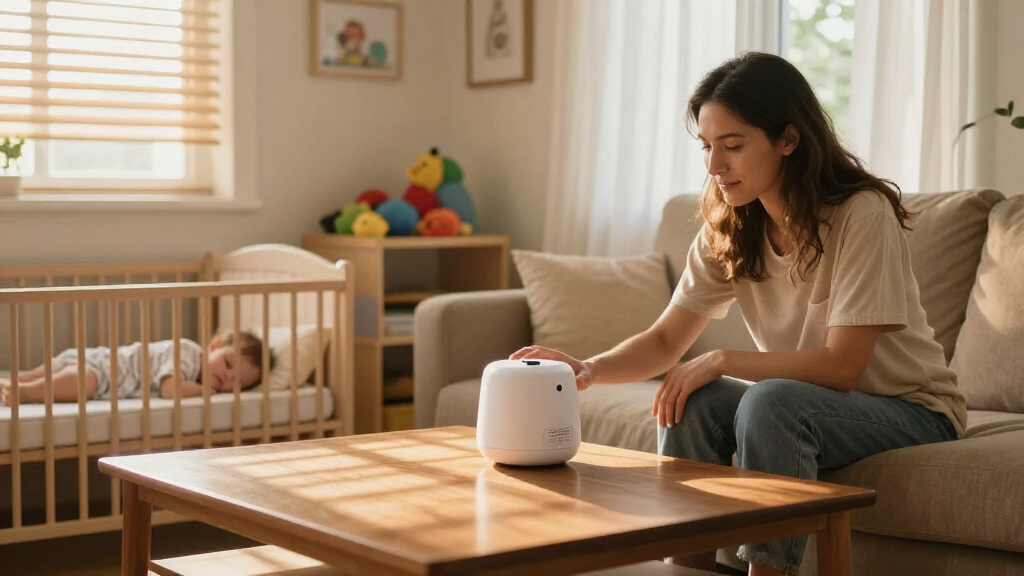
Sound machines produce a constant, soothing sound that masks household noise. Imagine a gentle rain or the steady hum of a fan—these sounds create a sound blanket. They help your child focus on that comforting noise instead of household disruptions.
Take a morning when the vacuum roars, the dog barks, and the kids play loudly. With a sound machine nearby, your little one hears a steady, calming sound—like ocean waves—drowning out the chaos. This makes falling asleep faster and staying asleep easier.
Research from BabyUI shows that consistent sound environments can reduce perceived noise levels by up to 15 decibels, making a huge difference in nap quality.
As an affiliate, we earn on qualifying purchases.
Picking the right sound machine: what types work best for noisy homes
Not all sound machines are created equal—some are better suited for noisy environments. Here’s a quick comparison:
| Type of Sound Machine | Best For | Pros | Cons |
|---|---|---|---|
| White Noise Machines | Consistent static-like sound masking | Effective at drowning out noise, simple to operate | Can cause dependency or discomfort if volume is too high |
| Nature Sound Machines | Soothing sounds like rain, ocean, forest | Natural, relaxing, less monotonous | Variability may reduce masking effectiveness in very noisy spaces |
| Fan-based Machines | Gentle hum mimicking a fan | Quiet, familiar sound, adjustable volume | May not block loud noises effectively |
| App-based or Smart Devices | Customizable, multi-sound options | Portable, integrate with smart home systems, offers adaptive noise levels | Requires a device and some tech setup |
Choosing the right type depends on your specific noise environment and your child’s preferences. For example, white noise can be very effective at creating a consistent sound barrier, but some children might find it jarring or cause them to become dependent if used excessively. Nature sounds offer a more natural ambiance, which can be soothing but might not be as effective in very loud or unpredictable environments. Experimenting with different sounds allows you to find the optimal balance—what masks household noise effectively while still being comforting enough for your child to relax and fall asleep. The tradeoff involves balancing effectiveness with comfort and potential dependency, so consider your child’s reactions and your household’s noise profile when choosing a device.
As an affiliate, we earn on qualifying purchases.
How to position and operate your sound machine for maximum nap success
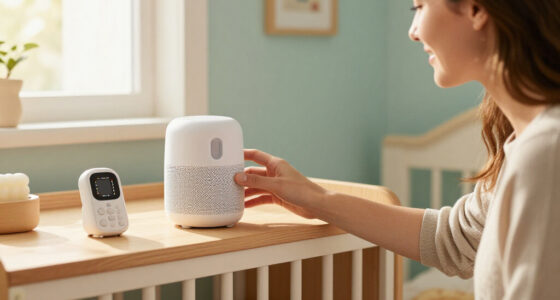
Where you place the sound machine significantly influences its effectiveness. Positioning it about 3 to 6 feet from your child’s crib or nap area ensures the sound envelops them evenly without being intrusive or startling. Placing it too close can cause the sound to be overwhelming or uncomfortable, while too far away might reduce its masking effect. The goal is to create an environment where the sound feels natural and all-encompassing, helping your child focus on the soothing background rather than household chaos.
Setting the correct volume is crucial. It should be loud enough to mask household noise but not so loud that it causes discomfort or potential hearing damage. Think of a gentle rain or a soft hum—these levels can often be achieved at a volume similar to a quiet conversation or a library environment, roughly 50 decibels. Overly loud settings can cause auditory fatigue or dependence, making it harder for your child to sleep without the device later.
Using timers effectively can help prevent dependency and promote healthier sleep habits. Setting the machine to turn off after 20-60 minutes, aligned with your child’s typical nap duration, helps your child associate sleep with the environment rather than continuous noise. Many modern devices have automatic shutoff features, which simplify this process. For example, during a busy household nap, placing the machine near the crib, setting it to a gentle rain sound at a moderate volume, and programming the timer to 30 minutes can promote faster, more restful sleep—your child learns to fall asleep with a consistent, soothing background that doesn’t rely on continuous noise.
portable sound machine for noisy home
As an affiliate, we earn on qualifying purchases.
As an affiliate, we earn on qualifying purchases.
Smart tech and new features making sound machines better for busy homes
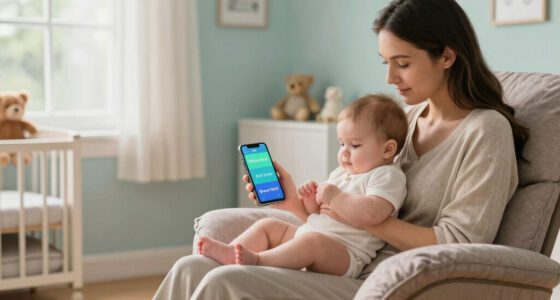
Recent advances mean your sound machine can do more than just play static sounds. Smart models connect via Wi-Fi, letting you control settings remotely or set schedules from your phone. This flexibility allows you to adapt to changing household noise levels or nap schedules without hassle, ensuring your child always has a calming environment even when you’re not nearby.
Some machines incorporate learning algorithms that analyze your child’s responses over time, automatically adjusting volume or sound type to optimize comfort and sleep quality. This personalization reduces the need for manual adjustments and ensures the device remains effective as your child’s preferences evolve. Integration with smart home systems, like voice assistants, enables hands-free control—simply saying, “Start nap sounds,” can initiate the environment without disrupting your routine. Portable models are now compact and lightweight, making them easy to carry during travel, daycare, or visits, ensuring consistent sleep environments regardless of location. Richer sound quality, with deeper bass and more natural tones, enhances the immersive experience, making the background sound feel more like a natural environment—be it ocean waves or a gentle breeze. These innovations help busy families maintain a calm, predictable nap routine amid unpredictable household noise, reducing stress and improving sleep quality.
As an affiliate, we earn on qualifying purchases.
Making sure your sound machine isn’t causing more problems than it solves
Proper volume control is essential. An excessively loud setting, above 50 decibels, can lead to auditory fatigue or even potential hearing damage over time, especially with prolonged exposure. Keeping the volume below this threshold ensures that your child’s hearing remains safe while still masking household noise effectively. This balance is crucial because too high a volume can also cause your child to become overly reliant on the sound machine, making it harder for them to fall asleep without it later. Additionally, some parents worry that dependence might interfere with their child’s ability to sleep in quieter or unfamiliar environments. However, most children adapt quickly once they recognize the environment as safe and familiar, especially if you gradually reduce the volume or frequency of use. Regular safety checks of your device are vital—ensure it complies with safety standards and is free from recalls. Combining the sound machine with other strategies, such as blackout curtains or earplugs, can further reduce noise intrusion, creating an optimal sleep environment. Gradually phasing out the device by reducing volume or usage time helps your child develop independent sleep habits, preventing reliance while maintaining a calm, restful nap routine.
Your quick-start plan for peaceful daytime naps in a noisy home
- Choose a sound machine with the sounds your child prefers—white noise, nature sounds, or fan hum—and ensure it has safety features like volume limiters.
- Position it about 3-6 feet from the crib or nap spot, on a flat, stable surface, avoiding direct contact with bedding or other items that could pose safety risks.
- Set the volume to a comfortable, non-disruptive level—roughly the sound of a gentle rain or quiet hum—using the device’s volume limiter if available.
- Use the timer to turn off after 30-45 minutes, matching your child’s nap length, to prevent over-dependence and promote natural sleep cycles.
- Experiment with different sounds, placements, and volume levels to identify what helps your child fall asleep fastest and stay asleep longer.
Consistency is key. Over time, your child will associate the sound with sleep, making naps smoother—even amid household chaos. Remember, patience and gradual adjustments are essential to help your child adapt while ensuring their safety and comfort.
Frequently Asked Questions
Do sound machines really improve daytime napping in noisy environments?
Yes. Many parents find that sound machines help children fall asleep faster and stay asleep longer, even amid household noise. The consistent background sound masks disruptions and creates a calming environment.What type of sound is best for daytime naps?
It varies. White noise, pink noise, and nature sounds all work well. The key is finding what your child finds soothing—some prefer the steady hum of a fan, others the gentle patter of rain.Can sound machines cause dependence or interfere with nighttime sleep?
Most children adapt quickly, and dependence isn’t a big concern if you use volume and timers responsibly. You can gradually phase out the device once naps become consistent.Are there health concerns with using sound machines?
When used at appropriate volumes—under 50 decibels—sound machines are safe. Avoid loud settings to protect your child’s hearing and prevent possible fatigue.How long should I run a sound machine during a nap?
Typically, 20 to 60 minutes is enough. Many machines have timers, allowing you to set it and forget it, giving your child a peaceful, uninterrupted nap.Conclusion
A well-placed, appropriately loud sound machine can transform your noisy home into a peaceful oasis for daytime naps. It’s a simple tool that, when used wisely, offers consistent, calming environments—making nap time easier and less stressful for everyone.
Think of it as turning a chaotic symphony into a gentle lullaby. Your child’s restful nap is just a sound machine away—quiet, predictable, and refreshingly simple.
Fall Picks
fall essentials
As an affiliate, we earn on qualifying purchases.