
TL;DR
Open a free Amazon Business account
Business pricing, bulk buying and tax-exempt orders.
Create a free accountAs an affiliate, we earn on qualifying purchases.
Breast milk and formula require different warming settings because of their composition. Breast milk needs gentle, controlled heat to preserve live cells and antibodies, while formula tolerates slightly higher temperatures. Using the right setting helps keep nutrients safe and your baby happy.
Ever heated a bottle of milk and wondered if you’re doing it right? You’re not alone. Many parents don’t realize that breast milk and formula aren’t just different in content — they need different warming approaches, too.
Getting this right isn’t just about convenience; it’s about protecting the nutrients, enzymes, and live cells that make breast milk so powerful. In this guide, you’ll learn why the settings differ, how to warm each safely, and what common mistakes to avoid during those middle-of-the-night feedings.
Breast milk needs gentle, controlled warming to preserve live cells and immune factors.
Formula tolerates slightly higher temperatures but still benefits from careful, safe warming.
Never microwave milk — it creates hot spots and destroys nutrients.
Use a thermometer to verify milk is at a safe, warm temperature before feeding.
Follow your warmer’s instructions carefully to avoid overheating and nutrient loss.
Why Breast Milk Needs Gentle, Precise Warming
Breast milk is a living fluid packed with antibodies, enzymes, and immune-boosting cells. These delicate components are sensitive to heat — too high, and you risk destroying their benefits. That’s why many bottle warmers have a specific, lower setting for breast milk.
Imagine a slow, warm bath for your baby’s favorite blanket. That’s the gentle approach needed to keep breast milk’s nutrients intact. Heating beyond 98.6°F (37°C) can break down vital proteins and antibodies, reducing its health benefits.
For example, a parent using a bottle warmer set to 110°F might think it’s safe, but research indicates that even a few extra degrees can compromise immune-boosting properties. That’s why choosing the right temperature and setting matters so much.
By warming breast milk gently and precisely, parents ensure that these valuable immune components remain effective, offering the best possible protection for their baby. Overheating, even slightly, can significantly diminish these benefits, making the effort to control temperature a critical aspect of feeding.
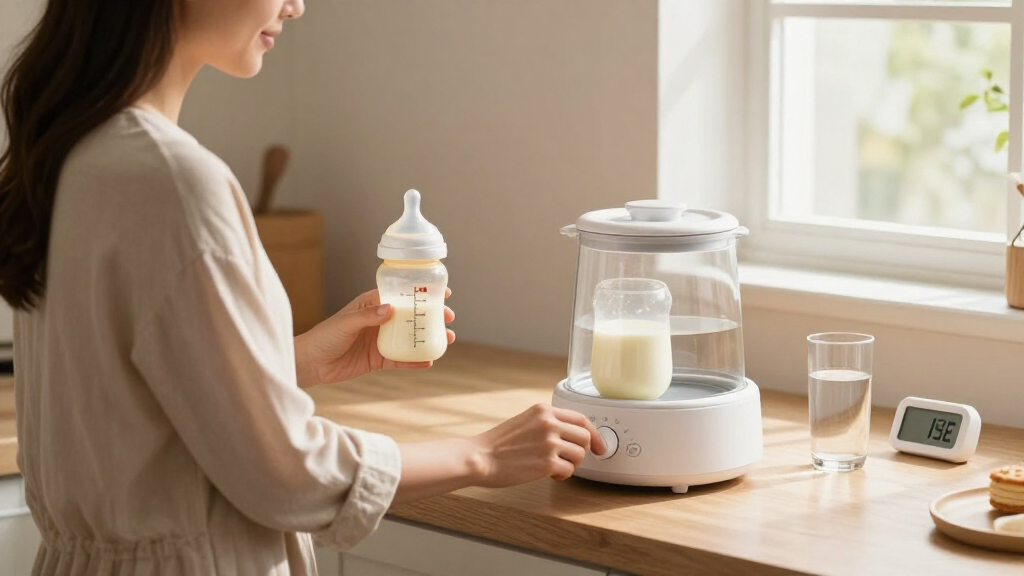
baby bottle warmer for breast milk
As an affiliate, we earn on qualifying purchases.
As an affiliate, we earn on qualifying purchases.
How Formula Tolerates Slightly Higher Temperatures
Formula is a processed, stable product designed to withstand a bit more heat. It’s made to be safe at higher temperatures, which makes warming more flexible. However, understanding the implications of higher temperatures is important. While formula can tolerate temperatures up to around 104°F (40°C), exceeding this can lead to unintended consequences.
Heating formula at slightly higher temperatures can make the feeding process quicker and more convenient, especially when you’re in a hurry. Yet, the tradeoff is the potential for hot spots that can scald your baby’s mouth or alter the taste, which might make feeding uncomfortable or unsafe. Furthermore, excessive heat can degrade some nutrients, such as certain vitamins, reducing the nutritional quality of the formula.
Therefore, while formula is more resilient, it’s still best to warm it to a safe, moderate temperature close to body temperature. This approach ensures your baby receives the full nutritional benefits without the risks associated with overheating, such as nutrient loss or hot spots that can cause burns.
Understanding that formula’s thermal resilience offers flexibility, but also requires caution, helps parents make informed choices that prioritize safety and nutrition during feeding.
As an affiliate, we earn on qualifying purchases.
Compare Warming Settings for Breast Milk and Formula in a Simple Table
| Feature | Breast Milk | Formula |
|---|---|---|
| Optimal Warming Temperature | Around 98.6°F (37°C) — gentle, controlled heat | Up to 104°F (40°C) — slightly higher but still safe |
| Device Settings | Low, specific for delicate nutrients | Medium to high, depending on device |
| Risks of Overheating | Damages live cells, reduces antibodies | Hot spots, altered taste, nutrient loss |
| Microwave Use | Never recommended | Not advised due to uneven heating |
As an affiliate, we earn on qualifying purchases.
Why Microwave Warming Is a Bad Idea for Both
Microwaving might seem quick and easy, but it’s risky. The uneven heat creates hot spots that can scald your baby’s mouth or destroy vital nutrients. That’s true whether you’re warming breast milk or formula.
Imagine a cup of hot coffee — one sip might be just right, but the next could burn your tongue. The same applies to microwave-warmed milk. It’s unpredictable and unsafe.
Instead, opt for a warm water bath or a bottle warmer with controlled temperature settings. They deliver consistent, safe heat that preserves nutrients and prevents burns.
As an affiliate, we earn on qualifying purchases.
Step-by-Step: How to Warm Breast Milk Safely
- Fill a bowl with warm water — not hot, just comfortably warm.
- Place the stored breast milk in a sealed bottle or container.
- Submerge it in the water, gently swirling for even warmth.
- Test the temperature by dropping a few drops on your wrist — it should feel warm, not hot.
- Feed your baby immediately after warming.
This method gently heats the milk without risking nutrient loss or hot spots. It’s simple, effective, and safe.
How to Set Your Bottle Warmer for Safety and Nutrition
Always follow the manufacturer’s instructions. Most warmers have specific settings for breast milk and formula. Use the lower, gentle setting for breast milk, usually around 98°F (37°C).
Adjust the warmer to a slightly higher setting for formula if needed, but never exceed 104°F (40°C).
Use a thermometer to double-check the temperature before feeding. Remember, baby’s skin is sensitive — the milk should feel warm, not hot.
By sticking to these steps, you protect your baby’s health and preserve the nutritional power of breast milk and formula alike.
Common Mistakes That Wreck Your Baby’s Milk and How to Avoid Them
- Overheating milk — destroys nutrients and antibodies.
- Using hot water or boiling — risks scorching or nutrient damage.
- Microwaving — causes uneven heating and hot spots.
- Skipping temperature checks — risking burns or feeding too cold or hot.
Instead, stick to gentle warming methods, always test the temperature, and follow device guidelines. Your baby’s health depends on it.
Frequently Asked Questions
Why shouldn’t I microwave breast milk or formula?
Microwaving creates uneven hot spots that can burn your baby’s mouth and destroy critical nutrients. It’s safer to use a warm water bath or a bottle warmer with controlled heat.
What is the ideal temperature to warm milk?
About 98.6°F (37°C), which closely matches your baby’s body temperature. Always test a few drops on your wrist to ensure it’s warm, not hot.
Can I use the same warming setting for breast milk and formula?
It’s best to use specific settings for each. Breast milk needs lower, gentler heat, while formula can tolerate slightly higher temperatures. Always follow your device’s instructions.
How do I prevent hot spots when warming milk?
Use a warm water bath or a bottle warmer and swirl gently. Always test the temperature before feeding to avoid burns or uneven heating.
Conclusion
Keeping your baby’s milk at the right temperature isn’t just about comfort — it’s about protecting their health. A gentle, controlled approach makes all the difference in preserving nutrients and avoiding burns. A little patience and the right tools go a long way.
Next time you warm a bottle, remember: it’s not just about heat — it’s about safeguarding your baby’s future health, one gentle step at a time.
Pool season Picks
robotic pool cleaners
As an affiliate, we earn on qualifying purchases.