
TL;DR
Listen free for 30 days with Audible
Thousands of audiobooks and originals — cancel anytime.
Start your free trialAs an affiliate, we earn on qualifying purchases.
A rotating toy and gear storage system maximizes space and simplifies organization. It makes toys easier to access, encourages tidiness, and can be customized to fit your needs. Safety and sustainability are key trends driving new designs.
Ever struggled to find that one toy buried at the bottom of a mountain of clutter? Or watched your child fumble through a messy shelf, losing patience? A rotating toy and gear storage system might just change your game. It’s a simple idea—turning shelves or bins that spin to reveal what’s inside—yet it packs a punch when it comes to saving space and boosting organization.
In this guide, you’ll learn how these systems work, what to look for, and how to set one up that’s safe, flexible, and just right for your nursery or playroom. Ready to make tidying up a breeze? Let’s spin into it.
Choose durable, child-safe materials like rounded-edged plastic or finished wood.
Customize your system with adjustable bins and clear labels to suit your child’s toys and preferences.
Safety is paramount—secure the unit to the wall and inspect it regularly for stability.
Rotate toys on a schedule to keep playtime fresh and prevent clutter from building up.
Stay eco-conscious by selecting sustainable materials and designing stylish, multifunctional units.
How a rotating storage system makes toy cleanup easier and more fun
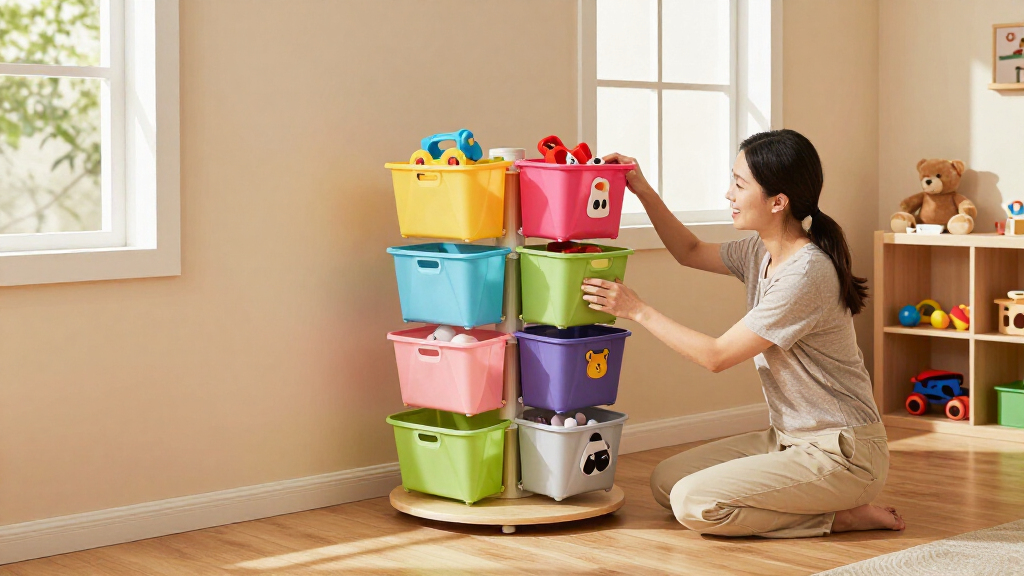
Rotating shelves or bins act like a secret treasure chest for your kid’s toys. Instead of sifting through cluttered piles, children can simply spin the unit to access different sections, which reduces frustration and makes cleanup feel less like a chore. This design encourages independence—kids learn to put things back in their designated spots without adult supervision—fostering responsibility early on.
The circular or tiered platforms that turn smoothly are not just convenient; they also introduce an element of play into daily routines. As children develop spatial awareness and motor skills, spinning the unit becomes a fun, engaging activity that reinforces organization habits. Moreover, these systems maximize vertical space, allowing more toys to be stored compactly—an especially important feature in small or shared rooms, where every square inch counts.
Choosing a rotating system that’s easy for your child to operate—lightweight but stable—ensures ongoing usability and safety. The ease of access and the interactive nature of these systems can significantly reduce parental stress while promoting a sense of ownership and pride in tidiness for your child.
As an affiliate, we earn on qualifying purchases.
What materials keep a rotating toy system safe and durable
Choosing the right materials is crucial because it directly impacts safety, longevity, and ease of maintenance. Durable plastics with smooth, rounded edges are popular because they resist breakage and are less likely to cause injuries. The non-toxic paints and finishes used on these plastics further ensure that no harmful chemicals are exposed during regular use. The tradeoff here is that plastic may sometimes be less aesthetically warm compared to wood, but advances in design now offer attractive options that blend safety with style.
Wooden units with natural finishes are often preferred for their durability and aesthetic appeal—they add warmth to a nursery and can be more stable if constructed well. However, wood can be heavier and may require more maintenance to prevent damage from moisture or scratches. Metal is another option, typically used for the structural framework; it offers strength but must be carefully finished to prevent rust and sharp edges.
Safety certifications and quality standards, like ASTM or EN71, serve as benchmarks for ensuring the materials used are appropriate for children. Always verify that the manufacturer adheres to these standards, as subpar materials can compromise safety over time. In essence, selecting the right combination of materials balances durability, safety, and aesthetic appeal, ensuring the system remains a reliable part of your child’s environment for years to come.
As an affiliate, we earn on qualifying purchases.
How to customize your rotating storage for your kid’s specific toys
- Measure your space carefully, considering not just the footprint but also the height and clearance needed to spin the unit comfortably. This ensures the system fits well without crowding other furniture or obstructing pathways.
- Select a system with adjustable or removable bins. This flexibility allows you to accommodate various toy sizes—from large plush animals to tiny building blocks—and adapt as your child’s interests evolve. Think about whether the bins are easy for small hands to open and close, promoting independence.
- Label each bin with pictures or words, enhancing your child’s ability to identify and put away toys independently. Visual cues are especially helpful for younger children learning to organize and recognize categories.
- Sort toys into categories—such as cars, art supplies, or dolls—and assign each to a specific bin. This categorization simplifies rotation and encourages your child to develop sorting skills, which are foundational for organization and cognitive development.
- Establish a routine—whether weekly or biweekly—to rotate toys. This not only keeps playtime fresh but also helps teach responsibility and time management. Consistent routines foster a sense of order and predictability that children thrive on.
For example, you might keep all cars in one bin, art supplies in another, and rotate seasonal or new toys into the mix. This approach prevents overwhelm and keeps your child’s interest piqued, making cleanup and organization a natural part of daily life.
As an affiliate, we earn on qualifying purchases.
Frequently Asked Questions
Are rotating storage systems safe for toddlers?
Yes, if you select models with rounded edges, stable bases, and non-toxic finishes. Always check for safety certifications and secure the unit to the wall if needed to prevent tipping.How much space do I need for a rotating system?
Most units are designed to fit in standard nursery or playroom corners and closets. Measure your available space beforehand—aim for at least 3 feet in diameter for comfortable spinning and access.Is assembly complicated?
Not at all. Many systems come with straightforward instructions and require only basic tools. Set aside about 20–30 minutes for assembly, and regularly check screws and moving parts for safety.Can I expand or reconfigure my rotating storage later?
Absolutely. Many modular systems are designed to be expanded or reconfigured as your collection grows or your needs change.Are eco-friendly options available?
Yes, increasingly manufacturers offer sustainable plastics, recycled materials, and non-toxic finishes—helping you make greener choices without sacrificing safety or style.As an affiliate, we earn on qualifying purchases.
Conclusion
A rotating toy and gear storage system isn’t just about tidiness—it transforms your space into an inviting, organized haven where toys are easy to find and put away. It makes cleanup quicker and encourages your child’s independence, turning chores into a game.
Imagine the satisfaction of gliding a smooth, colorful circle and revealing a stash of favorite toys—less stress, more fun. With simple choices and a little planning, you can create a storage setup that grows with your child and keeps your home calmer.
Labor Day sales Picks
labor day deals
As an affiliate, we earn on qualifying purchases.