TL;DR

Turn the school run and nap time into listening time
- Thousands of audiobooks, podcasts and originals
- Listen on your phone, tablet or Echo — also offline
- Cancel anytime
A diaper caddy offers unmatched flexibility, allowing you to change your baby anywhere. While a fixed station provides organization and ergonomics, combining both often delivers the best of both worlds for busy households.
Imagine this: it’s 3 a.m., your baby wakes, and you’re already groggy. You scramble for supplies, stumble over furniture, and hope you don’t wake the whole house. Now, picture having everything you need—diapers, wipes, creams—right at your fingertips, no matter where you are in your home. That’s the real power of a mobile diaper caddy.
Many parents wrestle with the choice between a fixed changing station and a portable setup. Each has its perks, but the key is understanding how they fit into your daily rhythm. This guide breaks down the advantages of each, showing you why a hybrid approach might actually make diapering smoother, safer, and less stressful.
A diaper caddy offers unmatched flexibility, making quick changes anywhere in the home possible.
A fixed station provides ergonomic comfort, larger storage, and routine stability—ideal for everyday use.
Safety depends on choosing stable surfaces and never leaving your baby unattended, whether on a caddy or a fixed station.
A well-stocked caddy should include diapers, wipes, a changing mat, barrier cream, and a couple of spare outfits.
The best nursery setup often combines both: a reliable fixed station plus a portable, organized caddy for on-the-go needs.
Diaper Caddy vs Fixed Station: The Case for Mobile Changing
A fixed station delivers stability, storage, and ergonomic comfort. A diaper caddy brings the essentials to the baby. For most busy households, the smoothest answer is a dependable home base supported by a lightweight mobile kit.
Two setups, two different jobs
A caddy wins on reach, flexibility, and efficient use of space. A fixed station wins on ergonomics, capacity, and routine. The right choice depends less on the product and more on where changes actually happen.
| Decision factor | Mobile diaper caddy | Fixed changing station | Best use |
|---|---|---|---|
| Room-to-room access | ✓Excellent | ~Limited | Mobile caddy |
| Ergonomic height | ~Surface dependent | ✓Purpose designed | Fixed station |
| Bulk storage | ~Essentials only | ✓High capacity | Fixed station |
| Small-space fit | ✓Minimal footprint | ~Needs floor space | Mobile caddy |
| Postpartum mobility | ✓Reduces extra walking | ~Requires travel to station | Mobile caddy |
| Predictable routine | ~Flexible | ✓Consistent home base | Fixed station |
| Long-term reuse | ✓Easy to repurpose | ~Furniture dependent | Mobile caddy |
✓ Strong advantage ~ Usable with tradeoffs The caddy organizes supplies; it is never the changing surface.
Less searching. Less walking. Less disruption.
Mobile changing removes friction between noticing a need and starting the change. That matters during night care, postpartum recovery, shared caregiving, and moments when leaving the room would disturb the household.
Respond where the baby is
Diapers, wipes, cream, clothing, and a clean mat stay together, reducing forgotten items and repeated trips.
Reduce unnecessary movement
Placing supplies near the caregiver can limit stair climbing and long walks after birth or a cesarean delivery.
One system for everyone
Partners, grandparents, and babysitters can find the same supplies in the same organized portable kit.
The surface matters more than the organizer
A mobile setup can be safe when the change happens on a stable, flat surface. The caddy only brings supplies within reach; it does not replace attentive supervision or a suitable changing area.
Keep one hand on the baby
Use continuous contact whenever changing on an elevated surface.
Prepare before starting
Place every needed item within adult reach so there is no reason to turn away.
Never step away
Straps are not a substitute for supervision, even for a brief moment.
Control hazards
Store creams, medicines, bags, cords, and small objects beyond the child’s reach.
A lighter caddy is a better caddy
Carry enough for the next stretch of the day, not the entire nursery. A modest, visible inventory stays portable and makes it easier to notice when supplies need replenishing.
The low-friction changing loop
A simple routine keeps the mobile setup fast, sanitary, and ready for the next caregiver.
Position
Choose a stable, clear changing surface.
Prepare
Open the mat and place supplies within reach.
Change
Maintain contact and continuous supervision.
Clean
Remove waste and wash or wipe used surfaces.
Reset
Restock before the next change or overnight period.
Fixed station for routine and storage. Mobile caddy for flexibility, recovery, shared caregiving, and changes wherever family life is already happening.
Why a diaper caddy makes life easier for busy parents
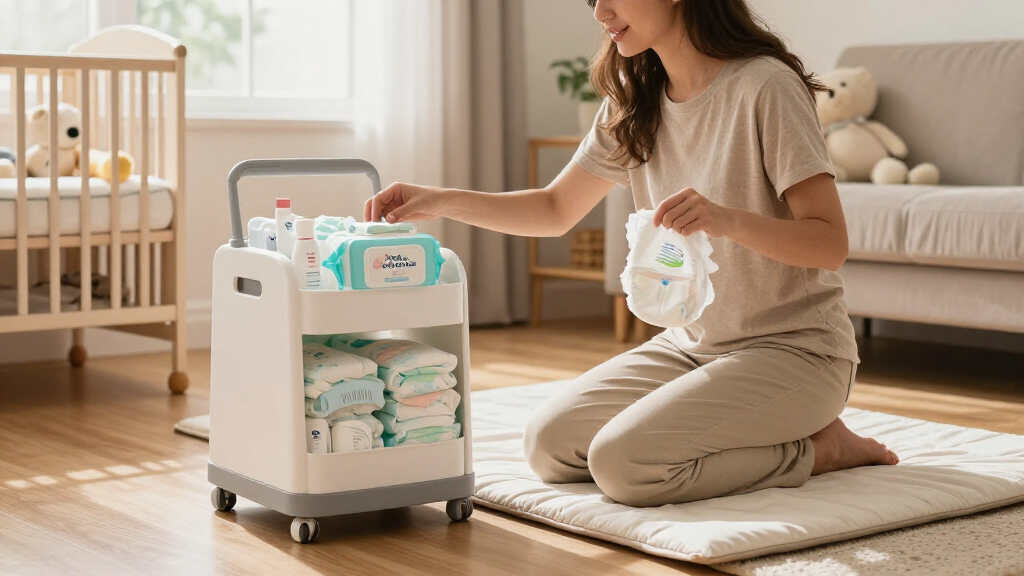
A diaper caddy isn’t just a container; it’s a portable command center. It moves with you, so the moment your baby fusses, you’re ready. Think about it: no more rushing across the house with a load of supplies, only to realize you forgot the diaper cream or a clean onesie.
Picture yourself in the living room, feeding your baby. Suddenly, a diaper blowout. Instead of rushing to the nursery, you simply grab your caddy, which sits nearby. You change the baby right there—on a clean, soft mat—without disrupting your flow. It’s like having a mini nursery on wheels.
For postpartum recovery or after a cesarean, a caddy reduces unnecessary walking. It’s also perfect for small or shared spaces where dedicating a whole changing table isn’t practical. Plus, the same setup can serve grandparents, babysitters, or even be packed for travel. It’s a versatile, space-saving solution that adapts to your lifestyle.
Popular right now

Shark PowerPro Reveal Plus Cordless Vacuum Cleaner, Charcoal, IZ376H

De'Longhi Magnifica Evo Fully Automatic Espresso Machine with Manual Milk Frother, Silver

Dyson Airwrap i.d. Multi-Styler for Straight and Wavy Hair
As an affiliate, we earn on qualifying purchases.
Why a fixed changing station still has its place
A fixed station offers a dedicated, stable platform for diaper changes—think of it as your home base. It’s usually set up at ergonomic height, making repeated changes easier on your back and knees. Plus, it provides built-in storage for bulk supplies like wipes, diapers, and laundry hampers.
Imagine your nursery with a sleek changing table. Everything you need is within arm’s reach—no need to hunt for supplies or rearrange the room. When you’re changing a squirming toddler, the stability and routine help keep things calm and organized. The station also simplifies overnight diaper changes, where familiarity and quick access matter.
However, fixed stations do come with downsides: they occupy floor space, often cost more initially, and can tempt you to leave the baby elevated when safety should be your priority. But for families with a permanent nursery setup, it’s a reliable, efficient choice.
Safety first: Can a mobile setup be just as safe?
Yes, with the right precautions, a mobile diapering system can be just as safe as a fixed station. The key is to always change the baby on a stable, flat surface—like a clean floor with a soft mat—rather than on an elevated or unstable surface.
For example, changing your baby on the bed or sofa feels convenient, but soft, sloped surfaces can increase the risk of rolling or falling. Always keep one hand on your baby when changing on an elevated surface, and prepare all supplies beforehand. Never leave your baby unattended, even for a second.
Safety also means keeping creams, medicines, cords, and small objects out of reach. Regularly cleaning any used mats and replacing soiled clothes helps prevent infection or irritation. A mobile setup requires vigilance, but when done carefully, it’s perfectly safe.
Understanding these safety nuances matters because it influences how you organize your space and plan your diapering routine. Proper precautions minimize risks and ensure your baby’s safety, regardless of whether you’re using a caddy or a fixed station.
What should be in your diaper caddy? The essentials list
A well-stocked diaper caddy keeps everything you need within arm’s reach. For most babies, a basic kit includes:
- Correctly sized diapers (about a day’s worth)
- Baby wipes (preferably fragrance-free)
- A wipeable changing mat
- Barrier cream or ointment
- Disposable diaper sacks or wet bags
- One or two spare outfits
- Burp cloths or muslin squares
- Hand sanitizer for quick cleanups
- A small toy or distraction for older babies
Having these essentials organized ensures you can respond quickly to messes or unexpected needs. It streamlines your diapering process, which is crucial during those frantic middle-of-the-night changes. Keeping everything in one portable, accessible container reduces the mental load, minimizes disruptions, and helps you stay calm and prepared. The tradeoff is that overstuffed caddies can become cumbersome, so focus on quality over quantity to maintain efficiency.
Features to look for in a diaper caddy — what makes a good one?
Choosing the right caddy isn’t just about size. Focus on these features because they directly impact usability, safety, and longevity. A sturdy handle ensures comfortable carrying, especially when your hands are full. A broad, stable base prevents tipping, which reduces spills and accidents. Materials that are wipe-clean or washable are essential for hygiene—diapering is messy, and quick cleanup keeps germs at bay. Reinforced, non-collapsible construction guarantees durability under daily use. Adjustable dividers allow you to customize compartments based on your changing needs, keeping supplies organized and accessible. Compact size ensures the caddy fits in your designated space without cluttering, and minimal loose decorations reduce the risk of tearing or spills. These features collectively create a reliable, easy-to-maintain organizer that enhances your diapering routine, especially during those hectic moments when every second counts.
Keeping your diaper caddy hygienic and ready
Staying on top of hygiene isn’t just about cleanliness; it’s about preventing infections and making diaper changes smoother. After each change, promptly remove soiled clothes and waste to prevent bacteria buildup. Wiping down the caddy with disinfectant wipes or soap and water after each use ensures it remains sanitary. Reusable mats should be washed regularly, following the manufacturer’s instructions, to eliminate germs and odors. Regularly check the expiration dates on creams and medicines—expired products can lose effectiveness or cause irritation. Replenishing supplies before they run out, especially before heading out or overnight, minimizes last-minute scrambles. Organize your supplies so that clean items are separated from used or contaminated ones. This routine not only maintains hygiene but also speeds up the process during those demanding moments when you need everything at your fingertips. Consistent maintenance prevents the buildup of germs and keeps your baby safe and your diapering station ready for the next use.
Cost and space: What’s realistic for your home?
Budget and space considerations are crucial in deciding your diapering setup. A basic caddy is generally less expensive and easier to store or move around, making it ideal for small spaces or for families who frequently change locations within the home. However, it may require additional accessories like a changing pad or storage bins to be fully functional. A fixed station, often built into a dresser or dedicated furniture piece, can be more cost-effective long-term if you already have suitable furniture and prioritize safety. It offers larger storage, stability, and a consistent routine, which benefits busy households. For small apartments, a compact caddy on a shelf or rolling cart maximizes limited space without sacrificing convenience. Larger families or multi-child households might find value in combining both—using a fixed station as a permanent base and portable caddies for quick changes on different floors or during outings. Analyzing your layout, budget, and changing frequency helps determine the most practical and efficient solution for your family’s needs.
The latest trends shaping diaper changing choices
Modern parenting and home design trends are influencing how families approach diapering. Multi-use furniture like dressers with built-in changing pads and storage makes fixed stations more versatile, blending functionality with style. Smaller, modular, and washable organizers cater to minimalist parents who want to reduce waste and clutter while maintaining a clean aesthetic. Shared caregiving roles, such as babysitters or grandparents, have increased the popularity of portable kits, which promote convenience and consistency across caregivers. Safety remains a priority, leading to practices like anchoring furniture and keeping supplies out of children’s reach. Eco-conscious families are opting for washable wet bags and refillable wipes to minimize disposable waste, aligning with sustainable living principles. These trends reflect a broader shift toward adaptable, eco-friendly, and space-efficient solutions that cater to diverse family lifestyles and values.
Hybrid setups: The best of both worlds
The most practical approach isn’t strictly one or the other. Many families find that a fixed station acts as a reliable home base—well-organized and ergonomically friendly—while a lightweight caddy moves around for quick, flexible changes. This hybrid setup allows you to enjoy the stability and capacity of a dedicated station while maintaining the portability needed for busy, changing environments. For example, keeping a sturdy, organized fixed station in the nursery ensures quick access during routine daytime and overnight diaper changes. Meanwhile, a smaller, well-stocked caddy can be carried to the living room, car, or when traveling, making diapering seamless across different settings. This combination minimizes the compromises of each individual option—eliminating the need to choose between convenience and comfort—and creates a flexible, efficient routine tailored to your home’s layout and your baby’s needs. Ultimately, it offers the adaptability necessary for modern family life, where multitasking and quick transitions are the norm.
Frequently Asked Questions
Is a diaper caddy necessary?
Not strictly. It’s a convenience that makes diapering easier and faster. Any sturdy, portable container can do the job if it keeps supplies organized and accessible.
Can I change my baby directly in the caddy?
No. The caddy holds supplies, not a baby. Always change on a dedicated, stable surface like a clean mat on the floor or a sturdy changing table.
Is floor changing safer than using a changing table?
Generally yes, if the floor is clean and a soft mat is used. It eliminates fall risk from elevated surfaces, but always supervise and prepare your supplies beforehand.
How many diapers should I keep in my caddy?
Usually enough for a day’s worth of changes in the area where you are. Adjust based on your baby’s age, activity level, and your changing frequency.
Should every floor have a diaper caddy?
It can be very helpful—especially during postpartum recovery or if you have multiple floors. A smaller, portable kit can suffice for other rooms or quick trips.
Conclusion
The truth is, no single setup fits every family. The secret lies in balancing convenience with safety, organization with flexibility. A portable caddy that moves with your day-to-day life transforms diapering from a chore into a smoother, more manageable part of family life.
So, think about your space, your routine, and your safety priorities. The right mix of fixed and mobile solutions can make those middle-of-the-night changes quicker and less stressful—leaving you more time for what really matters: cuddles, giggles, and a little more sleep.