TL;DR

Turn the school run and nap time into listening time
- Thousands of audiobooks, podcasts and originals
- Listen on your phone, tablet or Echo — also offline
- Cancel anytime
Not every baby gadget needs a duplicate, but essentials like chargers, sound machines, and feeding backups are worth extra. Focus on what impacts sleep, feeding, and safety to travel stress-free.
Traveling with a baby can feel like packing for a military operation. One forgotten charger or missing sound machine can turn a relaxing trip into chaos. But you don’t need to duplicate everything—just the essentials that keep your baby safe, comfortable, and fed.
The goal is smart redundancy. Think of it as a safety net. If a piece of gear fails or gets lost, you want a backup that’s quick to deploy. This guide walks you through what deserves a duplicate, how to decide, and safety tips to keep your trip smooth from start to finish.
Focus on duplicating essential items tied to sleep, feeding, and safety—chargers, sound machines, backup pump parts, and health kits.
Avoid clutter by skipping full-size sterilizers and bulky gear; rent or buy lightweight, portable alternatives when possible.
Use a layered packing approach: essentials on you, critical tech in carry-on, bulky items in checked luggage or at your destination.
Check safety recalls and standards before traveling, and keep cords and batteries out of the baby’s reach.
Stay updated on new tech trends like USB-C devices and offline monitors to choose reliable, travel-friendly gear.
Backup Baby Tech for Travel: What Deserves a Duplicate
Duplicate the routine, not the entire nursery. Build a compact safety net around sleep, feeding, health, and communication so one lost cable or failed device cannot derail the trip.
Back up the items whose absence would immediately affect safety, feeding, sleep, or access to help.
Pack labeled cables, a multi-port USB charger, proprietary adapters, and a charged power bank.
Essentials belong on you or in carry-on luggage—not beyond reach in a checked bag.
Eight backups that protect the trip
Prioritize items that are difficult to replace quickly, essential to a familiar routine, or capable of creating an urgent problem when they fail.
Charging essentials
Duplicate cables, a compact multi-port charger, a power bank, and any proprietary adapters. Label and test everything.
Portable sound machine
Keep one permanently packed. Choose a model that works while charging and does not depend entirely on Wi-Fi or an app.
Travel monitor
A simple non-Wi-Fi setup is fast to deploy, avoids unfamiliar networks, and reduces dependence on hotel connectivity.
Pump and bottle backups
Pack a manual pump, spare valves and membranes, bottles, storage bags, a brush, and a formula dispenser as needed.
Dedicated health kit
Include a thermometer, nasal aspirator, saline, dosing syringe, labeled medicines, prescriptions, and medical details.
Warm night-light
A compact, dimmable light makes overnight feeds and changes safer without fully waking the baby or the room.
Approved travel cot
Worth owning for frequent trips or regular family visits. Use only the supplied or manufacturer-approved mattress.
Changing kit
Keep a mat, wipes, cream, bags, sanitizer, wet bag, and current-size outfit packed and ready to leave.
Back up high-impact failure points
The strongest candidates combine high disruption risk with low portability cost. Bulky products with easy substitutes belong at the other end of the scale.
Choose the lightest reliable solution
A duplicate should solve a likely failure without consuming more money and luggage space than the problem justifies.
| Item | Duplicate? | Why | Best travel approach |
|---|---|---|---|
| Cables and power bank | ✓ Yes | Small failure points can disable several essential devices. | Keep a tested set in a dedicated travel pouch. |
| Sound machine | ✓ Yes | A familiar sleep cue is useful across hotels, cars, and rentals. | Choose rechargeable, offline-capable equipment. |
| Pump parts and manual pump | ✓ Yes | A missing valve or failed pump can immediately disrupt feeding. | Match compatibility before leaving home. |
| Travel monitor | ~ Consider | Useful for frequent trips, but never a substitute for safe sleep. | Favor a simple non-Wi-Fi audio or video system. |
| Travel cot | ~ Consider | Worth it for regular travel or repeat family visits. | Confirm sleep approval and destination standards. |
| Full-size sterilizer | ✗ Skip | Bulky, expensive, and usually replaceable with simpler cleaning. | Use an appropriate compact cleaning method. |
| Smart bassinet | ✗ Skip | High cost and poor portability weaken the case for duplication. | Rent approved equipment or use a travel cot. |
| Premium Wi-Fi monitor | ✗ Skip | Unfamiliar networks can add setup, reliability, and privacy issues. | Use a straightforward offline travel monitor. |
| Wipe warmer or humidifier | ✗ Skip | Comfort benefit rarely outweighs luggage space and complexity. | Leave behind or source locally only if necessary. |
✓ Duplicate ~ Trip-dependent ✗ Borrow, rent, simplify, or skip
From failure risk to calm recovery
Smart redundancy works because each choice connects a predictable travel problem to a fast, tested response.
Identify
Find the devices tied to sleep, feeding, health, safety, and communication.
Score
Compare the consequence of failure with replacement difficulty.
Duplicate
Select the smallest reliable backup or compatible manual alternative.
Test
Charge, connect, label, and operate each item before departure.
Deploy
Keep the backup accessible so recovery takes minutes, not hours.
Immediate essentials
Phone, medication, feeding essentials, medical information, and one emergency charging option.
Critical technology
Charging pouch, monitor, sound machine, health kit, pump parts, bottles, and a change of clothes.
Bulky equipment
Checked, borrowed, or rented sleep spaces and larger items that are not required during transit.
Four checks before the bag closes
A backup only helps when it is compatible, maintained, safely used, and appropriate for the baby’s current age and needs.
Check recalls and standards
Review current product recalls and destination-country requirements. Inspect rented equipment before use and reject damaged or incomplete gear.
Protect sleep space
Use only the supplied or manufacturer-approved mattress. Do not add padding, positioners, bumpers, or loose bedding.
Secure cords and batteries
Keep chargers, monitor cords, button batteries, power banks, and loose adapters inaccessible to the baby during use and storage.
Maintain the packed kit
Recharge batteries, refresh dried wipes, replace expired medicines, update prescriptions, and swap outgrown clothing before every trip.
Sleep. Feeding. Safety.
If a product protects one of these three areas—and failure would be hard to fix quickly—it deserves a backup. Everything else must earn its luggage space through clear, trip-specific value.
Why Some Baby Tech Items Deserve a Second Set
When you’re on the go, a single broken charger or a lost sound machine can disrupt your entire day. That’s why certain items, especially those tied to sleep, feeding, and safety, benefit from having a duplicate ready. It’s about creating a safety net that minimizes surprises.
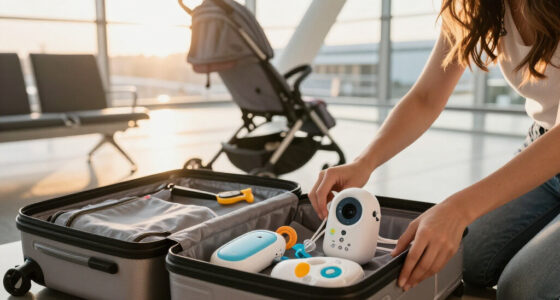
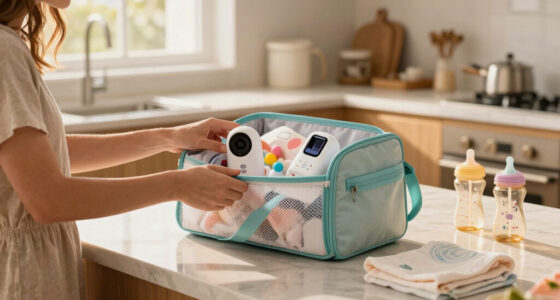
For example, a second portable sound machine in your diaper bag means your baby can settle even if the hotel’s unfamiliar noise or a dead battery ruins the first one. Similarly, a backup charger ensures your phone stays alive for emergency calls or navigation, which is critical in unfamiliar places.
Having duplicates of these vital items isn’t just about convenience; it’s about ensuring your child’s routines aren’t interrupted by preventable mishaps. The tradeoff involves balancing the added cost and space against the peace of mind and smoothness of your trip. Prioritizing these items means you’re investing in safety and stability, which are invaluable when you’re navigating unfamiliar environments.
As an affiliate, we earn on qualifying purchases.
8 Critical Items That Deserve a Duplicate
Here’s a list of the baby tech essentials that truly deserve a twin. Think of these as your safety and comfort anchors during trips. Understanding why each is critical helps you make smarter packing choices and prepares you for potential failures or mishaps.
- Charging cables and power bank: These are your lifelines for keeping devices functional. A duplicate ensures you’re never stranded without a way to communicate or access vital information. Having a spare set reduces the risk of being cut off in an emergency, and labeling cables prevents confusion when time is tight.
- Portable sound machine: Sleep routines are fragile, especially in unfamiliar environments. A second sound machine provides a familiar sleep cue, helping your baby settle faster and stay asleep longer, which benefits everyone’s rest. This is especially crucial if the first device fails or is incompatible with the new environment.
- Baby monitor or travel monitoring setup: Ensuring your baby’s safety from a distance is paramount. A second, non-Wi-Fi monitor offers a reliable, interference-free connection, particularly in hotels or areas with poor Wi-Fi. It provides peace of mind, minimizes dependency on potentially unreliable internet, and allows you to respond promptly to your baby’s needs.
- Feeding backups: Spare pump parts, bottles, milk storage bags, and a manual pump aren’t just convenience—they’re lifelines during disruptions. If your electric pump breaks or a bottle gets lost, these backups prevent feeding delays that could upset your baby’s routine and cause stress. A second bottle warmer can also be a game-changer if your baby relies on warm feeds, saving time and frustration during busy travel days.
- Night-light: Proper lighting during diaper changes or feeds prevents accidents and minimizes wake-ups. A battery-powered or rechargeable night-light provides a gentle glow, ensuring safety without disturbing your baby’s sleep or waking everyone else.
- Travel sleep equipment: A portable crib or travel cot maintains your baby’s sleep routine and comfort, especially if your regular sleep environment isn’t available. Having a backup sleep setup reduces the stress of unfamiliar sleeping arrangements and helps your baby settle more easily.
- Diaper-changing supplies: Portable changing mats, wipes, cream, and spare outfits stored in a small wet bag are essential for hygiene and convenience. Duplicating these supplies ensures you’re prepared for diaper blowouts or messes, preventing stressful delays or compromises in cleanliness.
- Health essentials: Thermometers, nasal aspirators, medications, and copies of prescriptions are critical for managing your baby’s health during travel. Keeping these in a dedicated health kit minimizes the risk of missing essential treatments when needed most, and having backups can be lifesaving if the primary items are misplaced or damaged.
Choosing which to duplicate depends on your child’s needs, the trip length, and logistics. Prioritize items that are difficult to replace or repair quickly, understanding that these are your safety nets in unpredictable situations. The tradeoff involves balancing space, cost, and the importance of uninterrupted routines, but investing in duplicates of these critical items can significantly reduce travel stress and emergencies.
As an affiliate, we earn on qualifying purchases.
What Usually Doesn’t Need a Duplicate (Save Your Budget and Space)
Some bulky or rarely-used products aren’t worth a second set. These include full-size sterilizers, smart bassinets, large bottle-prep machines, and high-end Wi-Fi monitors. Renting or borrowing often makes more sense for these. The cost-benefit analysis shows that these items rarely justify the space and expense of duplication, especially since many can be substituted with smaller, travel-friendly options or rented at your destination.
For example, a large sterilizer is impractical to pack, and relying on thorough cleaning at your destination is often sufficient. Similarly, high-end Wi-Fi monitors and bulky bassinets tend to be less portable and are better rented or left behind unless absolutely necessary. This approach reduces clutter, saves money, and allows you to focus on the essentials that truly impact safety and routine, without sacrificing peace of mind.
Remember: your goal isn’t to bring everything twice, but to identify which items are critical enough to justify the extra effort and space. Being selective ensures you’re prepared without overloading your luggage or budget, making your travel experience more manageable and less stressful.
As an affiliate, we earn on qualifying purchases.
How to Decide What Truly Deserves a Backup
Deciding what to duplicate involves five simple questions, but each should be considered in depth to understand their implications:
- What are the consequences if it’s lost, broken, or forgotten? Will it significantly disrupt routines or safety? For example, losing a critical medication or a vital monitor could cause health risks, making duplicates essential.
- Can I easily buy or borrow a replacement on the go? If yes, the item might not need to be duplicated, but consider the time and hassle involved in sourcing replacements, especially in remote or foreign locations.
- Does my child rely on it for sleep, feeding, or health? Items central to routine and well-being should have backups, as their absence could cause stress or health issues.
- Is it cumbersome to pack or unpack? Heavy or bulky items that are difficult to transport may not be worth duplicating unless absolutely necessary.
- Is there a simple, cheaper alternative that performs the same function? Sometimes, a basic manual or lower-tech version can serve as a reliable backup without the added bulk or expense.
Applying these questions helps you make nuanced decisions, balancing safety and practicality. For example, a manual pump can often replace an electric one without sacrificing function, and simple audio monitors can be effective backups. The key is to match function and importance, not just duplication for its own sake. This thoughtful approach reduces clutter, saves money, and ensures your backups are genuinely useful in emergencies and routine disruptions alike.
As an affiliate, we earn on qualifying purchases.
Safety First: What to Keep in Mind When Packing Extras
Before you hit the road, it’s vital to understand the safety implications of your gear. Always check for recalls and ensure all chargers, monitors, and sleep equipment meet current safety standards. Using outdated or recalled gear can pose significant risks, so regular updates and checks are essential. Never use a car seat outside the vehicle as a sleep space—this is a serious safety hazard and should be avoided at all costs.
Keep cords, power banks, and chargers out of the baby’s reach to prevent choking or electrical hazards. When traveling internationally, verify voltage compatibility and plug types—using the wrong adapter or converter can damage your devices or create safety issues. Use a plug adapter, not a converter, to match outlets safely.
Always pack medical tech, medications, and batteries in your carry-on luggage. This ensures immediate access in case of emergencies and complies with airline regulations for items like breast milk and formula. Double-check the condition of rental or borrowed equipment, inspecting for damage or missing parts to prevent safety hazards upon arrival.
Finally, avoid placing tracking tags with button batteries where your child could access or swallow them, as these pose serious choking and ingestion risks. Properly secure or remove such items from your child’s reach.
Safety isn’t just about the gear—it’s about how you pack, check, and verify everything before departure. Regular safety checks and cautious packing practices are your best defense against preventable accidents.
The New Tech Landscape: What’s Changing for Traveling Families
Recent trends make travel baby tech more portable and reliable. USB-C consolidation means fewer cables—just one multi-port charger can power multiple devices, reducing clutter and complexity. Smaller, rechargeable products like sound machines, night-lights, and pumps are now lighter, last longer, and are easier to pack, which directly benefits travel convenience and battery management.
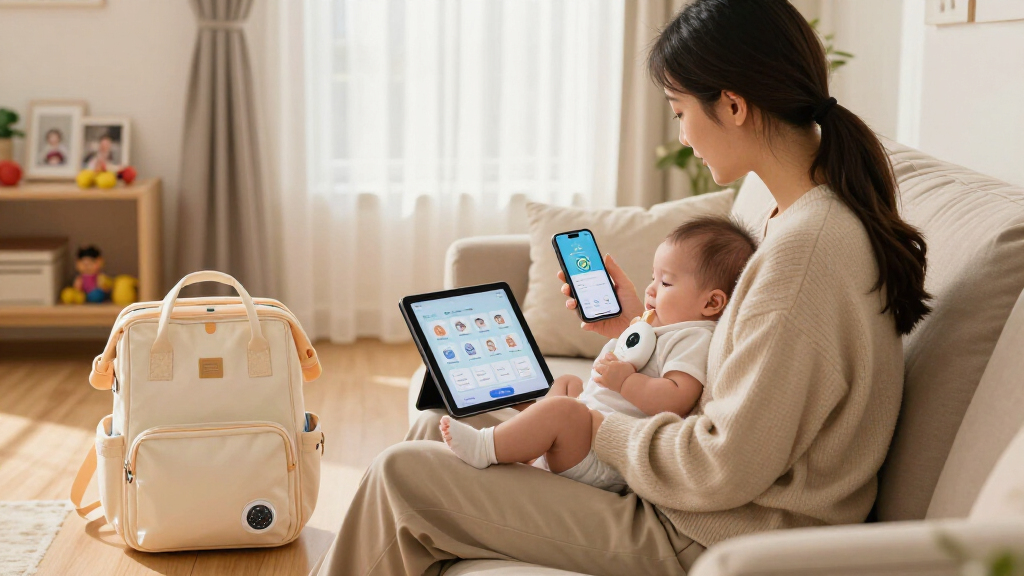
Connected devices with app controls are increasingly popular, but their reliance on hotel Wi-Fi or weak signals can lead to frustrations or failures. Many parents prefer local controls or offline modes to ensure consistent operation regardless of network quality. Understanding these options helps you choose gear that’s both smart and dependable on the road.
Wearable monitors that track movement or heart rate are gaining popularity, offering peace of mind but raising concerns about false alarms and data privacy. Portable sterilizers using UV light or steam are marketed heavily but require careful use—proper cleaning still hinges on thorough washing. These innovations offer convenience but come with tradeoffs that parents should consider based on their specific needs and risk tolerance.
International travel complicates tech packing further—spare batteries, power banks, and plug adapters all need careful planning to ensure compatibility and safety across different countries. Staying informed about these technological developments enables you to select gear that’s safe, reliable, and manageable, making your travel experience smoother and less stressful.
Your Travel Packing Checklist: Building a Redundancy Framework
Think of packing baby tech as layering safety and convenience, ensuring that each layer addresses potential failures and emergencies effectively:
- On you: phone, medical info, medications, immediate feeding essentials—these are your first line of response in emergencies or quick fixes.
- In carry-on: critical tech, chargers, backup pump, batteries, and supplies for delays—these keep routines intact and prevent disruptions during transit or waiting periods.
- At destination or in checked luggage: bulky gear, extra convenience products, and replaceable items—these provide long-term support and replaceability, reducing the stress of unavailability or damage.
Focus on inexpensive, compact, safety-critical gadgets—cables, chargers, sound machines, thermometers, and medications. Regularly check and update your kit before each trip, replacing expired items and recharging batteries. Think strategically about what needs to be instantly accessible versus what can be stored away.
This layered approach not only prevents delays but also creates a buffer against unforeseen issues, making your trip smoother and less stressful. It allows you to respond swiftly to problems, minimizing their impact on routines and safety, and giving you peace of mind throughout your journey.
Frequently Asked Questions
Do I need a second baby monitor for travel?
If you travel frequently, a compact non-Wi-Fi monitor can be a lifesaver. It’s simple to set up, doesn’t depend on hotel Wi-Fi, and avoids privacy concerns. For occasional trips, your existing monitor or an adult nearby may suffice.
Is a Wi-Fi or non-Wi-Fi monitor better for hotels?
A non-Wi-Fi monitor is generally easier to set up and more reliable in hotels, since it doesn’t depend on Wi-Fi signals or captive portals. Wi-Fi models offer range but can be unreliable or insecure in unfamiliar networks.
What baby tech belongs in carry-on luggage?
Pack essential medications, breast pump parts, power banks, spare batteries, and critical feeding supplies in your carry-on. Leave bulky, replaceable gear like large sterilizers or full-size monitors in checked luggage or at the destination.
Is a manual breast pump worth packing?
Definitely. It’s compact, doesn’t need electricity, and is a reliable backup if your electric pump or parts fail. Plus, it’s useful in places where power outlets are scarce or unreliable.
Should I buy an identical duplicate?
No need for exact copies. Focus on gear that performs the essential function safely. A simple backup, like a manual pump or basic monitor, often beats expensive, complicated duplicates.
Conclusion
Traveling with a baby is all about foresight. Prioritize duplicating the gear that keeps routines safe and smooth—chargers, sound machines, and feeding backups. A little extra planning now saves hours of stress later.
Remember, the goal isn’t to achieve perfection but to be prepared. When your gear is ready, so are you—ready to enjoy the journey, no matter what surprises come along.
Fall Picks
fall essentials
As an affiliate, we earn on qualifying purchases.