TL;DR

Turn the school run and nap time into listening time
- Thousands of audiobooks, podcasts and originals
- Listen on your phone, tablet or Echo — also offline
- Cancel anytime
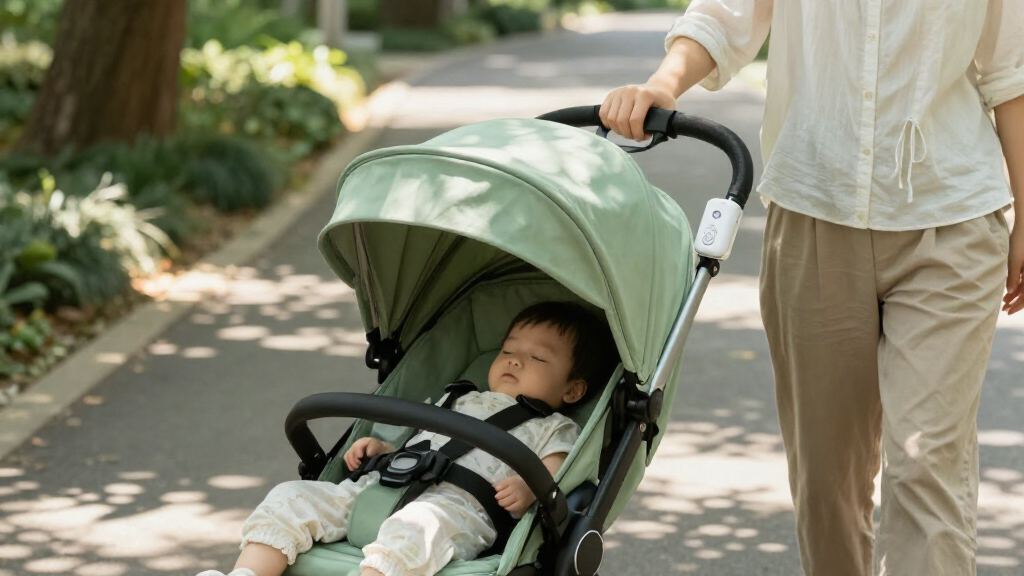
Secure a portable white-noise machine to the stroller frame or in a closed, secured pocket, away from your baby’s head and reach. Keep it at the lowest useful setting and aim for about 50 dBA or less at your baby’s ears; phone meter apps offer only approximate readings. White noise is an optional nap cue, never a replacement for supervision or an approved safe sleep space.
A stroller wheel hits a crack, a bus sighs at the curb, and your baby’s eyelids pop open. A small sound machine may soften those sudden changes, but where you attach it and how loud you set it matter more than whether it has an app or a dozen sound options.
This guide walks you through safe placement, low-volume checks, and what to do when traffic or a crowd gets loud. You’ll also see where white noise fits into a stroller nap—and where stroller and safe-sleep guidance still comes first.
Think of the sound as a quiet cue, like a familiar song on the way home: useful for some babies, unnecessary for others. It can help make a stroller nap feel more predictable by smoothing out abrupt noises, but it cannot guarantee sleep or turn a stroller seat into an approved sleep surface.
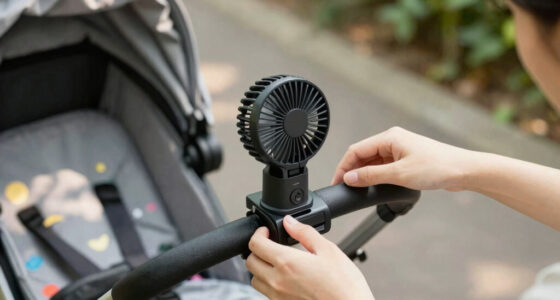
Attach the machine securely to the stroller frame or a secured pocket, away from your baby’s head, reach, and airway.
Use the lowest helpful setting; about 50 dBA or less at the baby’s head is a commonly used precaution, and phone meter apps give approximate readings.
Check sound at your baby’s ear position with the machine in its usual spot, not beside the speaker.
Move somewhere quieter when traffic or crowds are loud instead of turning the sound up to compete.
Treat white noise as an optional nap cue, not a guarantee of sleep or a replacement for supervision and an approved sleep surface.
Portable white noise placement and volume
A quiet sound may help make stroller naps feel more predictable. Secure the device away from your baby, check volume at ear position, and keep safe sleep guidance first.
Secure the device
Check that it stays in place through turns and bumps.
Attach it to the stroller frame or put it in a secured pocket, away from your baby’s head and reach.
Keep cords and straps out of reach. Avoid the canopy, loose baskets, and anything that could swing or fall.
Check the attachment and controls before leaving and after folding or adjusting the stroller.
Check sound where it matters
Distance changes what reaches your baby’s ears.
Set up for a supervised nap
Low and secure
Keep the device away from your baby’s head, face, and hands.
Use the lowest helpful setting
Check at ear position with the machine in its usual spot, not beside the speaker.
Keep it steady and gentle
Soft fan-like or nature sounds may work. Turn it off if your baby seems bothered.
Check before each walk
Confirm the charge, attachment, harness, and controls.
When surroundings get loud
Traffic, wind, and crowds can change how prominent the machine sounds.
- Lower the setting or move the device farther away if it sounds prominent.
- Move somewhere quieter when traffic or a crowd gets loud.
- Phone readings are approximate, not calibrated measurements.
- Built-in volume limits and labels do not replace checking at your baby’s position.
Place the machine low, secure, and away from your baby’s head
Portable white noise for stroller naps works best when the machine is secured to the stroller frame or tucked into a secured storage pocket, away from your baby’s head. Keep the device, cords, and straps out of reach, and choose a spot where nothing can swing or fall onto your baby. A canopy is a poor attachment point because it can move or fold.
Before you leave, give the attachment a gentle tug and check that the machine cannot slide loose when the stroller turns. Imagine you’re rolling over cracked pavement: a clip that felt firm on the kitchen floor may bounce with every bump outside. Recheck the device after you fold or adjust the stroller.
For example, if your stroller has a frame bar beside the handle and a closed storage pocket below the seat, use the frame bar only if the machine attaches securely and stays away from your baby. A loose device in an open basket can shift; a dangling loop can become reachable when your baby stretches. Follow the stroller maker’s instructions, keep the harness fastened, and leave your baby’s face and airway clear.
A sound machine only changes the sound around the stroller. It does not make a stroller sleep space safer. A firm, flat, approved sleep surface is safest for sleep; a stroller seat may not suit unattended or extended sleep. Supervise your baby and move them to an approved sleep space when practical, especially if they are very young or slump in the seat. Follow current local safe-sleep guidance and ask your pediatrician about your baby’s needs.
Popular right now

Apple AirPods Pro 3 Wireless Earbuds with Active Noise Cancellation

Samsung 65-Inch The Frame Pro Neo QLED 4K TV (2026) Bundle with Modern Brown Bezel, HDMI Cables, and Home Theater Guide

Bose QuietComfort Wireless Noise-Cancelling Headphones, Cypress Green
As an affiliate, we earn on qualifying purchases.
Check the volume where your baby’s ears actually are
For portable white noise for stroller naps, use the lowest setting that helps and aim for about 50 dBA or lower at your baby’s head, a commonly used precaution. That figure is a practical reference, not a guarantee that every device or situation is safe. Distance, sound output, and how long the sound plays all affect exposure.
Measure from your baby’s usual ear position, with the machine attached where you plan to keep it. A phone sound-meter app can offer an approximate reading, but phones are not calibrated sound meters. Keep your setup conservative: if you can clearly pick the machine out over the rest of the stroller’s surroundings, lower it or move it farther away.
Here’s a simple check before a walk. Put the stroller in its usual nap setup, turn the machine to a quiet setting, and hold your phone near where your baby’s ears would be without placing it in the sleep space. If the reading or sound feels high, move the machine farther down the frame and check again. Don’t measure right beside the speaker and assume that tells you what reaches your baby.
Research and public-health advice have raised concerns about sound machines playing loudly close to infants’ ears. A frequently cited 2014 laboratory study found that some infant sleep machines could exceed recommended sound limits when placed near a crib at maximum volume. Its practical lesson applies outdoors too: keep the sound low and distant. A built-in volume cap or “baby-safe” label doesn’t replace checking the sound at your baby’s position.
Follow a quick setup routine before every walk
To set up portable white noise for stroller naps, secure the device away from your baby, check the sound at ear position, and confirm the stroller is ready for a supervised outing. A short routine catches the things that are easy to miss when you’re holding a diaper bag and looking for your keys.
- Choose a stable spot: attach the machine to the frame or put it in a secured pocket. Keep it away from the head, hands, and face.
- Check the sound: start at the lowest setting and listen at your baby’s ear position. Use a sound-meter app only as an approximate guide.
- Check stroller safety: follow the manufacturer’s instructions, fasten the harness, and make sure the machine and its attachment cannot drop or dangle.
- Check power and controls: confirm the battery charge and timer or volume before leaving. Recheck after folding, unfolding, or adjusting the stroller.
- Respond to the surroundings: if traffic or a crowd gets loud, move to a quieter place instead of turning the device up to compete.
For instance, imagine you’ve paused at a café while your baby naps. You fold the stroller to get through a narrow doorway, then open it again outside. Before walking on, check that the clip still grips the frame and that the volume control hasn’t shifted. A thirty-second check can prevent a loose device or an unexpectedly louder sound from following you down the block.
This routine also helps keep white noise in its proper role: an optional cue. You can use the same gentle sound as part of a calm pre-nap routine, then see whether your baby settles. If the baby doesn’t respond, or seems more bothered by it, silence is a perfectly reasonable choice.
Choose steady sound and let silence be an option
Portable white noise for stroller naps is a background sound, not a treatment for sleep problems. Many parents choose a steady, gentle noise because it is less startling than music or audio that changes suddenly. Soft fan-like or nature sounds are other options; the right choice depends on what your baby seems comfortable with.
Keep the sound simple and quiet. A loud recording with sharp chirps, dramatic waves, or sudden pauses can draw attention instead of fading into the background. Imagine walking along a leafy path: soft, even sound may blend with the rustle of leaves, while a bright chime that repeats every few seconds may catch your attention each time. If your baby startles or fusses when the sound begins, switch it off and see how they do without it.
You can introduce the sound as one small part of a familiar routine: settle your baby, check the harness and position, start the sound quietly, then begin the walk. Over several outings, you’ll learn whether that cue seems helpful for your child. Some babies settle with steady background noise; others sleep just as well in quiet. It’s fine to follow your baby’s response rather than treating the machine as a required piece of gear.
Consumer machines now offer timers, rechargeable batteries, app controls, and advertised volume limits. Those features can make a walk easier to manage, but they don’t establish a safe sound level by themselves. A timer can limit unnecessary use, and a rechargeable battery can spare you a last-minute hunt for fresh cells. Still, placement and the sound at your baby’s ears matter more than the feature list.
Move to a quieter spot instead of turning it up
When outdoor noise gets loud, move the stroller somewhere quieter rather than raising the machine’s volume to overpower traffic or a crowd. White noise should stay in the background; it is not a way to cover every sound around you. A bus, leaf blower, or packed market can be louder than a small portable device can reasonably mask at a low setting.
Picture a Saturday walk that passes a busy road. Your baby stirs when a truck rattles by, and your first instinct is to press the volume button. Try stepping onto a calmer side street or pausing in a sheltered area instead. The change in surroundings may help more than a louder speaker, and you don’t have to guess how high the device is playing.
Wind and changing street noise can also make a sound machine seem quieter to you while it remains close to the baby. Don’t keep increasing the setting to chase a moving target. If the surroundings stay noisy, shorten the stop or choose a calmer route. The machine can soften sudden sounds; it cannot create a quiet room outdoors.
A phone can play sound if it’s secured away from the baby and kept out of the sleep space. Don’t leave it where it could fall, overheat, or become reachable. Whether you use a phone or a dedicated machine, check the same basics: secure placement, low sound, and clear space around your baby’s face and airway.
Keep the nap cue separate from safe-sleep decisions
White noise may help make a stroller nap feel more predictable by giving your baby a familiar cue, but it does not make a stroller seat a safe sleep surface. A seated stroller may not be appropriate for unattended or extended sleep. Follow current safe-sleep guidance and the stroller maker’s instructions, keep your baby supervised, and transfer them to a firm, flat, approved sleep space when practical.
This distinction matters on an ordinary errand. Your baby nods off while you walk home, and the sound machine is clipped securely to the frame. You still need to check your baby’s position and airway, keep the harness used as directed, and plan what to do when you arrive. A quiet stroller is not a substitute for an approved sleep space.
If your baby is very young, slumps in the seat, was born prematurely, has hearing concerns, or has another medical condition, ask your pediatrician for guidance that fits your child. Sound exposure depends on loudness, distance, and duration, and individual needs can vary. Pediatric guidance can help you make choices about the device and the sleep setup without relying on a product label.
Think of the sound machine like a familiar jacket on a chilly walk: it may make the outing more comfortable, but it doesn’t change the route or remove the need to watch where you’re going. Use it only if it helps, keep it quiet and secure, and let stroller and sleep-safety practices lead every decision.
Frequently Asked Questions
Where should I clip a white-noise machine on a stroller?
Secure it to the stroller frame or place it in a secured pocket, away from your baby’s head and reach. Avoid the canopy, loose placement, and dangling cords or straps. Check the attachment again after adjusting or folding the stroller.
How loud is too loud for stroller white noise?
A commonly used precaution is about 50 dBA or lower at your baby’s head, but the actual sound depends on the device and distance. Start low and check at your baby’s ear position; phone meter apps provide approximate readings only. If it sounds prominent, lower it or move it farther away.
Can white noise hurt a baby’s hearing?
Concern centers on sound that is loud, close, or played for a long time. Keep the device distant and quiet, and don’t assume a product’s lowest setting is automatically suitable at any distance. Ask your pediatrician about hearing concerns or your baby’s individual needs.
Is white noise safe for a newborn in a stroller?
White noise does not make a stroller seat a safe sleep space. Follow current safe-sleep guidance and the stroller maker’s directions, supervise your baby, and move them to a firm, flat, approved sleep surface when practical. Ask your pediatrician about sound and sleep choices if your baby was premature or has a medical condition.
Should I leave the sound machine on for the whole nap?
There isn’t one rule for every family and device. A timer may reduce unnecessary use; if you leave the sound on, keep it low and distant. Watch your baby’s response, since some babies settle with it and others prefer silence.
What should I do if the stroller is somewhere noisy?
Move to a quieter place when you can instead of turning the volume up to compete with traffic, wind, or a crowd. A portable machine can soften sudden sounds, but it cannot make a noisy outdoor space quiet. If your route stays loud, consider taking a calmer one.
Conclusion
Keep the machine secure, distant, and quiet. Check the sound where your baby’s ears are, and when the street gets too loud, change your route instead of raising the volume. Those small choices matter more than a timer, app, or extra sound setting.
White noise can be one gentle thread in your nap routine. Your baby’s clear airway, supervised stroller ride, and safe sleep space are the parts that hold the whole picture together.