
TL;DR

Turn the school run and nap time into listening time
- Thousands of audiobooks, podcasts and originals
- Listen on your phone, tablet or Echo — also offline
- Cancel anytime
Formula maker calibration means checking that your machine dispenses the amounts specified for your exact formula and model. Follow both manufacturers’ instructions, verify output with the model’s approved method, and recheck after formula changes or maintenance. If a bottle seems incorrectly mixed, set it aside and prepare a fresh one according to the formula label rather than adjusting powder or water by guesswork.
Match the machine setting to the exact formula and model instructions; don’t assume similar products share a setting.
Use the model’s specified output check because bottle appearance and fill level alone cannot confirm the ratio.
Recheck after formula changes, maintenance, part replacement, reassembly, or signs of inconsistent output.
Follow the manual’s cleaning and assembly steps; residue, moisture, blockages, and worn parts can affect dispensing.
If a bottle may be incorrectly mixed, set it aside, prepare a fresh bottle by the formula label, and pause machine use until you resolve the issue.
Formula Maker Calibration: Getting Consistent Mixes Every Time
Check that your machine is set up for the exact formula and model. Follow both manufacturers’ instructions, use the model’s approved output check, and recheck after changes or maintenance.
What calibration checks—and why it matters
Calibration means verifying that a formula maker is configured and dispensing as its manufacturer directs for the exact formula you use. The water-to-powder ratio matters: a mix that is too concentrated or too diluted can affect a baby’s fluid and nutrient intake.
Match the exact formula
Powder density and dispensing behavior can vary by product. Similar branding does not mean settings are interchangeable. If the product is not listed, ask the appliance maker.
Keep the label in charge
Check the formula’s required ratio, water temperature, and preparation method. A machine’s convenience features do not replace the formula label.
A repeatable setting can be wrong
Think of the machine as a kitchen scale with a memory: it repeats a setting, but only when that setting and the dispensing path are right.
Verify settings without guessing
There is no universal calibration test or magic number. Start with the exact formula and machine instructions, then follow the measurement method and schedule specified for your model.
- 1Compare full product namesConfirm the exact formula type appears in the machine’s compatibility guidance.
- 2Read both sets of directionsCheck ratio, water temperature, preparation method, and documented machine setting.
- 3Inspect assembly and cleanlinessMake sure removable parts are seated correctly and the dispensing path is clean and dry as directed.
- 4Run only the approved output checkUse the specified method and tools. Do not substitute a visual estimate or improvised procedure.
- 5Record setting and dateA short note can help another caregiver repeat the setup during a sleepy handoff.
Why a bottle’s fill line can fool you
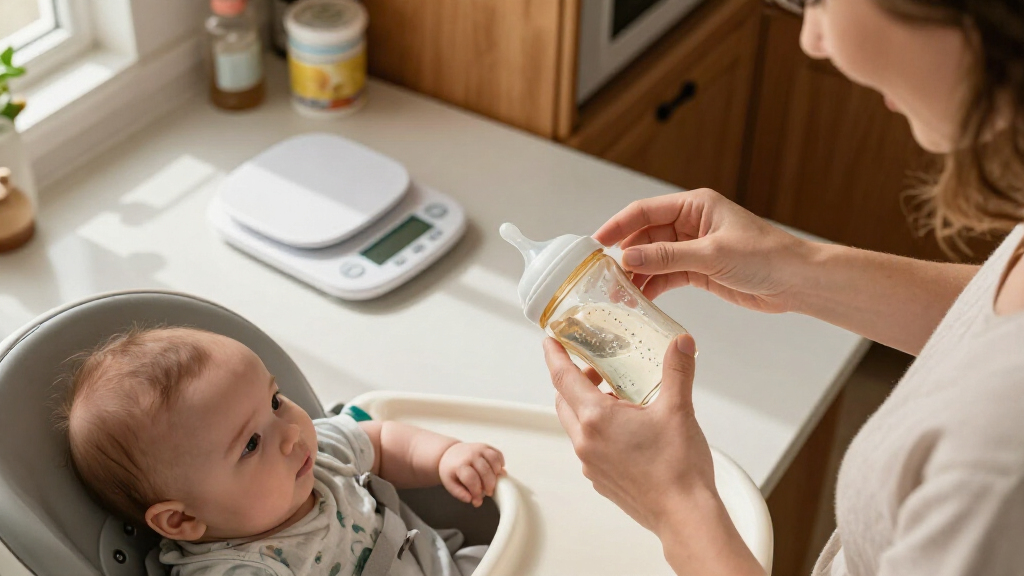
A bottle that looks slightly fuller after mixing may have a ring of bubbles or foam that settles as you carry it. That shifting surface is a visual cue, not a reliable ratio check. Texture and fill level alone cannot show whether the machine dispensed the intended amounts.
Notice
Output looks or seems different than expected.
Set aside
Do not feed a bottle you suspect was incorrectly mixed.
Prepare fresh
Follow the formula label’s directions exactly.
Resolve
Pause machine use until you identify and address the cause.
When to recheck the formula and machine match
Follow the checking schedule and procedure in your appliance manual. Recheck at setup, after changes, and whenever output seems inconsistent.
At first setup
Confirm the exact product is supported and choose the documented setting for your model.
After a formula change
Check compatibility and settings again—even when the new tin looks similar to the previous one.
After cleaning or repair
Recheck after maintenance, part replacement, cleaning the dispensing path, or reassembly after a move.
When output seems inconsistent
Repeated differences in volume, texture, or dispensing are a reason to stop and investigate.
Keep health guidance in the loop.
Powdered formula is not sterile. Follow local advice for water safety, sterilization, storage, and feeding. Extra precautions may be needed for newborns, premature babies, or babies with weakened immune systems; ask a pediatric clinician if unsure.
What formula maker calibration checks—and why it matters
Formula maker calibration means verifying that a machine is configured and dispensing as its manufacturer directs for the exact formula you use. A formula maker is designed to dispense powdered formula and water in repeatable amounts, but it cannot make every powder compatible or replace the preparation directions on the formula label. The ratio matters because a mix that is too concentrated or too diluted can affect a baby’s fluid and nutrient intake.
Think of the machine as a kitchen scale with a memory: it can repeat a setting, but only if the setting matches the ingredients and the parts are working as intended. Imagine you switch from one tin to another at bedtime because the first is empty. The labels may look similar, yet the appliance maker may specify a different setting for the new product. Familiar branding is no reason to assume the settings match.
Getting consistent mixes starts with two sets of instructions: the formula manufacturer’s directions and the appliance maker’s instructions for your specific model and formula. Check the formula’s water-to-powder ratio, water temperature, and preparation method. The machine’s convenience features do not override those directions.
Calibration is not a universal adjustment or one magic number for all machines. Acceptable checks and steps vary by model. If your manual doesn’t list the formula you have, ask the appliance manufacturer for guidance instead of guessing. A repeatable wrong setting is still wrong.
Popular right now

Shark PowerDetect Corded Stick Vacuum, Self-Cleaning (Eggplant, HZ4002)

De'Longhi Magnifica Evo Fully Automatic Espresso Machine with Manual Milk Frother, Silver

De'Longhi 15-Bar Pump Espresso Machine with Milk Frother & Temperature Control
As an affiliate, we earn on qualifying purchases.
How to verify your settings without guessing
To verify a formula maker’s settings, start with the exact formula and model instructions, then use the machine’s specified measurement method. Those instructions govern the setting and any acceptable check; there is no universal calibration test that applies to every appliance. For instance, if you have opened a new tin and cannot find its exact name in the machine guide, pause automated feeds until the manufacturer tells you which setting applies.
- Match the names. Compare the formula’s full product name and type with the machine’s compatibility guidance. Don’t assume two products from the same brand use the same setting.
- Read both labels. Confirm the formula’s water-to-powder ratio, temperature, and preparation method alongside the machine’s directions.
- Inspect assembly and cleanliness. Check that removable parts sit in the right places and the dispensing path is clean and dry as directed in the manual.
- Run only the check your model describes. Measure output with the method and tools specified by its maker. Don’t substitute a visual estimate or an improvised procedure.
- Record the setting and date. A quick note near the machine can help another caregiver repeat the right setup during a sleepy handoff.
Calibration matters because powder density and dispensing behavior can vary between products. For example, a caregiver who moves the machine to a relative’s house may reassemble it after travel and overlook a part that hasn’t seated fully. A careful check after reassembly is more useful than trusting the familiar hum of the motor.
Why a bottle’s fill line can fool you
A bottle’s visible fill level cannot, by itself, prove that the water-to-powder ratio is correct. Foam, bubbles, and powder settling can shift the apparent volume, while the right-looking line says little about whether the machine dispensed the intended amounts. Use the verification method in your model’s instructions rather than treating the bottle’s appearance as a measuring tool.
Consider a bottle that looks slightly fuller after the machine runs. You may see a pale ring of bubbles clinging to the neck, or a little mound of foam that slowly sinks as you carry the bottle to the nursery. That changing surface can make the fill line look different from one minute to the next. It’s a visual cue, not a reliable ratio check.
The same caution applies to texture. A mix that looks thin or thick may prompt a tired caregiver to add powder or water “to fix it.” Don’t make that adjustment by eye. Do not compensate with extra powder or water; if you suspect a preparation error, set that bottle aside and prepare a fresh one according to the formula label.
A machine may be programmed correctly and still dispense inconsistently if powder residue, moisture, a blockage, a worn part, or incorrect assembly interferes with the dispensing path. Think of the setting as a recipe and the dispensing path as the measuring spoon: both need attention. If your approved output check is off, stop using the machine for feeds until you resolve the cause.
When to recheck the machine and formula match
Recheck formula maker calibration when you first set up the machine, after maintenance or a formula change, and whenever output seems inconsistent. Your appliance manual sets the checking schedule and procedure, so follow that model-specific guidance. A routine recheck can catch a mismatch before it turns into a string of uncertain bottles.
Picture a common handoff: you usually use one formula, then a caregiver opens a different tin while you’re out. If the machine has not been checked against that exact product, ask them to follow the label’s preparation directions until you confirm compatibility and the correct setting. The same logic applies after replacing a funnel or other dispensing part, cleaning the dispensing path, or moving the machine and reassembling it.
- At setup: Confirm the exact product is supported and select the documented setting.
- After a change: Recheck when switching formula or replacing a part, following the machine’s instructions.
- When something looks different: Pay attention to repeated differences in volume, texture, or dispensing behavior, but verify through the approved method.
- When unsure: Contact the appliance maker for model-specific help rather than adjusting the setting on a hunch.
A single unusual-looking bottle may have a harmless explanation, such as foam. Repeated inconsistency or a failed manufacturer-specified check is different. If you suspect the machine dispensed the wrong amount, stop using it for feeds while you work out what happened, and make bottles by following the formula label’s directions.
How cleaning protects repeatable dispensing
Cleaning and calibration solve different problems: calibration checks settings and output, while cleaning helps the dispensing path work as intended. Powder residue, moisture, blocked funnels, worn parts, and incorrect assembly can interfere with dispensing even when you selected the documented setting. Follow the appliance maker’s cleaning schedule and use only its recommended method.
For example, after several night feeds you may spot a fine dusting of formula around a funnel or a clump near a damp part. It’s tempting to wipe the visible patch and carry on. But the machine’s instructions may call for cleaning and drying particular pieces before use, and a part that looks clean on the outside may still have residue in its path. Follow the manual’s steps instead of improvising with extra water or a cleaning product it doesn’t recommend.
Assembly deserves the same attention as cleaning. When parts go back in at a slight angle, they may not seat as intended. A quick check against the diagrams can help after a deep clean or a late-night rinse, when memory is less reliable than usual.
Keep the formula container and dispensing area dry as the manufacturer directs. If you find a worn part, persistent blockage, or moisture where it should not be, stop and follow the manual or contact the appliance maker. A clean machine with correctly seated parts gives calibration a fair chance to produce repeatable results; cleaning alone cannot confirm the ratio.
How to respond when a mix looks too thin or thick
If you suspect a bottle was prepared incorrectly, don’t feed it or try to repair it by adding powder or water. Set it aside, prepare a fresh bottle according to the formula label, then inspect the machine’s setting, assembly, and cleaning status. If the machine appears to dispense the wrong amount, stop using it for feeds until you resolve the cause.
Say you hear an unfamiliar rattle, notice a new clump of powder near the funnel, and find a bottle that looks different from usual. Don’t rely on the fact that it smells or tastes like formula, and don’t try a “small correction.” Prepare a new bottle by the label’s instructions, then check the machine manual for what to inspect and how to verify output.
If a bottle seems wrong, make a fresh one from the formula label’s directions and pause machine use until you understand the problem.
For an unresolved machine concern, contact the appliance manufacturer with the exact model, formula name, and the steps you have already checked. If you’re unsure what to do about the baby’s feed or health, contact a pediatric clinician. Feeding and medical guidance can depend on the individual baby; the machine cannot answer that question.
Never change settings outside the manufacturer’s instructions. A guessed adjustment may make the next bottle less predictable, not more. The safest practical response is to return to the written preparation directions while you get model-specific help.
What extra care newborns and some babies may need
Ask your baby’s clinician which preparation method is appropriate if your baby is a newborn, premature, or has a weakened immune system. Powdered formula is not sterile, and extra precautions may be needed for some babies. A formula maker’s convenience features do not determine whether its water source, temperature, or preparation method fits your baby’s needs.
For instance, a family may bring home a premature baby and already own a machine set up for an older sibling’s formula. The setting and routine that worked for the older child don’t settle the question for this baby. Ask the clinician about the preparation method, water safety, sterilization, and storage guidance that applies to your situation, then compare that advice with the formula and appliance instructions.
For every baby, follow the formula label and local health guidance for water preparation, temperature, storage, and feeding. A machine may dispense water, but it cannot tell you whether your water source is safe or whether the bottle has been stored correctly. Those decisions sit outside its calibration settings.
If guidance from the clinician, formula label, and machine manual seems difficult to reconcile, pause and ask the clinician or relevant manufacturer for clarification before relying on an assumption. That small phone call can bring more peace than another late-night cycle spent staring at the bottle’s fill line.
Frequently Asked Questions
How often should I check a formula maker’s accuracy?
Follow the schedule and method in your machine’s manual. Check at setup, after maintenance or a formula change, and whenever output seems inconsistent. If the manual is unclear, ask the appliance manufacturer.
Do I need a different setting for each formula?
Settings can differ by product because powder density and dispensing behavior vary. Use the setting specified for the exact formula in your appliance maker’s guidance. If the product is not listed, contact the manufacturer rather than guessing.
Can I use any brand of formula in the machine?
Not necessarily. Check the exact model’s compatibility guidance and confirm with the appliance or formula manufacturer if needed. A familiar brand name does not confirm that a particular product is supported.
How can I tell whether a bottle is mixed correctly?
Use the verification method specified for your machine. Appearance and visible volume alone may not confirm the water-to-powder ratio because bubbles, foam, and settling can change the apparent fill level.
What should I do if a mix looks too thin or thick?
Set the bottle aside rather than feeding it or adding powder or water to correct it. Prepare a fresh bottle according to the formula label, then check the machine’s settings, assembly, and cleaning status. Contact the appliance maker if the output concern remains.
Is a formula maker suitable for a newborn or premature baby?
Ask your baby’s clinician which preparation method is appropriate. Powdered formula is not sterile, and some babies may need extra precautions. Follow the clinician’s guidance alongside the formula label and appliance instructions.