TL;DR
Listen free for 30 days with Audible
Thousands of audiobooks and originals — cancel anytime.
Start your free trialAs an affiliate, we earn on qualifying purchases.
A practical changing station setup focuses on safety, organization, and comfort. Using this checklist, you can create an efficient space that makes diaper changes quick and stress-free.
Picture this: it’s 3 a.m., your baby wakes up crying, and you’re half-asleep trying to change a diaper in the dark. A cluttered, unsafe station makes the task harder — and more stressful. The good news? A thoughtful setup turns diaper duty into a quick, safe routine.
In this guide, you’ll find a practical checklist for creating a changing station that’s safe, organized, and easy to use. Whether at home or on the go, these tips help you stay prepared for just about anything. Let’s get started.
Choose a stable, accessible location for safety and convenience.
Keep essential supplies organized in labeled, easy-to-reach containers.
Adjust the station’s height and add soft covers for comfort and ergonomics.
Regularly disinfect the surface to prevent diaper rash and infections.
Explore space-saving, eco-friendly, and portable options to fit your lifestyle.
Changing Station Setup: A Practical Checklist
A safer, calmer diaper change starts before the baby reaches the pad. Build a stable station, keep every essential within one-handed reach, protect caregiver posture, and make cleanup automatic—even at 3 a.m.
Location, stability, supplies, comfort, hygiene
Comfortable caregiver working height
Remove mess and reduce contamination
Pad cover and full-station refresh
Choose the right spot
Look for a private, low-traffic area near useful infrastructure such as a sink, laundry basket, or diaper disposal. The surface must be flat, sturdy, non-slip, and easy to approach without obstacles.
Accessible
Choose a nursery or bathroom-adjacent corner with a clear path, comfortable lighting, and supplies close enough to reach without turning away.
Flat & secure
Place the station on level flooring. Use anti-slip protection and inspect screws, joints, straps, and wobbling components regularly.
Durable & non-toxic
Favor wipeable, baby-safe surfaces and washable textiles. Avoid damaged finishes, sharp edges, loose hardware, and reachable cords.
Fold-out efficiency
A securely installed wall-mounted or foldable station can preserve floor space while adding useful compartments for daily essentials.
Work at waist level
A comfortable surface height reduces repeated stooping, shoulder tension, and back strain during hundreds of routine changes.
Low, useful light
Use gentle task lighting that reveals the surface and supplies clearly without making the room unnecessarily bright or stimulating.
The one-way workflow
Prepare first, then move through the change without leaving the station. This sequence limits distraction, unnecessary reaching, and cross-contamination.
Stock
Check diapers, wipes, cream, clothes, bags, and sanitizer.
Secure
Place baby centrally and use the pad strap when provided.
Change
Keep supplies close and maintain contact throughout.
Dispose
Seal soiled items and place them directly in the designated bin.
Sanitize
Clean the surface and hands before restocking.
Leave a baby unattended on an elevated changing surface—even for a moment. Straps and raised edges are safeguards, not substitutes for active supervision.
Build the grab zone
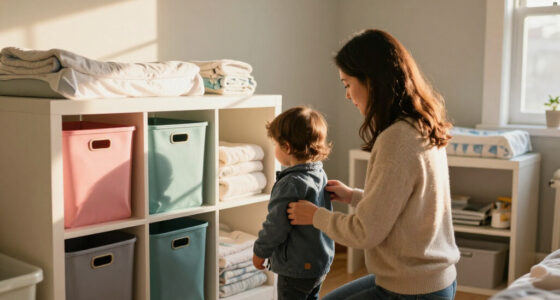
Clear, labeled containers reduce searching and make low stock obvious. Place everyday items in the closest zone; keep backup stock nearby but outside the active changing surface.
Must-have checklist
Match the station to your life
The best format is the one you can secure, stock, clean, and use consistently. Compare permanent, space-saving, and portable options before choosing.
| Station type | Stability | Storage | Space saving | Travel use | Best fit |
|---|---|---|---|---|---|
| Dedicated table | ✓ Strong | ✓ High | ✗ Low | ✗ No | Nursery with available floor space |
| Dresser + secured pad | ✓ Strong | ✓ High | ~ Medium | ✗ No | Multi-functional long-term setup |
| Wall-mounted fold-out | ✓ If installed correctly | ~ Medium | ✓ Excellent | ✗ No | Small apartment or compact room |
| Portable changing mat | ~ Surface dependent | ~ Limited | ✓ Excellent | ✓ Excellent | Travel, car, visits, or backup kit |
Clean little, clean often
Prompt cleanup removes visible mess; scheduled cleaning addresses buildup. Always follow the product directions for baby-safe cleaners and let surfaces dry as instructed.
Remove mess
Wipe visible soil from the pad and surrounding contact area immediately.
Clean hands
Wash or sanitize hands to reduce cross-contamination after disposal.
Deep clean
Disinfect the full station with a suitable baby-safe product.
Refresh textiles
Wash or replace pad covers and inspect for dampness, mold, or damage.
Parent FAQ
Four practical decisions cover most setup questions: stability, essentials, sanitation, and portability.
How do I confirm the station is safe?
Check for a flat, non-slip base, secure hardware, an undamaged pad and strap, non-toxic materials, and no reachable hazards. Reinspect it regularly.
What should always be stocked?
Keep diapers, wipes, rash cream, a clean pad, spare clothes, disposal bags, and hand sanitizer within easy reach. Add one safe distraction item.
How often should I disinfect?
Remove mess after every use and disinfect according to your cleaner and surface instructions. Give the entire station a thorough clean at least weekly.
Can the setup travel?
Yes. Pack a foldable wipe-clean mat with a small diaper, wipes, bag, and clothing kit. Before use, choose the cleanest stable surface available.
How to Pick the Perfect Spot for Your Changing Station
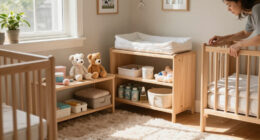
Choosing the right location is the foundation of a good changing station. It needs to be accessible, private, and near essentials like a sink or diaper disposal. Think about a spot with a flat, sturdy surface and minimal foot traffic — maybe near the nursery or bathroom.
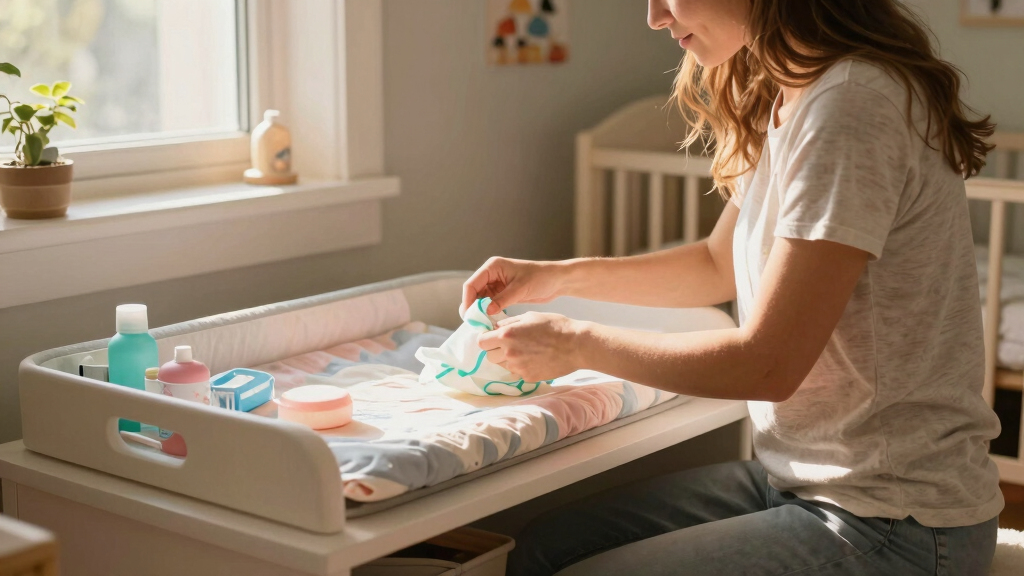
For example, a corner in the nursery with a changing table and nearby storage keeps everything within arm’s reach. If space is tight, a wall-mounted fold-out station can save room while still offering safety and convenience.
As an affiliate, we earn on qualifying purchases.
What Makes a Changing Station Truly Safe and Stable
A safe changing station isn’t just about the materials—it’s about how stability impacts safety. An unsteady surface can lead to accidents, especially if your baby moves suddenly or rolls. Ensuring the station is on a non-slip, flat surface means less risk of tipping over, which could cause injury. Safety standards for baby furniture are in place for a reason—they help prevent preventable accidents.
Using a changing pad with safety straps isn’t just about security; it’s a crucial safeguard against sudden movements that might cause a fall. Regularly inspecting the station for wear and tear, loose screws, or wobbling parts isn’t just maintenance—it’s a safety necessity. When parts become loose or damaged, the entire structure’s stability can be compromised, increasing risk. Choosing durable, non-toxic materials is also vital because babies tend to mouth surfaces, and exposure to harmful substances can be dangerous. Prioritizing stability and material safety creates a dependable environment that minimizes hazards and provides peace of mind for parents.
As an affiliate, we earn on qualifying purchases.
Must-Have Supplies for a Well-Organized Changing Station
Keeping everything organized isn’t just about convenience—it directly impacts safety and efficiency. When supplies are cluttered or hard to find, you’re more likely to fumble or forget essentials during a diaper change, which can lead to delays or accidents. Clear, labeled containers allow you to quickly grab what you need, reducing time spent searching and keeping your baby calmer.
By categorizing supplies—diapers in one bin, wipes in another—you streamline the process, especially during late-night changes when your focus is divided. Well-organized supplies also help you spot when items are running low, preventing last-minute panic or rushing to find replacements, which can compromise safety. This proactive approach ensures you’re always prepared, reducing the likelihood of hurried, unsafe handling of supplies or rushing through changes. An organized setup fosters a calm environment, which is essential for both safety and peace of mind.
Imagine a system where everything is within arm’s reach and clearly labeled—this not only saves time but also minimizes distractions and chaos during diaper duty, ultimately making the process safer and less stressful.
Here’s a quick checklist:
- Diapers (several sizes)
- Baby wipes
- Rash cream or ointment
- Extra clothes
- Changing pad
- Disposable bags for soiled items
- Hand sanitizer or sanitizer wipes
baby changing table with safety straps
As an affiliate, we earn on qualifying purchases.
As an affiliate, we earn on qualifying purchases.
How to Make Changing Easier and More Comfortable
Comfort isn’t just for the baby. Your station should be at a height that lets you change the diaper without stooping or reaching awkwardly. Proper ergonomic positioning reduces strain on your back and shoulders, making frequent diaper changes less tiring and preventing discomfort or injury over time. A good rule of thumb: the changing surface should be at your waist level, which helps you maintain good posture and reduces fatigue.
Adding a soft, washable cover on the pad boosts comfort and makes cleanup easier. Include a few small toys or a soft book nearby to distract your little one—turning a chore into a quick game. Engaging your baby can also reduce resistance and make diaper changes smoother, which is especially helpful during longer or more challenging sessions.
For example, a cushioned pad with a textured cover can make a 2-minute change feel less like a battle, and a distraction like a toy can divert their attention, making the process quicker and more relaxed for both of you.
diaper changing station storage bins
As an affiliate, we earn on qualifying purchases.
As an affiliate, we earn on qualifying purchases.
Simple Steps to Keep Your Changing Station Clean and Safe
Hygiene is key to preventing diaper rash and infections. Wiping down the changing surface daily with a disinfectant safe for baby products isn’t just about cleanliness—it’s about creating a barrier against germs that can cause rashes or illness. Regular cleaning minimizes bacteria buildup, which is especially important in environments with frequent use.
Keep cleaning supplies within reach so you can sanitize quickly after each diaper change. After every change, use disposable wipes or a damp cloth to remove any mess thoroughly. Regularly replacing outgrown diapers and cleaning cloths helps prevent the buildup of bacteria and mold, maintaining a hygienic environment that reduces the risk of infections. These routines are small but impactful steps toward a healthier, safer space for your baby.
Here’s a quick routine:
- Wipe the surface after each change to remove immediate messes and reduce bacteria.
- Wash or replace changing pad covers weekly to prevent dirt and bacteria buildup.
- Disinfect the entire station regularly (at least once a week), using baby-safe disinfectants to eliminate germs.
- Sanitize your hands or use hand sanitizer after each change to prevent cross-contamination.
Frequently Asked Questions
How do I make sure my changing station is safe for my baby?
Check that the station is stable, on a flat surface, and free from hazards. Use a secure, non-slip mat and ensure all materials are non-toxic. Regularly inspect for wear and tear, and follow safety standards for baby furniture.What are the essential items I should keep in my changing station?
Diapers, wipes, rash cream, a clean changing pad, and an extra set of clothes are must-haves. Add disposable bags for messes, hand sanitizer, and a small toy or book to keep your little one engaged.How often should I disinfect my changing station?
Disinfect it daily with a baby-safe cleaner and wipe it down after every use. Regular deep cleaning, about once a week, keeps germs at bay and maintains a hygienic space.Can I create a portable changing station for travel?
Absolutely. Lightweight, foldable changing pads with built-in storage for wipes and diapers make quick, safe changes easy on the go. Always check the surface’s cleanliness and stability before use outdoors.Conclusion
A well-thought-out changing station isn’t just about safety — it’s about making a task you’ll do hundreds of times smoother and less stressful. A little planning goes a long way in turning diaper duty into a quick, calm routine.
Remember, your setup should grow with your family: adaptable, organized, and safe. When everything’s in its place, those midnight changes become a little easier — and maybe even a tiny bit enjoyable.
Flea & tick season Picks
flea and tick prevention
As an affiliate, we earn on qualifying purchases.