TL;DR
Listen free for 30 days with Audible
Thousands of audiobooks and originals — cancel anytime.
Start your free trialAs an affiliate, we earn on qualifying purchases.
In a small nursery, pick a compact diaper pail with strong odor control, easy operation, and safety features. Recent models offer better sealing, eco-friendly options, and sleek designs to suit tight spaces.
Imagine changing your baby’s diaper and then wrestling with a bulky, smelly trash can that takes up half your nursery. Not fun. In a small nursery, every inch counts. Your choice of a diaper pail isn’t just about odor—it’s about keeping your space neat, safe, and smelling fresh, without sacrificing precious room.
In this guide, you’ll learn what to look for—size, odor control, safety, and features—so you can pick a diaper pail that fits your tiny space and keeps your sanity intact. Let’s make diaper duty a little easier, shall we?
Choose a compact, space-efficient diaper pail to maximize your small nursery space.
Prioritize models with strong odor control, like sealed lids and activated charcoal filters.
Opt for one-handed or foot pedal operation to keep diaper changes quick and hygienic.
Select durable, easy-to-clean materials like stainless steel or BPA-free plastic.
Balance upfront costs with ongoing expenses—standard trash bags often save money.
How to Choose a Diaper Pail for a Small Nursery
Every inch counts. The right pail contains odors, fits beside the changing station, and opens without requiring an extra hand—or turning your nursery into a crowded utility room.
Five features that earn their footprint
In a tight room, the best pail is not necessarily the one with the longest feature list. Prioritize fit, odor containment, simple operation, safe materials, and predictable running costs.
Measure the actual parking spot
Check width, depth, lid clearance, and the path needed to remove a full bag. Slim or corner-friendly shapes keep circulation routes open.
Seal first, filter second
A tight lid and enclosed bag opening do the heavy lifting. Charcoal filters or odor inserts provide an extra defense in low-airflow rooms.
Keep one hand on baby
Choose a foot pedal, touchless sensor, or genuinely easy one-hand lid. A stay-open function makes disposal faster and less messy.
Pick surfaces that wipe clean
Stainless steel resists absorbed odors and staining. BPA-free plastic is lighter and easier to reposition.
Lock down curious access
Look for a secure lid, child-resistant lock, stable base, and concealed liner. These become more important as crawling begins.
Price the bags, not just the pail
Standard trash-bag compatibility can lower recurring costs. Proprietary refills may seal better, but create an ongoing expense.
Fit is more than width
A compact pail can still hold a day or two of diapers, but reduced capacity means more frequent emptying. Choose the smallest footprint that still matches your household rhythm.
The small-space priority scale
Use this weighting as a practical starting point, then adjust for your room and routine.
Choose the mechanism that fits your routine
Automatic models offer touchless hygiene, while manual pails are usually more compact, less expensive, and simpler to maintain. In very small rooms, a good foot pedal is often the sweet spot.
| Feature | Manual pail | Automatic pail | Small-space verdict |
|---|---|---|---|
| Operation | ✓Lid, handle, or foot pedal | ✓Sensor or touchless opening | Pedals balance speed and simplicity |
| Footprint | ✓Usually compact | ~Electronics can add bulk | Manual usually wins |
| Hygiene | ~Some contact may be needed | ✓Minimal hand contact | Automatic wins if space permits |
| Reliability | ✓Few moving parts | ~Batteries and sensors required | Manual is lower maintenance |
| Initial cost | ✓Generally lower | ✗Generally higher | Compare total ownership cost |
| Night changes | ✓Quiet pedal options | ✓Fast, hands-free access | Check motor and lid noise |
From floor plan to final pick
Follow this sequence to prevent attractive extras from distracting you from the essentials. Space and sealing should eliminate unsuitable models first.
Measure
Record footprint, lid clearance, and bag-removal space.
Seal
Inspect the lid, bag opening, gasket, and filter system.
Operate
Test one-handed or foot-powered disposal while standing.
Cost
Estimate a year of liners, filters, and batteries.
Secure
Confirm the lid locks and the base remains stable.
Plan for refills and upkeep
The best pail is the one you can afford to operate and will actually clean. Newer options add biodegradable liners, reusable systems, charcoal inserts, and sleek finishes—but routine maintenance still matters most.
Calculate the true price
A lower purchase price can hide expensive refills. Compare costs over a full year, not just at checkout.
Keep odors from rebuilding
Even excellent seals cannot compensate for an overfilled or neglected pail.
Why Size and Space Matter More Than You Think
In a small nursery, a bulky diaper pail can feel overwhelming. Look for models that are compact, slim, or designed to fit into tight corners. For example, the Ubbi Steel Diaper Pail measures just 10 inches wide, making it easy to tuck beside a changing table or in a closet corner.
Choosing a smaller size doesn’t mean sacrificing capacity. Many compact pails hold enough diapers for a full day or two, especially if you use liners that expand with waste. Think about where you’ll place it—under a changing table, next to a wall, or in a closet—and measure carefully before buying.
It’s important to consider that a small, space-efficient pail can help prevent clutter and make diaper disposal less of a chore. However, tradeoffs exist: smaller models might require more frequent emptying, which could be inconvenient if you’re busy or forgetful. Balancing size with capacity ensures you don’t end up changing the bag multiple times a day, which can be disruptive. The key is to select a model that fits snugly into your space but still offers enough capacity for your routine, reducing the need for constant maintenance and keeping your nursery organized.
compact diaper pail with odor control
As an affiliate, we earn on qualifying purchases.
As an affiliate, we earn on qualifying purchases.
How to Pick a Diaper Pail That Actually Controls Odors
Odor control is the top reason parents invest in a diaper pail. For small nurseries, you need a model with a tight-sealing lid and odor-absorbing features. Look for options with activated charcoal filters or odor-blocking inserts—these can trap nasty smells before they escape.
Effective odor control isn’t just about blocking smells; it also impacts your nursery environment’s overall comfort and safety. Poorly sealed pails can allow odors to seep out, which can be particularly problematic in small spaces where air circulation is limited. This can lead to an unpleasant atmosphere that might even cause nausea or discomfort over time. Choosing a model with high-quality seals and filters means you’re actively preventing these issues, maintaining a fresh environment for your baby and your family.
For example, the Diaper Genie, with its multi-layer bag system, traps odors effectively, especially when combined with its proprietary refill cartridges. Regularly replacing filters or liners keeps the smell at bay. Remember, a poorly sealed pail can turn your cozy nursery into a scent trap, making the space less inviting and potentially affecting your baby’s health if odors linger or attract bacteria. Investing in a good odor control system ensures your nursery remains a clean, fresh sanctuary, which is vital for your baby’s well-being and your peace of mind.
small nursery diaper disposal system
As an affiliate, we earn on qualifying purchases.
As an affiliate, we earn on qualifying purchases.
Ease of Use: The One-Handed, Foot Pedal, Hero Features
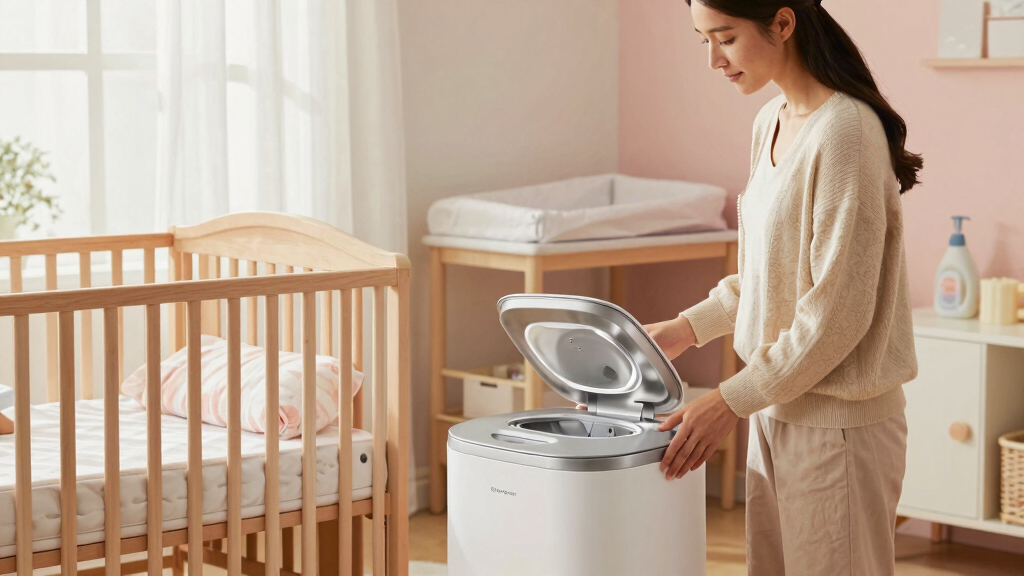
You’re often holding a squirming baby—your diaper pail should be easy to operate with one hand. Look for models with foot pedals or simple lid mechanisms. For instance, a pail with a foot pedal lets you open it while holding a diaper or baby without fumbling.
Imagine changing a diaper, then stepping on the pedal with your foot to open the lid—hands free. This small convenience saves time and keeps things hygienic. Also, check if the lid stays open when you’re dropping in a new diaper—no more juggling.
Choosing a diaper pail with one-handed operation or foot pedal mechanisms isn’t just about convenience—it also significantly reduces the risk of accidents or messes. For example, a pail that opens with a gentle tap allows you to quickly dispose of diapers without setting your baby down or risking dropping the diaper. This feature is especially beneficial during nighttime changes or when your hands are full. Additionally, a lid that stays open during disposal prevents accidental closure, making the process smoother and safer, especially in cramped spaces where maneuvering can be tricky. Prioritizing ease of use enhances efficiency and hygiene, helping you manage diaper duty with less stress and more confidence.
hands-free diaper pail with charcoal filter
As an affiliate, we earn on qualifying purchases.
As an affiliate, we earn on qualifying purchases.
Manual vs. Automatic Diaper Pails: Which Fits a Small Space Best?
| Feature | Manual Diaper Pails | Automatic Diaper Pails |
|---|---|---|
| Operation | Requires physical opening, often via lid or foot pedal | Uses sensors or touchless operation, hands-free |
| Size | Usually more compact, better for small spaces | May be bulkier due to electronics |
| Hygiene | Good, but contact needed | Very hygienic, touchless |
| Cost | Generally less expensive | Higher price point |
As an affiliate, we earn on qualifying purchases.
Materials and Durability: What Keeps Your Nursery Safe and Clean
Look for pails made of sturdy, easy-to-clean materials like BPA-free plastic or stainless steel. These resist stains, scratches, and are less likely to harbor bacteria. For example, a stainless steel pail with a smooth surface can be wiped clean daily and withstand the bumps of a busy nursery.
Cheaper plastic models might crack over time or stain from diaper leaks. Consider the weight—heavier materials can feel more durable but may be harder to move. Balance durability with ease of cleaning for a nursery that stays safe and hygienic.
Choosing durable materials ensures your diaper pail maintains its integrity over time, preventing cracks or leaks that could harbor bacteria or cause messes. Stainless steel, for instance, resists staining and odors better than plastic, which can absorb smells or stain from diaper leaks. However, heavier materials might be less convenient to move around, especially if you need to reposition the pail frequently. The tradeoff between durability and portability is crucial—selecting a sturdy, easy-to-clean material like stainless steel can save you time and keep your nursery safer and more hygienic long-term.
Cost, Refills, and Saving Money in the Long Run
Initial price is only part of the story. Some diaper pails come with proprietary liners or special bags that cost more over time. Others use standard trash bags, which are cheaper and easier to find.
For instance, many parents find that models compatible with regular trash bags save money and simplify refills. Consider the long-term expenses: a $50 pail with $5 liners might cost less than a $70 model with costly proprietary refills.
Understanding the tradeoffs between initial investment and ongoing costs helps you make smarter choices. Cheaper models with standard bags may require more frequent emptying but save money over time, while pricier models with proprietary liners might reduce the frequency but increase refill costs. Evaluating your budget and refill habits will help you choose a diaper pail that balances affordability with convenience, ensuring you don’t overspend on costly liners that might not be necessary for your routine.
Safety Features to Keep Little Explorers Out
Small nursery means little hands and curious minds. Look for pails with lockable lids or child-proof mechanisms. A pail with a secure lid prevents accidental spills or babies trying to crawl inside.
Imagine your toddler opening the lid when you’re not looking—that’s a safety risk. Choose models with locking features or child-resistant latches. It’s peace of mind in a tiny space.
Safety features are not just about preventing messes—they’re about protecting your child from potential hazards. A latch or lock mechanism ensures that curious little ones cannot open the pail and access dirty diapers or any chemicals used for cleaning. This is especially important in small nurseries where space is limited and everything is within reach. Investing in a model with reliable safety features minimizes risks, giving you peace of mind and ensuring your nursery remains a safe environment for your baby to explore and grow.
Eco-Friendly Options for the Conscious Parent
Eco-minded parents can find biodegradable liners or reusable systems that cut down on waste. Some brands now offer compostable liners or reusable pail inserts—great for small nurseries aiming to be greener.
Using reusable cloth liners that can be washed and reused not only reduces plastic waste but also offers long-term savings. These options are especially appealing if you want to minimize your environmental footprint without sacrificing odor control or convenience. Be aware, however, that reusable systems may require more maintenance and cleaning but can significantly reduce your nursery’s waste and reliance on disposable products. Choosing eco-friendly alternatives aligns with a sustainable lifestyle and helps create a healthier environment for your baby by reducing the amount of plastic waste generated from disposable liners and bags.
Frequently Asked Questions
What is the best diaper pail for a small nursery?
The best diaper pail balances size, odor control, and safety. Popular compact options like the Ubbi Steel Diaper Pail are known for their slim profile and excellent seal, making them ideal for small spaces.
Can I use a regular trash can instead of a diaper pail?
Yes, but a regular trash can usually doesn’t contain odors as well and may not be as hygienic. Specialized diaper pails are designed to trap smells and prevent bacteria buildup, which is especially helpful in small nurseries.
How often should I empty the diaper pail?
Most parents find that emptying it daily or whenever it’s full helps keep odors at bay and avoids bacteria growth. In a small nursery, frequent emptying is key to maintaining freshness.
Are there eco-friendly diaper pails?
Yes, some brands offer biodegradable liners or reusable inserts that reduce waste. These options are great for environmentally conscious parents and work well in small spaces.
How do I clean and maintain my diaper pail?
Regularly wash the pail with soap and water, replace filters or liners as recommended, and use odor-neutralizing sprays if needed. Keeping it clean prevents bacteria and keeps odors under control.
Conclusion
In a tiny nursery, your diaper pail should be a quiet hero—saving space, blocking smells, and keeping your baby safe. Focus on size, odor control, and safety features. With the right choice, diaper duty becomes a manageable part of your day, not a source of stress.
Remember, a good diaper pail is less about fancy features and more about how well it fits your space and routine. Find one that blends into your nursery, and you’ll breathe easier, even in the middle of the night.
Labor Day sales Picks
labor day deals
As an affiliate, we earn on qualifying purchases.