
TL;DR
Listen free for 30 days with Audible
Thousands of audiobooks and originals — cancel anytime.
Start your free trialAs an affiliate, we earn on qualifying purchases.
A well-organized nursery closet saves time and reduces stress. Regular decluttering, smart storage, and safety measures keep it tidy as your baby grows. Routine maintenance is key.
Ever opened your nursery closet and felt overwhelmed by a jumble of clothes, toys, and diapers? You’re not alone. The secret isn’t just about squeezing everything in—it’s about creating a system that works, grows, and stays neat. Think of it as setting a stage where every item has a home, and that home makes sense.
In this guide, you’ll learn how to assess what you really need, organize with purpose, and keep clutter at bay—all without pulling your hair out at 3 a.m. A tidy nursery closet isn’t just about aesthetics; it’s about making your daily routine smoother, safer, and more manageable.
Regularly declutter and reassess your nursery closet to prevent build-up of unnecessary items.
Use clear bins, labels, and designated zones for quick access and long-term organization.
Maximize vertical and under-crib space with shelves, hooks, and multi-functional furniture.
Prioritize safety by securing furniture, keeping hazardous items out of reach, and using child-proof locks.
Schedule routine checks every 3-6 months to adapt your organization as your baby grows.
How to Organize a Nursery Closet That Stays Organized
A lasting nursery closet is not about squeezing in more. It is a clear, adaptable system where every item has a sensible home—making rushed mornings, late-night changes, and each new growth stage calmer and safer.
Vertical storage and clear labeling can unlock significantly more usable closet space.
Removing outgrown, unused, or unsafe items can reclaim a substantial share of space.
Reassess as seasons, sizes, routines, and safety needs change.
Remove first. Organize second.
Empty the closet completely so hidden clutter becomes visible. Assess every piece for usefulness, fit, condition, and safety before deciding how much storage you need.
Useful right now
Current sizes, daily-care supplies, favorite toys, and bedding used in the present season.
Still good, not current
Outgrown clothes, duplicate supplies, keepsakes, and future-size pieces belong in dated, labeled bins.
Unsafe or unusable
Damaged toys, expired products, stained textiles, and broken storage should not return to the closet.
Build a map, not a pile.
Group similar items, label their homes, and use the full height of the closet. The goal is instant recognition: one glance should tell every caregiver where an item belongs.
Space unlocked
Illustrative gains from the highest-impact organizing moves.
The five-zone closet
Assign categories by frequency, size, and reach.
Contents stay visible.
The category is obvious.
Every item has a home.
No searching during care.
Caregivers return it correctly.
Choose solutions by constraint.
Use wall height before adding furniture. Reserve under-crib space for bulky or seasonal pieces, and keep small accessories contained so they cannot spread across shelves.
| Solution | Best use | Advantages | Watch for | Small-space fit |
|---|---|---|---|---|
| Wall-mounted shelves | Bins, bedding, future sizes | ✓ Uses vertical space | Must be securely anchored | ✓ Excellent |
| Under-crib drawers | Seasonal and bulky items | ✓ Uses hidden space | Limited to suitable items | ✓ Excellent |
| Hanging organizers | Shoes, bibs, accessories | ✓ Saves drawer space | ~ Needs category limits | ✓ Strong |
| Multi-purpose furniture | Storage plus changing | ✓ Combines functions | ~ Higher upfront cost | ✓ Strong |
| Slim stackable bins | Narrow gaps and shelves | ✓ Flexible and modular | Stacks must remain stable | ✓ Excellent |
Convenient for adults. Safe for children.
Place frequently used supplies where a caregiver can reach them without stepping away. Secure tall units, lock hazardous materials, and keep small or sharp objects above a child’s reach.
The non-negotiable checklist
Placement spectrum
Organize by risk and frequency—not merely by available space.
Small resets prevent big reorganizations.
The closet must evolve with the child. Short, predictable checks catch outgrown clothing, expired products, unstable fixtures, and overloaded categories before chaos returns.
Swap sizes, remove clutter, wipe shelves, and move the next set of clothes into the current-use zone.
Quick sweep
Remove outgrown items, return strays, and refill daily-care supplies.
Wardrobe swap
Rotate clothing, update labels, and check what the next size range needs.
Full reassessment
Review every zone, test safety hardware, and adapt storage to new routines.
Let the system grow with the child.
Adaptable storage reduces repeated overhauls. Choose solutions that can change height, purpose, and capacity as clothing, toys, and caregiving routines evolve.
Modular shelving
Adjust shelf heights and configurations as storage needs change.
Eco-friendly bins
Look for non-toxic bamboo, recycled plastics, or organic fabrics.
Smart inventory
Label makers and simple apps help track sizes, stock, and stored items.
Dual-purpose pieces
Changing stations, seating, and cribs with storage save floor space.
Clear it. Zone it. Secure it. Reset it.
A nursery closet stays organized when the system is easy to understand, quick to use, safe for the child, and flexible enough to change every few months.
Start with a Clean Slate: Declutter and Assess Your Nursery Closet
The first step to a lasting organized nursery closet? Clear everything out. Yes, every single item. This gives you a fresh look at what you truly need and what’s just taking up space. As you sort through clothes, toys, and accessories, ask yourself: Do I use this regularly? Is it still useful or safe?
Be honest. Outgrown clothes, toys your baby never played with, or items past their best? Donate, store, or toss. This step alone can free up 30-50% of your space.
Pro tip: create three piles—keep, donate, discard. Revisit every few months to prevent clutter from creeping back in.
As an affiliate, we earn on qualifying purchases.
Group Items by Type and Use for Quick Finds
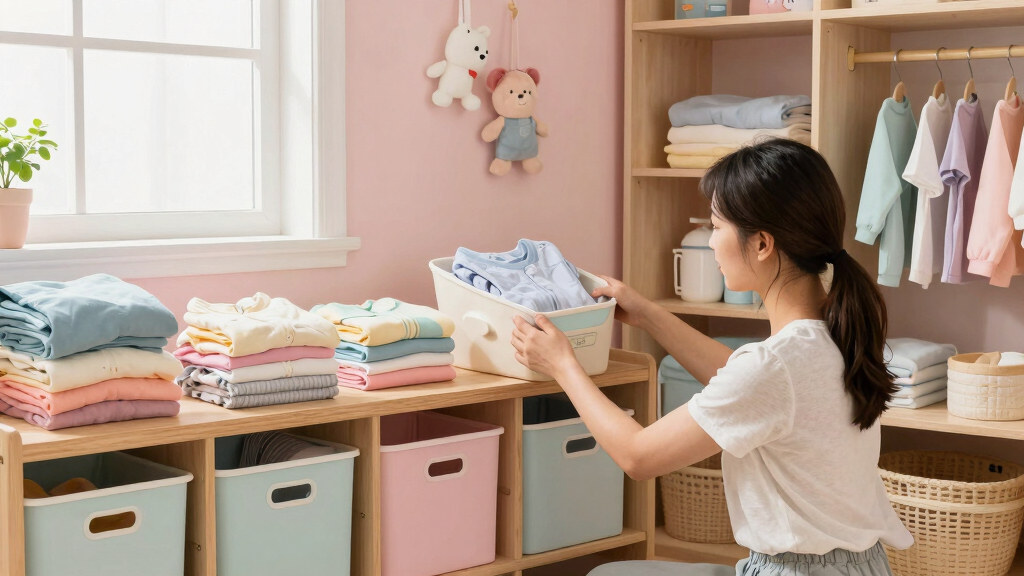
Organizing your nursery closet by grouping similar items together isn’t just about tidiness—it’s about efficiency and reducing stress. When everything is categorized, you minimize the time spent searching for essentials, which is crucial during those busy mornings or late-night feedings. This method also helps you identify gaps—like missing sizes or seasonal items—so you can plan ahead. Proper grouping prevents impulsive cluttering because each category has a designated space, making it easier to maintain order over time. Think of it as creating a mini-map of your nursery’s contents, which promotes a calmer environment and quicker decision-making.
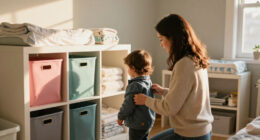
Use clear storage bins or baskets, so you see what’s inside without rummaging. Label each bin clearly—think big, bold labels or even color-coded tags. When you need a onesie or a diaper, you know exactly where to look.
Real-world example: During a chaotic morning, you grab a labeled basket of diapers and wipes in seconds—no hunting, no stress.
As an affiliate, we earn on qualifying purchases.
Maximize Space with Smart Storage Solutions
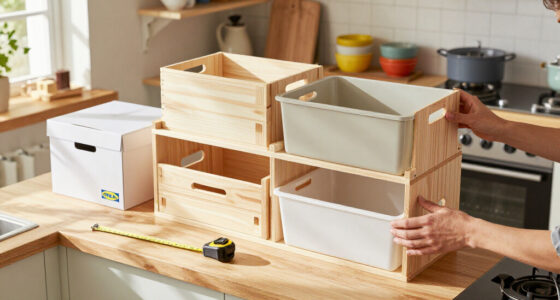
Nursery closets are often tight, but smart use of vertical space makes a huge difference. Installing floating shelves or hanging organizers allows you to utilize wall space that often goes unused, turning empty areas into functional zones. Using door hooks for hats, bibs, or small toys keeps frequently accessed items within arm’s reach and prevents clutter from spilling onto shelves or floors. Under-crib storage drawers aren’t just for extra space—they enable you to store seasonal clothing or bulky items out of sight but still easily accessible. These solutions matter because they prevent the feeling of cramped chaos and help you make the most of every inch.
For a real game-changer, consider multi-functional furniture: a crib with built-in drawers or a changing table with shelves underneath. Such furniture reduces the need for additional storage units, which can clutter small spaces. Slim, stackable bins can fit into narrow gaps, turning every inch into usable space and reducing the need for more furniture or storage pieces that might overwhelm your nursery.
Comparison table:
| Solution | Pros | Cons |
|---|---|---|
| Wall-mounted shelves | Maximizes vertical space, keeps items visible | Needs secure installation |
| Under-crib storage | Utilizes unused space, easy access | Limited to specific items |
| Hanging organizers | Good for small accessories, saves drawer space | Can become cluttered |
| Multi-purpose furniture | Combines storage + function | May cost more upfront |
vertical closet shelves for nursery
As an affiliate, we earn on qualifying purchases.
As an affiliate, we earn on qualifying purchases.
Keep Essentials Within Reach and Hazard-Free
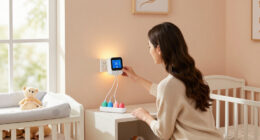
Safety and accessibility go hand in hand. Keeping your frequently used items—like diapers, wipes, and favorite clothes—at eye level or within easy reach ensures you can respond quickly during those frantic moments, reducing stress and potential accidents. Conversely, hazardous items such as cleaning supplies, small parts, or sharp objects should be stored out of reach or in locked cabinets to prevent curious little explorers from getting hurt. This balance between convenience and safety is critical because it directly impacts your daily routines and your child’s safety. When you organize with safety in mind, you create a space where you can act swiftly without compromising your child’s well-being. Proper storage and placement also help prevent accidental ingestion or injuries, which are common risks in cluttered or unsafe environments.
Use child-proof latches on cabinets and drawers if they’re accessible to your little explorer. Rotate frequently used items to the front of shelves, so they’re always ready when you need them. This intentional placement ensures safety without sacrificing convenience, which is essential for a stress-free routine.
Imagine: you’re changing your baby, and the wipes are right there, no digging through piles. That’s what accessibility and safety achieve together.
child-proof safety locks for furniture
As an affiliate, we earn on qualifying purchases.
As an affiliate, we earn on qualifying purchases.
Create a Routine for Maintenance and Growth
A tidy nursery closet isn’t a one-and-done task. Establishing a regular schedule—every 3 to 6 months—ensures your organization adapts to your growing child’s needs and prevents clutter from becoming overwhelming. As your baby grows, their wardrobe will change, toys will be added or outgrown, and your storage requirements will shift. Regularly reassessing helps you stay ahead of these changes, maintaining a functional space that suits current needs. This routine also helps catch safety hazards early, such as loose shelves or unsafe storage of small parts. Making this a habit means your nursery remains a calm, safe environment, and you avoid the stress of last-minute reorganizations.
Make it easy: dedicate 15 minutes after seasons change to swap out clothing, clear clutter, and tidy shelves. Enlisting your partner or a helper can distribute the workload, making the process quicker and less burdensome. Consistent maintenance reduces the likelihood of accumulated chaos and ensures your nursery remains a safe haven for your child’s growth.
Real-life tip: A quick monthly check of toys and clothes keeps clutter from piling up, making your life easier and your nursery safer.
Embrace Trends That Keep Your Nursery Closet Smart and Safe
Recent trends in nursery organization focus on combining safety with adaptability. Modular, customizable shelving systems allow you to adjust storage as your child’s collection of clothes and toys expands, preventing the need for frequent reorganization. Eco-friendly bins made from recycled, non-toxic materials are not only environmentally conscious but also safer for your baby, reducing exposure to harmful chemicals. Smart tools like label makers or app-based inventory systems can help you track what’s stored and where, saving time and mental energy. Advanced options like RFID tags or barcode systems, while more complex, can be invaluable if you have a large collection or plan to resell items later. These trends prioritize safety by ensuring furniture is anchored securely and avoiding sharp or heavy items stored at child level. Embracing such innovations means your nursery remains functional, safe, and adaptable for years to come, reducing future reorganizations and promoting peace of mind.
Remember: safety is paramount. Check that furniture is anchored, and avoid sharp or heavy items being stored at child level.
Frequently Asked Questions
How often should I reorganize my nursery closet?
Every 3 to 6 months is ideal—especially with seasonal changes or when your baby’s wardrobe and toy collection grow. Regular reassessment keeps clutter down and ensures safety and accessibility.
What are the best storage solutions for small nursery closets?
Vertical shelving, hanging organizers, under-crib storage, and slim stackable bins make the most of tight spaces. Multi-purpose furniture with built-in storage can also transform small closets into efficient hubs.
How can I keep the closet organized with frequent use?
Use clear, labeled bins for different categories, designate specific spots for each item, and rotate frequently used items to the front. This keeps things accessible and prevents chaos.
What safety precautions should I take?
Anchor heavy furniture to the wall, keep hazardous items out of reach, and use child-proof locks on cabinets or drawers. Regularly check for loose or unsafe items in the closet.
How do I manage outgrown clothing and toys?
Sort and donate or store outgrown items in labeled bins for future use or resale. Regular sorting prevents clutter and keeps your space manageable.
Conclusion
Think of your nursery closet as a living space—one that evolves with your child. When you set up systems that are simple, safe, and adaptable, you’re not just tidying up; you’re creating a calm zone that makes every day easier.
Start small, stay consistent, and remember: a tidy nursery isn’t just prettier—it’s better for your sanity, your baby’s safety, and your routine. As you walk in and see that neat, functional space, you’ll feel a quiet sense of achievement—and maybe even get a little more sleep.
Flea & tick season Picks
flea and tick prevention
As an affiliate, we earn on qualifying purchases.