TL;DR

Turn the school run and nap time into listening time
- Thousands of audiobooks, podcasts and originals
- Listen on your phone, tablet or Echo — also offline
- Cancel anytime
Nursery cable management is about keeping cords out of reach, reducing tripping hazards, and maintaining a calm environment. Recent innovations like wireless tech and built-in channels make it easier for parents to create a safe, tidy nursery.
Ever stepped into a nursery and felt overwhelmed by a jumble of cords? Those colorful monitor wires and lamp cords might seem harmless, but they hide real risks. Every parent knows the chaos of tangled cables — and the worry about safety, especially at night.
This guide shows you how to tame those cords, turning a cluttered space into a safe haven. You’ll learn practical solutions, recent innovations, and simple steps to protect your little one while keeping the nursery looking tidy and inviting.
Prioritize safety: keep cords at least 3 feet away from cribs and play areas.
Use simple tools like adhesive clips and fabric sleeves for quick, effective cord management.
Wireless devices can drastically reduce cord clutter and hazards in the nursery.
Choose child-safe, durable products that blend seamlessly with nursery decor.
Regularly inspect and maintain your cable setup to keep it safe as your child grows.
Why Safe Nursery Cables Matter More Than You Think
Nursery cable management isn’t just about looks. It’s about safety—preventing strangulation, choking, and electrical hazards. The CPSC warns that cords should be at least 3 feet away from cribs and play areas to reduce risks. For example, a loose monitor cord hanging near a crib can become a dangerous strangulation hazard if a curious toddler pulls on it.
Good cable management also cuts down on trips and falls. Imagine walking into a nursery where cords snake across the floor—easy to trip over, especially when sleep-deprived. Properly secured cords keep your nursery safe and peaceful, so you can focus on what truly matters: your baby’s well-being.
Beyond safety, well-organized cords contribute to a calming environment that promotes restful sleep and reduces stress. Conversely, tangled or exposed cords can create visual clutter that overstimulates a baby, making it harder for them to settle. Therefore, investing in safety and organization isn’t just about avoiding hazards; it’s about fostering a nurturing space conducive to healthy development. The tradeoff might be a little effort now, but the payoff is peace of mind and a safer nursery for your child.
As an affiliate, we earn on qualifying purchases.
Quick Win: 5 Easy Ways to Secure Cords Today
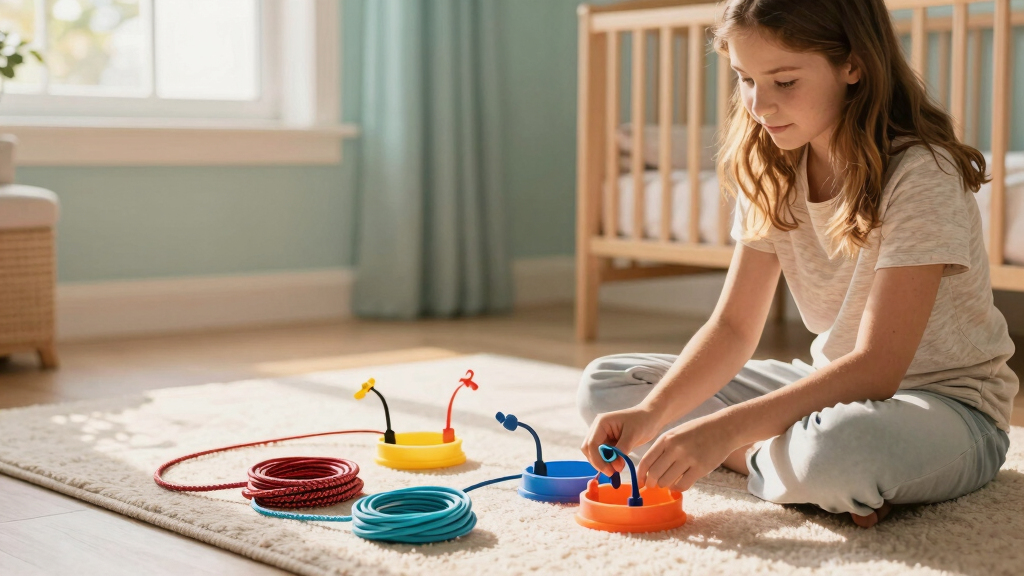
- Adhesive cable clips: Stick these to walls or furniture to hold cords flat against surfaces. They prevent cords from sagging or dangling, which reduces the risk of tripping or accidental pulling. Proper placement ensures cords are out of reach of curious little hands, but also accessible for maintenance.
- Cord sleeves: Wrap cords in soft, fabric sleeves for a tidy look and added safety. They protect cords from wear and tear, which can lead to exposed wires—a serious safety concern. Additionally, sleeves can prevent cords from unraveling or becoming a choking hazard if frayed, but choosing the right material is crucial to avoid overheating or fire risks.
- Outlet covers: Cover unused outlets and secure cords behind them. This prevents little fingers from poking into electrical outlets and reduces the chance of accidental shocks. Ensuring cords are plugged in securely and outlets are covered also minimizes the risk of electrical fires or short circuits.
- Zip ties: Bundle excess cord lengths neatly and keep them out of reach. This reduces clutter and prevents cords from becoming tripping hazards. Be cautious to not tighten zip ties too much, which could damage cords or restrict airflow, leading to overheating.
- Furniture positioning: Place furniture to hide or block access to cords near cribs or play areas. This not only makes the space look cleaner but also physically prevents children from pulling or playing with cords, which can be dangerous. The tradeoff involves rearranging furniture to optimize safety without sacrificing functionality or aesthetic appeal.
For example, a parent might use adhesive clips along the wall behind the crib, neatly guiding cords out of reach without damaging paint or wall integrity. Combining these simple methods creates a layered, effective safety system that minimizes hazards and enhances room aesthetics.
child-safe cord organizers for nursery
As an affiliate, we earn on qualifying purchases.
As an affiliate, we earn on qualifying purchases.
How to Hide Monitor and Lamp Cords Without Damaging Walls
Hiding cords neatly without drilling or damaging walls is easier than you think. Here’s a step-by-step approach:
- Attach adhesive cable clips: Place these along the back of furniture or wall edges to hold cords flat and out of sight. Proper placement ensures cords stay secure and do not sag or get pulled, which could expose wiring or cause tripping.
- Use flexible cable sleeves: Wrap long cords in soft fabric sleeves that match nursery decor, creating a seamless look. This not only conceals cords but also protects them from wear, which can prolong their lifespan and reduce safety risks associated with frayed wires.
- Install built-in channels: Opt for furniture with integrated cable conduits or add adhesive cable raceways to walls—these hide cords behind furniture or along edges. This method keeps cords protected from damage and out of sight, maintaining a sleek aesthetic while reducing hazards.
- Utilize decorative covers: Paintable or fabric cord covers can blend with nursery themes, turning cords into part of the decor. When chosen carefully, these covers make cords less noticeable and prevent curious children from pulling on them.
- Position furniture strategically: Push a changing table or bookshelf in front of cords to keep them out of reach and sight. This simple tactic creates a physical barrier, reducing temptation and risk of accidental pulling or tripping.
A real-world example: a parent runs monitor cords behind a tall bookshelf with built-in channels, then covers the visible parts with a fabric panel that matches the nursery curtains. It’s both safe and stylish, demonstrating how thoughtful placement can combine safety and aesthetics effectively.
This method keeps cords tidy, protected, and out of the child’s reach, all without damaging your walls or furniture. The tradeoff involves a bit of planning and rearrangement, but the long-term safety benefits are worth it.
wireless baby monitor with no cords
As an affiliate, we earn on qualifying purchases.
As an affiliate, we earn on qualifying purchases.
Wireless Devices: The No-Cord Solution for a Tidy Nursery
Wireless monitors, lamps, and sound machines are game changers. They eliminate the need for long, dangling cords, reducing clutter and hazards. According to BabyUI, switching to wireless tech can cut cord clutter by up to 70% and significantly lower tripping risks.
For example, a parent replaced a wired baby monitor with a Wi-Fi-enabled camera that streams directly to their phone. The result? A clean wall, no cords hanging near the crib, and quick access to the feed anywhere in the house.
While wireless devices often cost a bit more upfront, they pay off in safety and convenience. They also reduce the likelihood of accidental pulls or trips that could cause injury or damage. Many now come with rechargeable batteries or low-voltage power supplies, making them even safer for nursery use. The tradeoff involves considering potential connectivity issues or power limitations, but the safety and aesthetic benefits often outweigh these concerns.
However, ensure your wireless devices meet safety standards and are compatible with your nursery setup before switching.
As an affiliate, we earn on qualifying purchases.
Choosing the Best Cord Management Products for Your Nursery
Not all cord management products are created equal. The key is selecting solutions that are child-safe, durable, and match your nursery style. Here’s a quick comparison:
| Product Type | Features | Best For |
|---|---|---|
| Adhesive Clips | Easy to install, flexible, non-toxic | Hanging cords along walls or furniture |
| Cord Sleeves | Soft fabric, customizable length, paintable | Hiding and protecting cords |
| Built-in Channel | Integrated into furniture, seamless look | Permanent, tidy solutions |
| Decorative Covers | Colorful, fabric, paintable | Matching nursery decor |
| Smart Power Strips | Child-proof, surge protection, multiple outlets | Controlling multiple devices safely |
Choosing the right products involves understanding their safety features, durability, and aesthetic compatibility. For example, a parent might combine adhesive clips with fabric sleeves to secure and conceal cords, and add a child-proof power strip for safe control of multiple devices. The key is layering solutions to address different safety concerns while maintaining style. The tradeoff is the initial investment in quality products versus long-term safety and peace of mind.
Safety Checks and Maintenance: Keep Cords Safe Over Time
Managing nursery cords isn’t just a one-time task; it requires ongoing vigilance. Regular inspections allow you to catch potential hazards early—such as frayed wires, loose clips, or sagging cords that could become accessible to your child. Understanding the implications of wear and tear is vital: damaged cords can lead to electrical fires, shocks, or choking hazards if exposed wires are accessible.
When you perform routine checks, you’re effectively extending the lifespan of your safety measures. For example, replacing a worn-out clip or re-tightening a zip tie prevents cords from sagging or becoming loose, which could otherwise tempt a curious toddler. Staying updated with safety recalls from agencies like the CPSC is crucial—using recalled or damaged products increases risk. The tradeoff involves time and effort, but the benefit is a consistently safe environment that adapts to your growing child’s needs.
For instance, a parent notices a zip tie has loosened, and a cord is slightly sagging. They tighten it, ensuring cords stay hidden and secure. Routine upkeep keeps your nursery safe long-term, preventing accidents before they happen.
Frequently Asked Questions
What are the safest ways to secure cords in a nursery?
Use adhesive cable clips, cord covers, and outlet safety covers designed for children. These keep cords flat, out of reach, and prevent choking or strangulation hazards.
How can I hide monitor and lamp cords without damaging walls or furniture?
Attach adhesive clips or use flexible fabric sleeves to run cords along furniture edges or behind furniture with built-in channels. Decorative cord covers matching nursery decor also work well.
Are wireless devices a good alternative to reduce cord clutter?
Yes. Wireless monitors, lamps, and sound machines eliminate long cords, making the nursery safer and more organized. Just verify they meet safety standards and suit your setup.
What materials are best for nursery cable management products?
Opt for non-toxic, soft, flexible materials like fabric, silicone, or child-safe plastics. These are gentle, durable, and blend seamlessly into nursery decor.
How do I ensure that my cable management solutions are safe and compliant?
Choose products certified by safety organizations like UL or ASTM. Follow manufacturer instructions carefully, and regularly check for wear or damage over time.
Conclusion
Good nursery cable management isn’t just about tidiness. It’s about creating a safe, calming space for your little one to grow and explore. With the right tools and habits, you can turn a chaotic jumble of cords into a seamless part of your nursery’s design.
Remember: safety always comes first. Keep cords out of reach, use child-proof products, and stay vigilant. A tidy nursery isn’t just beautiful — it’s a safer place for your baby to thrive.
Halloween Picks
halloween
As an affiliate, we earn on qualifying purchases.