TL;DR

Turn the school run and nap time into listening time
- Thousands of audiobooks, podcasts and originals
- Listen on your phone, tablet or Echo — also offline
- Cancel anytime
A smart changing pad offers convenience with added features for diaper changes, while a baby scale provides precise weight data for growth tracking. Your choice depends on your routine priorities and budget.
Imagine changing your baby’s diaper and simultaneously getting a snapshot of their health. Sound too good to be true? With recent tech advancements, some devices blur the line between convenience and health tracking. But which one truly fits your routine: a smart changing pad or a dedicated baby scale? This guide breaks down their features, benefits, and limitations—helping you choose what makes your daily life easier and your baby healthier.
If you’ve ever felt overwhelmed by the number of gadgets claiming to make parenting simpler, you’re not alone. The right device should seamlessly integrate into your day, offering reliable data without adding stress. Let’s explore how these two popular options stack up, so you can decide which fits your parenting rhythm best.
A smart changing pad offers convenience with integrated health features during diaper changes, saving time and providing quick insights.
Dedicated baby scales deliver the most accurate weight measurements, essential for tracking your baby’s growth milestones.
Your choice hinges on your routine: frequent, quick updates vs. precise, less frequent weighing.
Prioritize safety, ease of cleaning, and compatibility with your lifestyle when selecting a device.
Investing in the right device can make a real difference in your confidence about your baby’s health and your daily peace of mind.
Smart Changing Pad vs Baby Scale
One folds health tracking into diaper duty. The other is built for precise growth data. The best fit depends on whether your routine values frequent snapshots, clinical-level consistency, or a little of both.
Same baby. Different jobs.
A smart changing pad turns a repeated daily task into a lightweight health check. A baby scale separates weighing into a focused, controlled measurement.
Smart Changing Pad
A changing surface with digital sensors and connected features. Weight readings are useful for seeing broad trends, though movement and positioning can affect results.
- Captures quick data during diaper changes
- May track temperature, humidity and routines
- Often syncs with iOS or Android apps
- Reduces the need for a separate weighing ritual
Dedicated Baby Scale
A purpose-built device for consistent infant weight measurements. Its stable platform and tare function help isolate true weight more reliably.
- Can measure weight with ±10 gram precision
- Supports accurate growth-curve monitoring
- Tare removes clothes or blanket weight
- Useful when subtle changes matter
Where each device wins
There is overlap, but not equivalence. A pad prioritizes seamless routine integration; a scale prioritizes measurement quality.
| Decision factor | Smart changing pad | Baby scale |
|---|---|---|
| Primary purpose | Diapering + health snapshots | Precise weight measurement |
| Weight accuracy | ~ Approximate; model dependent | ✓ Up to ±10 g precision |
| Routine frequency | ✓ Multiple daily opportunities | ~ Weekly or bi-weekly checks |
| Extra tracking | ✓ Temperature, humidity, app logs | ~ Tare, display, Bluetooth |
| Clinical confidence | ✗ Not a substitute for precise data | ✓ Better for subtle growth changes |
| Space profile | Often lightweight or foldable | Compact, usually used in one stable spot |
| Typical cost | $50–$150 | $30–$200 |
Legend: ✓ strong fit ✗ limitation ~ varies by product or routine
Trend data is not precision data.
Smart pads can reveal the direction of growth. Dedicated scales are better suited to confirming small changes with consistent readings.
Dedicated baby scales may offer this level of precision—important when monitoring subtle growth patterns or following professional guidance.
Start with the moment you need help.
The best device is the one you can use safely and consistently. Match the purchase to your real habits—not an idealized routine.
You want fewer extra steps
You already change diapers several times a day and mainly want quick, automatic growth snapshots.
Lean toward: Smart changing padSmall changes matter
You need repeatable measurements, are following a growth concern, or want reliable data to discuss with a clinician.
Lean toward: Baby scaleYou value both benefits
Use a pad for broad daily trends and a scale for scheduled checks when budget and storage allow.
Consider: Complementary useName the goal
Convenience or precision?
Map the routine
Daily snapshots or planned checks?
Check the space
Portable setup or stable station?
Verify safety
Stable, non-slip and easy to clean?
Buy for fit
Pay only for features you will use.
Good data starts with a stable setup.
Whichever device you choose, careful positioning, cleaning and maintenance improve both safety and measurement consistency.
- Place the device on a flat, level and stable surface.
- Look for non-slip bases and gentle, hypoallergenic materials.
- Keep one hand close to your baby; never leave them unattended.
- Use a damp cloth and avoid harsh cleaning chemicals.
- Follow manufacturer guidance for calibration, firmware and detachable parts.
- Check manufacturer recall and safety notices regularly.
Before you choose
Focus on reliability, routine fit and the level of confidence you actually need from the number on the screen.
Can a smart changing pad replace a baby scale?
Not entirely. It may be enough for broad trend tracking, but a dedicated scale is the stronger choice when precise, repeatable weight data is important.
Which is better for everyday use?
A smart changing pad fits naturally into daily diaper changes. A scale is better for purposeful weekly or bi-weekly measurements.
Are these devices safe for newborns?
Reputable products should meet applicable safety requirements. Check certifications, stability, materials and the manufacturer’s newborn-use instructions.
How often should a baby be weighed?
Frequency depends on age and health needs. Avoid over-monitoring and follow the schedule recommended by your pediatrician or healthcare provider.
What Is a Smart Changing Pad and Why It Might Be Your Best Ally
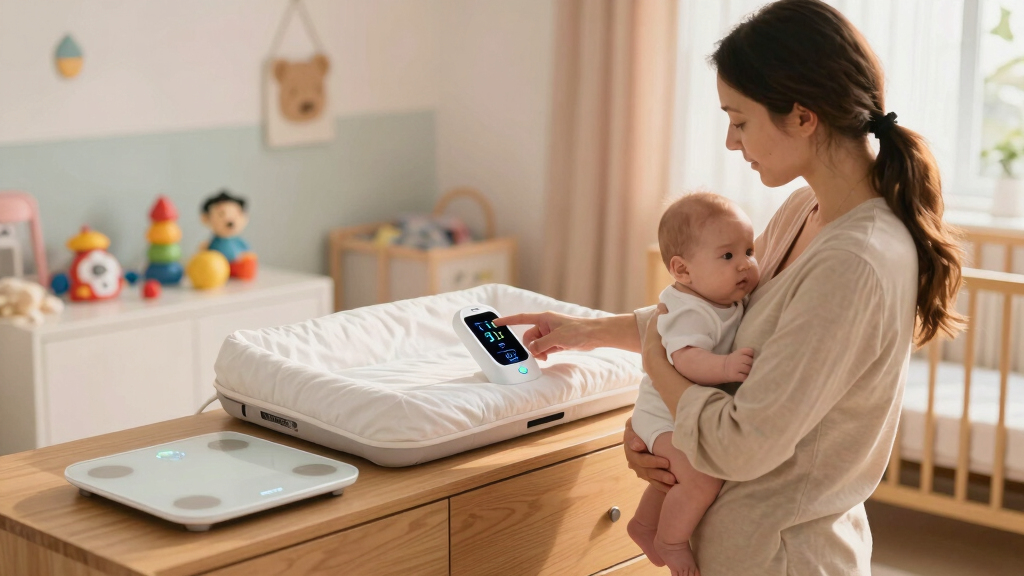
A smart changing pad is more than just a soft surface for diapering. It often includes digital weight sensors, temperature checks, and app connectivity, turning diaper duty into a mini health session. For example, some models weigh your baby with each diaper change, tracking growth over time without extra steps.
Imagine that every diaper change becomes a quick health check—weight, temperature, humidity—all in one. This integration can save time during busy mornings or nighttime feedings, reducing the need for separate weighing routines. However, it’s important to recognize that the weight measurements from these pads are often approximate because they rely on sensors that may be affected by the baby’s position or movement. This means they are excellent for trend monitoring but less reliable for precise growth tracking, which could lead to misinterpretations if used as the sole data source.
Think about a typical morning: you’re changing your 4-month-old, and the pad displays a weight increase of 200 grams since last week. While this indicates growth, it may not be precise enough to detect subtle changes or confirm health concerns. In this context, understanding these tradeoffs helps you decide if a smart changing pad is sufficient or if you need a dedicated scale for accuracy.
Popular right now

Samsung 42-Inch S90H OLED 4K Smart TV Bundle

Samsung 48-Inch S90H OLED 4K Smart TV (2026)

Vitamix Propel Series 750 Professional-Grade Blender, 4 Programs, Black
As an affiliate, we earn on qualifying purchases.
Why a Baby Scale Is the Gold Standard for Weighing Your Little One
A baby scale is designed specifically for the task of measuring your infant’s weight with the highest accuracy. It typically offers readings down to the gram, with a precision of ±10 grams, which is crucial when monitoring subtle growth patterns or diagnosing health issues. This level of precision can be the difference between catching a growth delay early or missing it entirely, potentially impacting health outcomes.
For example, if your baby’s growth curve shows a plateau, a precise scale helps you confirm whether this is a temporary fluctuation or a sign of a problem requiring medical attention. The ability to get consistent, highly accurate measurements allows parents and healthcare providers to make informed decisions about nutrition, health interventions, or further investigations.
Moreover, many baby scales include features like tare functions, which let you subtract the weight of clothes or blankets, ensuring you only record the baby’s true weight. The importance of this accuracy extends beyond routine checks; it’s vital for situations where precise dosing of medication based on weight is necessary or when tracking slow or irregular growth patterns.
In essence, a dedicated baby scale offers peace of mind, knowing you have the most reliable data, which can be critical for early detection of health issues or ensuring your baby’s growth milestones are on track.
Compare These Devices Side-by-Side — Which Fits Your Routine?
| Feature | Smart Changing Pad | Baby Scale |
|---|---|---|
| Purpose | Diaper changes + health tracking | Precise weight measurement |
| Accuracy | Approximate, varies by model | ±10 grams, highly precise |
| Additional Features | Temperature, humidity, app tracking | Tare, digital display, Bluetooth |
| Routine Fit | Every diaper change, quick health snapshot | Weekly or bi-weekly growth checks |
| Portability | Usually lightweight, foldable | Compact but designed for static use |
Choosing depends on your priorities: do you want quick health updates with each diaper change or precise weight data for growth milestones? Both devices serve different, yet sometimes overlapping, purposes. Recognizing these differences helps you weigh the tradeoffs—convenience versus accuracy—and select the device that best complements your routine and your baby’s health needs.
How to Decide Which One Your Baby Needs Most
- Identify your primary goal: quick daily updates or precise growth data. Understanding this helps prioritize features and avoid unnecessary expenses.
- Assess your routine: do you change diapers multiple times a day or weigh weekly? This determines how often you need to use the device and what kind of accuracy is required.
- Consider space and portability: do you need something lightweight that can be easily moved or stored? This impacts your choice if you have limited space or need flexibility in where you weigh your baby.
- Check safety features: non-slip bases, hypoallergenic materials, and certifications are essential for daily use. Ensuring safety reduces risks and gives peace of mind during routine handling.
- Set your budget: smart changing pads range from $50-$150; baby scales from $30-$200. Balance cost with the features you need most, understanding that higher price often correlates with greater accuracy or additional functionalities.
For example, if you’re a busy parent who wants to keep an eye on growth without extra fuss, a smart changing pad might be enough. But if your baby’s health requires close monitoring, investing in a precise baby scale makes sense. Recognizing your priorities ensures you select a device that truly supports your parenting style and health goals.
Safety and Practical Tips for Using These Devices
Both devices should meet safety standards—look for non-slip surfaces and hypoallergenic, easy-to-clean materials. Always place the device on a flat, stable surface to prevent slips or falls.
For example, when weighing your baby, ensure the scale is on a level table and your baby is comfortable. Regularly check for recalls or safety notices from manufacturers—especially important for electronic devices used daily.
Keep the device clean with a damp cloth and avoid harsh chemicals. For smart changing pads, remove any detachable parts before cleaning, and follow the manufacturer’s instructions for app updates or firmware checks. Proper maintenance extends the lifespan of your device and ensures consistent, safe operation, which is vital for your baby’s health and your peace of mind.
Frequently Asked Questions
Can I use a smart changing pad for weight monitoring instead of a baby scale?
Smart changing pads can give you a rough idea of your baby’s weight, but they are generally less precise than dedicated scales. This means that while they are useful for observing general trends, they may not detect subtle changes or provide the consistency needed for medical assessments. Relying solely on them could lead to misinterpretation of your baby’s growth patterns, potentially delaying necessary interventions. For critical health monitoring or when precise data is required, a dedicated baby scale remains the more reliable and accurate choice, ensuring you have confidence in the measurements that matter most for your child’s health.Are baby scales safe for newborns?
Yes, reputable baby scales are designed with safety as a priority, meeting strict standards for stability and non-toxicity. When used correctly—placing the scale on a flat, stable surface and ensuring your baby is comfortable and secure—they are safe for newborns. It’s essential to follow the manufacturer’s instructions carefully, including how to position your baby and how often to weigh, to avoid any risks such as falls or discomfort. Regularly inspecting the device for recalls or safety notices further ensures safe usage. Proper handling and maintenance make baby scales a safe, reliable tool for monitoring your newborn’s growth and health.How often should I weigh my baby?
The frequency of weighing depends on your baby’s health status and your pediatrician’s recommendations. Typically, weekly weigh-ins are common during the first few months, especially if your baby is premature, underweight, or experiencing health concerns. Regular monitoring helps detect growth patterns and possible issues early, providing valuable data for healthcare providers. However, excessive weighing can cause unnecessary worry or attachment to numbers, so balance is key. Always consult your pediatrician to determine the appropriate schedule tailored to your baby’s specific needs, ensuring your approach supports both health monitoring and your peace of mind.Will a smart changing pad replace the need for a separate baby scale?
While some smart changing pads include weight measurement features, they typically do not offer the same level of accuracy as dedicated baby scales. For routine growth tracking, especially when subtle changes are involved, a precise baby scale remains essential. Smart changing pads are excellent for quick health snapshots during diaper changes but should be viewed as complementary tools rather than replacements for specialized equipment. Relying solely on a smart changing pad could risk missing small but significant growth deviations. Therefore, for comprehensive health monitoring, investing in a dedicated baby scale is advisable to ensure you have the most accurate, reliable data for your baby’s well-being.What features should I look for in a device?
Prioritize accuracy, safety features, ease of cleaning, and connectivity options that suit your lifestyle. High accuracy ensures reliable growth data, especially with baby scales that measure in grams. Safety features like non-slip bases, hypoallergenic materials, and proper certifications protect your baby during use. Ease of cleaning reduces maintenance time and keeps the device hygienic. Connectivity options such as Bluetooth or app integration allow you to track data over time and share information with healthcare providers seamlessly. Additionally, consider whether the device fits well within your available space and your routine—selecting features that align with your needs will maximize the device’s usefulness and your confidence in its performance.Conclusion
Ultimately, the best device depends on what fits your routine, your baby’s needs, and your comfort level. A smart changing pad can transform diaper duty into a health snapshot, while a baby scale offers peace of mind with precise growth data. Think about your typical day—what will truly make your life easier?
Choosing wisely means you’ll spend less time worrying and more time enjoying those precious moments. After all, this is about making parenting simpler, not more complicated. Keep your focus on your baby’s well-being, and let technology do the heavy lifting.