TL;DR

Turn the school run and nap time into listening time
- Thousands of audiobooks, podcasts and originals
- Listen on your phone, tablet or Echo — also offline
- Cancel anytime
Most baby tech—tablets, headphones, sound machines—is allowed on planes if used properly. Download content ahead, verify airline policies, and pack smart for a smoother flight with your baby.
Flying with a baby often feels like a juggling act — trying to keep them entertained, comfortable, and safe at 30,000 feet. But knowing what tech is actually allowed onboard can turn chaos into calm. The right gadgets, used smartly, can make your trip smoother and even enjoyable.
In this guide, you’ll learn exactly what baby tech works on a plane, what’s allowed by airlines, and how to pack and prepare for different flight phases. It’s not about gimmicks — it’s about practical tools that serve real needs during your journey.
Always preload entertainment content onto your device before the flight — in-flight Wi-Fi is often unreliable or restricted.
Verify your airline’s policies on sleep devices and inflatables — policies vary widely, and assumptions can backfire.
Use approved, lightweight child restraint tech, like the CARES harness or FAA-approved car seats, for safety and convenience.
Pack enough charged power banks and baby feeding gear to handle delays or turbulence without stress.
Attach tracking devices like AirTags to strollers and checked luggage for peace of mind during baggage handling.
Family Travel · In-Flight Tech Guide
Flying With Baby Tech: What Works on a Plane
Tablets, headphones, sound machines, restraint systems — most baby tech is allowed onboard if you use it properly. Download ahead, verify airline policies, and pack smart to turn 30,000-foot chaos into calm.
“Since the 2013 FAA rule change, portable electronic devices — tablets, e-readers, sound machines — are permitted gate-to-gate in airplane mode.”
Section 01 — Rules of the Cabin
What’s Allowed Onboard — and What Isn’t
Bluetooth is fine on nearly all major carriers; cellular radios must stay off. Anything that emits a signal follows airline rules — always check your specific carrier before packing.
| Device / Tech | Status | Conditions |
|---|---|---|
| Tablets & e-readersiPad, Fire HD Kids — downloaded content only | ✓ Allowed | Gate-to-gate since 2013, airplane mode on |
| Bluetooth headphones & sound machinesBuddyPhones, Yogasleep Hushh, Baby Shusher | ✓ Allowed | Permitted on nearly all major airlines |
| Power banks under 100 WhEssential backup — not all seats have outlets | ✓ Carry-on only | Never in checked luggage |
| AirTags / Tile trackersStrollers, car seats, checked bags | ✓ Allowed | Permitted in checked luggage |
| Inflatable footrests & seat bedsFly Tot, Plane Pal, BedBox | ~ Gray area | Some carriers allow with conditions; others ban outright — verify first |
| Sleep canopiesSlumberPod-style covers | ~ Gray area | Built for hotel rooms, not airplane seats or bassinets |
| Cellular streaming & hotspotsAny cellular radio use in flight | ✗ Banned | Cellular service must be off for the entire flight |
Section 02 — The Biggest Tech Decision
Choosing Child Restraint Tech
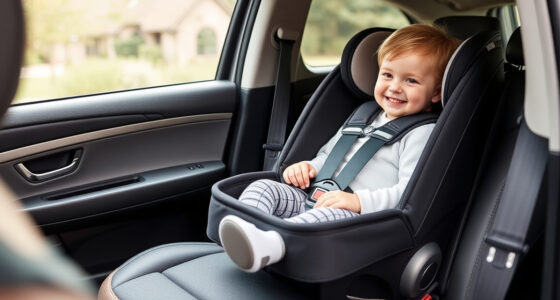
The FAA, NTSB, and pediatricians recommend children under ~40 lbs fly in their own seat with an approved restraint — not as lap infants. Look for the label “certified for use in motor vehicles and aircraft.”
Cosco Scenera Next
Budget-friendly, FAA-approved car seat that travels light without compromising safety.
Doona
Car seat that converts into a stroller — cuts gear count and streamlines boarding.
WAYB Pico
Compact folding travel seat designed for portability on planes and beyond.
CARES Harness
The sole FAA-approved alternative to a car seat — about a pound, window seat only.
Section 03 — Surviving Altitude
Entertainment Tech That Really Works
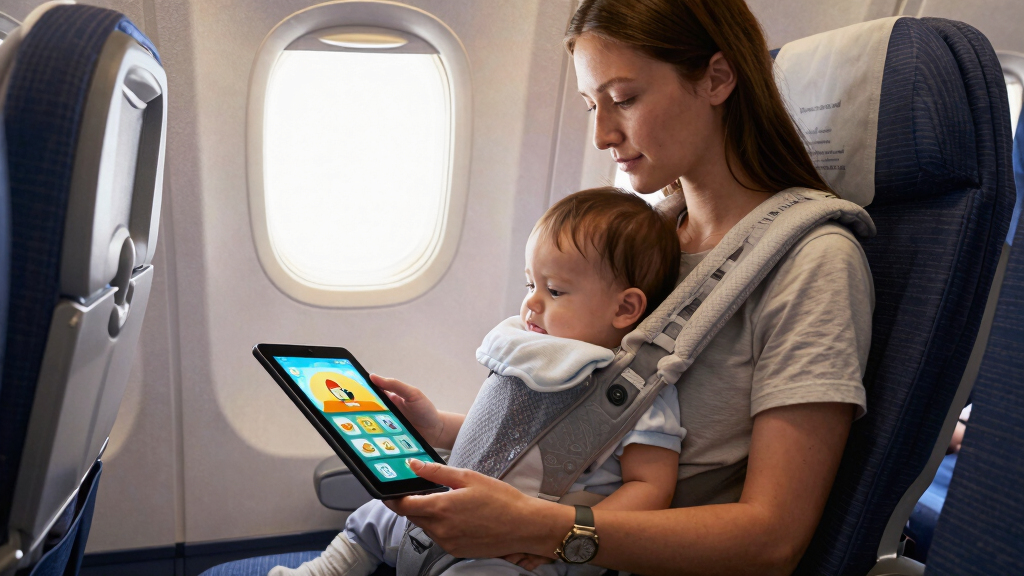
Downloaded, offline content is the gold standard. In-flight Wi-Fi is often slow, paid, or blocked from streaming — preload Netflix, Disney+, or PBS Kids before departure.
Rugged Tablets
Amazon Fire HD Kids and iPads in kid-proof cases dominate for durability and ease of use.
- Preload everything — shows, movies, nursery-rhyme playlists
- Khan Academy Kids & PBS Kids work fully offline
Volume-Limited Headphones
BuddyPhones, Puro Sound Labs, and LilGadgets cap output at ~85 dB to protect little ears.
- Bluetooth pairing is allowed on nearly all major carriers
- Keeps cabin noise — and your neighbors — happy
Passive Ear Muffs
Baby Banz-style muffs give simple, effective noise reduction for the youngest flyers.
- No electronics needed — nothing to pair or charge
- Experts favor passive muffs over ANC for infants
Connectivity Reality Check at 30,000 Feet
Section 04 — Comfort Systems
Sleep, Power & Feeding Tech
The supporting cast that keeps naps on schedule, batteries alive, and bottles warm from gate to gate.
Nap-Enabling Gear
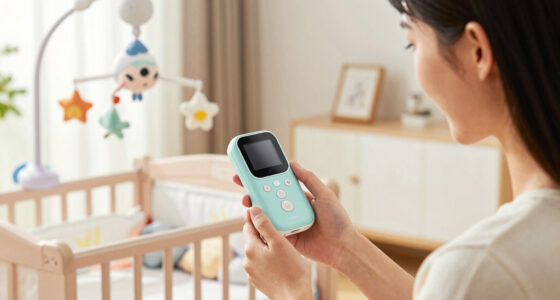
- White-noise machines (Yogasleep Hushh, Baby Shusher) — allowed and mask cabin noise
- Bulkhead bassinets — reserve early; ~20–25 lb weight limits on long-haul carriers
- Inflatable footrests — call ahead; policies vary widely by airline
Charging at Altitude
- Power banks <100 Wh — carry-on only, no approval needed
- Assume no outlet — many seats lack power; a 10,000 mAh bank lasts a 5-hour flight
- Charge every device to 100% the night before
TSA-Friendly Kit
- Formula, breast milk & baby food — exempt from the 3.4 oz rule; declare at screening
- Ice & freezer packs — allowed even if partially slushy
- Bottle warmers & wearable pumps — classed as medical devices; pumps don’t count against carry-on limits
Free family seating is now standard: after the DOT’s 2023 family-seating dashboard, major US airlines — American, United, Alaska, Frontier, and more — commit to seating children under 14 next to an accompanying adult at no extra charge.
The Gate-to-Gate Game Plan
Six Steps to a Smoother Flight
Pack & Preload
Download shows, charge power banks, drop AirTags in checked gear
Security
Declare formula, milk, and ice packs — exempt from the 3.4 oz rule
At the Gate
Gate-check the stroller free; confirm bassinet or seating requests
Takeoff
Devices in airplane mode, restraint or CARES harness secured
Cruise
Offline shows, white noise, and 85 dB headphones do the heavy lifting
Landing
Track checked gear via AirTag and grab your stroller at the jet bridge
What baby tech is allowed onboard — and what isn’t?
Since the FAA’s 2013 rule change, portable electronic devices like tablets, e-readers, and sound machines are allowed gate-to-gate in airplane mode. Bluetooth is permitted on nearly all major airlines, so wireless headphones and white-noise devices can connect without issue. Cellular service must be off — no streaming over cellular or hotspot use.
For example, you can watch downloaded shows on your tablet or let your baby listen to a sound machine while keeping the cabin peaceful. Just remember, anything that emits a signal—like Wi-Fi or Bluetooth—must follow airline rules. Always check your airline’s specific policy before packing.
As an affiliate, we earn on qualifying purchases.
Choosing the right child restraint tech: seats, harnesses, or strollers?
Children under about 40 lbs should fly in their own seat with an approved restraint, not as a lap infant. The FAA, NTSB, and pediatricians recommend this for safety during turbulence. This is crucial because turbulence can happen unexpectedly, and a proper restraint minimizes the risk of injury. The tradeoff is that it adds weight and bulk to your carry-on, but the safety benefits far outweigh the inconvenience. Popular options include the lightweight Cosco Scenera Next, the FAA-approved Doona car seat/stroller, and the foldable WAYB Pico, which are designed to be portable without compromising safety.
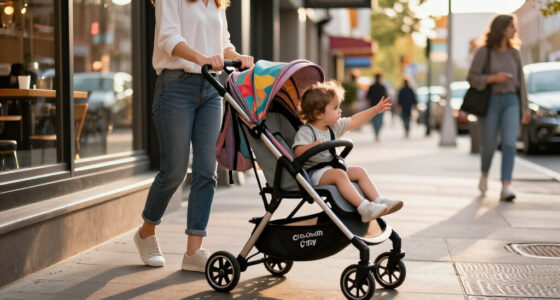
The CARES harness is the only FAA-approved non-car-seat device, rated for kids 22–44 lbs. It’s tiny—about a pound—and must be used in a window seat. If you’re bringing a stroller, gate-check it for free; many ultracompact strollers like the Babyzen Yoyo2 fit overhead bins. This flexibility allows you to choose the best setup depending on your flight length and your child’s comfort.
Example: I used the Doona on a long flight — it’s a car seat that turns into a stroller, saving space and hassle. Just check the label to confirm FAA approval. This dual-functionality can reduce the number of items you need to carry and streamline your boarding process.
portable baby sound machine for travel
As an affiliate, we earn on qualifying purchases.
As an affiliate, we earn on qualifying purchases.
Entertainment tech that survives altitude — and what really works
Flying with a baby means being prepared for the worst Wi-Fi. Downloaded content is king because offline availability ensures your child’s entertainment isn’t dependent on unreliable in-flight Wi-Fi, which often can’t stream or is too slow. Pre-loading shows from Netflix, Disney+, or PBS Kids onto a tablet or iPad before departure means you’re not at the mercy of connectivity issues. This preparation is essential because streaming quality can vary widely, and delays or outages can turn a calm flight into chaos. The tradeoff is the upfront time spent downloading, but it’s a small price for peace of mind.
Popular devices include Amazon Fire HD Kids and rugged iPads, chosen for durability and user-friendliness. Pair them with volume-limited headphones like BuddyPhones or Puro Sound Labs, capped at around 85 dB, to protect your child’s hearing. For infants, passive ear muffs like Baby Banz provide simple, effective noise reduction without the complexity of active noise cancellation, which can sometimes be uncomfortable or confusing for little ears. These tools help create a controlled auditory environment, reducing overstimulation and making naps more achievable.
Real-world example: I preloaded a playlist of nursery rhymes and a couple of movies on a toddler’s tablet. It kept her entertained for hours without needing Wi-Fi, and the headphones kept the noise level safe and non-disruptive to others.
child restraint harness for airplane
As an affiliate, we earn on qualifying purchases.
As an affiliate, we earn on qualifying purchases.
Sleep and comfort tech that really helps in-flight naps
White-noise machines like Yogasleep Hushh or Baby Shusher are widely used and allowed. They help mask airplane noise and create a soothing environment, which is crucial because cabin noise can be disruptive and prevent restful sleep. Sleep can also be improved with portable canopies like SlumberPod, but these typically work best in hotel rooms or at home, as they require a stable surface and space. The key is to understand that their effectiveness depends on the environment, and they may not be practical for airplane seats.
Inflatable footrests (Fly Tot, Plane Pal) and seat-to-bed devices are a gray area: some airlines allow them, others ban them outright. Always verify with your airline before bringing these, as policies vary and inconsistency can cause delays or confiscation. Many long-haul flights offer bulkhead bassinets — but these must be reserved well in advance and have weight limits (~20–25 lbs). Using these options strategically can significantly improve your child’s comfort and the quality of their sleep, which in turn affects the overall flight experience.
Example: I used a compact inflatable footrest on a recent flight, but I called ahead to confirm the airline’s policy first. Knowing the rules prevented surprises and helped me prepare the right gear for restful naps.
baby entertainment tablet with preloaded content
As an affiliate, we earn on qualifying purchases.
As an affiliate, we earn on qualifying purchases.
Power and charging tech: keeping devices alive at altitude
Power banks are essential for keeping devices charged during flights, especially when in-flight power outlets are unavailable or unreliable. Lithium batteries under 100 Wh are allowed in carry-on bags, but always check airline restrictions. A fully charged power bank can be a lifeline during turbulence or delays, ensuring your tablet or sound machine continues to operate. The tradeoff is that some seats lack power outlets, so having a backup is crucial. A high-capacity power bank allows you to extend device usage without stress, making it easier to manage your child’s entertainment and comfort throughout the flight.
Example: I kept my kid’s tablet charged with a 10,000 mAh power bank, lasting the entire five-hour flight without worry. This peace of mind allowed me to focus on our baby’s needs rather than constantly monitoring battery life.
Feeding tech that’s TSA-friendly and flight-ready
Formula, breast milk, and baby food are exempt from the 3.4 oz liquid rule — declare reasonable quantities at TSA. This exemption is vital because it allows you to carry enough to feed your baby without stress or multiple security checks. Ice packs and freezer packs are allowed even if slushy, which helps keep milk and food fresh during the journey. Portable bottle warmers and wearable pumps are classified as medical devices and are safe to carry onboard, providing convenience and peace of mind. Properly packing these items ensures you can feed your baby comfortably and maintain their routine, even during long flights.
Example: I packed a portable bottle warmer and a wearable pump, both of which went through security without issues. Having these items readily available meant I could feed my baby as needed, reducing fussiness and making the flight calmer for everyone.
Luggage and tracking tech: what’s allowed and what’s helpful
Apple AirTags, Tile trackers, and similar devices are permitted in checked bags and strollers. Many parents attach them to strollers, car seats, and luggage to recover lost items quickly, especially in busy airports. Gate-checking strollers is free on most airlines, and travel-friendly models like Babyzen Yoyo2 or GB Pockit fit overhead bins comfortably, making them easier to manage during transit. These tracking devices provide peace of mind because you can locate your belongings in real-time, reducing stress during baggage handling and transfers. The tradeoff is minimal — a small device can save hours of searching and prevent lost items from disrupting your trip.
Example: I used AirTags on our stroller and checked it at the gate — it arrived intact and I knew exactly where it was at every step, which alleviated a lot of worry during busy travel days.
Recent tech updates making flying with a baby easier
Family seating policies now often guarantee children sit next to an adult at no extra charge, which greatly enhances safety and convenience. Many airlines have expanded free Wi-Fi, though speeds can vary, affecting streaming and browsing. The integration of tracking devices like AirTags into travel routines has become standard advice, helping locate belongings quickly. Ultracompact strollers are replacing bulky models, simplifying airport navigation and storage. Some carriers have cracked down on inflatable sleep devices, so always verify airline rules before packing. Wearable pumps are now more normalized for onboard use, providing flexibility for breastfeeding mothers. Additionally, airline entertainment systems are expanding their programming for kids, making in-flight entertainment more engaging for little ones. These updates collectively reduce stress and streamline travel, but always double-check airline policies before packing to avoid surprises.
Frequently Asked Questions
Do I need to buy my baby a seat, or can they fly on my lap?
Under 2, your baby can fly as a lap infant for free on domestic flights. But for safety, the FAA, NTSB, and pediatricians strongly recommend booking a separate seat with an approved restraint. It’s safer during turbulence and gives you more control over their comfort.
Is my car seat allowed on the plane?
Yes, if it has the label “certified for use in motor vehicles and aircraft.” Rear-facing is fine as long as you follow the manual and airline rules. Always check your specific seat’s approval before flying.
Can I bring breast milk, formula, and baby food through TSA?
Yes, they are exempt from the 3.4 oz liquid rule in reasonable quantities. Declare them at security, and ice packs or freezer packs are allowed, even if slushy. This makes feeding your baby easier during the flight.
Do I need to download shows before the flight?
Absolutely. In-flight Wi-Fi often can’t stream or is too slow. Download episodes, movies, and apps beforehand for reliable entertainment without interruptions.
Are Bluetooth headphones allowed on planes?
Yes, nearly all airlines permit Bluetooth headphones in airplane mode. They’re a safe way for your child to listen to shows or music without disturbing others.
Conclusion
Flying with a baby doesn’t have to be a guessing game. Knowing what tech is permitted, what actually works, and how to prepare makes all the difference. Your best tool is a well-packed bag of downloaded shows, safe headphones, and an approved restraint — plus a calm, flexible mindset.
Next time you board, picture your little one peacefully napping with a favorite song softly playing, knowing you’ve got the tech to make it happen. That’s the real secret to flying with a baby — plan, prepare, and trust the tech that’s allowed.
Cold & flu season Picks
humidifiers
As an affiliate, we earn on qualifying purchases.