
TL;DR

Turn the school run and nap time into listening time
- Thousands of audiobooks, podcasts and originals
- Listen on your phone, tablet or Echo — also offline
- Cancel anytime
When selecting a portable baby monitor for travel, prioritize size, battery life, stable connectivity, and security. Recent models offer smart features, longer batteries, and better video quality, making travel safer and easier.
Traveling with a baby can feel like trying to juggle a dozen things at once. Your mind races—did I pack everything? Is my little one safe while I’m out of sight? A good portable baby monitor can ease that anxiety, letting you keep an eye (or ear) on your baby from anywhere. But not all monitors are created equal, especially when you’re on the move.
In this guide, you’ll learn what features truly matter in a travel-friendly baby monitor. We’ll cover everything from size and battery life to security and smart tech. Knowing what to look for helps you avoid gimmicks and pick a device that’s reliable in any setting—hotel, park, or roadside stop.
Prioritize a lightweight, compact design that fits into your travel gear without adding bulk.
Choose a monitor with at least 12 hours of battery life, especially for overnight use or long outings.
Decide between Wi-Fi and RF connectivity based on your travel environment—Wi-Fi for features, RF for reliability.
Look for high-resolution video with night vision and two-way audio to keep a clear, soothing view of your baby.
Ensure the device is durable and weather-resistant if you plan outdoor or active trips.
Portable Baby Monitors for Travel: What to Look For
The best travel monitor is compact enough to disappear into your bag, dependable enough for an unfamiliar room, and secure enough to protect your family’s privacy. Focus on four essentials: size, battery life, connectivity, and security.
The six travel priorities
A feature-rich monitor is only useful if it survives the journey and works where you arrive. Start with practical essentials, then add smart features that fit your travel style.
Compact by design
Look for a slim body under a pound, foldable hardware, a protective case, or a clip that attaches securely to a stroller or bag.
All-night battery
Target at least 12 hours. USB charging, quick charge, efficient standby, and replaceable batteries add flexibility away from outlets.
Stable connection
Choose Wi-Fi for remote smart features or dedicated RF for dependable monitoring when hotel internet and mobile coverage are uncertain.
See and hear clearly
Prioritize 720p or 1080p video, useful night vision, crisp audio, noise reduction, adjustable volume, and two-way talk.
Secure by default
Strong encryption, unique passwords, current firmware, controlled app permissions, and secure network practices protect the feed.
Ready for movement
A robust build, protected lens, stable mounting, and weather resistance matter for road trips, camping, parks, and frequent travel.
Wi-Fi vs. RF
Neither connection type wins everywhere. Wi-Fi expands what the monitor can do; RF reduces dependence on unfamiliar networks. Your destinations should make the decision.
| Feature | Wi-Fi monitor | RF monitor | Travel verdict |
|---|---|---|---|
| Connection | ~Smartphone app + network | ✓Dedicated radio channel | RF avoids hotel login portals |
| Range | ~Limited by network coverage | ✓Up to 900 ft on some models | Verify real-world indoor range |
| Smart features | ✓Remote view, alerts, recording | ✕Usually simpler audio/video | Wi-Fi offers more automation |
| Internet dependence | ✕Stable internet often required | ✓No internet required | RF suits cabins and campsites |
| Privacy | ~Secure when configured well | ✓Smaller online attack surface | Encryption still matters |
| Fast setup | ~App, account, and pairing | ✓Often pre-paired | Test setup before departure |
Choose Wi-Fi when…
You expect dependable private internet and value phone access, remote viewing, motion alerts, recording, or multi-camera controls.
Choose RF when…
You travel through campgrounds, cabins, roadside stops, or hotels where internet access may be weak, restricted, or unpredictable.
Runtime versus clarity
High-resolution video and pan-tilt-zoom improve awareness, but they can consume more power. Choose the clearest feed you need without undermining overnight coverage.
Battery benchmark
Illustrative comparison against a 12-hour travel target.
Clear-view essentials
Features that help you interpret the feed quickly in an unfamiliar space.
720p or 1080p video
Sharper detail helps distinguish normal movement from a situation needing attention.
Useful night vision
Check clarity and exposure in dark hotel rooms, cabins, and temporary sleeping spaces.
Two-way audio
Soothe your baby remotely with clear speech and adjustable volume.
Pan, tilt, and zoom
Expand the view when a temporary room offers limited camera placement options.
Noise reduction
Reduce static and echoes in busy hotels, family homes, parks, or roadside settings.
Monitoring in three steps
The goal is a reliable feed in under five minutes. Pre-trip testing and a simple arrival routine reduce troubleshooting when everyone is tired.
Unpack and charge
Place the camera on a stable surface, connect power if available, and switch on the camera and parent unit.
Confirm the signal
Use the pre-paired RF unit or connect through the app. Confirm video, audio, alerts, and intended range.
Check the environment
Keep cords out of reach, frame the sleeping area, test night vision, and secure any Wi-Fi connection.
Buy with confidence
Use this checklist to separate meaningful travel features from gimmicks. A balanced monitor should be easy to carry, quick to deploy, and dependable after the novelty wears off.
Fits your actual travel bag
Count the camera, parent unit, stand, cables, adapters, case, and spare battery—not only the camera body.
Runs for at least 12 hours
Check whether the published runtime assumes screen-off mode, low brightness, or reduced video use.
Works without ideal internet
For Wi-Fi models, confirm fallback behavior. For RF models, test signal through walls before relying on the stated maximum range.
Protects access to the feed
Look for encryption, unique credentials, firmware support, secure sharing controls, and a clear privacy policy.
Shows enough detail at night
Review night-vision samples and test audio quality, latency, noise reduction, and two-way talk.
Has support after purchase
Compare warranty length, replacement policy, app update history, accessories, and customer support availability.
The best monitor matches the journey.
Choose smart Wi-Fi features for connected destinations, dedicated RF reliability for uncertain networks, and never trade away battery life, security, or clear night monitoring.
How to Pick a Compact, Travel-Ready Baby Monitor
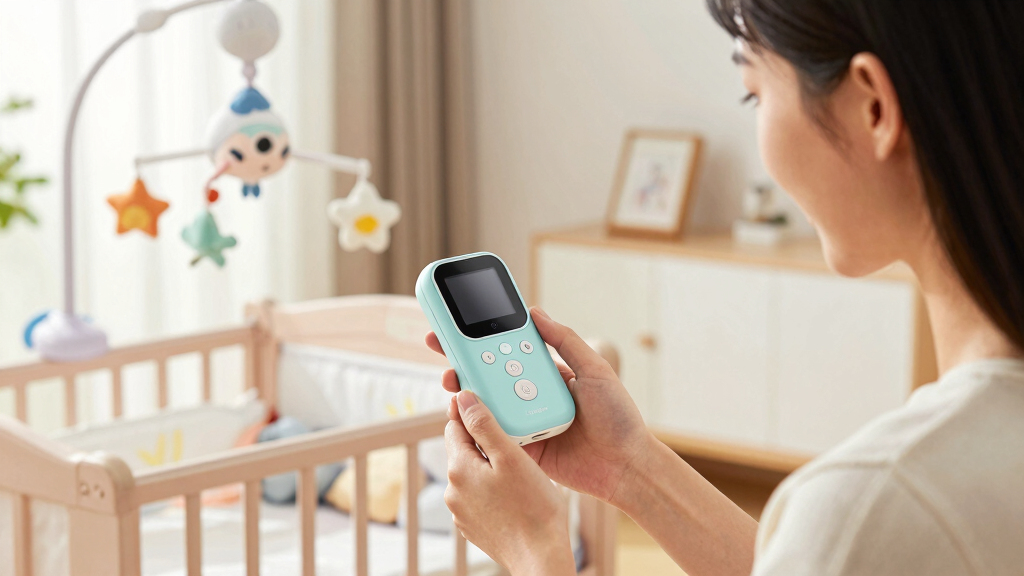
When choosing a portable baby monitor, size and weight top the list. You want something that slips into your diaper bag or carry-on without adding bulk. Picture a slim, lightweight device that weighs less than a pound, yet packs a punch with clear video and audio.
Look for models with a foldable or clip-on design—easy to pack, easy to carry. For example, a monitor that fits into a small pocket in your bag, so you don’t feel like you’re lugging around a bulky gadget. That way, your monitor becomes just another piece of your travel gear, not a burden.
Consider the form factor—does it come with a protective case or a clip for attaching to your stroller or backpack? These little touches make a big difference when moving through airports or navigating crowded parks.
portable baby monitor with long battery life
As an affiliate, we earn on qualifying purchases.
As an affiliate, we earn on qualifying purchases.
Battery Life: Why 12+ Hours Matters for Travel
Imagine being at a lively outdoor picnic or a late-night hotel stay. Your baby sleeps peacefully, but your monitor’s battery runs out after 6 hours. Frustrating, right? That’s why a monitor with at least 12 hours of battery life is a must for travel.
Long-lasting batteries mean fewer interruptions during critical moments, like overnight monitoring or extended outings. When you’re in unfamiliar environments, the last thing you want is to worry about recharging or losing connection just when you need it most. Models with extended battery life reduce this anxiety, providing peace of mind and allowing you to focus on enjoying your trip. Additionally, longer battery life often correlates with more efficient power management, which can mean less frequent recharging and more consistent monitoring. Some models even offer quick-charge features, so you can top up during short breaks, ensuring continuous coverage without hassle.
Furthermore, consider the tradeoff between battery capacity and device size. Larger batteries may extend hours but could add weight and bulk, impacting portability. Choosing a model with a balanced design ensures you get sufficient runtime without sacrificing convenience. Also, look for options with replaceable batteries—so if one runs out unexpectedly, you can swap it without stopping your monitoring. Recharging via USB adds convenience, especially when outlets are scarce or crowded in travel settings.
As an affiliate, we earn on qualifying purchases.
Connectivity Options: Wi-Fi vs. RF — Which Is Better for Travel?
Knowing how your baby monitor connects can save you headaches on the road. Wi-Fi monitors sync with your smartphone via an app, offering smart features like remote viewing, notifications, and even recording. But they depend on a stable internet connection, which isn’t always guaranteed during travel.
RF (radio frequency) monitors, on the other hand, operate on dedicated channels. They don’t rely on Wi-Fi, making them more reliable in areas with spotty internet—like campgrounds or remote cabins. For example, an RF monitor with a 900-foot range lets you keep an eye on your baby even if your hotel’s Wi-Fi is weak.
Here’s a quick comparison:
| Feature | Wi-Fi Monitor | RF Monitor |
|---|---|---|
| Connection | Via smartphone app | Dedicated radio channel |
| Range | Limited by Wi-Fi network | Up to 900 feet |
| Features | Remote viewing, notifications, recording | Simple audio/video, reliable signal |
| Security | Encrypted but vulnerable if Wi-Fi is hacked | Usually more secure |
Choosing depends on your travel destinations and internet reliability. For urban hotels with good Wi-Fi, a smart Wi-Fi monitor works great. For outdoor adventures, RF might be the safer bet.
wireless baby monitor with night vision
As an affiliate, we earn on qualifying purchases.
As an affiliate, we earn on qualifying purchases.
Video and Audio Quality: What Makes a Clear, Safe View
Clear visuals and crisp sound turn a good monitor into a great one—especially in unfamiliar places. Look for high-resolution cameras with night vision, so you can see your baby’s tiny face even in dim hotel rooms or dimly lit parks.
For example, a monitor with 720p or 1080p video quality offers sharp images, while noise reduction in audio prevents static or echoes. Adjustable volume and two-way talk let you soothe your baby from afar—imagine whispering softly through the device during a late-night wake-up.
Some models include digital pan-tilt-zoom, giving you a wider view or focusing on your baby’s face. It’s like having a mini security camera, but for your nursery.
Good video and audio quality are crucial because they directly impact your ability to assess your baby’s well-being quickly and accurately. When visuals are blurry or static, it can lead to misinterpretation or missed cues, increasing your anxiety especially in unfamiliar environments. High-quality feeds ensure you’re making decisions based on clear, real-time information, which is vital when you can’t rely on other visual cues. The tradeoff often involves battery consumption—higher resolution and features like pan-tilt zoom can drain power faster, so consider your monitoring needs carefully. Balancing these features with battery life and ease of use is essential for effective travel monitoring.
As an affiliate, we earn on qualifying purchases.
Ease of Setup and Use: Get Monitoring Quickly and Without Stress
When you’re tired, stressed, or in a new place, complicated tech setups are the last thing you want. Choose a monitor with simple setup—ideally, plug-and-play or with minimal steps. For instance, a monitor that automatically pairs with your smartphone via Bluetooth or Wi-Fi reduces frustration.
Look for intuitive controls—large buttons, clear menus, and straightforward pairing instructions. A model with a dedicated parent unit is also helpful, so you don’t have to fuss with app downloads or permissions in a hurry.
Imagine arriving at a hotel, unpacking your monitor, and having it ready in under 5 minutes. That peace of mind is worth its weight in gold.
Streamlined setup processes mean less time troubleshooting and more time focusing on your trip or your baby. Compatibility with your existing devices and clear instructions ensure you’re not fumbling through confusing menus or missing critical steps—especially in unfamiliar environments. If setup is complicated or takes too long, it can lead to frustration or even abandonment of the device, defeating its purpose. A quick and intuitive setup process ensures you’re not left scrambling when you need to monitor your baby urgently, making your travel experience smoother and less stressful.
Extra Features That Make Travel Easier and Safer
Beyond basic video and audio, some monitors pack handy extras. Think of features like temperature sensors—helping you keep the nursery cozy—and motion alerts that notify you if your baby wakes or moves unexpectedly.
Two-way talk is a favorite—imagine whispering lullabies or soothing words without disturbing your baby’s sleep. Some models also have secure encryption, cutting out worries about hacking or privacy breaches during your travels.
Weather-resistant or rugged builds are great if you plan outdoor trips—say, camping or beach days. The more your monitor can handle varied environments, the better your peace of mind.
These additional features can significantly enhance safety and convenience, especially in unfamiliar or outdoor settings. For example, temperature sensors prevent overheating or chilling, ensuring your baby’s comfort. Motion alerts can help you respond quickly if your baby wakes or moves, which is especially useful in noisy or busy environments. Two-way talk allows you to soothe your baby remotely, reducing stress during late-night wake-ups. Weather-resistant designs mean your device remains functional despite exposure to the elements, making outdoor adventures safer and more manageable. Choosing monitors with these extras means you’re better equipped to handle unpredictable situations, giving you confidence wherever your travels take you.
Durability and Weather Resistance: Will It Survive Your Trip?
Travel often means rougher handling and unpredictable weather. A durable, weather-resistant monitor can withstand bumps, splashes, and dust. For example, a model with an IP65 rating can resist water jets and dirt, perfect for outdoor adventures.
If you plan to hike, camp, or spend time at the beach, look for rugged options with reinforced casing and sealed ports. This way, your monitor survives even if it gets knocked around in a backpack or exposed to the elements.
Choosing a sturdy device means fewer worries about accidental drops or rain ruining your monitoring setup. It also means your monitor can be used in a variety of environments without concern, providing continuous peace of mind regardless of where your travels take you.
Keep in mind that durability often adds to the weight and cost of a device. Prioritize models with high durability ratings if your outdoor adventures are frequent, but balance this with portability needs. A well-built, weather-resistant monitor ensures that your monitoring capability remains intact, even in unexpected conditions, making it a reliable companion for all your travel activities.
Price, Warranty, and Support: What’s Worth Your Money?
Travel monitors range from budget-friendly under $50 to premium models over $200. Consider how often you travel and your budget. Cheaper models may lack longer battery life or advanced features but can still do the job.
Check for warranties and customer support—especially important if you’re relying on the device during trips. A reliable warranty can save you headaches if it malfunctions or breaks.
For example, a mid-range monitor with a 2-year warranty and responsive support might be a smarter investment than a cheap model with no support options.
Investing in a product with good support and warranty coverage ensures that if issues arise, you have recourse. This is especially crucial during travel, where access to repair services or replacements may be limited. Spending a bit more upfront on a trusted brand can save money and stress later, ensuring your monitoring remains uninterrupted throughout your trips.
Quick Setup for Travel: How to Get Started in 3 Easy Steps
- Unpack and power up your monitor—most models turn on with a single button. Charge it fully before your trip.
- Follow the simple pairing instructions—often, pressing a button or scanning a QR code. Have your smartphone or parent unit ready.
- Test the connection—make sure you can see and hear your baby from your usual spot. Adjust camera angles or volume if needed.
Frequently Asked Questions
What features are most important for travel-specific baby monitors?
Portability, long battery life (12+ hours), reliable connection (Wi-Fi or RF), and durability are key. Features like night vision and two-way talk enhance safety and convenience.Are Wi-Fi monitors safe and secure for travel?
Wi-Fi monitors can be secure if they use strong encryption and password protection. Always update firmware and avoid public networks for sensitive monitoring.How long should the battery last for overnight monitoring?
Aim for at least 12 hours of battery life. Some models offer 16-20 hours, which is ideal for overnight stays or long outings without recharging.Can portable monitors be used outdoors or in noisy environments?
Yes, especially models with weather resistance, loud volume controls, and noise reduction. Look for outdoor-rated, rugged designs if outdoor use is frequent.What should I consider regarding privacy and security?
Choose monitors with encrypted video streams and secure passwords. Avoid using unsecured networks and regularly update your device’s security settings.Conclusion
Traveling with your baby doesn’t mean sacrificing peace of mind. The right portable monitor combines size, battery life, clear visuals, and security—making every trip smoother and safer.
Remember, a monitor that’s easy to set up and withstands the bumps of travel turns worries into confidence. Your baby’s safety isn’t just about tech; it’s about peace of mind, wherever you go.
Halloween Picks
halloween
As an affiliate, we earn on qualifying purchases.