
TL;DR

Turn the school run and nap time into listening time
- Thousands of audiobooks, podcasts and originals
- Listen on your phone, tablet or Echo — also offline
- Cancel anytime
Smart bassinets emit a gentle hum or white noise to promote sleep and monitor environmental sounds. Recognizing what these sounds indicate helps you respond appropriately, ensuring your baby’s safety and comfort at night.
Ever notice that steady, calming hum from your smart bassinet at night? It’s more than just background noise. That gentle sound plays a key role in soothing your baby and monitoring their environment.
Understanding what that hum, or any fluctuation in noise, really means can give you peace of mind. Whether it’s a lullaby, white noise, or a sudden change in sound levels, knowing how to interpret these cues makes all the difference in creating a safe, restful sleep space for your little one.
Keep white noise below 50 decibels to prevent hearing damage and promote safe sleep.
Learn to interpret fluctuations—steady hum is soothing, sudden changes signal potential distress.
Use app features to monitor noise levels and customize sounds for your baby’s comfort.
Recent tech improvements include smarter sound recognition and adaptive noise control.
Always follow safety guidelines—place the bassinet away from windows and loud appliances.
Why Your Smart Bassinet’s Hum Is More Than Just Noise
The steady hum from your bassinet isn’t random. It’s the heartbeat of the device’s purpose—to soothe and monitor. When the white noise is active, it masks disruptive sounds from outside, helping your baby stay asleep longer. This consistent background sound acts as a sensory anchor, creating a stable auditory environment that can reduce the likelihood of waking due to sudden external noises.
Imagine trying to sleep in a busy coffee shop—those constant background sounds can be distracting. Your bassinet’s hum mimics the comforting white noise your baby might have heard in the womb, which can help them feel secure and relaxed, facilitating easier transition into sleep and reducing fussiness.
Sometimes, the bassinet detects sounds like crying or coughing. These signals can trigger the device to adjust the noise level or alert you via an app, giving you a chance to respond before your baby wakes fully. This proactive monitoring helps prevent minor disturbances from escalating into full awakenings, supporting safer and more restful sleep patterns.
As an affiliate, we earn on qualifying purchases.
Decoding the Different Sounds and What They Mean
When you hear that consistent hum, it’s usually white noise at a safe volume, designed to be soothing and non-intrusive. However, sudden shifts—such as the sound becoming louder, more irregular, or the emergence of new noises—are significant because they can signal your baby’s changing needs or distress. Recognizing these changes allows you to interpret whether your baby is waking, upset, or simply reacting to environmental factors.
For example, a sudden loud cry detected by the bassinet’s microphone often indicates your baby needs comfort or reassurance. Conversely, minor fluctuations—like a passing car or a creaking door—are typically benign, but being aware of these patterns can help you distinguish between normal environmental sounds and potential distress signals. Over time, understanding these cues helps you respond more effectively, reducing stress for both you and your baby. Additionally, many models log these sound patterns, which can reveal trends or recurring disturbances that may affect your baby’s sleep quality, guiding you to make informed adjustments to their sleep environment.
As an affiliate, we earn on qualifying purchases.
How to Tell If the Noise Is Safe and Soothing
- Check the volume setting—keeping it below 50 decibels is crucial because higher volumes can pose a risk of hearing damage over time. This level is roughly equivalent to a normal conversation, ensuring the sound remains soothing without being overwhelming.
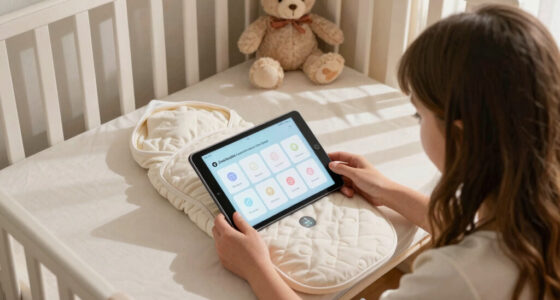
- Use the app to monitor real-time sound levels, which allows you to see if the noise remains within safe parameters and adjust the volume or switch sounds if needed. This proactive monitoring helps prevent accidental exposure to potentially harmful noise levels.
- Ensure the white noise isn’t too loud or too soft—aim for a gentle, consistent hum that provides a calming background without startling or waking your baby. Proper calibration supports uninterrupted, restful sleep and reduces the risk of sensory overstimulation.
- Observe your baby’s reactions—if they seem agitated, distracted, or fussy, it might indicate the sound level needs adjustment. Children can be particularly sensitive to changes in their environment, so paying close attention helps you fine-tune the settings for optimal comfort and safety.
- Follow safety guidelines for infant sleep environments—place the bassinet away from windows, loud appliances, and other sources of excessive noise or drafts. Proper placement minimizes external disturbances and creates a controlled, safe sleep space.
This proactive approach to managing sound levels is essential for balancing soothing comfort with safety, ensuring your baby’s hearing health while promoting restful sleep. Regularly reviewing and adjusting settings based on your baby’s responses can help you maintain an optimal environment that supports healthy development.
As an affiliate, we earn on qualifying purchases.
What Recent Tech Is Doing to Make Noise Monitoring Smarter
Advances in smart bassinet tech mean better sound detection and more personalized soothing. Newer models feature sophisticated algorithms that can distinguish between crying, coughing, or ambient noises with a high degree of accuracy, reducing false alarms and enabling more targeted responses. This means the device can prioritize urgent sounds like crying and suppress benign background noises, creating a more tailored sleep environment.
Apps now provide detailed sound logs over days or weeks, allowing you to identify patterns or recurring disturbances. Some bassinets even adapt their white noise volume based on your baby’s sleep stage or ambient noise levels, offering a dynamic approach that responds to your baby’s needs in real time. This technological progression helps parents better understand their baby’s auditory environment and make informed adjustments, ultimately promoting safer, more restful sleep.
Additionally, the integration of natural sounds like gentle rain or lullabies, along with traditional white noise, offers a broader range of soothing options. These features can be customized to suit your baby’s preferences and your household’s acoustics, fostering a more personalized sleep setting that supports healthy auditory development and comfort.
As an affiliate, we earn on qualifying purchases.
Key Facts You Need to Know About Noise and Baby Sleep
White noise can help babies fall asleep faster—sometimes in as little as 3 minutes—according to sleep studies. It also extends sleep duration by masking disruptive environmental noises that could wake your baby prematurely. This effect is especially important in noisy households or urban settings where external sounds are frequent.
Safety experts recommend keeping noise levels below 50 decibels during sleep to prevent potential hearing damage. This guideline is based on research showing that prolonged exposure to louder sounds can cause auditory damage, even if the noise is perceived as harmless or soothing. Maintaining this level ensures a balance between effective soothing and safety, allowing your baby to benefit from white noise without risking their hearing health.
Monitoring sound patterns helps parents catch early signs of distress, such as increased crying or irregular breathing sounds, which could indicate discomfort or health issues. Recognizing these early warning signs enables prompt intervention, reducing the risk of unsafe sleep conditions and supporting overall well-being.
Your Top Questions About That Nighttime Hum Answered
- What does the hum at night mean? It usually indicates the white noise feature is active or that environmental sounds are being monitored. Changes in the sound can signal your baby is waking or crying, but understanding the context—such as whether the volume increased or if a new sound appeared—helps determine if intervention is needed. Recognizing these cues allows you to respond appropriately, either by checking on your baby or trusting the device to handle minor disturbances.
- Is white noise safe for my baby? When kept below 50 decibels, white noise is generally safe and can promote longer, calmer sleep. However, prolonged exposure at higher volumes or improper placement close to your baby’s ears can pose risks. Always follow manufacturer recommendations and ensure the sound is at a safe, comfortable level to support healthy auditory development without risking damage.
- Can I customize the noise levels? Yes, most smart bassinets allow you to adjust volume, switch between different soothing sounds, or schedule different profiles based on time of night or sleep stage. Customization ensures the environment remains tailored to your baby’s needs and your preferences, enhancing sleep quality and safety.
- What if the noise is too loud or too quiet? Use the app or device controls to find the optimal balance—soothing but safe. Regularly checking sound levels and your baby’s reactions helps you fine-tune settings for maximum comfort and safety, preventing overstimulation or insufficient soothing.
- Are there privacy concerns? Some worry about data security with connected devices. It’s important to choose models with transparent privacy policies, encrypted data transmission, and secure storage. Being informed about how your data is handled ensures your family’s privacy is protected while benefiting from smart monitoring features.
Conclusion
Understanding that steady, gentle hum from your smart bassinet isn’t just background noise. It’s a vital tool for creating a safe, peaceful sleep space. When you know what to look for—whether it’s a calm white noise or a sudden cry—you can respond confidently and keep your baby sleeping soundly.
Next time you hear that familiar hum, remember—it’s your baby’s sleep assistant working quietly. Trust your instincts, use the tech wisely, and enjoy those precious restful nights.
Fall Picks
fall essentials
As an affiliate, we earn on qualifying purchases.