TL;DR

Turn the school run and nap time into listening time
- Thousands of audiobooks, podcasts and originals
- Listen on your phone, tablet or Echo — also offline
- Cancel anytime
Smart sleep tech for twins can be either duplicated with individual monitors or shared via one device. The best choice depends on accuracy needs, privacy, and your budget. Recent advances make individual monitoring more precise, but sharing can be simpler and more cost-effective.
Imagine waking at 3 a.m., peering into your twin’s crib. You wonder: should you invest in separate sleep monitors for each baby or opt for a single device covering both? The choice matters. Smart sleep technology can make your nights calmer or add confusion—depending on how you set it up.
This guide breaks down what you need to know about twin-specific sleep tech. From accuracy to privacy, we’ll explore whether to duplicate everything or share a device. Because with twins, sleep isn’t just about rest—it’s about peace of mind, too.
Choose separate monitors for detailed, accurate sleep data—especially if your twins show sleep issues.
Shared devices are simpler and cheaper but may miss critical nuances of each twin’s sleep pattern.
Recent advances in algorithms and integration make twin sleep tech more reliable and user-friendly.
Prioritize devices with strong privacy protections to keep your children’s sleep data safe.
Assess your needs carefully—balance accuracy, privacy, ease of setup, and your budget before deciding.
Why Separate Monitors Give You Clearer Sleep Data for Each Twin
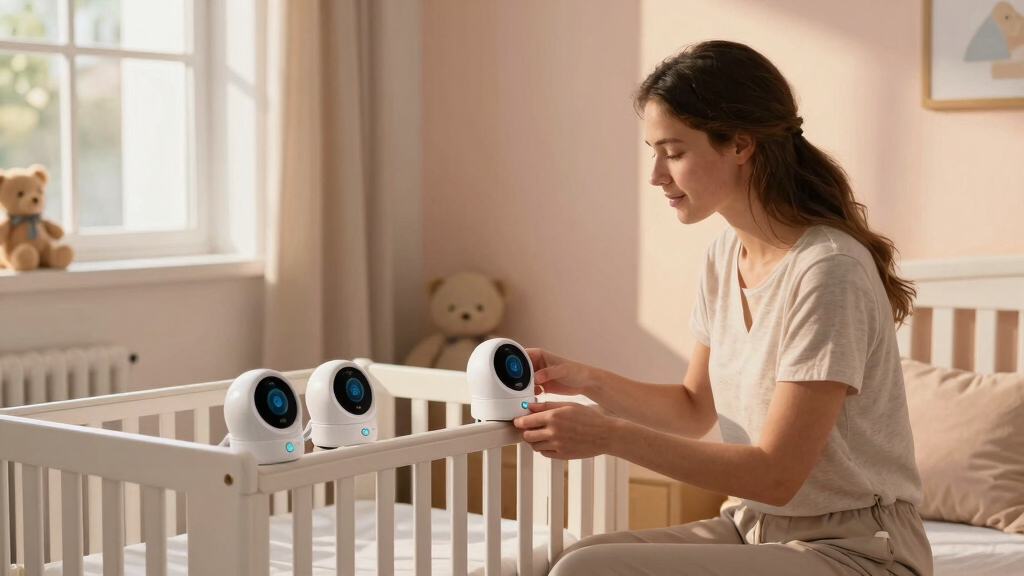
Smart sleep tech for twins often comes in two flavors: separate monitors for each baby or a shared device. Separate monitors are like individual reporters—they track each twin’s sleep patterns, breathing, and movements independently. This means you get precise info on who’s waking, who’s sleeping soundly, and who might need help.
Why does this matter? Because twins can have vastly different sleep behaviors and needs. For instance, one might suffer from reflux, causing frequent awakenings, while the other sleeps through the night. Without separate data, such issues can be masked by aggregated information, delaying necessary interventions. The tradeoff, however, is that individual monitors often cost more and require more effort to set up and maintain. But this investment can be crucial if you’re trying to troubleshoot sleep problems or tailor routines for each child. In essence, detailed, accurate data helps you make informed decisions—potentially improving each twin’s sleep quality and your peace of mind.
As an affiliate, we earn on qualifying purchases.
Shared Devices: Simpler Setup, Less Clutter, But Less Precision
Shared sleep devices function like a single microphone capturing the entire room’s activity. They typically monitor both twins through a bed sensor or a single camera, providing a broad overview rather than detailed insights. This simplicity means easier setup—just one device, one app, fewer wires and configurations. But what do you lose? The main tradeoff is precision. With a shared device, you might see that your twins are restless or waking frequently, but you won’t know which twin is responsible for each disturbance. This ambiguity can hinder targeted interventions, especially if one twin’s sleep issues are causing overall disruptions. Conversely, for parents seeking a general sense of sleep health without the need for granular data, this approach can be more convenient and cost-effective. However, it’s important to recognize that the less detailed the data, the harder it is to identify specific problems or tailor solutions—so consider your priorities carefully.
As an affiliate, we earn on qualifying purchases.
Comparison Table: Duplicate vs. Share Sleep Tech for Twins
| Feature | Duplicate (Separate Devices) | Share (Single Device) |
|---|---|---|
| Accuracy | High, individualized data that can reveal specific issues like reflux or sleep regressions in each twin, enabling targeted interventions. | Lower, providing only general trends. This can mask individual sleep disruptions, potentially delaying diagnosis or tailored solutions. |
| Setup | More complex, requiring two devices, which may involve more time and effort to install and maintain. However, this setup allows for precise data collection for each twin. | Simpler, with one device and fewer wires, making it quick to implement. But this simplicity comes at the expense of detailed, twin-specific information. |
| Cost | Higher, since two units are needed, but the investment can be justified by the depth of data and potential health benefits. | Lower, as only one device is purchased, making it more budget-friendly but less comprehensive. |
| Data Privacy | Separate controls and data streams provide more granular privacy options, giving you better control over each twin’s information. | Shared data stream, which may limit control over individual privacy and data management. |
| Ease of Use | Requires managing two setups, which might be more effort initially but offers richer data for analysis. | More straightforward, suitable for parents preferring a quick overview without detailed analytics. |
| Ideal For | Parents needing detailed, actionable insights—especially if twins have sleep issues or health concerns that require close monitoring. | Parents seeking a simple, general overview of sleep patterns, suitable for those who want basic monitoring without fuss. |
baby sleep monitor with privacy protection
As an affiliate, we earn on qualifying purchases.
As an affiliate, we earn on qualifying purchases.
How to Choose the Right Sleep Tech Setup for Your Twins
Deciding between duplication and sharing involves understanding your family’s specific needs and constraints. Consider how much precision you require—if one twin has sleep issues or health concerns, separate monitors can provide the detailed data needed for targeted interventions. Think about your budget: investing in two high-quality devices might be more costly upfront but could prevent future health problems or sleep disturbances. Your comfort with technology also matters: if you’re tech-savvy and willing to troubleshoot, two setups are feasible; if not, a single device might be more practical. Privacy is another concern—if you’re wary of data sharing, independent monitors offer better control. Finally, consider future needs—do you want to expand monitoring to include breathing, environmental factors, or other health metrics? Balancing these considerations will help you select the most effective setup for your family’s unique situation.
As an affiliate, we earn on qualifying purchases.
Recent Tech Trends Making Twin Sleep Monitoring Better Than Ever
Recent innovations are significantly enhancing twin sleep monitoring. Advanced algorithms leverage machine learning to distinguish between two babies’ movements, reducing false alarms that previously plagued shared devices. For example, some sensors can now analyze subtle differences in breathing patterns, enabling early detection of sleep issues like apnea or reflux. Integration with smart home platforms such as Alexa or Google Home allows parents to receive real-time alerts and access data remotely, making monitoring more seamless and less intrusive. These improvements mean that even in shared setups, accuracy and reliability have increased, providing more peace of mind. Additionally, technological advancements are making devices smaller, more comfortable, and easier to incorporate into daily routines—minimizing disruption and encouraging consistent use. Overall, these trends are empowering parents with tools that are both smarter and more user-friendly than ever before, helping to ensure healthier sleep for twins and peace of mind for parents.
Privacy Matters: Protecting Your Twins’ Sleep Data
Smart sleep tech involves lots of data—sometimes sensitive. Choosing devices with strong encryption and clear privacy policies is essential. For instance, reputable brands encrypt data both in transit and at rest, so your children’s sleep patterns stay private. However, beyond encryption, understanding how your data is handled is crucial. Some companies may share anonymized data with third parties for research or marketing purposes. This can inadvertently expose your family’s sleep habits to external entities, risking privacy breaches. The implications are significant: sensitive health data could be misused or accessed without your consent. Therefore, thoroughly review privacy policies, opting for products that prioritize data security and give you control over what’s shared. Regularly updating device firmware and passwords adds an extra layer of protection. Ultimately, safeguarding your children’s sleep data isn’t just about privacy—it’s about respecting your family’s right to control personal health information and preventing potential misuse or breaches that could compromise trust and security.
Frequently Asked Questions
Are smart sleep monitors safe for infants and toddlers?
Most are designed with safety in mind, using non-intrusive sensors and soft materials. Always check for safety certifications and follow the manufacturer’s instructions. If unsure, consult your pediatrician before starting any new monitoring device.
Can these devices really help improve my twins’ sleep quality?
They can reveal patterns or disturbances you might not notice, allowing you to adjust routines or seek medical advice. However, they’re tools—not a cure-all. Use the data as a guide, not a guarantee of better sleep.
How do I ensure my children’s sleep data remains private?
Opt for reputable brands with transparent privacy policies. Look for encryption and clear data handling practices. Regularly update passwords and avoid sharing access with third parties unless you trust their security measures.
Is it worth investing in multiple devices for twins?
If accuracy and detailed info are your priorities, yes. Especially if one twin has sleep concerns. For general tracking or budget-conscious families, a shared device might do the trick initially.
What are some common limitations of twin sleep tech?
False positives/negatives, data overlap, privacy concerns, and cost are typical issues. Technology isn’t perfect, but choosing validated, well-reviewed products can minimize these drawbacks.
Conclusion
When it comes to twin sleep tech, the right choice isn’t universal. It depends on your priorities—whether clarity or simplicity matters most. The key is understanding what each approach offers and choosing what best fits your family’s sleep journey.
Imagine drifting off knowing you have the right tools to understand and improve your twins’ sleep—peaceful nights, calmer mornings, and a little more control. That’s the goal. Sleep well, parent.
Halloween Picks
halloween
As an affiliate, we earn on qualifying purchases.