TL;DR
Listen free for 30 days with Audible
Thousands of audiobooks and originals — cancel anytime.
Start your free trialAs an affiliate, we earn on qualifying purchases.
Using a single sound machine can work in smaller rooms or for siblings with similar sleep needs. For larger spaces or different schedules, two machines might be better. The key is proper placement, volume control, and safety to ensure restful, safe sleep for your kids.
One sound machine can suffice in smaller rooms or when children share similar sleep preferences.
Two machines offer personalized sound environments, especially in larger spaces or with differing sensitivities.
Proper placement and volume control are essential to keep sound soothing and safe.
Choose sounds your children find calming, and avoid volumes above 50 decibels.
Smart, portable, and customizable options are making it easier to create a peaceful sleep space anywhere.
Sound Machines in a Shared Sibling Room
One machine can create calm for two children—but room size, schedules and sound sensitivities determine whether a second device earns its place. The goal is not more noise. It is the lowest effective, safely positioned sound that helps both children settle.
Central placement can create one even sound field.
Separate sounds and volumes support personalization.
Check volume where each child actually sleeps.
Use the lowest useful level at a sensible distance.
Match the setup to the sleepers
A shared room does not automatically require shared settings. Begin with the simplest arrangement, then watch whether both children fall asleep comfortably and remain undisturbed.
The room and routines align
A centrally placed machine is often enough when beds are relatively close and both children respond well to the same steady sound.
- Room is small or acoustically even
- Bedtimes and wake times are similar
- Both children prefer the same sound
- Household noise enters from one main direction
- Lower cost and less clutter are priorities
Each bed needs its own zone
Separate machines can target uneven noise and allow different tones or levels without forcing one child to accept the other’s preference.
- Room is large, long or acoustically uneven
- Siblings follow different sleep schedules
- One child is more sensitive to sound
- White noise suits one; nature sounds suit the other
- Noise reaches the room from multiple sides
Test one machine centrally for several nights. If one sleep area remains noisy, one child dislikes the shared sound, or schedules regularly clash, move to two independently controlled zones.
One machine versus two
The second machine buys flexibility, not automatically better sleep. Choose it when personalization solves a specific problem.
| Decision factor | One sound machine | Two sound machines |
|---|---|---|
| Ideal room | ✓ Small or compact | ✓ Large or divided |
| Similar sleep needs | ✓ Excellent fit | ~ Usually unnecessary |
| Different schedules | ✗ Limited control | ✓ Separate zones |
| Sound personalization | ~ One shared profile | ✓ Tailored per child |
| Placement | Central and away from heads | Near each zone, never beside a pillow |
| Cost and clutter | ✓ Lower | ~ Higher |
| Monitoring effort | ✓ One level to check | ~ Check combined exposure |
Distance first. Volume second.
Measure from the sleeping position, not beside the device. With two machines, consider the combined sound reaching each bed and keep every unit at the lowest effective setting.
A practical sound boundary
machine
head
Place it away from heads
Maintain at least three feet of distance and avoid directing a speaker toward a pillow or crib.
Use the lowest effective volume
Keep output below 50 decibels and recheck from each sleeping position after moving furniture.
Set a timer or sleep mode
Auto shut-off can reduce unnecessary exposure once the children have settled.
Inspect the hardware
Check cords, heat, recalls and device condition; replace any unit that overheats or malfunctions.
Different ears prefer different textures
There is no universally “best” sleep sound. Let each child’s comfort guide the choice, while keeping the sound steady, gentle and predictable.
White noise
A steady, static-like sound that masks sudden household noises effectively, though some children find it sharp.
Pink noise
Softer and more balanced than white noise, with less emphasis on higher frequencies.
Brown noise
A lower, richer sound that may suit children who find brighter noise abrasive or distracting.
Nature sounds
Rain, waves and other gentle soundscapes can create a calming association with bedtime.
Observe
Notice noise triggers and each child’s sensitivity.
Test low
Begin with one sound at a very gentle level.
Check distance
Maintain at least three feet from every head.
Track sleep
Watch settling, waking and morning comfort.
Adjust
Add a second zone only if the evidence supports it.
A device supports the routine—it does not replace it
Sound masking works best alongside a consistent bedtime, a comfortable room and a predictable wind-down ritual.
The practical verdict
Use one for a smaller room and similar sleepers. Use two for a larger space, different schedules or genuinely different sound preferences. In either setup, safe placement and controlled volume matter more than the device count.
App control
Remote volume, timers and saved sound profiles.
Portable sleep
Battery-powered designs support travel and room changes.
Custom soundscapes
Blended tones make individualized sleep zones easier.
Efficient operation
Quiet-running, energy-conscious models reduce waste.
One sound machine: Is it enough for your kids?
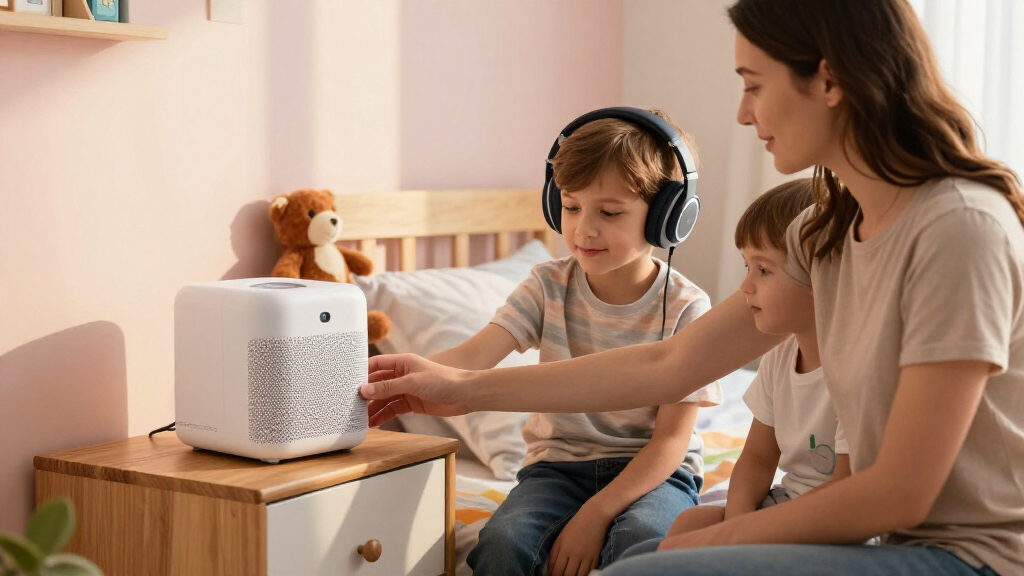
Using just one sound machine in a shared room is common and often effective, especially in smaller spaces. When placed centrally, it can fill the room with soothing noise, masking external sounds and creating a uniform auditory environment. For example, in a cozy nursery where beds are close, one machine can deliver gentle white noise that calms both children. Just ensure it’s positioned far enough away from their heads to prevent discomfort. If your kids have similar sleep schedules and sensitivities, one machine might be all you need, saving space and reducing clutter.
children's sound machine for shared room
As an affiliate, we earn on qualifying purchases.
As an affiliate, we earn on qualifying purchases.
When two sound machines make sense — size, schedule, and sensitivities
Two sound machines can be a game-changer in larger rooms or when children have different sleep needs. Larger rooms often have areas with varying noise levels; a single machine might not adequately mask external sounds in all corners, leading to disrupted sleep. Additionally, children with different sensitivities may prefer distinct sound types or volumes—one might find white noise too harsh, while another prefers nature sounds. Using separate machines allows you to customize each environment, which can significantly improve their sleep quality. This flexibility can also help mitigate conflicts, as each child can control their sound environment, reducing frustration and promoting independence in bedtime routines. However, managing multiple devices requires more attention to safety, volume control, and placement to prevent potential overexposure or disturbance.
portable baby sound machine with volume control
As an affiliate, we earn on qualifying purchases.
As an affiliate, we earn on qualifying purchases.
How to position and control volume for safety and effectiveness
- Place the sound machine at least 3 feet away from each child’s head to avoid direct exposure, which reduces the risk of potential hearing damage and ensures sound is distributed evenly rather than concentrated near their ears.
- Set the volume below 50 decibels—about a soft conversation—because higher volumes can risk hearing damage over time, especially with prolonged exposure during sleep. Using the device’s volume limiter or maximum setting can help maintain safe levels.
- Utilize timers or sleep modes to turn off the machine after a set period, typically after the child has fallen asleep. This prevents continuous overnight sound exposure, which can lead to habituation or dependency, and minimizes the risk of overexposure to sound.
- If your machine offers individual volume controls, set each to the lowest effective level. This customization ensures each child’s needs are met without unnecessary loudness, fostering a safe and personalized sleeping environment.
dual sound machine for kids' bedrooms
As an affiliate, we earn on qualifying purchases.
As an affiliate, we earn on qualifying purchases.
Different sounds for different kids: Which ones work best?
Choosing the right sound is more art than science. White noise, with its consistent static-like hum, is popular for masking disruptive sounds because it creates a steady auditory backdrop that can help children ignore sudden noises. Nature sounds—waves crashing, rain falling—offer a calming, familiar environment that can evoke feelings of safety and relaxation. Brown noise has a deeper, richer tone, often preferred by children who find white noise too sharp or high-pitched, as it is less abrasive and more soothing. For example, a child who loves the ocean might drift off faster with gentle rain or ocean waves, as these sounds can be associated with peaceful environments. Experimenting with different sounds helps find the perfect match—so your kids associate their sleep environment with calm, comfort, and security, which can significantly improve their ability to fall asleep and stay asleep.
calming sound machines for children
As an affiliate, we earn on qualifying purchases.
As an affiliate, we earn on qualifying purchases.
Safety first: The do’s and don’ts of using sound machines
Sound machines are generally safe when used wisely, but understanding potential risks and how to mitigate them is crucial. Always check that your device meets current safety standards, is free from recalls, and is from reputable manufacturers. Keep the device at a safe distance from your children’s heads—at least 3 feet—to prevent potential hearing damage from prolonged exposure at high volumes. Setting the volume below 50 decibels is essential, as higher volumes can cause hearing loss over time, especially with nightly use. Using timers or sleep modes not only conserves energy but also reduces the risk of overexposure and habituation, helping children not to become overly reliant on sound for sleep. When selecting a model, opt for one with auto shut-off or sleep modes, and regularly inspect it for overheating or malfunctions. Replacing faulty devices promptly minimizes fire hazards or electrical issues, ensuring ongoing safety. Being informed and cautious in your choices helps balance the benefits of sound masking with the necessity of safety precautions.
Latest trends: Smarter, portable, and customizable sound options
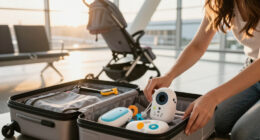
Technology is making sound machines smarter and more flexible. Today’s models often connect via apps, letting you tweak sounds, set timers, or even control volume remotely. Portable options are perfect for travel or flexible sleeping arrangements, so your kids sleep peacefully anywhere. Some devices now offer customizable soundscapes, blending nature sounds with white noise, giving your children a soothing, tailored environment. Eco-friendly, quiet-running models are also gaining popularity, helping you reduce energy use and noise pollution. These advancements mean you can adapt the sleep environment precisely to your child’s preferences and changing needs, making bedtime routines more effective and less stressful. The ability to personalize soundscapes and control devices remotely enhances convenience and ensures your children’s sleep environment is always optimized, regardless of location or circumstance.
Quick comparison: One vs. Two sound machines — which fits your room?
| Feature | One Sound Machine |
|---|---|
| Ideal for | Small rooms, similar sleep needs |
| Cost | Lower |
| Placement | Central, away from heads |
| Sound personalization | Limited to one environment |
| Feature | Two Sound Machines |
|---|---|
| Ideal for | Larger rooms, differing needs |
| Cost | Higher |
| Placement | Near each bed or corner |
| Sound personalization | High, tailored to each child |
What parents should keep in mind before choosing
- Check that the device is CPSC compliant and has no recalls.
- Choose sounds that your child finds soothing and not irritating.
- Set volume limits to stay below 50 decibels.
- Use timers or sleep modes to prevent overuse.
- Consider room size and your children’s sensitivities when deciding on one or two machines.
Frequently Asked Questions
Is it safe to use a sound machine every night?
Yes, when you keep volume below 50 decibels and use timers or sleep modes, nightly use is safe. Regularly check the device for overheating or malfunctions to maintain safety.
Should each child have their own sound machine?
It depends on their sensitivities and sleep routines. Some children sleep better with personalized sounds and volume, while others are fine sharing a single device. Observe your kids and adjust accordingly.
What sounds are best for children?
White noise, gentle rain, ocean waves, or nature sounds tend to be most calming. Experiment to find what helps each child relax and fall asleep faster.
How loud should the sound machine be?
Keep the volume below 50 decibels—roughly a soft conversation—to prevent potential hearing damage over time. Always monitor your children’s comfort and response.
Can sound machines replace bedtime routines?
They can be part of a calming routine but shouldn’t replace essential practices like consistent bedtimes and a quiet, dark environment. Use them as a tool to enhance sleep, not as the only solution.
Conclusion
Your choice of one or two sound machines hinges on room size, children’s preferences, and safety. Prioritize proper placement, volume, and sound type to set the stage for peaceful, restful nights. After all, a calm sleep environment isn’t just about devices—it’s about making your kids feel safe, soothed, and ready for dreams.Fall Picks
fall essentials
As an affiliate, we earn on qualifying purchases.